

City Council considers details of Colorado Springs police accountability committee; seeking public opinion Tuesday

Colorado Springs City Council members discussed and debated details about setting up a police accountability committee in Colorado Springs for hours Monday, but didn’t agree on any details and are to seek residents’ opinions before potentially voting on an ordinance Tuesday.
After receiving 561 applications from residents interested in serving on the committee, the council discussed the selection process, qualifications and goals of the committee.
Residents for months have pushed for civilian oversight of the Colorado Springs Police Department with the goal of boosting community trust and increasing transparency. City council members last week cited an urgency in creating a committee after more than two dozen days of downtown demonstrations in protest of racial injustice and police brutality brought on by the death of George Floyd, a black Minneapolis man who died in the custody of a white police officer.
Councilwoman Yolanda Avila raised concerns about having a non-independent committee, saying it would have “no teeth” and calling it a “sham.” The council-appointed committee, as council members discussed, could make recommendations on how to improve police policies but any action must be approved by the mayor.
“… It looks like we are doing something. It’s all the optic,” Avila said. “But we are not really doing something. We are not really doing what the people want us to do. And their voices are not being heard. We have to do something that is impactful so this won’t come up again.”
The council-appointed committee would be expected to review the police department’s policies and practices, as well as inform the city on positive practices that may improve police outcomes, Councilman Wayne Williams said.
Ultimately, the committee could make “evidence-based recommendations” for implementing policies that committee members believe would improve police outcomes and the relationship between the community and law enforcement, Williams said.
After the committee presents a recommendation, council members could decide to present to Mayor John Suthers, who would have the ultimate authority to implement any policy or procedure changes.
The committee would not review or propose disciplinary actions following a controversial case of an officer’s use-of-force or review investigations into a specific person in the police department.
Councilman David Geislinger supported an independent committee to determine what recommendations need to be made, “but simultaneously keeping the ultimate buck with the mayor and the council because that is where the voters are ultimately going to have their authority and their final say about this.”
A selection committee will likely review the applications to fill 11 seats on the committee, council members said.
Several council members advocated for selecting at least one applicant from each of city’s six council districts in order to be inclusive and get support from the entire city.
“If we don’t get the whole trust of the city, the decisions or recommendations that this committee makes will not be heard as well by all members of the city council, who needs to of course approve any recommendation that comes from this body,” Councilwoman Jill Gaebler said.
Council President Richard Skorman said he thought the committee should be predominately made up of residents who are most affected by policing and those who are leaders for their communities.
Specific qualifications to serve on the committee weren’t discussed, although Williams said he was hesitant about having each council member choose an applicant from his or her district. He suggested seeking input from a representative from the Colorado Springs Police Protective Association, as well as a member from the The People — an organization that presented a committee proposal — but the city council would make the final decision on applications.
Without support from the police union, an accountability board tends not to be successful, said Williams, who attended a symposium hosted by the National Association of Civilian Oversight of Law Enforcement in February.
He questioned whether background checks should be required of applicants.
“I would want this group to have a fair amount of access and the mayor’s office and chief of staff have expressed their willingness to provide that access. In doing that, there might be questions or discussions that I would be wary of some of those taking place if someone had a pending case against them,” Williams said.
Councilman Don Knight said a member from a police department should be on the committee either as a voting member or a liaison, stressing the need for the committee to represent a “two-way street” rather than become one-sided.
Avila opposed having an employee of the police department on the committee.
“This committee is to address the people who have been impacted by police shootings, we’re talking about what is going on nationwide, statewide, worldwide. It was about Black Lives Matter and we’re trying to take it away from that,” she said.
The council also discussed having non-voting members on the committee, including from the mayor’s office, the city council, and possibly the district attorney’s office and public defender’s office. Councilman Bill Murray suggested having a representative from the city’s chapter of the ACLU on the committee.
City council is to meet Tuesday at 10 a.m. to continue discussions and possibly vote on forming a committee.

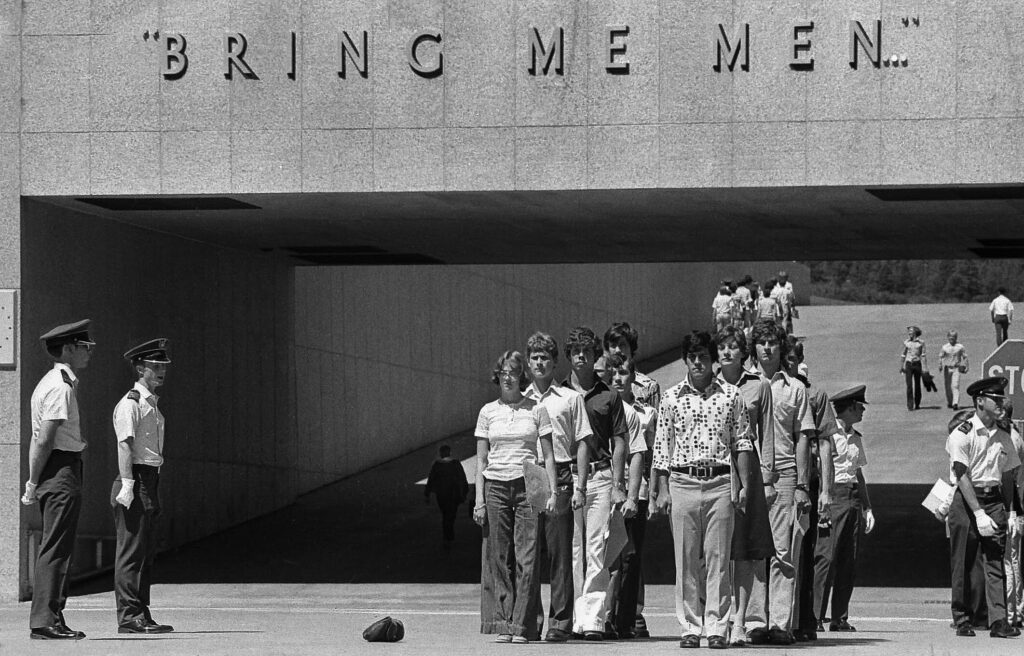
Fifty years later, women reflect on first coed class at the Air Force Academy, struggle for equality
Mary Shinn
mary-shinn@coloradopolitics.com
Updated 1 day ago
When the first female Air Force Academy cadets arrived 50 years ago this summer, they stood in front of an enormous sign on campus that read “Bring me men.” In the shadow of that sign, Kathleen Utley Kornahrens, one of...

Colorado Democrats, your time is coming | Jon Caldara
Jon Caldara
jon-caldara@coloradopolitics.com
Updated 1 day ago
Hey, Colorado Democrats! All the fun you’ve had watching Republican dysfunction in Colorado for the last 20 years was just a preview of what is about to happen to you. The Colorado Republican Party no longer exists as a competitive...

A new day? Colorado’s troubled guardianship office pursues ‘cultural reset’
Marianne Goodland
marianne.goodland@coloradopolitics.com
Updated 3 days ago
Colorado’s guardianship program, long criticized for mismanagement and high staff attrition, is undergoing a “cultural reset,” as its new director works to repair partnerships and prepare for a major expansion under recent legislation. Created by lawmakers in 2017, the Office...

As Lake Powell shrinks, marinas are having to adapt to dwindling water levels | OUT WEST ROUNDUP
The Associated Press
the-associated-press@coloradopolitics.com
Updated 4 days ago
ARIZONA Reservoirs near record lows PAGE — The Colorado River’s Lake Powell, the second largest reservoir in the U.S., is shrinking. A record-dry winter and extreme heat — as well as decades of overuse, chronic drought and climate change —...

U.S. Senate OKs funding bill to avoid government shutdown
Wire Services
wire-services@coloradopolitics.com
Updated 1 day ago
Hemp provision became point of contention WASHINGTON • The U.S. Senate in an overnight vote Saturday approved a short-term measure to fund federal agencies into early December and avoid a government shutdown during the middle of campaign season. The late-summer...

Colorado Politics Calendar Aug. 10-16
Rachael Wright, Special to Colorado Politics
rachael.wright@coloradopolitics.com
Updated 3 days ago
CoPo’s weekly political calendar will help you find political and public-policy events throughout Colorado. It includes candidate and issue campaign events, public policy meetings, court hearings, state and local party conventions, assemblies, debates, rallies, parades, speaking engagements, traveling dignitary appearances,...
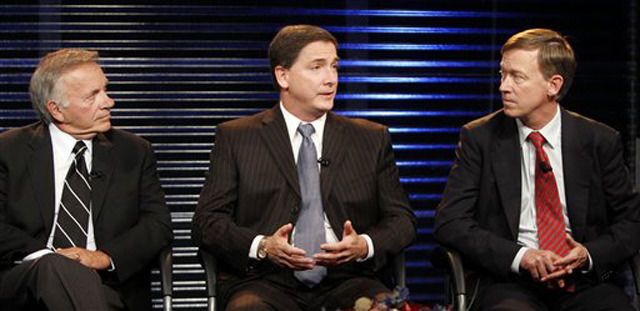
Wirth downplays Social Security disaster talk | A LOOK BACK
Rachael Wright, Special to Colorado Politics
rachael.wright@coloradopolitics.com
Updated 3 days ago
Forty-five years ago this week: “As time goes on,” said Democratic U.S. Rep. Tim Wirth, of the 2nd Congressional District, “we are finding that the safety net, which was proposed earlier this year, has some very large holes in it,”...
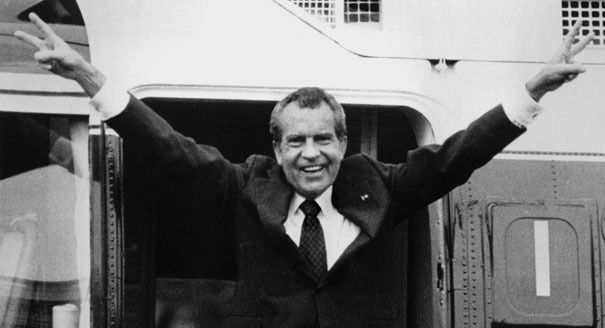
The relevance of Watergate more than a half-century later | SONDERMANN
By Eric Sondermann
by-eric-sondermann@coloradopolitics.com
Updated 4 days ago
It was the scandal for which all other scandals are now named. In June 1972, a small group of Cuban burglars with high-level connections broke into the headquarters of the Democratic National Committee. Those headquarters were located in the Watergate...

Democratic group aims Spanish-language TV ad at Gabe Evans in Colorado’s battleground 8th CD
Ernest Luning
ernest.luning@coloradopolitics.com
Updated 2 days ago
A national group tied to House Democratic leadership launched a six-figure Spanish-language TV ad in Colorado this week targeting Republican U.S. Rep. Gabe Evans and the GOP’s signature budget legislation. The 30-second spot is part of $15 million in new...

Colorado School of Mines lands major share in Trump’s $100M mining-education plan
Thelma Grimes
thelma.grimes@coloradopolitics.com
Updated 2 days ago
President Donald Trump on Friday named the Colorado School of Mines among roughly a dozen institutions that will share in a $100 million commitment “to train the next generation of American miners.” Paul Johnson, the university’s president, said he is...