

State Supreme Court upholds DNA analyst testimony in burglary case
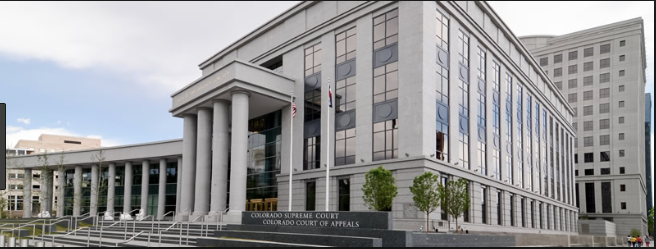
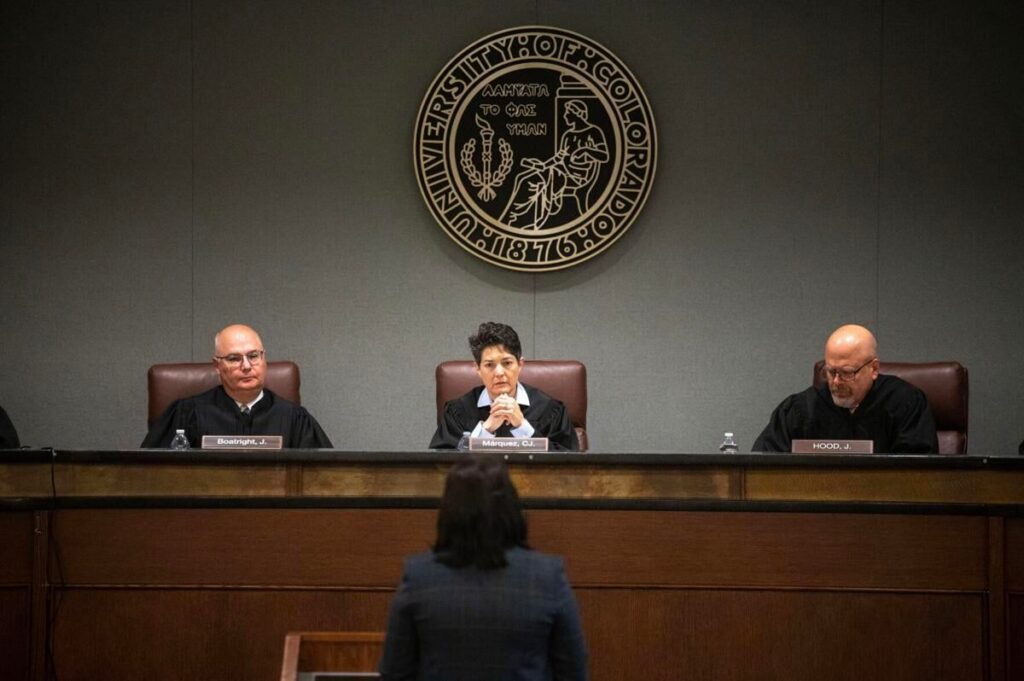
A DNA analyst’s testimony was valid in a burglary trial, even though she did not process the sample in one piece of evidence used to convict the defendant, the state Supreme Court ruled on Monday.
“[L]ocal law enforcement outsourced DNA testing and an expert then testified relying on the results of testing performed by someone else,” wrote Justice Monica M. Márquez. “But the defense here failed to object to the admission of such testimony on Confrontation Clause grounds.”
The Denver Police Department Crime Laboratory analyzed a soda can found at the scene of a home burglary and matched the DNA to a profile of Brandon D. Campbell in the Colorado Bureau of Investigation’s database. Police arrested Campbell and took another DNA sample for comparison. Campbell filed a request to prosecutors for the testimony of “any employee or technician” from CBI or from the Denver Police Department who was involved in the testing.
Subsequently, Campbell’s DNA matched that found on a plum at another burglary scene.
The defense attempted to block the evidence from the second crime scene, but a judge denied it. At trial, the DNA analyst who processed the initial samples – but not the plum sample – testified. Campbell had not specifically requested the testimony of the plum analyst.
The analyst acknowledged that it was not possible to say whether the DNA came from Campbell’s saliva or when and how it was deposited on the objects. Campbell’s lawyer did not dispute that the DNA was the defendant’s, but did question whether the DNA got on the soda can and the plum during the burglaries.
Campbell received convictions for burglary, theft and criminal trespass. He appealed, citing a violation of his Sixth Amendment right to confront witnesses against him, due to the lack of testimony from the plum analyst.
The Colorado Court of Appeals ruled against Campbell, citing that he failed to object at trial.
Márquez wrote that “state and federal courts have struggled to discern a clear test for the admission of expert testimony relying on DNA test results performed by a non-testifying analyst.” However, “any error here was not so obvious that the trial judge should have identified it without the benefit of an objection.”
The 2014 case of People v. Merritt decided that testimony from an autopsy expert who did not perform the autopsy in the case at hand was nevertheless permissible. The majority indicated that in that case, as in Campbell’s, there was no error in allowing the testimony that would have clearly affected the outcome.
Justices Melissa Hart and William W. Hood, III joined a dissent from Justice Richard L. Gabriel. While the three justices agreed with the handling of the DNA evidence, they objected to the majority’s order for re-sentencing after prosecutors mislabeled a past conviction of Campbell’s as a drug offense instead of a felony trespass. The prosecution pursued habitual offender charges against him due to his past felonies.
“The statute expressly requires the prosecution to allege the specific felony,” Gabriel wrote. “Today, the majority adopts a rule that effectively allows prosecutors to convict defendants on charges different from those specifically alleged, by name, in the charging instruments.”
He added that he would have reversed Campbell’s conviction. The majority called the discrepancy in labeling a “simple variance.”
The case is Campbell v. People.

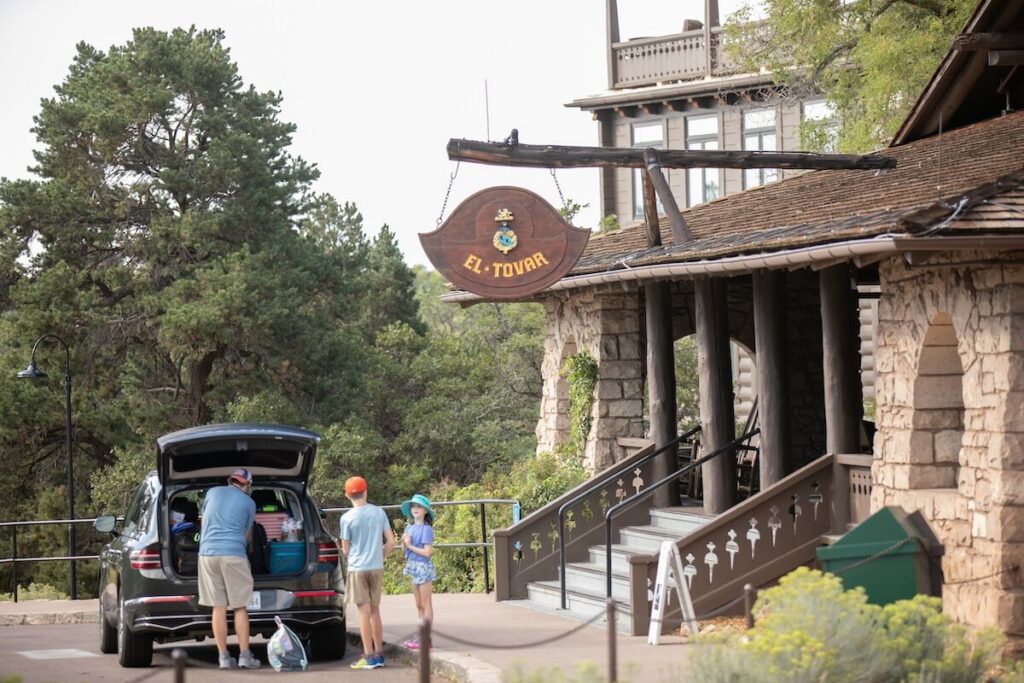
Grand Canyon flooding threatens economy that’s still recovering from a fire | OUT WEST ROUNDUP
Ernest Luning
ernest.luning@coloradopolitics.com
Updated 3 days ago
ARIZONA Flooding slams park’s economy Deadly flooding at the Grand Canyon is damaging the area’s economy, with a washed-out pipeline severing the South Rim’s water supply and shutting down lodging at the popular tourist vista for an indefinite period. The...

Immigration reporting measure fuels debate over Colorado’s role with ICE
Marissa Ventrelli
marissa.ventrelli@coloradopolitics.com
Updated 10 hours ago
A coalition of advocacy groups and several district attorneys rallied outside the Colorado Capitol on Thursday to oppose a ballot measure that, if approved by voters in November, would require state and local law enforcement to cooperate with federal immigration...

Colorado Politics Calendar Sept. 14-20
Rachael Wright, Special to Colorado Politics
rachael.wright@coloradopolitics.com
Updated 4 days ago
CoPo’s weekly political calendar will help you find political and public-policy events throughout Colorado. It includes candidate and issue campaign events, public policy meetings, court hearings, state and local party conventions, assemblies, debates, rallies, parades, speaking engagements, traveling dignitary appearances,...
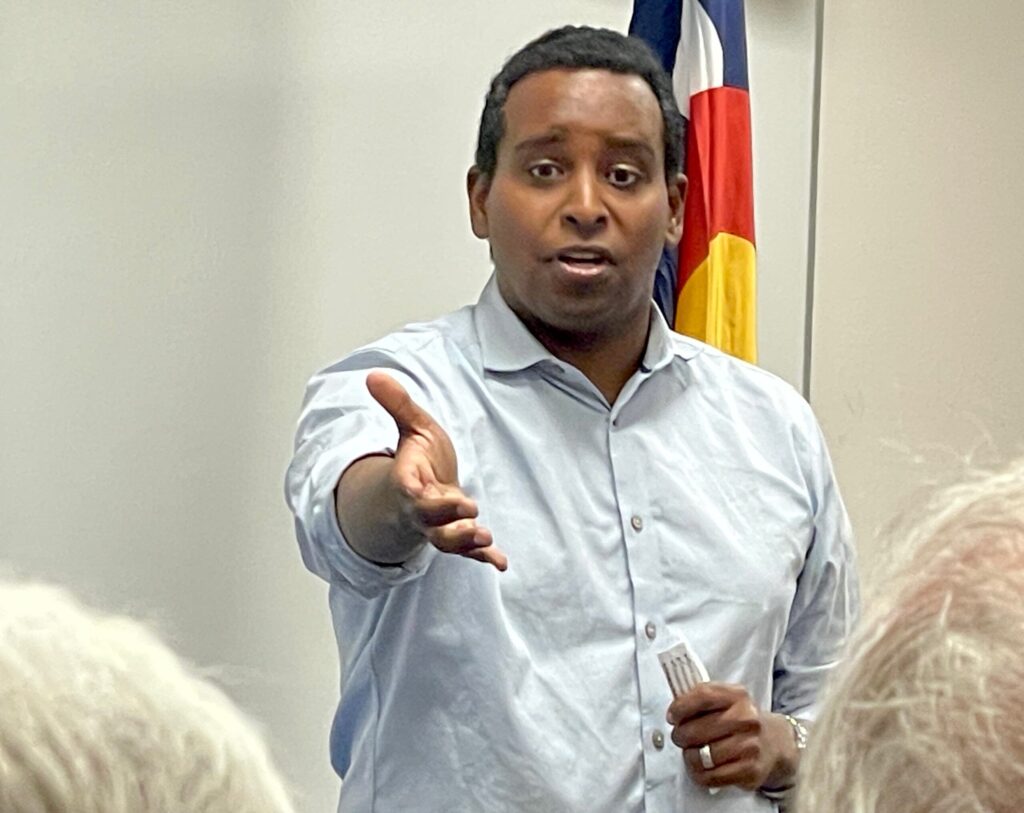
The African roots of three Colorado leaders | SONDERMANN
Eric Sondermann
eric-sondermann@coloradopolitics.com
Updated 3 days ago
Colorado’s political transformation is measured in many ways. A once reliably red state (with asterisks) became purple and is now a rather deep blue. For better or worse, probably the latter, power is ever more consolidated along the Front Range...
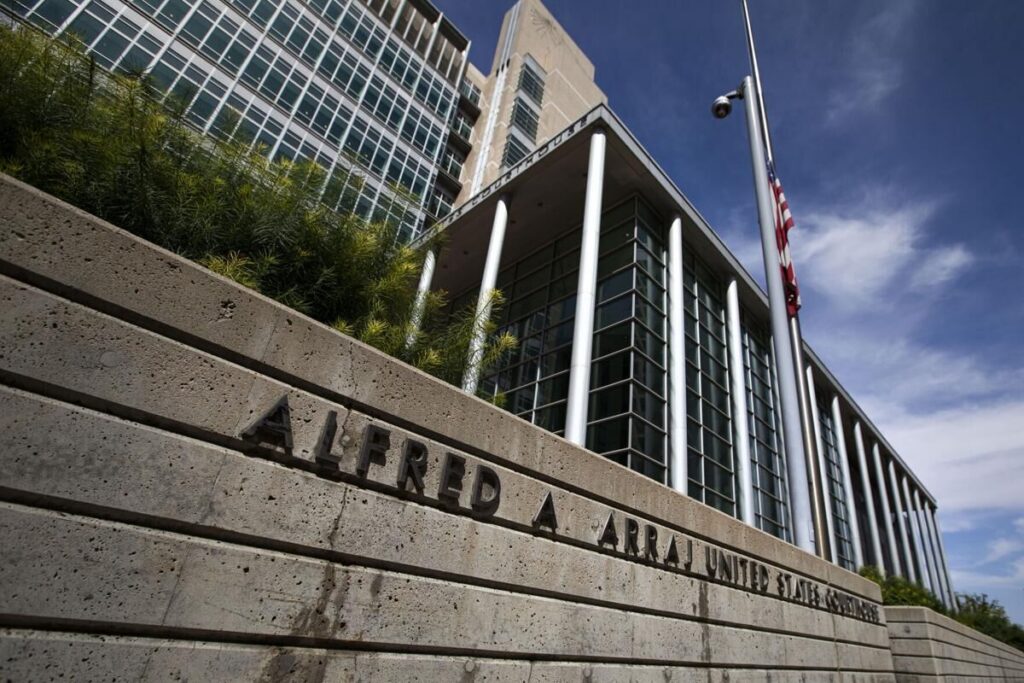
Federal judge green-lights civil trial against ex-Fort Collins DUI officer
Michael Karlik
michael.karlik@coloradopolitics.com
Updated 2 days ago
A federal judge ruled on Thursday that Fort Collins’ former “DUI officer” will face a civil trial for allegedly investigating a motorist for impaired driving without any reasonable suspicion to do so. In recent years, several people arrested by Officer...

Denver police reopen 13 sex assault cases after retesting Missy Woods’ CBI work
Jenny Deam
jenny.deam@gazette.com
Updated 10 hours ago
Thirteen previously closed Denver sexual assault cases have been reopened after the city’s crime lab retested DNA evidence once analyzed by former Colorado Bureau of Investigation forensic analyst Yvonne Woods. A police spokesperson told The Denver Gazette the once-closed cases...

Ballot measure aims to shift Colorado sporting goods tax revenue to land, water and wildfire projects
Marissa Ventrelli
marissa.ventrelli@coloradopolitics.com
Updated 1 day ago
Colorado voters this November will decide whether to direct a share of sales tax revenue from sporting goods — including bicycles and skiing equipment — toward land and water conservation, wildfire prevention and expanding outdoor recreation. Supporters say the measure...

Colorado Supreme Court suspends Mesa County judge pending misconduct investigation
Michael Karlik
michael.karlik@coloradopolitics.com
Updated 1 day ago
The Colorado Supreme Court suspended Mesa County Court Judge Michael J. Grattan on Thursday amid a misconduct investigation. The court’s Sept. 10 order gave Grattan 21 days to explain why his paid suspension should not continue through the end of...

Trump honors the fallen of the 9/11 terrorist attacks during Pentagon speech
Mabinty Quarshie
mabinty-quarshie@coloradopolitics.com
Updated 2 days ago
President Donald Trump and first lady Melania Trump honored the roughly 3,000 Americans killed during the Sept. 11, 2001, terrorist attacks during a ceremony at the Pentagon. The event marking the 25th anniversary of the deadliest attack on American soil...
Colorado Supreme Court changes course, dismisses case about special district bonds
Michael Karlik
michael.karlik@coloradopolitics.com
Updated 1 day ago
The Colorado Supreme Court declined on Friday to decide a dispute between a large-scale Commerce City development and the various districts financing it, after initially showing interest in the ongoing case. Colorado has roughly 2,800 special districts, which are local...
PREV
PREVIOUS

More than a million sign petition to reopen investigation of Aurora police involvement in Elijah McClain’s death
Editor’s note: This article was updated at 10 a.m. on June 12, 2020, to include the latest actions from the city of Aurora. More than a million people have signed an online petition calling for Aurora officials to reopen the investigation into the death of Elijah McClain – a 23-year-old unarmed black man who died in August […]

Resilient Restaurants aims to get eateries humming again
Resilient Restaurants is out to help restaurants bounce back from the pandemic and thrive in whatever landscape emerges in the socially distant future. The organization won’t tell anybody how to run their business, but it will offer smaller, locally owned eateries the expertise their large, franchised competitors can afford, through workshops, discussions and analysis. Robert […]