

Lawsuit filed alleging Denver violated federal civil rights of protesters
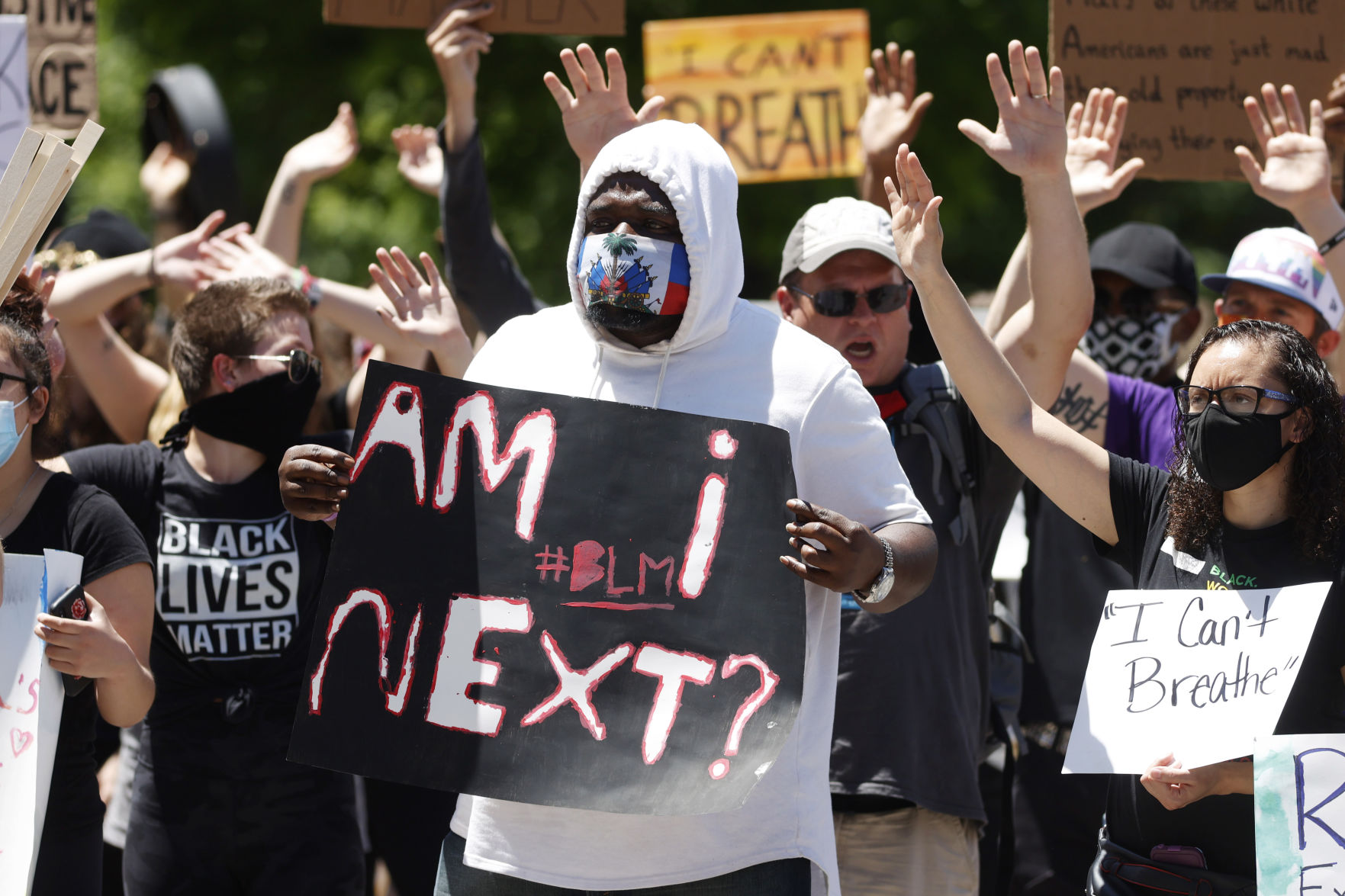
Four Denver residents have filed a class action lawsuit against the city of Denver alleging violations of their federal civil rights through police use of force during the racial justice protests of the past week.
The complaint to the U.S. District Court for Colorado contains pages of references to videos, social media posts and news articles that depicted instances of tear gas, less-than-lethal bullets and flash bangs that Denver officers used against people protesting the deaths of George Floyd and other African Americans in police custody.
“For seven days, they have shown, across hundreds of incidents and just as many officers, that the use of these ‘less than lethal’ ordinances is being done without regard to the constitutional rights of protesters and bystanders,” the lawsuit alleges about the department. “The officers have, time and again, targeted journalists and ordinary citizens documenting their conduct, targeted medics seeking to give aide to those harmed by the use of these ordinances, failed to follow training or have not been trained on the use of these ordinances, and most upsettingly, these officers have simply used these weapons to assert and show their dominance over protesters and the citizens of Denver.”
The city did not immediately respond to a request for comment.
Plaintiffs Agazi Abay, Gabriel Thorn, Amy Schneider and Michael McDaniel seek compensation as well as a temporary restraining order that prevents Denver police from using tear gas, rubber bullets, pepper balls, pepper spray and flash bangs. Each of them was the target of the police tactics: Thorn and McDaniel claimed that officers shot pepper balls at them while they were identified as medics. In McDaniel’s case, he said he was treating a protester when he was shot. Schneider alleged that an officer responded to calls for medical personnel for an asthmatic protestor by saying, “If you wanted to breathe, you should have stayed home tonight.”
The complaint references injuries sustained by journalists, as well as an Instagram post from one officer captioned “Let’s start a riot.” Originally reported by Colorado Politics, the city subsequently fired the officer.
“This mentality that the DPD was not there to serve a public safety role, but instead to dominate the protesters, is evident through talks with protesters, bystanders, press, and indeed, as captured on video,” the lawsuit claims.
President Donald Trump has repeatedly urged states to “dominate” the demonstrations, which initially saw incidents of looting and vandalism from people not necessarily associated with the protests. However, there has been a cascade of criticism for police nationwide following numerous reports of excessive force against nonviolent demonstrators. The White House itself ordered the forceful clearing of protesters in the District of Columbia on Monday so that Trump could pose for photos by a church.
The Denver Post reported that a shooting occurred near Thursday night’s protest at the capitol, but it appeared to be unrelated to the demonstration.
The plaintiffs bring their claim under section 1983 of federal civil rights law, which allows for government officials to be sued for violating people’s clearly established constitutional rights. The complaint against Denver alleges violations of the First Amendment’s protection of free expression and the Fourth Amendment prohibition on unlawful seizure. It accuses Denver of failing to train and supervise its officers.
Alan Chen, a law professor at the University of Denver, said that while he did not have access to all of the evidence in the Denver lawsuit, “I have no doubt that there are numerous civil rights violations that have occurred at the protests here and in other cities.”
Chen said that it is difficult to succeed in claims against local governments because of the 1978 U.S. Supreme Court decision in Monell v. Department of Social Services of the City of New York. The Court concluded that a locality cannot be sued simply because its employee caused an injury.
“Instead, it is when execution of a government’s policy or custom, whether made by its lawmakers or by those whose edicts or acts may fairly be said to represent official policy, inflicts the injury that the government as an entity is responsible under 1983,” wrote Justice William J. Brennan, Jr.
“It‘s frequently difficult to satisfy the Monell official policy requirement without fairly specific evidence,” Chen said. “Police departments rarely, if ever, write down policies that are themselves unconstitutional.”
A recently-introduced bill in Congress proposes to end qualified immunity by removing the defense that a government employee was acting in good faith or that the violation was not of a clearly established right. U.S. Rep. Diana DeGette is a cosponsor of the proposal.
Another proposal introduced this week in the Colorado General Assembly attempts to address some concerns about police excesses by further restricting use of deadly force and allowing for officers to be sued individually for civil rights violations, waiving qualified immunity. Colorado’s law enforcement representatives agree with some of the provisions, including the elimination of the use of chokeholds, but are seeking revisions to others.
“Some of these topics deserve more time for stakeholders, including community members, to address areas of concern and achieve meaningful change,” Gary Creager, president of the Colorado Association of Chiefs of Police.


What courageous citizenship really looks like | Vince Bzdek
Vince Bzdek
vince.bzdek@gazette.com
Updated 8 hours ago
By Vince Bzdek What exactly is courage? Ernest Hemingway famously called it grace under pressure. Mark Twain wrote that “courage is resistance to fear, mastery of fear — not absence of fear.” C.S. Lewis refined that even more: “Courage is...
The coming election and mischief in the making | SONDERMANN
Eric Sondermann
eric-sondermann@coloradopolitics.com
Updated 3 days ago
America’s tribalism is such these days that we struggle to even agree on the basic rules. Elections have always been hotly contested. As the saying goes, “Politics ain’t beanbag.” The process has long involved elements of nastiness and underhanded conduct....

Colorado Politics Calendar Aug. 31-Sept. 6
Rachael Wright, Special to Colorado Politics
rachael.wright@coloradopolitics.com
Updated 3 days ago
CoPo’s weekly political calendar will help you find political and public-policy events throughout Colorado. It includes candidate and issue campaign events, public policy meetings, court hearings, state and local party conventions, assemblies, debates, rallies, parades, speaking engagements, traveling dignitary appearances,...
Tancredo in Running for Dept. of Ed. Position | A LOOK BACK
Rachael Wright, Special to Colorado Politics
rachael.wright@coloradopolitics.com
Updated 3 days ago
Forty-five years ago this week: “I know that my name has been placed before the Secretary of Education, and I know that I’m one of three or four being considered for the Department of Education’s Region 8,” said state Rep....
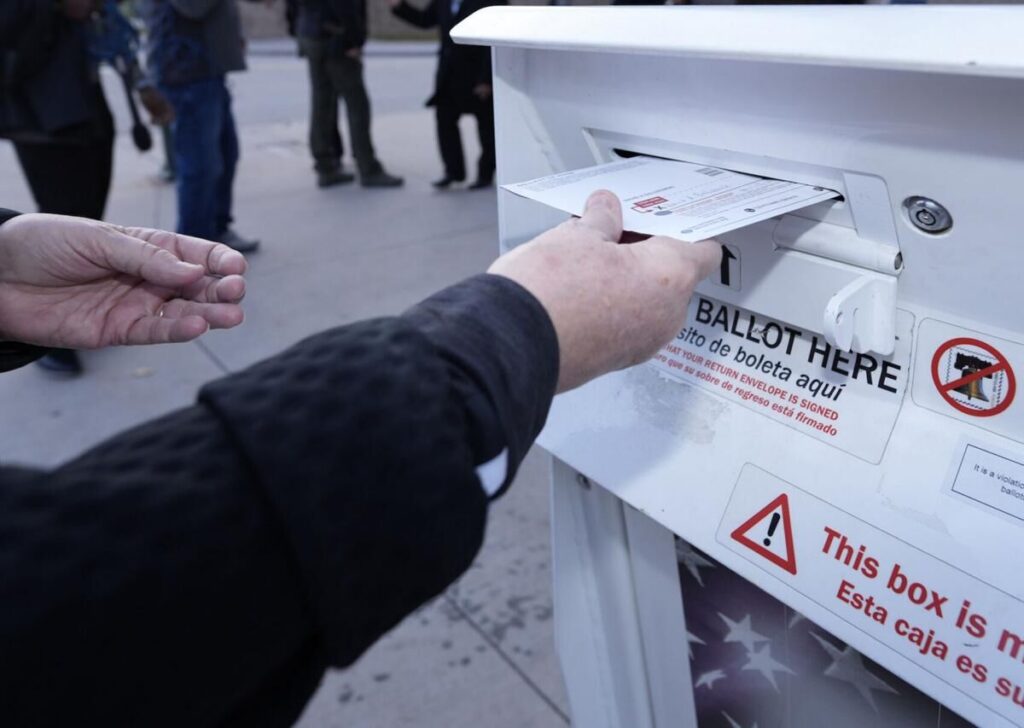
Colorado measure adding ID checks to mail-in voting qualifies for ballot
Marissa Ventrelli
marissa.ventrelli@coloradopolitics.com
Updated 1 day ago
A ballot initiative that would require voters to include additional information on mail-in ballots has qualified for the November election, according to the Secretary of State’s Office. Backed by El Paso County Treasurer Chuck Broerman and former Deputy Secretary of...
Colorado election website error exposes personal data of confidential voters
Marissa Ventrelli
marissa.ventrelli@coloradopolitics.com
Updated 1 day ago
A system update accidentally lifted protections on confidential records in Colorado, exposing dozens of voters’ personal information, according to the Secretary of State’s Office. The limit that normally blocks access to confidential voter profiles was inadvertently disabled during an update...
PUC adds weekly comment after killing private talks
Scott Weiser
scott.weiser@gazette.com
Updated 1 day ago
The Colorado Public Utilities Commission will take public comment at the start of every commissioner’s weekly meeting beginning Sept. 9 as part of its new transparency mandate, the commission announced, expanding a slot previously limited to the second Wednesday of...
10th Circuit overturns framework for sentencing probation violators by 11-1
Michael Karlik
michael.karlik@coloradopolitics.com
Updated 7 hours ago
In a rare decision by all 12 of its full-time judges, the Denver-based federal appeals court ruled in a lopsided vote on Friday that one of its members created a sentencing process for probation violators that was out of step...
Federal judge dismisses excessive force lawsuit against Colorado Springs, officer
Michael Karlik
michael.karlik@coloradopolitics.com
Updated 11 hours ago
A federal judge concluded last week that a Colorado Springs police officer could not be held liable for shooting a suspect three times after the man menaced two victims with a gun and fled the scene. Al’morion Germany was involved...

DeFlock started from one man’s curiosity — now Flock cameras are a midterm issue
Claire Carter
claire.carter@washingtonexaminer.com
Updated 1 day ago
Will Freeman wasn’t looking to start a national movement when he launched DeFlock after noticing Flock Safety’s automatic license plate readers along the side of the road. The software engineer was driving across the country in 2024 when the cameras...
PREV
PREVIOUS
Denver to provide $750K in aid to residents who don’t qualify for state, federal relief dollars
Denver City Council on Monday is expected to pass a proposal that would draw $750,000 from the city’s general fund and give those dollars to residents who lost their jobs during the coronavirus pandemic but do not qualify for aid from the federal or state governments. Mayor Michael Hancock and Councilwoman at Large Robin Kniech […]
Denver implemented policies to better control software access, auditor finds
Denver has successfully addressed many of the user-access deficiencies in Workday, the city’s accounting and human resources software, according to a follow-up report from Denver Auditor Timothy O’Brien. The original audit, released in April 2019, found that since Denver began using Workday in 2017, the city did not put in place documented policies for user […]