

Court of Appeals: nursing home arbitration agreement valid, despite unavailability of arbitrator

By a 2-1 decision, the Colorado Court of Appeals on Thursday halted a lawsuit against a Denver nursing home because the parties had previously agreed to arbitrate – even though the organization referenced in the agreement had ceased consumer arbitrations.
“We conclude that the parties here agreed to arbitrate without regard to who was named as arbitrator,” wrote Judge Matthew D. Grove for the panel’s majority.
Shalandra M. Johnson-Linzy placed her husband, Damien Linzy, with Amberwood Court Rehabilitation and Care Community in Denver. She signed an agreement with the nursing home that any disputes would be solved by arbitration, rather than litigation, in accordance with procedures from the National Arbitration Forum, now known as the Forum.
However, the Forum, which was the largest consumer arbitrator at one point, decided in 2009 it would no longer involve itself in consumer disputes after then-Minnesota Attorney General Lori Swanson sued the organization. She alleged that the Forum “worked behind the scenes with credit card companies and other creditors, such as cell phone providers, to write themselves into customer purchase agreements as the sole arbitrator consumers could use if they had issues with their creditors,” according to The Star Tribune.
CEO Mike Kelly countered that “nothing in the Minnesota attorney general’s complaint alleges that the arbitration proceedings administered by the Forum are unfair.”
Shortly after Linzy was discharged from Amberwood, he died. Johnson-Linzy sued for negligence and wrongful death, but Amberwood pointed to the contract language requiring arbitration.
A district court sided with Johnson-Linzy, finding “the agreement to arbitrate is impossible to comply with” in the absence of the Forum.
The nursing home appealed, arguing that the contract did not require the Forum to be the arbitrator, but rather that the arbitration only follow the organization’s guidelines.
Under the Colorado Uniform Arbitration Act, courts are directed to determine whether an agreement to arbitrate is valid, and whether the issue under dispute is covered by the agreement. Grove, in the majority opinion, found that the agreement was sufficiently ambiguous to let the court decide whether it was valid.
However, the appellate panel reversed the district court, finding that “the agreement does not state that arbitration will be conducted ‘by’ NAF, or even by an arbiter affiliated with or approved by NAF.”
Grove acknowledged that the Forum’s arbitration code itself required the Forum or any organization that had an agreement with the Forum to conduct arbitration.
Dismissing such provisions as “boilerplate,” he concluded that “most cases analyzing language similar to the arbitration agreement at issue here have concluded that the agreement remains enforceable despite [the Forum’s] unavailability.”
Judge Michael H. Berger, in his dissent, vigorously disagreed with the majority’s interpretation that the Forum was incidental to arbitration, rather than a central component.
“The defendants – sophisticated, corporate entities presumably acting on the advice of counsel – drafted the agreement. They selected the NAF Code to govern arbitration – despite the fact that NAF had been defunct for a number of years and the NAF Code clearly provides that only NAF or an affiliated entity may administer it,” he wrote. “The defendants must live with that decision.”
Berger did not share the majority’s determination that if the nursing home had intended for the Forum, and only the Forum, to arbitrate, it would have explicitly written that into the agreement.
“Public policy does not authorize judges to substitute provisions they think are better or more reasonable, for those prescribed by the parties,” Berger countered.
The case is Johnson-Linzy v. Conifer Care Communities.



10th Circuit dismisses challenge to Colorado legislature’s decorum rules
Michael Karlik
michael.karlik@coloradopolitics.com
Updated 4 hours ago
The Denver-based federal appeals court concluded on Tuesday that Colorado lawmakers cannot be sued for creating and enforcing rules of decorum that circumscribe the public commentary allowed at legislative committee hearings. A three-judge panel of the U.S. Court of Appeals...

U.S. energy secretary warns Colorado’s energy policies could drive up prices, deter businesses
Scott Weiser
scott.weiser@gazette.com
Updated 2 hours ago
U.S. Energy Secretary Chris Wright on Monday warned that Colorado’s energy policies could lead to higher electricity prices and deter businesses, such as data centers, from locating in the state. Wright, a former executive of a Colorado-based energy company tapped...

Split vote by Colorado Title Board stops ballot push to privatize Pinnacol Assurance
Marianne Goodland
marianne.goodland@coloradopolitics.com
Updated 7 hours ago
The Colorado Title Board, a three-member panel that sets the language for ballot measures, recently reversed a prior decision and blocked a proposal to privatize Pinnacol Assurance from moving forward. The main issue decided by the title board is whether...
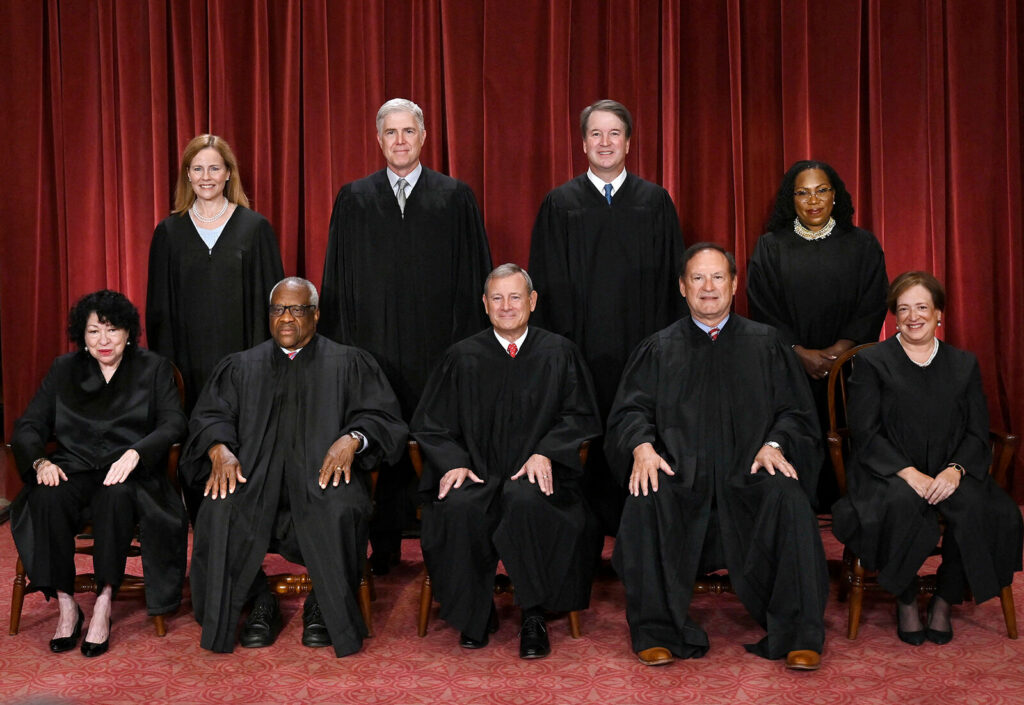
Jackson and Kavanaugh disagree over if the Supreme Court treats Trump like Biden
David Zimmermann Washington Examiner
davidzimmermannwashingtonexaminer@wpstage.coloradopolitics.com
Updated 7 hours ago
Supreme Court justices Ketanji Brown Jackson and Brett Kavanaugh disagreed on Monday over whether the high court treats President Donald Trump the same as former President Joe Biden in cases brought by their respective administrations. Jackson, who often writes dissents...

Rand Paul announces tentative date for Mullin DHS confirmation hearing
Washington Examiner Staff, Washington Examiner
washington.examiner.staff.washington.examiner@gazetteedit.wpenginepowered.com
Updated 8 hours ago
The nomination of Sen. Markwayne Mullin (R-OK) to be the next Department of Homeland Security Secretart was officially sent to the Senate by the White House on Monday. Mullin was nominated on March 5 by President Donald Trump to replace...
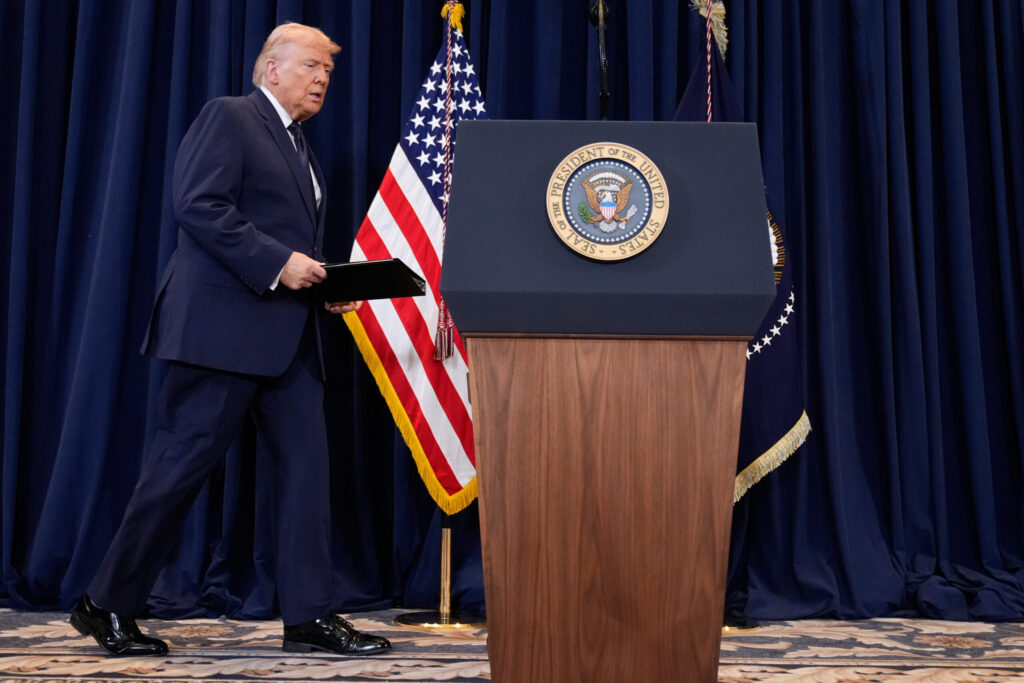
Trump calls SAVE America Act his ‘No. 1’ priority for House GOP
Rachel Schilke, Washington Examiner
rachel.schilke.washington.examiner@gazetteedit.wpenginepowered.com
Updated 8 hours ago
DORAL, Florida — President Donald Trump made his “biggest plea” to House Republicans on Monday: Pass the SAVE America Act, a GOP voter identification bill, even if it takes the rest of this year. A little over 100 of the...

Colorado Senate panel OKs bill named for Boulder teen cyclist killed in 2023 crash
Marissa Ventrelli
marissa.ventrelli@coloradopolitics.com
Updated 2 hours ago
The Senate Judiciary Committee on Monday gave unanimous approval to a bill that would require law enforcement officers responding to crashes resulting in serious injury or death to offer drivers a voluntary breathalyzer test. Sponsors hope the measure would provide...

Fort Carson-based soldier killed in Iranian attack
Mary Shinn
mary-shinn@coloradopolitics.com
Updated 9 hours ago
A Fort Carson-based soldier is among the U.S. service members killed in an attack by Iran during Operation Epic Fury, according to a Department of Defense news release. Sgt. Benjamin N. Pennington, 26, died Sunday of injuries sustained during an...
Colorado open records bill dies in Senate committee
Marianne Goodland
marianne.goodland@coloradopolitics.com
Updated 8 hours ago
Efforts to overhaul Colorado’s open records law stalled anew. A proposal that would have extended response times for public records requests and added accountability measures for late responses failed to advance out of its first committee and will not move...
Colorado Supreme Court blocks ballot initiative defining ‘fees’
Michael Karlik
michael.karlik@coloradopolitics.com
Updated 1 day ago
The Colorado Supreme Court blocked a proposed ballot initiative on Monday that would have required voter approval for new fees above a certain threshold, while also enshrining a definition of “fee” into the state constitution for the first time. Chief...
PREV
PREVIOUS

Colorado businesses ask Polis to back Big Tech
Small businesses in Colorado, fearful of a growing tsunami of federal probes into Big Tech, are asking Gov. Jared Polis to help them rein in any potential disruptions to digital technology platforms during the ongoing COVID-19 pandemic. In a letter to Polis spearheaded by the nonprofit Connected Commerce Council and signed by 154 Colorado businesses, the group, also […]

Health risks low from extraction-adjacent Greeley school campus, state reports
An assessment of the air around a Greeley school campus found no adverse health effects, apart from a onetime elevation in benzene levels in November. The Bella Romero Academy 4-8 lies approximately 1,400 feet from a well site. Air monitoring systems measured 25 different volatile organic compounds by the hour over 101 days. The assessment did […]