

Only 1 of 6 RTD mask batches passed test, while failed equipment sent back to vendor
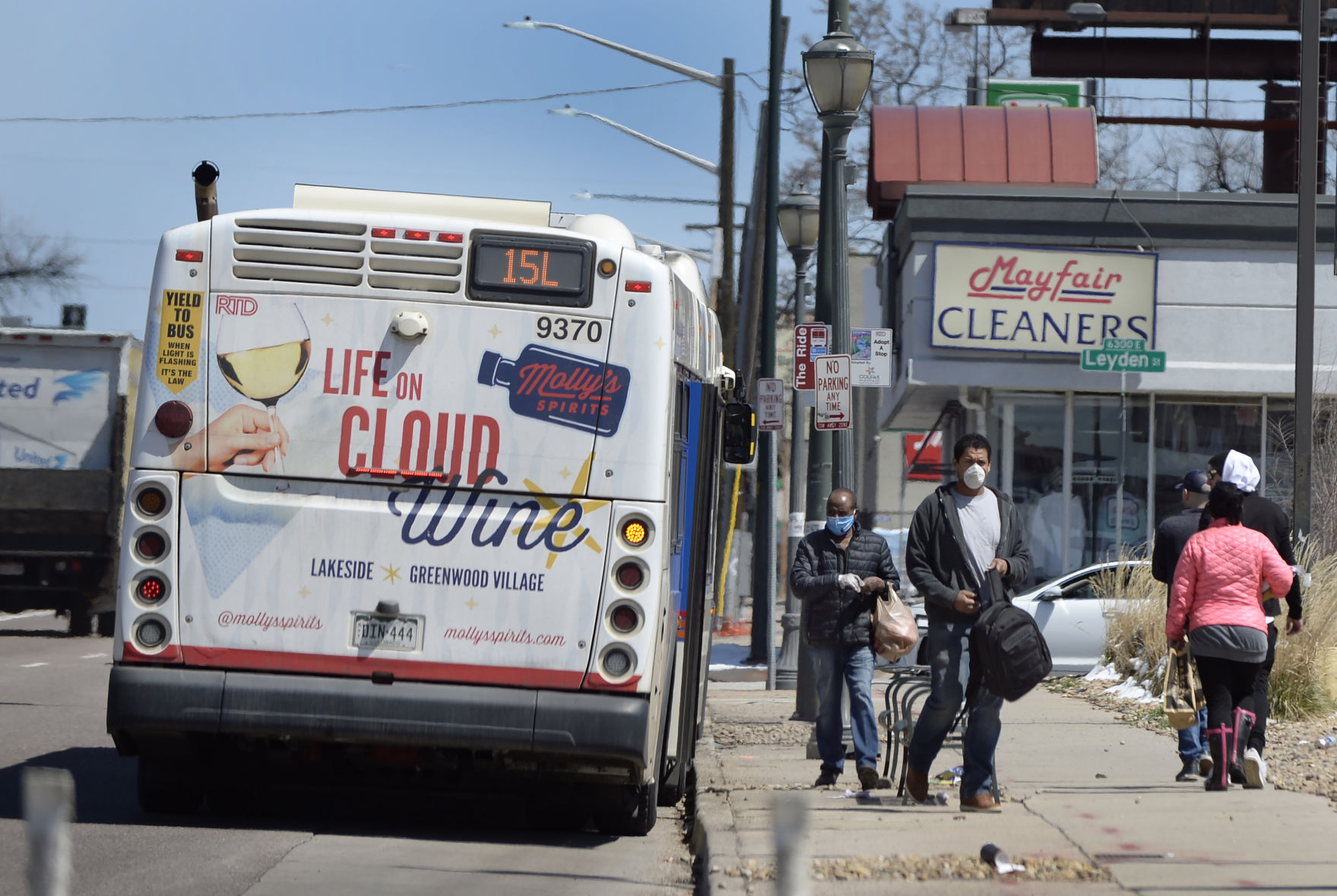
Only one batch of KN95 masks destined for the Regional Transportation District’s employees has passed its testing, out of six total batches.
“The failed masks will not be used and in most cases we are sending them back to the vendor and not paying for them, as they are not what was represented and may give individuals a false sense of protection,” said Christine L. Jaquez, a spokesperson for RTD. “The one batch of counterfeit KN95 masks that passed are being held in inventory to be used only if we run out of the 3M-approved N95 masks.”
RTD in April had an order pending for 21,000 N95 respirators and surgical masks, which the agency augmented with an order of KN95s. The shipment began arriving after April 20, destined for Colorado State University’s laboratory for testing. Two batches have yet to be tested.
N95 respirators, which block 95% of tiny particles, are medical-grade and are not for recommended use by the general public. KN95 masks, by contrast, are Chinese made and conform to that country’s health standards. The U.S. Food and Drug Administration issued an emergency use authorization for the masks in April to address the chronic shortage of N95 respirators among frontline medical personnel.
However, in mid-May the FDA revised its authorization, noting that the KN95 masks “may not provide consistent and adequate respiratory protection to health care personnel exposed to COVID-19 based on additional filtration performance testing conducted by the National Institute for Occupational Safety and Health.”
Lance Longenbohn, the president of Amalgamated Transit Union Local 1001, which represents 2,300 RTD employees, said that the union also gave masks to RTD for testing. The ones that have passed, RTD has prioritized for maintenance, service and cleaning workers, and new employees who must complete in-cab training for light rail and commuter runs.
“Once RTD got their hands on the masks, it really became an exercise in just how bureaucratic they can be,” he said.
On a virtual call on Saturday with some transit operators and RTD Director Shontel M. Lewis, District B, the question of the KN95 masks’ authenticity arose. Lewis said she did not know that the masks had failed the test.
“Give those to the riders,” said Yvette Trujillo, international vice president of the ATU, who was also on the call. “If they’re not safe for our operators, I believe any kind of face covering is better than nothing. Yet there are several thousand masks just sitting there.”
Christian L’Orange with the Department of Mechanical Engineering at CSU, explained that the lab did not test all KN95 masks in the six RTD batches. “No reason to conduct a full blown set of tests if it becomes obvious that a given mask isn’t going to pass,” he said.
The purpose of the testing is to verify a mask’s ability to remove particles from the air and measure resistance while breathing through the mask, which is done through an airflow test followed by a particle measurement. Fewer particles permeating the mask and lower drops in pressure are desirable. To pass the test, the mask needs to filter 95% of the particles and meet a pressure threshold.
“It is difficult to generalize how protective a ‘failed’ mask will be,” L’Orange said. “A bandana tied around your face will fail the tests, but it is still likely to be more protective than not wearing one at all.”
On the call with employees, one participant asked why operators had to wear a mask for 30 days before receiving another one.
“It’s unacceptable and it’s not safe,” Lewis responded. Longenbohn, the union president, said that he had not heard of the 30-day restriction, and said operators were free to obtain and wear their own masks.
Jaquez said that there is no 30-day rule, but RTD is asking those employees with N95 respirators to extend their use. That equipment is now typically replaced after 14 days. N95s are single-use devices, to be discarded when breathing becomes difficult or the respirator is damaged.
As of last week, RTD reports that there were 11 positive COVID-19 cases among employees, with two results pending.


Federal judges rebuke ex-Colorado judicial discipline director for conduct in lawsuit
Michael Karlik
michael.karlik@coloradopolitics.com
Updated 23 minutes ago
A pair of federal judges expressed a desire on Thursday to break the logjam on a lawsuit by Colorado’s former judicial discipline director against the state Supreme Court and related entities, while simultaneously showing little tolerance for the plaintiff’s scorched-earth...

Democratic bill would let recipients of ‘conversion therapy’ sue Colorado providers with no statute of limitations
Marissa Ventrelli
marissa.ventrelli@coloradopolitics.com
Updated 31 minutes ago
Colorado lawmakers have advanced a proposal that would allow people who underwent conversion therapy to sue licensed providers for damages, moving the measure forward on a party-line vote in the House Judiciary Committee. House Bill 1322, proposed by Democratic Reps....
Pinnacol separation bill delayed as Colorado budget remains in flux due to $1.5B deficit
Marianne Goodland
marianne.goodland@coloradopolitics.com
Updated 1 hour ago
A bill that would allow Pinnacol Assurance to formally sever its remaining ties with the state appears unlikely to emerge anytime soon, as House leaders juggle a massive budget shortfall, unresolved negotiations with key stakeholders, and growing doubts about whether...

100 days until America250: Five host cities unveiled for July 4 celebrations
Emily Hallas, Washington Examiner
emily.hallas.washington.examiner@gazetteedit.wpenginepowered.com
Updated 4 hours ago
America250, the entity tasked by Congress with marking the United States’ semiquincentennial, on Thursday revealed further details about its sweeping plans to celebrate the milestone. America250 chairwoman Rosie Rios launched the official 100-day countdown to July 4, and said the...

US Sen. Michael Bennet qualifies by petition for Colorado’s Democratic gubernatorial primary
Ernest Luning
ernest.luning@coloradopolitics.com
Updated 7 hours ago
U.S. Sen. Michael Bennet on Tuesday became the first gubernatorial candidate to qualify for Colorado’s June primary ballot after state election officials determined the three-term Democrat’s campaign submitted enough valid petition signatures. Bennet is facing Attorney General Phil Weiser in...
Colorado legislators consider $500 million in general fund cuts amid $1.5 billion deficit
Marianne Goodland
marianne.goodland@coloradopolitics.com
Updated 24 hours ago
The legislature’s Joint Budget Committee is working through a list Wednesday of about 150 suggestions to cut as much as $1.5 billion in general fund dollars out of next year’s budget. The largest on the list prepared by JBC staff...
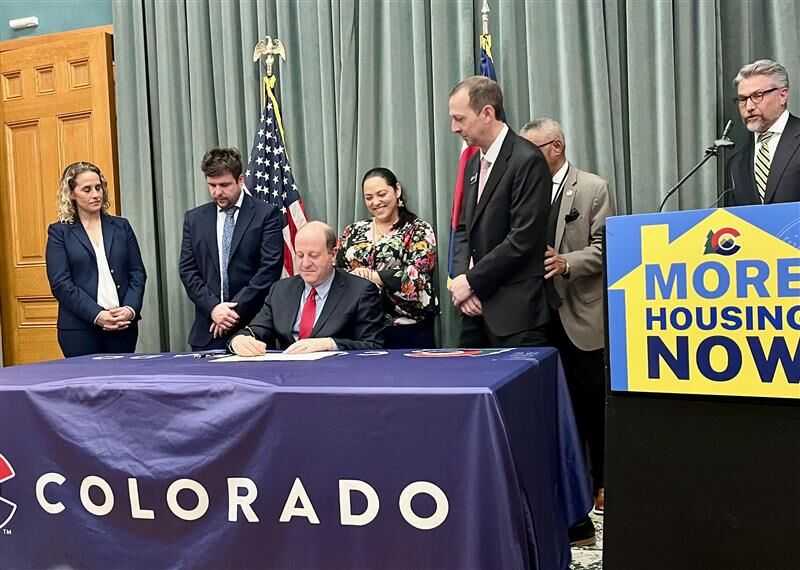
Colorado’s push for affordable housing continues as Gov. Polis signs HOME Act, workforce housing bill
Marissa Ventrelli
marissa.ventrelli@coloradopolitics.com
Updated 23 hours ago
Gov. Jared Polis held the first public bill signing of the 2026 legislative session on Wednesday, signing a pair of housing measures into law. The bills — House Bill 1001 and Senate Bill 001 — are part of Democrats’ affordable...
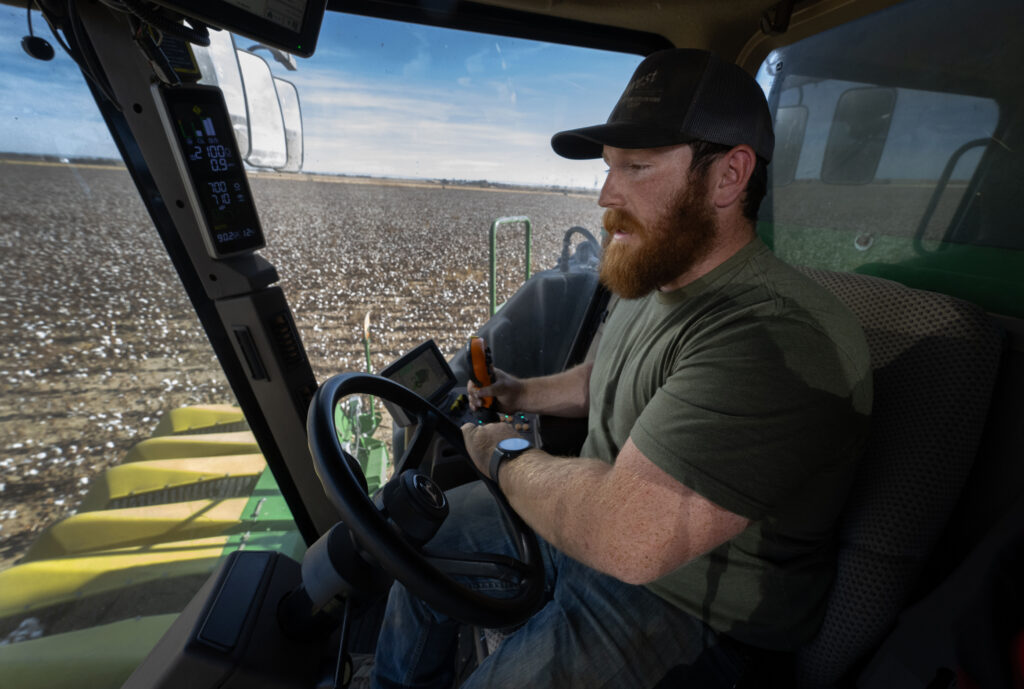
Colorado farmers begin spring planting season with soaring fertilizer costs and price-gouging fears
Marianne Goodland
marianne.goodland@coloradopolitics.com
Updated 6 hours ago
As Colorado farmers prepare their fields for spring planting, many are sounding the alarm over fertilizer prices that have surged far beyond what they say global supply disruptions can explain. With nitrogen costs up 30% in a matter of days,...
Federal judge refuses to authorize immediate appeal in World Cup trafficking lawsuit
Michael Karlik
michael.karlik@coloradopolitics.com
Updated 24 hours ago
A federal judge declined to authorize an immediate appeal last week of a prior decision allowing companies operating out of Colorado to be sued for allegedly participating in a human trafficking venture involving Filipino laborers who constructed facilities for the...

3 arrested after money laundering, motor vehicle theft investigation in Colorado Springs
Cleo Westin
cleo-westin@coloradopolitics.com
Updated 5 hours ago
Colorado Springs police arrested three people during the execution of an arrest warrant related to accusations of money laundering, motor vehicle theft, identity theft and burglary on Tuesday, according to a blotter entry by police. Carl Goodwin and two others...
PREV
PREVIOUS

House Transportation puts bills on cell phones and naming I-25 for former President Obama on ice
As is the way of the world these days, or at least in the General Assembly, bills that don’t tie into the pandemic or help with the budget are being given a quick demise. The victims today: a bill that would put stricter penalties into law for holding a cell phone while driving, and another […]

House gives final approval to bill expanding sex abuse victims' rights, but Senate path is unclear
By a vote of 60-1, the Colorado House of Representatives gave final approval to a bill that would allow victims of sexual misconduct, including childhood sex abuse survivors, unlimited time to sue their perpetrators and the institutions that harbored them. “We’re thrilled to see House Bill 1296 pass out of the House with broad bipartisan […]