

Petition clause may delay laws passed by General Assembly for months
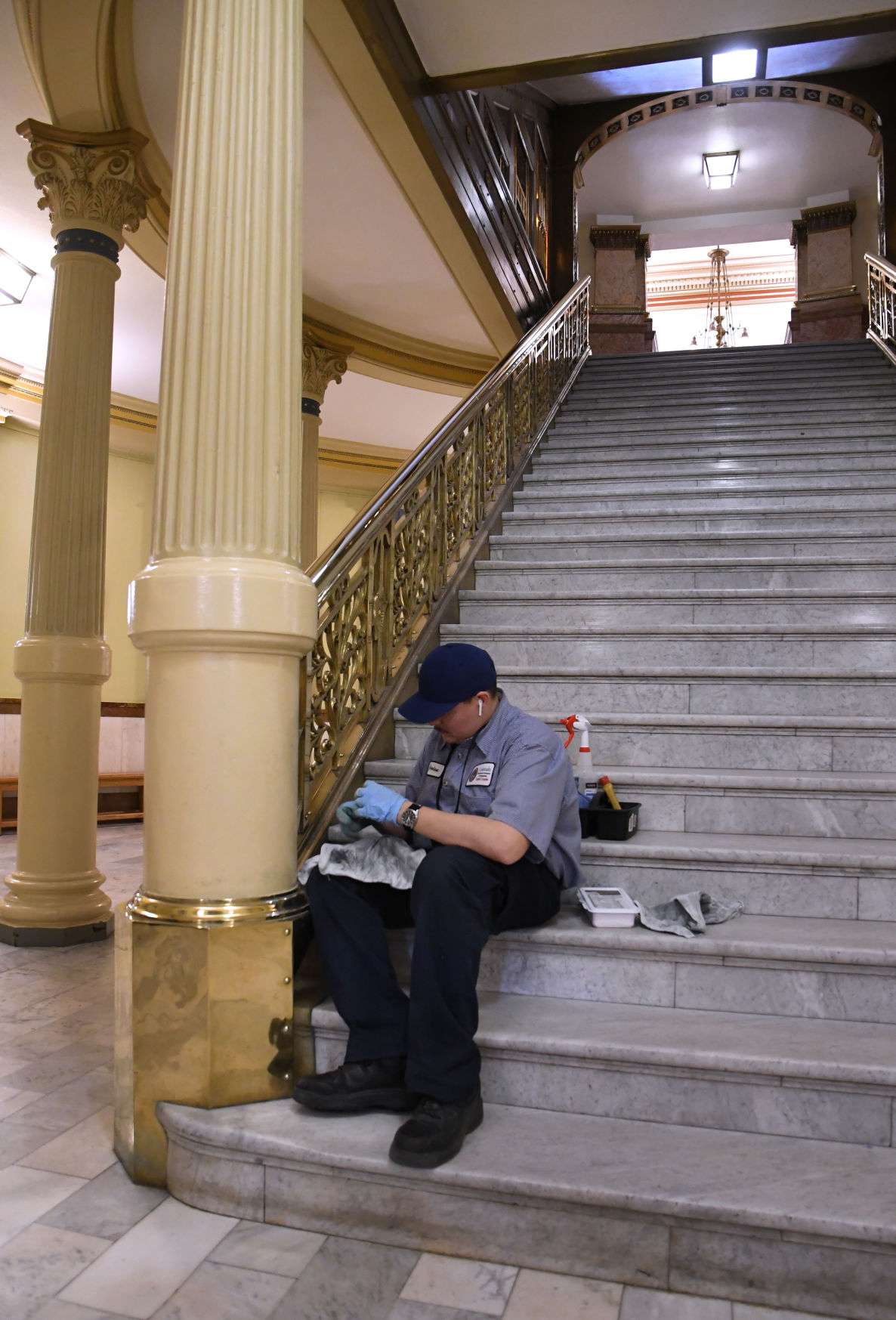
The two-month-long timeout for the Colorado General Assembly is scheduled to come to an end on May 18, leaving as much as 52 days remaining on the 120-day calendar, based on the Colorado Supreme Court’s April 1 ruling.
When lawmakers come back, their top priority is to pass the 2020-21 state budget, the school finance act, “sunset” bills that reauthorize state programs, and what’s known as “orbital bills” that go along with the state budget to help balance the budget.
There could be one other issue lawmakers will address: petition clauses on some of their bills that now may have unintended consequences.
A petition clause allows the public to challenge a law passed by the General Assembly. The clause delays the bill’s effective date for 90 days until citizens have had an opportunity to decide whether to issue that challenge. That’s the process that led to the ballot measure on National Popular Vote, which will be decided by voters this November.
But that 90-day clock doesn’t start until the General Assembly has adjourned for the year. It was supposed to be next Wednesday, May 6. Then the pandemic happened.
A check of the 359 House bills and 204 Senate bills introduced so far in 2020 show that at least 72 have been signed into law that have petition clauses: 22 in the Senate and 50 in the House.
Take, for example, House Bill 1026, which creates the 23rd judicial district for Douglas, Elbert and Lincoln counties. The new judicial district won’t be created until January 2025, but a portion of the bill goes into effect on Sept. 1, 2020. The law also has a petition clause, delaying its effective date until 90 days after the adjournment of the General Assembly.
Should the legislature go beyond June 1 – and that’s highly likely – the bill would have conflicting effective dates.
There’s talk that the General Assembly will meet for two weeks to get the budget done and then come back, perhaps in August. The Supreme Court’s ruling allows the General Assembly the latitude to do another timeout without loss of calendar days. But that would push out the effective dates tied to petition clauses until much later in the year.
One bill affected by that scenario is legislation around Columbus Day, scheduled for Oct. 12, 2020. The General Assembly passed a law substituting Columbus Day for Frances Xavier Cabrini Day, designated as the first Monday in October, which in 2020 is Oct. 5. But HB-1031 also has a petition clause, which delays its effective date to 90 days after the General Assembly adjourns. Should that be past July 5, that change could push the first Cabrini Day into 2021.
Of more concern are bills that may have tie-ins to the current pandemic situation.
Senate Bill 91 increases the pay for the lowest-paid members of the Colorado National Guard, which has been called out to assist with the pandemic. Its effective date – tied to the petition clause – is now on hold until the General Assembly adjourns. Had the bill been written with a safety clause, which allows for immediate enactment, those called out for the pandemic would be eligible for that higher pay. Currently, low-ranking members of the Guard get about $20 per day; the law will eventually bump that up to about $88 per day.
It’s unknown whether any of the Guard members working on the pandemic are among the lowest paid.
State Sen. Jerry Sonnenberg is a Sterling Republican and a co-sponsor of SB-91. He said changing the effective day would be the right thing to do and said he plans to see what can be done to help the National Guard. But he said that the bill as written didn’t carry a cost to the state, and changing the effective date would probably result in a fiscal note, which lawmakers have been warned to avoid at all costs when they return.
The Guard is being paid for their pandemic work by the federal CARES Act, and on Monday, Gov. Jared Polis was asked by Colorado Politics if he had taken any steps to increase the pay of the lowest-paid members of the Guard. He hasn’t, but said he was looking for a way to “reward” those members.


Immigration reporting measure fuels debate over Colorado’s role with ICE
Marissa Ventrelli
marissa.ventrelli@coloradopolitics.com
Updated 10 hours ago
A coalition of advocacy groups and several district attorneys rallied outside the Colorado Capitol on Thursday to oppose a ballot measure that, if approved by voters in November, would require state and local law enforcement to cooperate with federal immigration...

Colorado Politics Calendar Sept. 14-20
Rachael Wright, Special to Colorado Politics
rachael.wright@coloradopolitics.com
Updated 4 days ago
CoPo’s weekly political calendar will help you find political and public-policy events throughout Colorado. It includes candidate and issue campaign events, public policy meetings, court hearings, state and local party conventions, assemblies, debates, rallies, parades, speaking engagements, traveling dignitary appearances,...
The African roots of three Colorado leaders | SONDERMANN
Eric Sondermann
eric-sondermann@coloradopolitics.com
Updated 3 days ago
Colorado’s political transformation is measured in many ways. A once reliably red state (with asterisks) became purple and is now a rather deep blue. For better or worse, probably the latter, power is ever more consolidated along the Front Range...
Federal judge green-lights civil trial against ex-Fort Collins DUI officer
Michael Karlik
michael.karlik@coloradopolitics.com
Updated 1 day ago
A federal judge ruled on Thursday that Fort Collins’ former “DUI officer” will face a civil trial for allegedly investigating a motorist for impaired driving without any reasonable suspicion to do so. In recent years, several people arrested by Officer...

Denver police reopen 13 sex assault cases after retesting Missy Woods’ CBI work
Jenny Deam
jenny.deam@gazette.com
Updated 1 day ago
Thirteen previously closed Denver sexual assault cases have been reopened after the city’s crime lab retested DNA evidence once analyzed by former Colorado Bureau of Investigation forensic analyst Yvonne Woods. A police spokesperson told The Denver Gazette the once-closed cases...

Ballot measure aims to shift Colorado sporting goods tax revenue to land, water and wildfire projects
Marissa Ventrelli
marissa.ventrelli@coloradopolitics.com
Updated 10 hours ago
Colorado voters this November will decide whether to direct a share of sales tax revenue from sporting goods — including bicycles and skiing equipment — toward land and water conservation, wildfire prevention and expanding outdoor recreation. Supporters say the measure...

Colorado Supreme Court suspends Mesa County judge pending misconduct investigation
Michael Karlik
michael.karlik@coloradopolitics.com
Updated 12 hours ago
The Colorado Supreme Court suspended Mesa County Court Judge Michael J. Grattan on Thursday amid a misconduct investigation. The court’s Sept. 10 order gave Grattan 21 days to explain why his paid suspension should not continue through the end of...

Trump honors the fallen of the 9/11 terrorist attacks during Pentagon speech
Mabinty Quarshie
mabinty-quarshie@coloradopolitics.com
Updated 2 days ago
President Donald Trump and first lady Melania Trump honored the roughly 3,000 Americans killed during the Sept. 11, 2001, terrorist attacks during a ceremony at the Pentagon. The event marking the 25th anniversary of the deadliest attack on American soil...
Colorado Supreme Court changes course, dismisses case about special district bonds
Michael Karlik
michael.karlik@coloradopolitics.com
Updated 12 hours ago
The Colorado Supreme Court declined on Friday to decide a dispute between a large-scale Commerce City development and the various districts financing it, after initially showing interest in the ongoing case. Colorado has roughly 2,800 special districts, which are local...

Colorado leaders express outrage and pain following 9/11 attacks | A LOOK BACK
Rachael Wright, Special to Colorado Politics
rachael.wright@coloradopolitics.com
Updated 2 days ago
Twenty-Five Years Ago This Week: “Responding to the 9/11 terrorist attacks, Colorado Gov. Bill Owens told reporters in a statement, “I join all Coloradans in expressing outrage and horror at the senseless terrorist bombings in New York and Washington D.C....
PREV
PREVIOUS

State Supreme Court to decide on limits of Miranda protections
If a person in police custody lies during an interrogation, can they be charged with a new crime, regardless of their Miranda protections against self-incrimination? That is the question the Colorado Supreme Court will decide after it announced on Monday that it will consider whether the Colorado Court of Appeals correctly created an exception to […]
DeGette unveils roadmap for updated 'Cures' act
U.S. Rep. Diana DeGette released her blueprint for a “Cures 2.0” bill, an update to the 21st Century Cures Act of 2016 that would address clinical trials, modernization of the U.S. Food & Drug Administration, and pandemic preparedness in the future. “We’ve seen a record number of new drugs approved, including new generics, which have […]