

INSIGHTS | Stick a fork in this legislative session
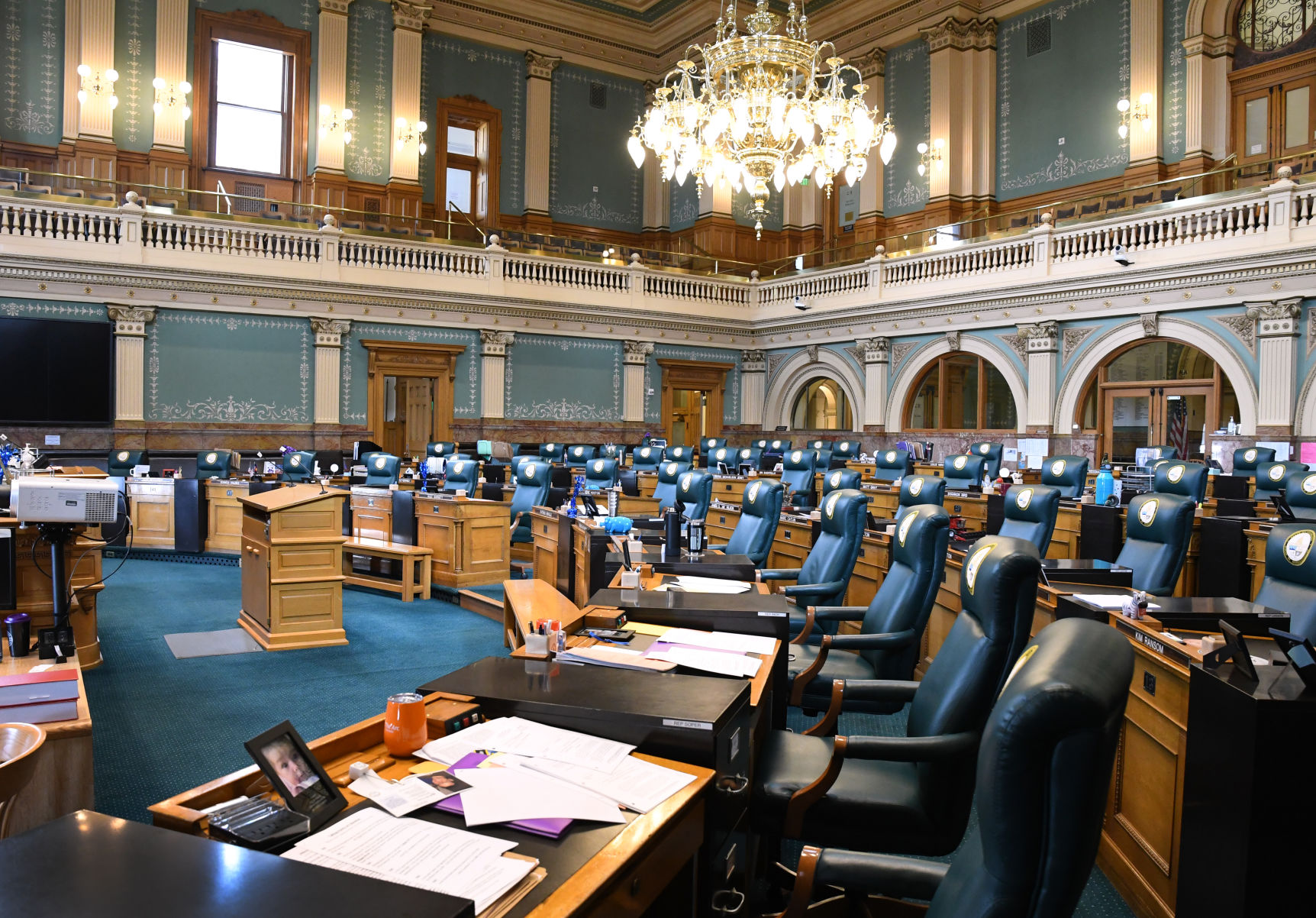
Colorado lawmakers – the Democrats, anyway – had so much they wanted to do this year. Voters in November awaited a statement. Cutting into health care costs, some form of paid family leave and bringing your dog to restaurant patios – they were all on the wish list.
Only the dogs made it across the finish line. The House majority and minority leaders (Alec Garnett and Patrick Neville) are a bill’s best friend.
A joint leadership committee said Wednesday they wouldn’t come back until May 18, very tentatively, to pass the state budget and the School Finance Act.
The question is still out on whether any new bills will be introduced or old ones considered, but legislative leaders as of now are invoking a rule that makes education and state government budgets the priorities, but otherwise they will “only address mission-critical responsibilities.”
“We’ll certainly be doing a budget, and the sunset bills, and there are going to be a whole bunch of bills that accompany the budget that are going to need statutory fixes,” House Speaker KC Becker, a Democrat from Boulder, said Wednesday afternoon.
On April 1 the Colorado Supreme Court ruled that the 120 legislative days allocated for the session do not have to be counted consecutively since lawmakers called it quits on March 14. That means there’s some change left, maybe 51, maybe 52 or maybe 44, depending on when different lawmakers contend the count officially stopped. That’s in question, too, because lawmakers have never done this before, but they’re nearly always quarrelsome.
Becker said just because they have that much time doesn’t mean they’ll spend it. The legislators might have to tweak some laws to adjust timelines and reauthorize a few noncontroversial programs.
No one is saying what the world needs right now is more government as usual. They’re saying we need more ventilators, more masks, more optimism and more toilet paper.
The 2020 General Assembly is effectively done. No more all-night hearings for dead-on-arrival bills, no glad-handing with lobbyists and we’re hopefully done with floor speeches full of sound and fury.
The school year will finish online. Legislators are exploring ways to do their work virtually, as well, though IT and legal experts said Wednesday it would be complicated and constitutionally unwieldy. In other words, doctors will figure out a vaccine before some of the lawmakers figure out the technology.
Until the co-equal branch of government can reconvene, the governor is driving the bus, Becker told her constituents in a telephone town hall meeting Monday.
“During this time the governor has broad statutory authority in existing law to do whatever is necessary to preserve the health and well-being of the state of Colorado,” she said.
Republicans don’t like the way Gov. Jared Polis is wielding his authority, however, raising a minority ruckus about whether they’re being adequately informed. If the GOP starts winning statewide elections again, then they’ll have the platform to decide what’s vague and misleading.
The budget and School Finance Act are have-to agenda items every year. The rest, you could argue, is mission creep, albeit well-intentioned from a partisan perspective.
This year there’s one more piece of legislation they’re talking about now: suspending interim committees. Interim committees meet year-round and hold hearings on potential legislation. The reason? To save money as the legislature joins every other part of state government slashing their respective budgets.
For some, it’s a moment interrupted. Rep. Dylan Roberts, a Democrat from Avon, is a legislative star in its zenith, for example.

Roberts is one of the chief architects of one of the most important bills before the session this year, the public option health insurance plan. The bill would have created a public-private partnership to provide below-market insurance rates in the individual market. While only a few people might buy it, the fact it’s there creates competitive pressure for other insurers to compete.
The way premiums get cheaper, however, is by the government holding down costs on hospitals.
That’s probably not a fight Polis is eager to have right now, when he’s doing everything he can to help hospitals where doctors and nurses are bonafide heroes.
Roberts’ first virtual town hall on March 25 was on health care. He has one scheduled today at 11:30 a.m. to talk to local chamber officials about the economic impact, as well.
“It’s our mountain communities in Colorado that are getting hit the hardest with this right now,” he said on recent call, asking for ideas to respond to the pandemic that he could take back to Denver when the legislature reconvenes.
None of this is to say lawmakers are doing nothing, when they can’t govern or politick.
On Monday Becker appointed four members – Roberts and Reps. Shannon Bird, James Coleman and Dominique Jackson – to the Governor’s Council on Economic Stabilization and Growth.
“House Democrats are working around the clock to help constituents during this public health crisis,” she said in a statement that accompanied the appointments. “We’re organizing PPE drives, connecting constituents with critical state and federal resources and hosting virtual town halls with public officials. Helping our state right now is a team effort, and I know our members will bring valuable experiences and resources to the governor’s council.”


Colorado justices confirm lawyers may ‘borrow’ allegations from elsewhere
Michael Karlik
michael.karlik@coloradopolitics.com
Updated 5 hours ago
The Colorado Supreme Court ruled on Monday that plaintiffs’ lawyers can use allegations made elsewhere to bolster their own clients’ claims, so long as the attorney first performs some degree of investigation into the “borrowed” assertions. Under Colorado’s rules for...

Colorado legislators propose $46.8 billion budget, driven by Medicaid costs
Marianne Goodland
marianne.goodland@coloradopolitics.com
Updated 8 hours ago
The six-member panel of legislators in charge of crafting the state budget has now turned over its plan to the Colorado legislature, proposing to spend $1.5 billion more for the Medicaid program. The increase is driven by Medicaid costs, which...

Governor signs bill expanding who can petition for weapons restrictions
Marissa Ventrelli
marissa.ventrelli@coloradopolitics.com
Updated 9 hours ago
Gov. Jared Polis on Monday signed a bill into law expanding who can ask a judge to temporarily restrict a person’s access to firearms. Established in 2019, 0Colorado’s extreme risk protection law (ERPO) initially allowed a family member or law...

Colorado justices restore RTD subcontractor’s award, reject ‘drastic’ view of public works law
Michael Karlik
michael.karlik@coloradopolitics.com
Updated 10 hours ago
The Colorado Supreme Court on Monday restored a $5.7 million award to a company that helped build a commuter rail line and, in doing so, rejected a view of state law that would nullify a subcontractor’s entitlement to any compensation...
As Colorado passes 6 million residents, housing initiatives take center stage
Marianne Goodland
marianne.goodland@coloradopolitics.com
Updated 9 hours ago
New Census data confirming Colorado’s population has topped six million is fueling renewed debate over Gov. Jared Polis’ housing agenda, as he tied the population increases to home construction. The governor said the counties experiencing the largest increases in new...

Congress urged to open antitrust investigation into Apple and OpenAI over ‘left-leaning bias’
Kaelan Deese, Washington Examiner
kaelan.deese.washington.examiner@gazetteedit.wpenginepowered.com
Updated 11 hours ago
A conservative legal group founded by senior White House adviser Stephen Miller is urging Congress to investigate a partnership between Apple and OpenAI, arguing the companies have effectively locked millions of people into a single, politically biased artificial intelligence system....

Trump threatens jail time over downed US fighter jet ‘leak’
Christian Datoc and Mabinty Quarshie, Washington Examiner
christian.datoc.and.mabinty.quarshie.washington.examiner@gazetteedit.wpenginepowered.com
Updated 11 hours ago
President Donald Trump threatened jail time Monday for the journalist who first reported that an airman was still missing after a fighter jet went down in Iran last week. The high-risk and eventually successful attempt to rescue the weapons officer...

Bill to accelerate police access to online data clears Colorado committee
Marissa Ventrelli
marissa.ventrelli@coloradopolitics.com
Updated 8 hours ago
A proposal to speed up law enforcement’s access to social media data is advancing in the Colorado Legislature, drawing testimony from the residents of Evergreen, where a school shooting took place, and questions from opponents worried about privacy and constitutional...
El Paso County defendant’s speedy trial rights violated, Colorado justices find in overturning convictions
Michael Karlik
michael.karlik@coloradopolitics.com
Updated 5 hours ago
The Colorado Supreme Court concluded on Monday that an El Paso County prosecutor made an unjustified decision to file a mid-case appeal, pushing the trial beyond the legal deadline and requiring that the defendant’s convictions be overturned. In Colorado, the...

SCOTUS decides Colorado case, state’s newest justice authors first opinion | COURT CRAWL
Michael Karlik
michael.karlik@coloradopolitics.com
Updated 15 hours ago
Welcome to Court Crawl, Colorado Politics’ roundup of news from the third branch of government. The nation’s highest court decided a First Amendment case out of Colorado, plus the state’s newest justice issued her first opinion since joining the Colorado...
PREV
PREVIOUS

Former GOP state treasurer nominee Brian Watson targeted in FBI investigation
The FBI confiscated laptop computers and a cell phone from real estate executive and former Republican Colorado state treasurer nominee Brian Watson last week as part of a grand jury investigation. Watson, the founder and CEO of Denver-based commercial real estate firm Northstar Commercial Partners, said in an email to business associates and family members […]

Municipal election results roll in, 3 new municipalities pass broadband service
Results from Tuesday’s spring municipal elections covered a range of issues, from broadband service to cannabis dispensaries to sales taxes. Frederick, Johnstown and Monument each received approval “to provide broadband service or partner with the private sector to provide that service,” according to the Colorado Municipal League. Those votes bring the number of municipalities opting […]