

We can enhance our social connections even amid social distancing
During our pandemic crisis, the concept of social distancing has come forward as an important strategy to slow the rate of increase and protect those who have not contracted the disease. We are told to stay at home, thereby reducing our person-to-person contact with anyone except our immediate family. When we must venture forth for groceries or medical treatment or even for walks along trails and in the park by ourselves or with our companion animals, we are told to social-distance ourselves from everyone by creating at least a six-foot separation.
So, what do we mean by social distancing? Clearly, the admonishment is to keep our physical distance away from anyone who might possibly be a carrier of the disease. Although none of us has any idea whether a stranger in a store or on a path is a carrier, we are being told to assume they are and avoid all of them at all cost.
Notice I said physical distance; I did not say intellectual, psychological, or emotional distance. In fact, in light of the explosion in emails, virtual meetings of all sorts, efforts to reach out and connect with friends and colleagues, it is clear that in every respect other than physical distancing, we are all trying to reduce our social distance.
This reduction in social distancing or what may be called social connecting is very consistent with the central message in our recent book, “Journeys Out of Homelessness: The Voices of Lived Experience,” that I co-authored with my colleague, Jamie Rife. In Journeys, based on the accounts of nine individuals who had experienced homelessness and had managed to get through it, we argue about the importance of social capital – people who care, networks of support, and community – in the lives of those without homes. As we suggest, most of us have networks of support that we can rely on in times of crisis, such as the emergence of COVID-19, but those without homes are often socially isolated, socially distanced. What’s crucial for them, and of course for the rest of us, is having networks of support, people who care, and a sense of community. We all need people we can count on at 2 a.m. when we face a crisis.
Therefore, as we think about how to respond to the current epidemic, let’s remember: Of course, continue to socially distance yourself physically from others; that is one of the best ways to reduce the risk of the disease spreading exponentially. However, during these extraordinary times, let’s remember to increasingly connect ourselves socially with our friends, neighbors, our community in any number of virtual ways or through volunteering. Social capital is essential for all of us; we are social animals, after all.
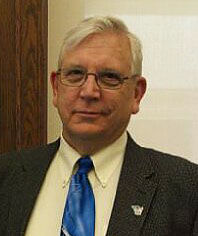
Don Burnes, Ph.D., is founder and senior adviser of the Burnes Institute of Poverty Research and is affiliated with the Colorado Center on Law and Policy. Contact him at donwburnes@gmail.com


Weiser’s leadership crucial for rural win-win | Rachel Gabel
Rachel Gabel
rachel-gabel@coloradopolitics.com
Updated 3 days ago
Attorney General Phil Weiser is going to win the gubernatorial election. That said, Colorado agriculture and rural communities have a 30-year track record of finding the win-win be it for species or industries or habitat. Former Governor Roy Romer possessed...
A Colorado history lesson for Victor Marx | Dick Wadhams
Dick Wadhams
dick-wadhams@coloradopolitics.com
Updated 2 days ago
Victor Marx, who narrowly won the Republican nomination for governor by one half 1% after boasting of a massive 44-point lead, is just as misguided on Colorado political history. During the primary, Marx made a clumsy attempt to denigrate his...
‘Be prepared to march in the streets’ | Miller Hudson
Miller Hudson
miller-hudson@coloradopolitics.com
Updated 2 days ago
It was early in 1974 when I first met Tim Wirth as he announced his candidacy for Congress, challenging Republican incumbent Don Brotzman. Although I had only resided in Colorado two years, I was drafted to serve as a Democratic...

‘CoCo’ would take taxpayers for a ride | John Caldara
Jon Caldara
jon-caldara@coloradopolitics.com
Updated 3 days ago
Colorado wants taxpayers to spend another $4.73 billion on passenger rail. Don’t worry. They have a plan. Which is a little like your brother-in-law announcing he’s launching another exciting restaurant venture after his last three restaurants ended in bankruptcy. Please....
The through line from Donald Trump to Victor Marx | SONDERMANN
By Eric Sondermann
by-eric-sondermann@coloradopolitics.com
Updated 5 days ago
Over 10 years ago, before Donald Trump could ever defeat Hillary Rodham Clinton, he had to first engineer a hostile takeover of the Republican Party. Prior to his descent of that golden escalator, the previous seven Republican presidential nominees had...
Primary voters rejected big money in politics | Paula Noonan
Paula Noonan
paula-noonan@coloradopolitics.com
Updated 2 days ago
While we’re in an election campaign lull between now and Labor Day, we have time to consider the impact of $102 million in campaign contributions in the primary. In the general election, more money will fill candidate campaign coffers, and...
Colorado’s primary proved in this political climate money doesn’t buy electoral happiness | Paula Noonan
Paula Noonan
paula-noonan@coloradopolitics.com
Updated 4 days ago
To catch you up, campaign committees from this 2026 election cycle already collected and shoveled out a lot of cash: $102.64 million. That’s contributions in all forms — dollars, in kind, loans, etc. — from December 2024 to now. Total...
Protecting Colorado from wildfire starts before fire arrives | PODIUM
Colorado Politics
colorado-politics@coloradopolitics.com
Updated 5 days ago
By Rick Cables Colorado is once again being reminded of how significantly wildfires can affect the people and places we love. In southern Colorado, the Aspen Acres fire has burned through the Wet Mountains near Beulah and Rye, quickly becoming...
Stop making business the health care scapegoat | GUEST COLUMN
Colorado Politics
colorado-politics@coloradopolitics.com
Updated 1 week ago
By John Carson It is perhaps a sad commentary in the wake of our nation’s 250th birthday to note even in this hyper-polarized age, one thing nearly every American can agree on is American health care is a mess. But...
Could an independent win CD-1?
Greg Fulton
greg-fulton@coloradopolitics.com
Updated 5 days ago
Turnout in Colorado’s 2026 primary election should concern many citizens. Only 36% of active registered voters participated, meaning a relatively small share of the electorate effectively determined the choices voters will see on the November ballot. Low participation has allowed...
PREV
PREVIOUS

FEEDBACK | We get the government we deserve
(Re: “Voters get it more often than we think,” March 9.) How can Miller Hudson claim that Democrats, rather than Republicans, are far less inclined to sweep political appointees from office after a victory, when President Obama did so en mass on his first day in office? How much faster can you get than that? […]
HUDSON | Is the state's shutdown really too high a price — for saving lives?
Miller Hudson The claim that a “…cure should never be worse than the problem” resonates with common sense. Upon inspection, however, the fallacy lurking within this argument is that no cure exists for COVID-19. That’s the real problem. We are months, perhaps more than a year, removed from a vaccination or drug regimen that will […]