

10th Circuit upholds Colorado court’s handling of self-representation case

The U.S. Court of Appeals for the 10th Circuit on Wednesday could not conclude that a Colorado court had mishandled a criminal defendant’s self-representation case in violation of established rules.
Jimmie Wellmon assaulted a woman in a Denver hotel room, and a jury convicted him of attempted first-degree murder and menacing, among other charges. He received 70 years of prison time. Wellmon exhausted his appeals, but then filed a federal claim that asserted the state court acted unreasonably in handling Wellmon’s self-representation at trial.
Before trial, Wellmon moved to dismiss his public defender, saying he had “nothing but confrontations” with the attorney. The court granted the request and Wellmon represented himself. Although he had an advisory counsel to assist but not actively participate in his case, that lawyer asked the court to remove her because Wellmon’s behavior – including witness tampering – made her uneasy. Subsequently, Wellmon asked for a new public defender and received one.
Prior to the trial, the public defender realized a conflict of interest, namely that he also represented one of the witnesses in Wellmon’s witness tampering charge. Prosecutors agreed to avoid calling that witness and the judge said that Wellmon’s witness tampering could be tried separately if needed. Nevertheless, Wellmon moved to dismiss his lawyer again. The desire was mutual for the lawyer, who told the judge “there just seems to be a concerted effort to abuse counsel.”
Although the defender ended up staying with Wellmon, the plaintiff suddenly expressed a desire to call the witness who presented the conflict of interest with his lawyer. The judge lectured Wellmon on how he purposefully created problems for his case.
If the court continuously allowed Wellmon new representation, “any defendant at any time could create these conflicts simply by similar type of behavior,” said the judge. “Anytime you don’t like your public defender, you can directly or indirectly do all sorts of things and, boom, you have manipulated the system.”
After deeming it clear that Wellmon had waived his right to counsel and represent himself, the judge dismissed the public defender. Wellmon then asked for yet another public defender. The judge, advising Wellmon to “just make the best of it,” told him that he had created an impossible working relationship for any lawyer. Consequently, Wellmon did not put up a defense at trial.
Writing for the three-judge federal circuit panel, Judge Joel M. Carson III explained that federal courts can review state courts’ handling of cases if their conduct was so unreasonable that it ran contrary to clear U.S. Supreme Court direction. Carson sided with the Colorado Court of Appeals that there was no conflict of interest at trial owing to the agreement with prosecutors, and that Wellmon clearly waived his right to counsel.
As to the question of whether Wellmon should have been given a new public defender after he changed his mind on self-representation, the circuit judges acknowledged that the Supreme Court never explicitly ruled on this situation.
Carson noted that there is a “tension between the Sixth Amendment’s guarantee of the right to counsel at all critical stages of the criminal process and its concurrent promise of a constitutional right to proceed without counsel when [a criminal defendant] voluntarily and intelligently elects to do so”.
In the absence of clear guidance, the circuit court could not conclude that the Colorado judge performed an “unreasonable application of the general standards established by the Court’s assistance-of-counsel cases.”
The case is Jimmie Wellmon v. Colorado Department of Corrections, et al.


Colorado justices confirm lawyers may ‘borrow’ allegations from elsewhere
Michael Karlik
michael.karlik@coloradopolitics.com
Updated 3 hours ago
The Colorado Supreme Court ruled on Monday that plaintiffs’ lawyers can use allegations made elsewhere to bolster their own clients’ claims, so long as the attorney first performs some degree of investigation into the “borrowed” assertions. Under Colorado’s rules for...
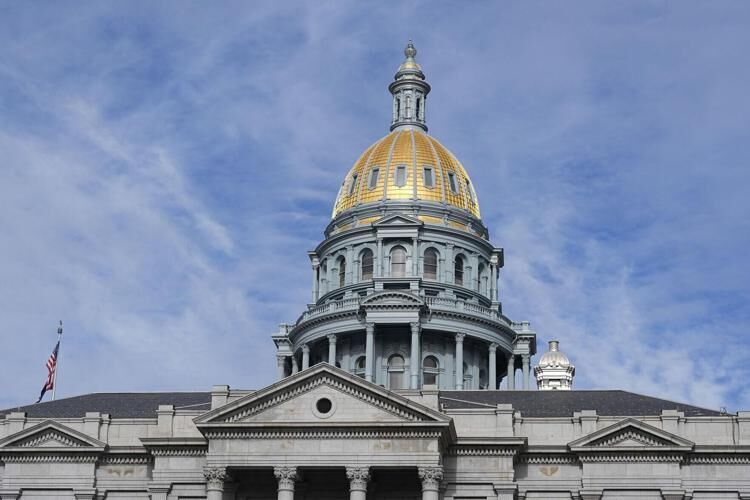
Colorado legislators propose $46.8 billion budget, driven by Medicaid costs
Marianne Goodland
marianne.goodland@coloradopolitics.com
Updated 5 hours ago
The six-member panel of legislators in charge of crafting the state budget has now turned over its plan to the Colorado legislature, proposing to spend $1.5 billion more for the Medicaid program. The increase is driven by Medicaid costs, which...

Governor signs bill expanding who can petition for weapons restrictions
Marissa Ventrelli
marissa.ventrelli@coloradopolitics.com
Updated 6 hours ago
Gov. Jared Polis on Monday signed a bill into law expanding who can ask a judge to temporarily restrict a person’s access to firearms. Established in 2019, 0Colorado’s extreme risk protection law (ERPO) initially allowed a family member or law...

Colorado justices restore RTD subcontractor’s award, reject ‘drastic’ view of public works law
Michael Karlik
michael.karlik@coloradopolitics.com
Updated 8 hours ago
The Colorado Supreme Court on Monday restored a $5.7 million award to a company that helped build a commuter rail line and, in doing so, rejected a view of state law that would nullify a subcontractor’s entitlement to any compensation...
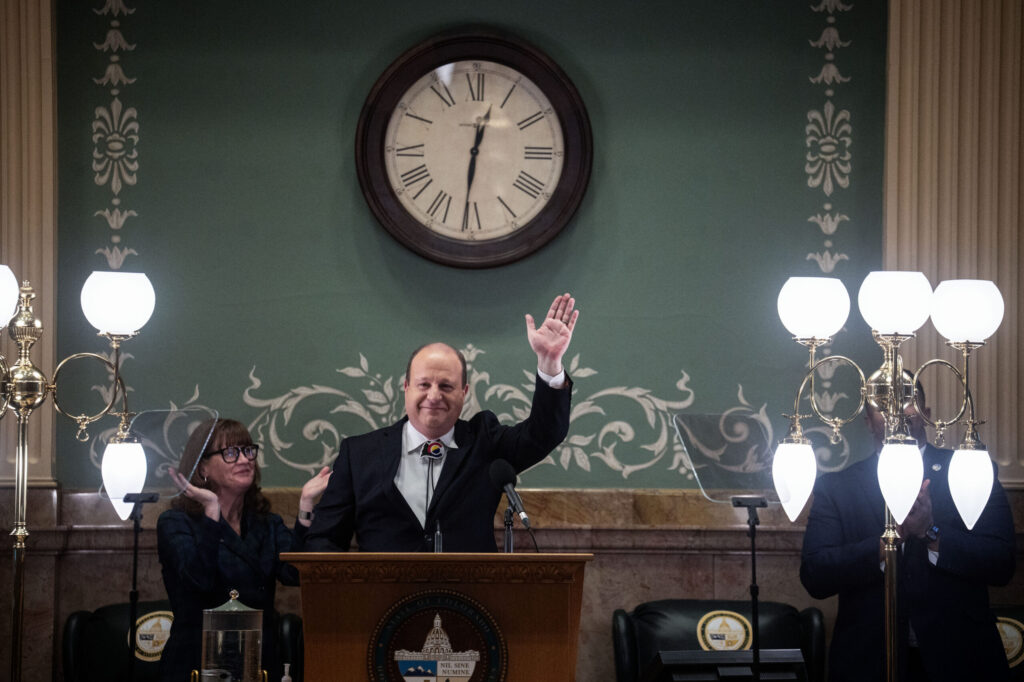
As Colorado passes 6 million residents, housing initiatives take center stage
Marianne Goodland
marianne.goodland@coloradopolitics.com
Updated 7 hours ago
New Census data confirming Colorado’s population has topped six million is fueling renewed debate over Gov. Jared Polis’ housing agenda, as he tied the population increases to home construction. The governor said the counties experiencing the largest increases in new...

Congress urged to open antitrust investigation into Apple and OpenAI over ‘left-leaning bias’
Kaelan Deese, Washington Examiner
kaelan.deese.washington.examiner@gazetteedit.wpenginepowered.com
Updated 9 hours ago
A conservative legal group founded by senior White House adviser Stephen Miller is urging Congress to investigate a partnership between Apple and OpenAI, arguing the companies have effectively locked millions of people into a single, politically biased artificial intelligence system....

Trump threatens jail time over downed US fighter jet ‘leak’
Christian Datoc and Mabinty Quarshie, Washington Examiner
christian.datoc.and.mabinty.quarshie.washington.examiner@gazetteedit.wpenginepowered.com
Updated 9 hours ago
President Donald Trump threatened jail time Monday for the journalist who first reported that an airman was still missing after a fighter jet went down in Iran last week. The high-risk and eventually successful attempt to rescue the weapons officer...

Bill to accelerate police access to online data clears Colorado committee
Marissa Ventrelli
marissa.ventrelli@coloradopolitics.com
Updated 5 hours ago
A proposal to speed up law enforcement’s access to social media data is advancing in the Colorado Legislature, drawing testimony from the residents of Evergreen, where a school shooting took place, and questions from opponents worried about privacy and constitutional...
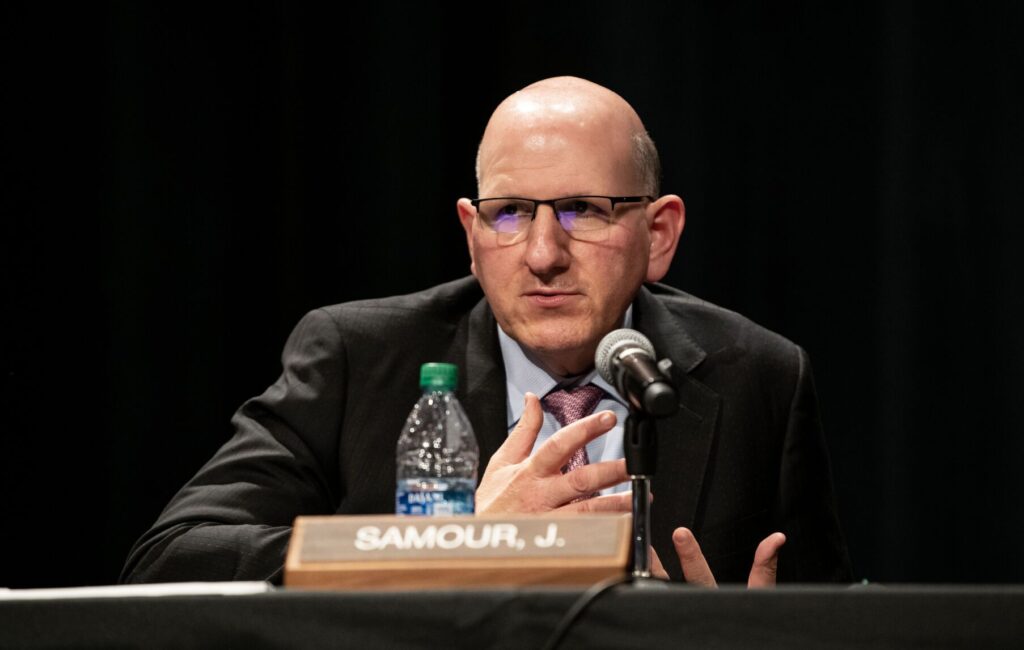
El Paso County defendant’s speedy trial rights violated, Colorado justices find in overturning convictions
Michael Karlik
michael.karlik@coloradopolitics.com
Updated 3 hours ago
The Colorado Supreme Court concluded on Monday that an El Paso County prosecutor made an unjustified decision to file a mid-case appeal, pushing the trial beyond the legal deadline and requiring that the defendant’s convictions be overturned. In Colorado, the...

SCOTUS decides Colorado case, state’s newest justice authors first opinion | COURT CRAWL
Michael Karlik
michael.karlik@coloradopolitics.com
Updated 13 hours ago
Welcome to Court Crawl, Colorado Politics’ roundup of news from the third branch of government. The nation’s highest court decided a First Amendment case out of Colorado, plus the state’s newest justice issued her first opinion since joining the Colorado...
PREV
PREVIOUS

10th Circuit rejects challenge to federal mineral rights settlement
The U.S. Court of Appeals for the 10th Circuit on Wednesday rejected an attempt to nullify a mineral rights settlement after intervening parties claimed that the oil and gas dispute could only be heard in state court. TEP Rocky Mountain LLC operates oil and gas wells in Colorado, all of which have agreements that give […]

Arapahoe County catches coronavirus-related cyberattack
Arapahoe County has caught one attempted cyberattack stemming from the coronavirus pandemic, the county’s information technology director said on Wednesday. “We’ve worked hard to educate employees for one, to be careful and to be vigilant,” said David Bessen, who heads the IT department. “And number two, when they make a mistake – which is human – how […]