

SONDERMANN | Situational ethics takes center stage amid impeachment follies


It might not be new news, but it is news nonetheless that principle is in alarmingly short supply in our national politics and that hypocrisy, often of the shameless variety, is the currency of the realm.
Of course, this is not just some recent development. As long as politicians, in our system and others, have sought to gain, exercise and maintain power, it has been a part of the process. But I am far from alone in sensing that the hypocrisy these days is amped up, more blatant and far more in your face.
There are no innocents here (certainly including myself in my days of direct political engagement) and both parties are grossly culpable – even if that culpability is not evenly distributed at any given moment.
Readers wanting to simply hand out white hats of virtue to one party and black hats of shame to the other would be well advised to seek out other columnists. Or to forget columnists altogether and simply purchase pom-poms in their chosen red or blue hue.
Before we lay waste to the very notion of situational ethics, it’s important to consider its roots. The idea that there are no universal rules or rights and that each case and each issue must be considered in its unique context is represented throughout history and a good deal of theology.
The Ten Commandments clearly instruct, “Thou shalt not kill.” While a few take that to be absolute and controlling regardless of circumstance, most would make an exception if defending their country or if their own life or that of a loved one was under imminent threat. In that case and many others, that moral standard would be situational.
However, there is quite some distance between such questions of big-picture morality and the spectacle that often passes for political debate at the moment.
Indeed, politics is a team sport. Hence, our political parties and partisan system. But that partisanship has grown so exaggerated and so corrosive that wide swaths of the country now substitute such interests for any sense of ethical standards.
How else do you explain those on the right who demonize George Soros’s political money but gladly spend that of Charles Koch? Or those on the left who are so aggrieved over Donald Trump’s notorious womanizing but, at least at the time, willfully looked the other way at Bill Clinton’s?
Or Democrats here in Colorado who lament the influence of big money in politics but were more than happy to lend their vote as Jared Polis purchased the governorship? Or Republicans these days quick to jump on Hunter Biden’s sleazy profiteering while not batting an eye as Trump blatantly uses his office to enrich himself?
And on. And on.
In the hypocrisy hall of shame, there may be a special place for Ken Starr. While the Clinton and Trump impeachments involve different facts and different abuses, it takes a special kind of moral dexterity to argue – with straight face, no less – that the former was an important and necessary procedure while the latter now playing out in front of us is an unworthy abuse of congressional discretion.
In a nation of cynics, perhaps made that way by such brazen pretense, we can be excused for suspecting that Starr’s differentiating standard might have less to do with ethics or legal doctrine than with elemental, raw partisanship.
At the outset of this Senate impeachment trial, all 100 senators swore to render “impartial justice”. No doubt, that is a fallacy in this hyper-partisan age.
As of this writing, attention is focused on the tiny handful of Republican senators who may – may – break ranks and vote to have witnesses. No senators have yet indicated an inclination to vote contrary to their party on the ultimate question of conviction or acquittal.
In the frequent formulation, Republicans are criticized as being hyper-partisan in their unwavering allegiance to the president. But are Democrats any less partisan in their impeachment zeal?
If Cory Gardner is a partisan shill in defending the president at almost all costs (as he may well be), is Michael Bennet any less partisan in his judgment?
In this kabuki dance, it very much takes two to tango.
While we should expect more from our political leaders, it is a mistake to expect too much. As a general rule, regardless of the era, they can be counted on as a sub-species to be opportunistic, to pursue self-advantage and to have a certain moral pliability. There are no virgins among them.
But this isn’t about them as politicians; it is about us as citizens.
There is a fine line between enthusiastic, unwavering team fandom and gang code. Based on my social media, and I’m guessing yours, many are flirting with that line and more than occasionally crossing it. In the cause of partisan zealotry, many have consigned ethics to a distinctly secondary position. If your side does it, it is virtuous at best and defensible at worst. While very similar conduct by the other side is, by definition, contemptible.
What higher order or higher calling countenances such double standards?
Last I looked at those Ten Commandments, there were no asterisks for political affiliation.
To rebuild the practice of one, unitary standard, let me suggest an exercise of substitution. For ardent Democrats, before castigating a Republican for some perceived wrong, substitute one of your own with the same conduct and ask yourself if you’d employ the same words. Committed Republicans should do the converse. Before attacking a Democrat in the harshest terms, answer truthfully whether you’d be equally vehement in your censure of someone from your own political tribe.
If we’re ever to detoxify our politics, a good place to start would be for all of us to have a singular ethical mark for political friend and foe alike. And to give voice to that mark even when politically inconvenient.
Absent that, our politics will only grow more poisonous with situational ethics being the only ethics we know.
Eric Sondermann is a Colorado-based independent political commentator. His column appears every Sunday in ColoradoPolitics. Reach him at EWS@EricSondermann.com; follow him at @EricSondermann

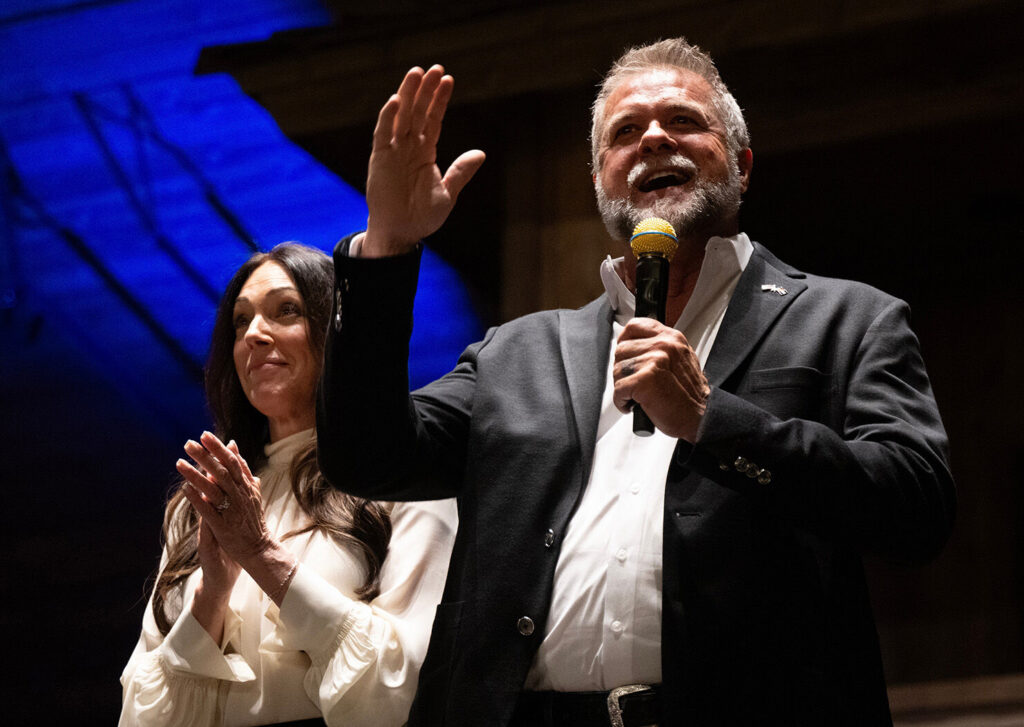
Victor Marx says he’ll only debate Phil Weiser once in Colorado governor’s race — without a moderator
Ernest Luning
ernest.luning@coloradopolitics.com
Updated 15 hours ago
Colorado Republican gubernatorial nominee Victor Marx said on Tuesday that he will participate in only one debate with Attorney General Phil Weiser before the November election — and he challenged the Democratic nominee to hold the event without a moderator....

Denver seeks to move more than $18 million to cover George Floyd protest claims
Deborah Grigsby
deborah.smith@denvergazette.com
Updated 2 minutes ago
City officials want to move millions from Denver’s General Fund contingency account to the City Attorney’s Liability Claims Fund to cover legal settlements and claims stemming from the 2020 George Floyd protests. The hefty shift of cash, proposed in Council...
10th Circuit finds no fair housing violation by Littleton landlord for worker’s alleged rape of tenant
Michael Karlik
michael.karlik@coloradopolitics.com
Updated 17 hours ago
The Denver-based federal appeals court concluded on Monday that Littleton’s housing authority could not be held liable for a maintenance worker’s alleged rape of a tenant, as the worker’s employment did not provide any special access to the victim. A...
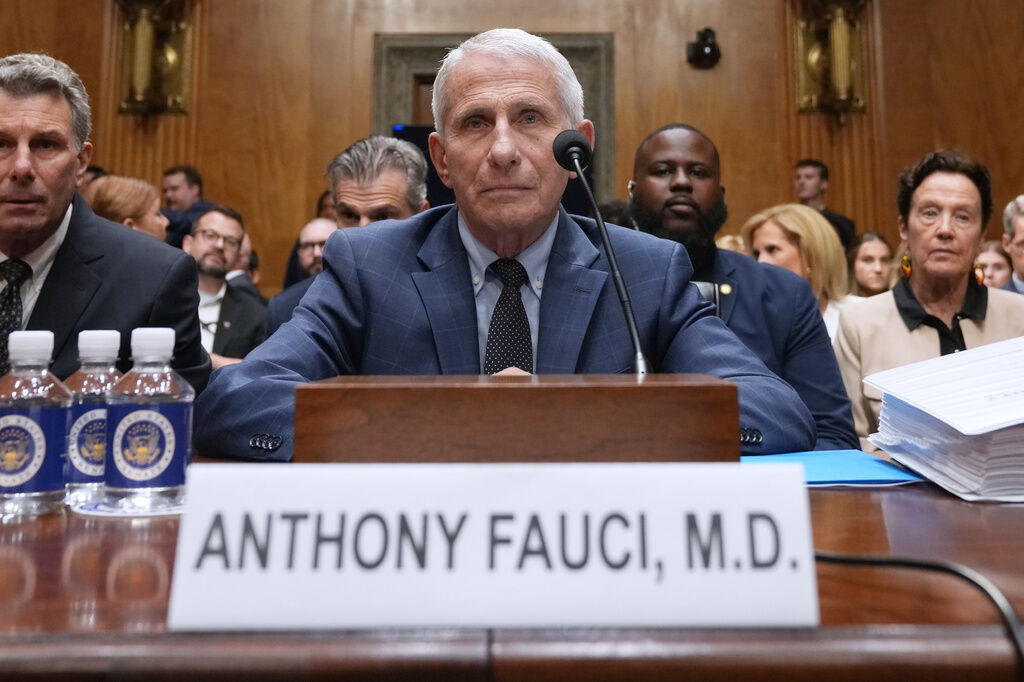
Fauci’s Fifth Amendment answers may test Biden pardon as GOP eyes contempt
Kaelan Deese
kaelan-deese@coloradopolitics.com
Updated 17 hours ago
Dr. Anthony Fauci invoked his Fifth Amendment right against self-incrimination more than 100 times on Wednesday, a move legal experts described as strategically sound despite the politically damaging optics. Sen. Rand Paul (R-KY), chairman of the U.S. Senate Committee on...
Democrats must win 57 out of 77 competitive House seats to take majority: Cook Political Report
Hailey Bullis
hailey-bullis@coloradopolitics.com
Updated 19 hours ago
Democrats’ path to retaking the House in November has significantly slimmed as a result of the mid-decade redistricting war this cycle, a new analysis found. The nonpartisan Cook Political Report found that under the newly drawn maps across 10 states,...

Denver labor acknowledgment proposal faces council committee questions
Deborah Grigsby
deborah.smith@denvergazette.com
Updated 23 hours ago
A proposal to add a labor acknowledgment to Denver City Council proceedings has been delayed by the Finance and Business Committee after members raised questions about its wording, intentions and place in the council’s opening proceedings. The proposal, put forth...
Fauci invokes the Fifth Amendment and declines to testify in GOP-led Senate panel’s COVID-19 hearing
The Associated Press
the-associated-press@coloradopolitics.com
Updated 24 hours ago
WASHINGTON (AP) — Dr. Anthony Fauci on Wednesday invoked the Fifth Amendment and declined to answer questions from senators in a Republican-led committee hearing about his handling of the COVID-19 pandemic. The move injects new drama into the lingering tensions...

Colorado residents rush to buy guns ahead of new restrictions, breaking sales records for several stores
By Debbie Kelley
by-debbie-kelley@coloradopolitics.com
Updated 23 hours ago
Colorado residents are lining up to buy guns ahead of the latest weapons restrictions set to take effect this Saturday. The new law mandates individuals seeking to purchase semiautomatic firearms with detachable magazines to first complete a firearm safety course...

Crime continues to decline in Aurora, police chief says
Kyla Pearce
kyla.pearce@gazette.com
Updated 23 hours ago
Crime in Aurora continued to decline in the first half of 2026, according to Aurora Police Department officials. Crime overall in the city has been on a downward trend since 2024, according to APD. Between Jan. 1 and June 30,...

El Paso County rejects multi-family zoning request near Monument Academy
Savannah Eller
savannah-eller@coloradopolitics.com
Updated 22 hours ago
The El Paso County Board of Commissioners narrowly rejected a developer’s bid to convert land from low- to high-density residential zoning. The request, made by MA Infrastructure, LLC, would have allowed 12 units per acre on half of a 14-acre...
PREV
PREVIOUS

Denver launches gun lock giveaway in response to youth violence
As part of Denver’s plan to help curb youth violence, at least seven locations across the city are giving out free gun locks to keep illegal firearms out of the hands of young people. Mayor Michael Hancock announced the giveaway of 1,200 gun locks during a press conference on Saturday morning at New Hope Baptist […]

OUT WEST ROUNDUP | Utah bans conversion therapy; NM bans guns during red-flag debate
UTAH State bans conversion therapy for LGBTQ children SALT LAKE CITY – The discredited practice of conversion therapy for LGBTQ children is now banned in Utah, making it the 19th state and one of the most conservative to prohibit it. Supporters navigated a winding path to passage and some dissent remains, but barring it in […]