

INSIGHTS | For Colorado, memories of Kobe Bryant have a disparate tone

I’ll be frank with you. I hadn’t thought of Kobe Bryant in a long time. For the longest time I didn’t think much of him at all.
The retired basketball star died Sunday in a helicopter crash in California that killed nine people total, including his 13-year-old daughter, Gianna.
Kobe Bean Bryant died at 41, a year older than I was when his actions in Colorado – criminal or simply crude – forced his way into our state’s reckoning with wealth, power and sexual entitlement.
On June 30, 2003, the Los Angeles Laker was getting treatment on his knee in Eagle County, a ragged landscape accustomed to the continental divide between haves and have-nots.
In the days that followed I combed through his actions like raking leaves on a windy day in November.
Bryant had a sexual encounter with a 19-year-old local girl who was a concierge at The Lodge & Spa at Cordillera between Edwards and Vail. She said it was rape. He told investigators it was a hookup as routine to stars like him as a layup.
Those who idolized Bryant smirked away the accuser as another young girl who hooked up with a celebrity for prestige and turned it into cash.
The case was dropped after she refused to testify, opting for a civil suit that required an apology – one that was ultimately read in court by Bryant’s attorney – and undisclosed terms, which is lawyer-speak for money. Whether he cheated on his wife, Vanessa, and forced himself sexually, to some degree, on a teenage girl was never in question.
The woman in question lived in Eagle. In the days that followed the rape allegation, I lived out of a hotel room by the interstate for The Denver Post. I swapped stories with her former classmates at Eagle Valley High and generally felt terrible about myself, awash in the dregs of teen gossip.
My future editor and close pal Chuck Plunkett and I worked together for the first time on a profile about life in Eagle County in the international spotlight.
“It’s hard to live a normal life in Eagle these days,” we wrote in our Sunday feature that I remember working on in a room that smelled of cigarettes and the dankness of a leaky air conditioner:
Early-morning garage sales, mid-morning trips to the playground with kids, hoops at high noon, hanging out in the Texaco lot in the evening. Those cherished pastimes have been eclipsed.
“It’s pretty much taken over our town,” said Mark Lovell Jr., who was 19 at the time, the same age as the woman at the center of the case. He knew her, he said, but that was about all he would offer.
“Basically,” he said. “I’m just trying to stay out of it.”
I recall how young they seemed, still teenagers. Bryant was 24, a multi-millionaire adored around the globe, with a McDonald’s commercial and a 6-month-old daughter. She was a small-town girl with a part-time job she lost when the world showed up at her doorstep. In any conceivable balance of power, she would be destroyed, I knew from my first day in Eagle. True enough, the era of victim-blaming was born with a tour de force.
I don’t know what happened in that hotel room, and neither do you, so I won’t use her name here, because it doesn’t feel right to hold up a person for attention over something that escalated so fast when she was still a kid – a decade and a half before #MeToo and #TimesUp.
Bryant, in his time, existed on the same astral plane that Donald Trump would describe to Billy Bush before he appeared on the TV show “Access Hollywood” two years later, audio that would lay dormant until the 2016 election.
“And when you’re a star, they let you do it,” Trump said. “You can do anything.”
Trump, like Bryant, went on the greater things.
Even when Bryant played his last game in 2016, the fury wasn’t what it would have been after the allegations against Harvey Weinstein released a pent-up demand for justice.
That wave washed over the Colorado Capitol in 2018, when six lawmakers were called to account. The defiance ousted a Democratic House member, the first expulsion in a century, and saw a failed vote on the removal of a Republican senator, who resigned later that year.
Bryant’s accomplishments leave no doubt about his greatness, in that regard. In 20 seasons, he was an NBA All-Star 18 times. His place in the Hall of Fame is assured.
Los Angeles County Supervisor Mark Ridley-Thomas sent out a statement on the evening after Bryant’s death that made it to my inbox. He called it “devastating news.”
“Kobe wasn’t just collectively our region’s favorite NBA player who won 5 NBA championships for the Los Angeles Lakers,” the supervisor stated. “He was so much more than that. He was a cultural ambassador, an icon even on a team and city known for its icons. He inspired the hearts and minds of millions. His legacy will be remembered not only for his pursuits on the court as one of the best, but off the court as a father, an entrepreneur, and a producer whose will to succeed symbolized the victory of the human spirit.”
By leaving so many questions unanswered about what he did in Colorado, however, Bryant left no doubt that there is much more to be said about money, power, privilege, sex – and the politics of it all.
“First, I want to apologize directly to the young woman involved in this incident,” Bryant’s court-rendered atonement stated. “I want to apologize to her for my behavior that night and for the consequences she has suffered in the past year. Although this year has been incredibly difficult for me personally, I can only imagine the pain she has had to endure.
“I also want to apologize to her parents and family members, and to my family and friends and supporters, and to the citizens of Eagle, Colorado.”
Maybe an apology is the last thing Colorado needs from Kobe Bryant, but as we close the book on this, a fuller picture of who the man was shouldn’t wash completely over the unanswered allegations he left here.



Denver to mull $6.9M East Colfax BRT extension, police union deal
Deborah Grigsby
deborah.smith@denvergazette.com
Updated 21 hours ago
Denver’s councilmembers will consider several items during Monday’s regular meeting, but the most notable is a resolution to overhaul contract review rules, requiring draft agreements to be shared with the Council before being heard at committee meetings. Council Resolution 26-0329...

Colorado justices confirm lawyers may ‘borrow’ allegations from elsewhere
Michael Karlik
michael.karlik@coloradopolitics.com
Updated 10 hours ago
The Colorado Supreme Court ruled on Monday that plaintiffs’ lawyers can use allegations made elsewhere to bolster their own clients’ claims, so long as the attorney first performs some degree of investigation into the “borrowed” assertions. Under Colorado’s rules for...
Colorado legislators propose $46.8 billion budget, driven by Medicaid costs
Marianne Goodland
marianne.goodland@coloradopolitics.com
Updated 12 hours ago
The six-member panel of legislators in charge of crafting the state budget has now turned over its plan to the Colorado legislature, proposing to spend $1.5 billion more for the Medicaid program. The increase is driven by Medicaid costs, which...

Governor signs bill expanding who can petition for weapons restrictions
Marissa Ventrelli
marissa.ventrelli@coloradopolitics.com
Updated 13 hours ago
Gov. Jared Polis on Monday signed a bill into law expanding who can ask a judge to temporarily restrict a person’s access to firearms. Established in 2019, 0Colorado’s extreme risk protection law (ERPO) initially allowed a family member or law...

Colorado justices restore RTD subcontractor’s award, reject ‘drastic’ view of public works law
Michael Karlik
michael.karlik@coloradopolitics.com
Updated 15 hours ago
The Colorado Supreme Court on Monday restored a $5.7 million award to a company that helped build a commuter rail line and, in doing so, rejected a view of state law that would nullify a subcontractor’s entitlement to any compensation...
As Colorado passes 6 million residents, housing initiatives take center stage
Marianne Goodland
marianne.goodland@coloradopolitics.com
Updated 14 hours ago
New Census data confirming Colorado’s population has topped six million is fueling renewed debate over Gov. Jared Polis’ housing agenda, as he tied the population increases to home construction. The governor said the counties experiencing the largest increases in new...

Congress urged to open antitrust investigation into Apple and OpenAI over ‘left-leaning bias’
Kaelan Deese, Washington Examiner
kaelan.deese.washington.examiner@gazetteedit.wpenginepowered.com
Updated 16 hours ago
A conservative legal group founded by senior White House adviser Stephen Miller is urging Congress to investigate a partnership between Apple and OpenAI, arguing the companies have effectively locked millions of people into a single, politically biased artificial intelligence system....

Trump threatens jail time over downed US fighter jet ‘leak’
Christian Datoc and Mabinty Quarshie, Washington Examiner
christian.datoc.and.mabinty.quarshie.washington.examiner@gazetteedit.wpenginepowered.com
Updated 16 hours ago
President Donald Trump threatened jail time Monday for the journalist who first reported that an airman was still missing after a fighter jet went down in Iran last week. The high-risk and eventually successful attempt to rescue the weapons officer...
Bill to accelerate police access to online data clears Colorado committee
Marissa Ventrelli
marissa.ventrelli@coloradopolitics.com
Updated 12 hours ago
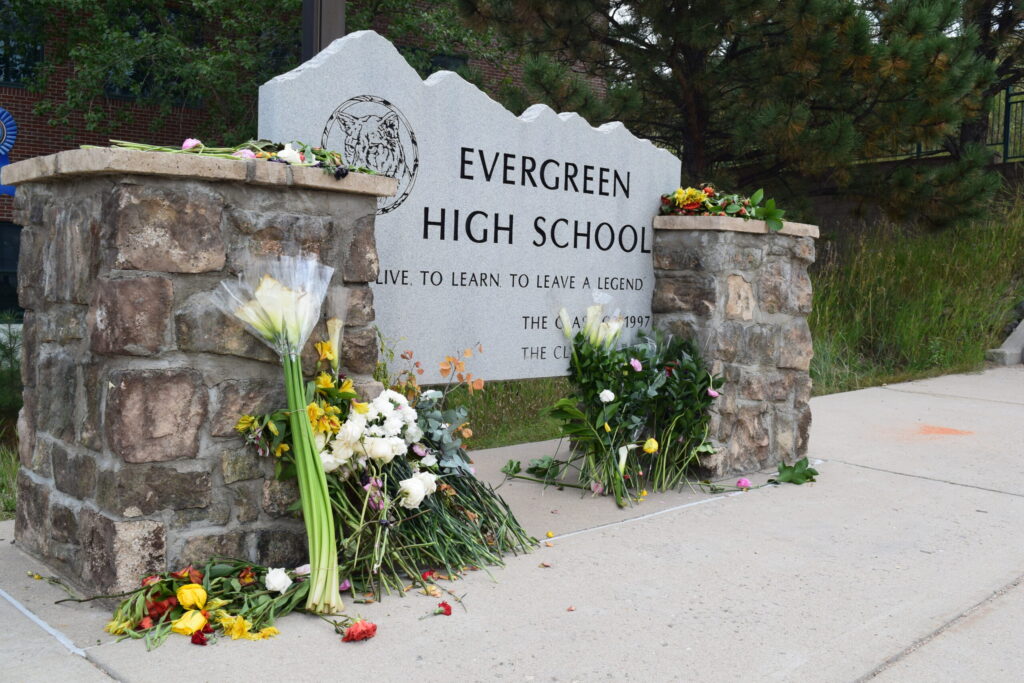
A proposal to speed up law enforcement’s access to social media data is advancing in the Colorado Legislature, drawing testimony from the residents of Evergreen, where a school shooting took place, and questions from opponents worried about privacy and constitutional...
El Paso County defendant’s speedy trial rights violated, Colorado justices find in overturning convictions
Michael Karlik
michael.karlik@coloradopolitics.com
Updated 10 hours ago
The Colorado Supreme Court concluded on Monday that an El Paso County prosecutor made an unjustified decision to file a mid-case appeal, pushing the trial beyond the legal deadline and requiring that the defendant’s convictions be overturned. In Colorado, the...
PREV
PREVIOUS

U.S. Rep. Jason Crow collects Valentines for Vets
U.S. Rep. Jason Crow has a special place in his heart for his brothers in arms, and he’s rounding up Valentines for Vets at his Aurora district office. Crow is an ex-U.S. Army Ranger who served three tours in Iraq and Afghanistan, and he was awarded the Bronze Star for heroic service. Plus, he is […]

THIS WEEK AT THE COLORADO CAPITOL | Jan. 27-31, 2020
Here are legislative committee hearings and other events of note for the week ahead at the Colorado state Capitol. Committee schedules are subject to change. The daily schedule is available on the Legislature’s website. This week, the General Assembly will begin allowing remote testimony for selected bills. Here are the ground rules from the Legislative Council […]