

Title Board prepares to hear 6 ballot proposals
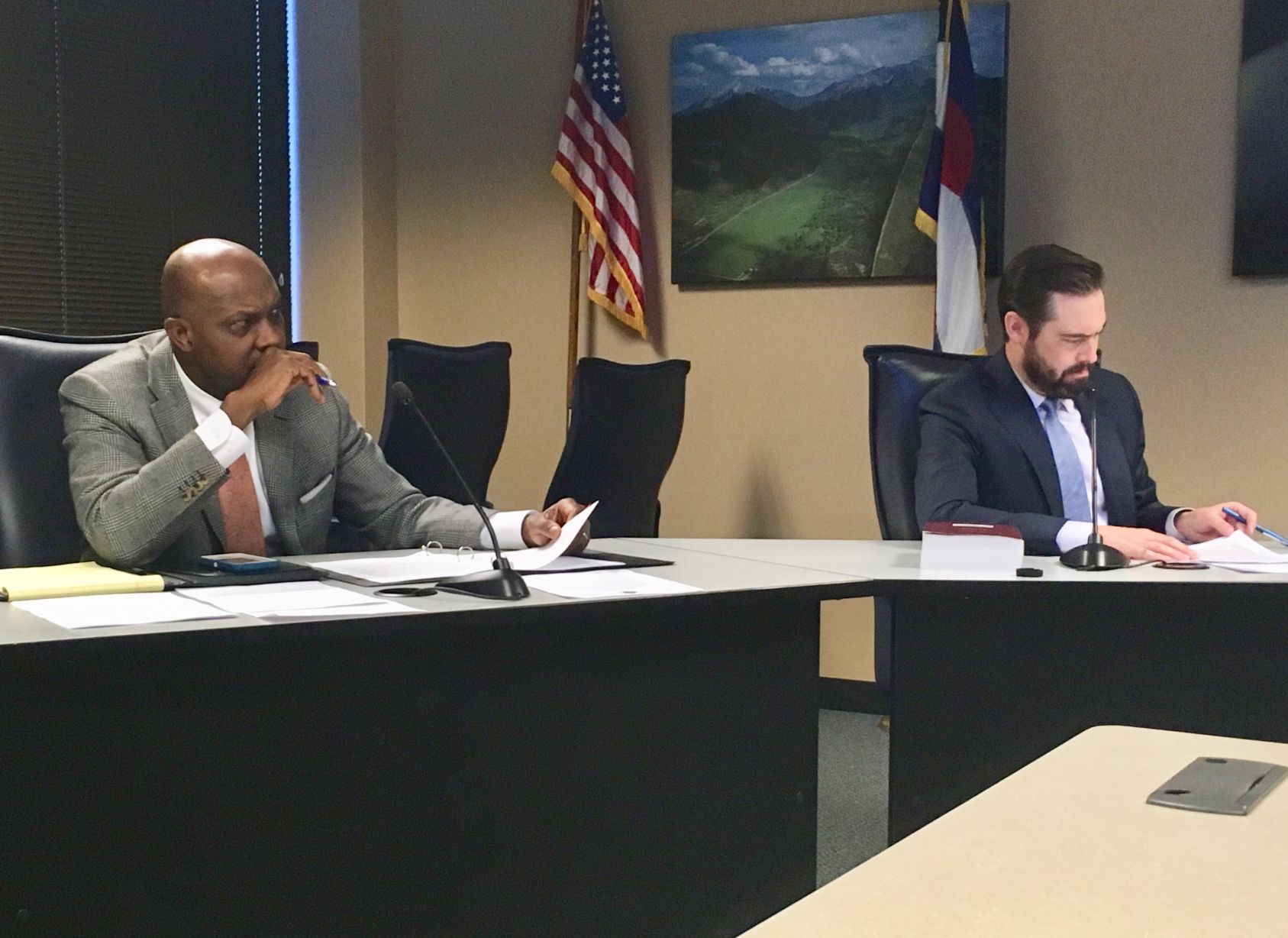
On Thursday, six proposed ballot measures will go before the Initiative Title Setting Review Board to determine whether they will advance one step closer to the 2020 statewide ballot.
The Title Board, in accordance with state law, sets the language that appears before voters as long as the proposal pertains to a single subject.
The measures — encompassing changes to campaign finance, elections and even criminal law — are as follows:
Tax credits for voting (Initiative 83): Beginning on Jan. 1, 2022, Colorado residents who vote in primary and general elections would receive a $40 tax credit for each occasion on which they vote. The measure directs auditors to look at public voting histories to confirm participation. The measure is silent about whether participation in municipal elections, runoffs and special elections would qualify. The designated representatives are Nathan Clay and Mark A. Tejeda. The men, both of Denver, brought forth four of the six measures pending a title.
Approval voting (Initiative 104): Calling itself the “Approval Voting Act,” the draft measure would redesign the election process such that “each elector may select (approve) any number of candidates. The winner is the most-approved candidate.” Ballot design must enable voters to make as many selections as there are listed candidates. In local contests, such as school boards or city councils, where multiple candidates can win multiple seats, the victors will remain those individuals with the greatest number of votes. The proposal would enact the change in 2022. The designated representatives are Clay and Tejeda.
Election Day as a state holiday (Initiative 105): This brief proposition would amend the list of legal holidays in the Colorado Revised Statutes to include “the Tuesday following the first Monday in November of each even year, commonly called Democracy Day.” According to the Employment Law Book, state employees may still be required to work on legal holidays, but must be granted an alternative day off. Private employers are not required to close. The measure would not create a holiday in odd-numbered years or for primary or local general elections that take place outside of November. The designated representatives are Clay and Tejeda.
Vouchers for campaigns (Initiative 106): Known as the “Democracy Voucher Act,” the proposal would create non-transferrable vouchers for registered voters to donate to campaign committees for Colorado political candidates. In odd years, each voter would receive 10 vouchers worth $5 each. In even years, voters would receive 10 vouchers worth $10 each. A person could donate as many of the vouchers to a single candidate as he or she wishes, and the secretary of state would create a procedure for redeeming the vouchers. Donations would be irrevocable. The proposal appears to limit vouchers only to campaigns for the U.S. House of Representatives, U.S. Senate, governor and General Assembly. The designated representatives are Clay and Tejeda.
Petitions (Initiative 127): Previously denied a title on the grounds that it did not pertain to a single subject, the Title Board will grant the initiative’s proponents a rehearing. Known as the “Petition Rights Amendment,” the measure would create a right to ballot initiative at every level of government in the state, assign new jurisdiction to the Colorado Supreme Court, and compress the timeline for challenges to initiatives. The designated representatives are Natalie Menten of Lakewood and Donald L. “Chip” Creager III of Denver.
Expungement of eligible criminal records (Initiative 131): This measure establishes a procedure for expunging criminal records. If a person is arrested and not charged, a district court shall destroy the record of the arrest within 31 days. The same would occur were a trial to result in an acquittal or dismissal. Convictions eligible for expungement would include Class 1 and Class 2 petty offenses, drug petty offenses, misdemeanor traffic offenses, drug misdemeanor and felony offenses, and certain classes of felonies. The measure would establish expungement fees, to be distributed to a variety of programs encompassing first responder safety, life skills and agricultural education, among other causes. The designated representative are Stephen Ball and Paul Ball of Denver.
Colorado Politics Must-Reads:


Public comment period opens as federal review targets Colorado’s wolf reintroduction program
Marianne Goodland
marianne.goodland@coloradopolitics.com
Updated 9 minutes ago
Federal wildlife officials have opened a formal review of Colorado’s wolf reintroduction program, launching a public comment period to assess how the state has handled rising conflicts between wolves and livestock. A notice from the U.S. Fish and Wildlife Service...

Denver to mull $6.9M East Colfax BRT extension, police union deal
Deborah Grigsby
deborah.smith@denvergazette.com
Updated 1 day ago
Denver’s councilmembers will consider several items during Monday’s regular meeting, but the most notable is a resolution to overhaul contract review rules, requiring draft agreements to be shared with the Council before being heard at committee meetings. Council Resolution 26-0329...

Colorado justices confirm lawyers may ‘borrow’ allegations from elsewhere
Michael Karlik
michael.karlik@coloradopolitics.com
Updated 14 hours ago
The Colorado Supreme Court ruled on Monday that plaintiffs’ lawyers can use allegations made elsewhere to bolster their own clients’ claims, so long as the attorney first performs some degree of investigation into the “borrowed” assertions. Under Colorado’s rules for...
Colorado legislators propose $46.8 billion budget, driven by Medicaid costs
Marianne Goodland
marianne.goodland@coloradopolitics.com
Updated 16 hours ago
The six-member panel of legislators in charge of crafting the state budget has now turned over its plan to the Colorado legislature, proposing to spend $1.5 billion more for the Medicaid program. The increase is driven by Medicaid costs, which...

Governor signs bill expanding who can petition for weapons restrictions
Marissa Ventrelli
marissa.ventrelli@coloradopolitics.com
Updated 17 hours ago
Gov. Jared Polis on Monday signed a bill into law expanding who can ask a judge to temporarily restrict a person’s access to firearms. Established in 2019, 0Colorado’s extreme risk protection law (ERPO) initially allowed a family member or law...

Colorado justices restore RTD subcontractor’s award, reject ‘drastic’ view of public works law
Michael Karlik
michael.karlik@coloradopolitics.com
Updated 19 hours ago
The Colorado Supreme Court on Monday restored a $5.7 million award to a company that helped build a commuter rail line and, in doing so, rejected a view of state law that would nullify a subcontractor’s entitlement to any compensation...
As Colorado passes 6 million residents, housing initiatives take center stage
Marianne Goodland
marianne.goodland@coloradopolitics.com
Updated 18 hours ago
New Census data confirming Colorado’s population has topped six million is fueling renewed debate over Gov. Jared Polis’ housing agenda, as he tied the population increases to home construction. The governor said the counties experiencing the largest increases in new...

Congress urged to open antitrust investigation into Apple and OpenAI over ‘left-leaning bias’
Kaelan Deese, Washington Examiner
kaelan.deese.washington.examiner@gazetteedit.wpenginepowered.com
Updated 20 hours ago
A conservative legal group founded by senior White House adviser Stephen Miller is urging Congress to investigate a partnership between Apple and OpenAI, arguing the companies have effectively locked millions of people into a single, politically biased artificial intelligence system....

Trump threatens jail time over downed US fighter jet ‘leak’
Christian Datoc and Mabinty Quarshie, Washington Examiner
christian.datoc.and.mabinty.quarshie.washington.examiner@gazetteedit.wpenginepowered.com
Updated 20 hours ago
President Donald Trump threatened jail time Monday for the journalist who first reported that an airman was still missing after a fighter jet went down in Iran last week. The high-risk and eventually successful attempt to rescue the weapons officer...

Bill to accelerate police access to online data clears Colorado committee
Marissa Ventrelli
marissa.ventrelli@coloradopolitics.com
Updated 16 hours ago
A proposal to speed up law enforcement’s access to social media data is advancing in the Colorado Legislature, drawing testimony from the residents of Evergreen, where a school shooting took place, and questions from opponents worried about privacy and constitutional...
PREV
PREVIOUS

Discriminatory hiring lawsuit filed against RTD
A bus driver applicant has alleged that the Regional Transportation District is violating the federal Civil Rights Act of 1964 in its hiring practices. “Although Defendants may permissibly consider an applicant’s driving record in evaluating her application to be a bus driver, they must do so through an individualized assessment of each applicant’s driving record,” […]

RTD announces new digital alerts
The Regional Transportation District now has new ways of quickly alerting customers to service changes. CPR reports that notifications will be sent out through the RTD NextRide app, as well as Google Maps and the Transit App. “I [publish] alerts in probably 30 seconds that used to take me five minutes,” Virginia Johnson of RTD […]