

IN RESPONSE | Bidlack’s over-regulated utopia harms as much as it helps
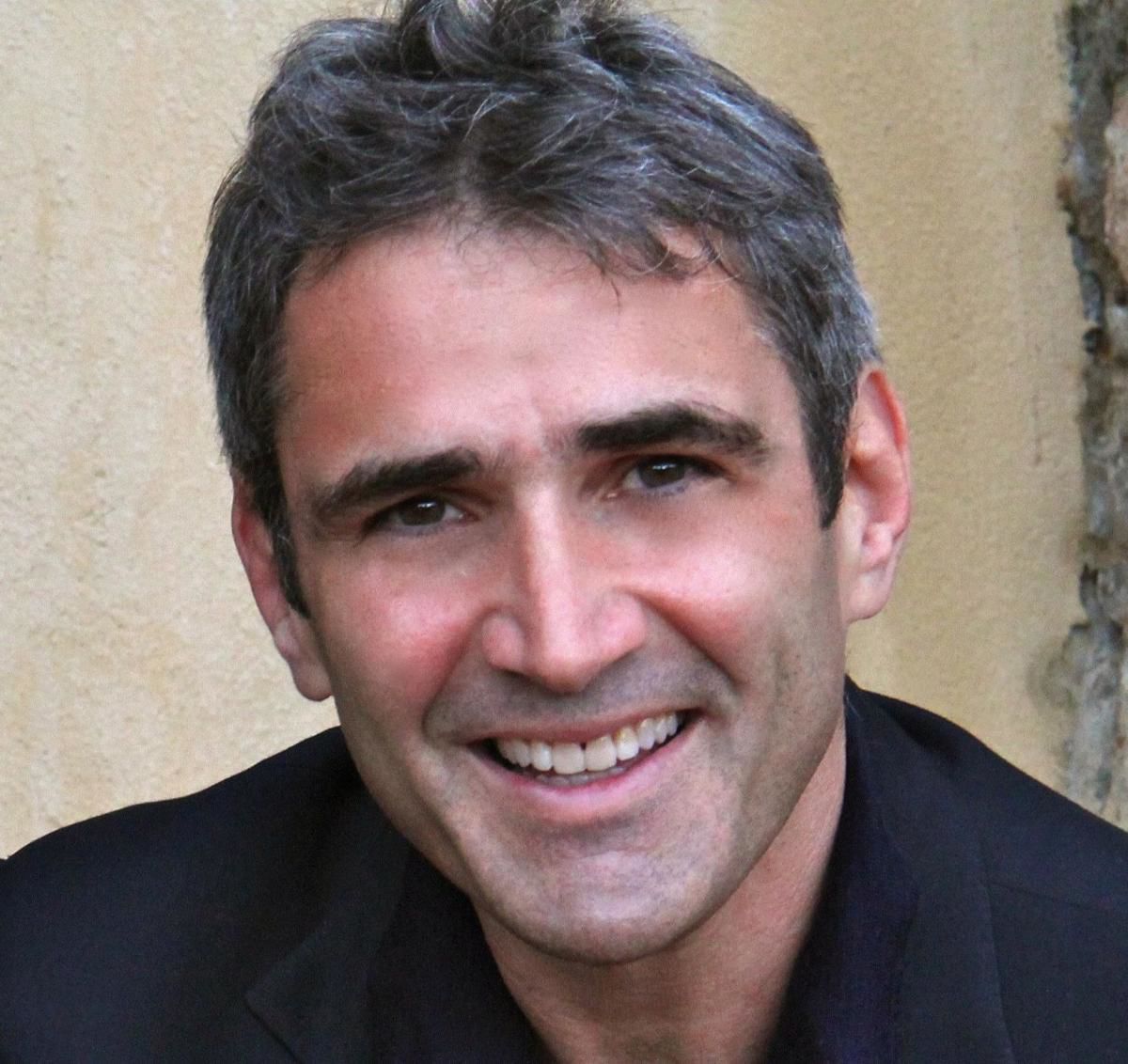

I’ve met Colorado Politics columnist Hal Bidlack, and he’s a nice and thoughtful guy. So I can only assume that he woke up on the wrong side of the bed on the day he wrote, “Conservatives may want to think twice before rolling back government” (Dec. 13).
The “TL;DR” version of this response would be simple to write. I could just point out that all of the supposedly essential government functions that Bidlack identifies — police and fire departments; occupational licensing boards; food, drug and building inspectors; the FAA — comprise about, what, 10% of the government’s activities? Maybe 15% at an outside? Since total government spending in the USA — federal, state and local — is estimated to be above $8 trillion, that would seem to leave wide scope for reductions even if we accept Bidlack’s characterization. In fact, one might even be tempted to say that his entire argument is a straw man.
But even this would be too kind — since some of the things Bidlack mentions are actually good examples of why less government, and more free market, would be beneficial.
Let’s take his comment about occupational licensing. Bidlack rightly ridicules the Colorado Office of Barber and Cosmetology Licensure, but then he states that surely everyone would want doctors to be licensed. Right?
I am fine with requiring doctors to be licensed, but it might interest Bidlack to know that, technically, a dermatologist has all the government licenses required to perform brain surgery. Why is it then that none of us worries about having a brain tumor operated on by a doctor who spent years studying zits? For the simple reason that no hospital would give a zit doctor admitting privileges to its brain surgery theater. No insurance company would insure such a doctor. And nobody who can read a Google search result would hire him or her for this task. Which means that the real protection against this type of medical risk comes from the private sector and not from Bidlack’s supposedly essential bureaucrats.
The last time I checked, there are over 1,000 occupations which require some kind of license in one of the 50 states, but only about 60 occupations which require a license in all 50 states. Which means that the public safety arguments for those other 940 occupations might be somewhat dubious, right? This illustrates one of the central fallacies of Bidlack’s argument. He assumes that we can always get the good things of a big government (such as the medical licensing) without any of the bad things (such as the cosmetology licensing). But both theory and experience say that this is nonsense.
The theory that we can’t just get the good stuff without the bad stuff is called “public choice theory.” But this theory goes even further. It claims that we are actually far more likely to get mostly the bad. The reason for this is that a bad regulation — such as a cosmetology license that serves only to limit competition to the detriment of the consuming public and all the (often marginalized) people who would like to braid hair but who can’t afford the time and money to get a license — typically hurts each of us only a little bit, whereas it helps each licensee a great deal.
So, guess who spends money lobbying for these regulations? Guess who writes letters to their representatives? Guess who shows up in public hearings on the regulation? And guess who donates to, and pounds the pavement for, the candidates who promise to get the regulation passed?
Hint: It ain’t you and me.
Which is why the percentage of jobs covered by occupational licensing has skyrocketed in the last 30-40 years even though, with the advent of Yelp, Google reviews, Angie’s List, etc., the need for government validation has clearly plummeted.
But there is another problem and it is illustrated by Bidlack’s invoking of the FDA’s mandate to determine the safety of medicines. The problem here is that, if the FDA allows a medication that “kills or maims kids,” then the entire world can see the carnage. But if the FDA blocks, delays or makes uneconomical (though excessive testing requirements, for example) a medication that could have stopped a bunch of kids from dying or being maimed, no one sees them.
So, guess what the FDA does when it has to balance the risks of approving a potentially very beneficial drug versus the risks of possibly letting a bad one through? A private version of the FDA — which exists and which performs better than the FDA — is required to balance risk and return, just like Underwriters Laboratory is required to do when it reviews electrical equipment. If it is too cautious, then no one would use its service. If it’s too reckless, then it destroys its reputation. The FDA has no such pressure and is guaranteed to be too cautious.
And, of course, Bidlack brings up the “who’ll pay for the roads?” trope. No sane person wants local roads to be privately provided, but as someone who regularly travels the beautifully functioning and privately built and operated E-470 toll road, I will take the private sector over the government for these types of large infrastructure projects all day long. Ditto for the predominately privately owned airports in Europe over the running sore that the DIA redevelopment has become.
Responding to all the examples cited by Bidlock, and showing how the private sector can do (or already does) a better job in many cases, would make this already-too-long response even longer. Nor am I suggesting that he is always wrong and that there is no valid role for government; I am not an anarchist. But the public is not served by these types of simplistic, reductio ad absurdum arguments. Particularly when they are used to justify the maintenance or expansion of a government which is, by my lights, already manifestly too large.
Roger Barris, an investor and entrepreneur from Evergreen, was the Libertarian Party candidate for Congress in Colorado’s 2nd Congressional District in 2018.
Colorado Politics Must-Reads:

It’s time to let unaffiliated voters caucus | Vince Bzdek
Vince Bzdek
vince.bzdek@gazette.com
Updated 11 hours ago
There’s no getting around it: Colorado’s 3,000 county caucuses, which just wrapped up recently, left half the electorate out in the cold. Since unaffiliated voters now make up 51% of all Colorado voters, a majority of Colorado electors are barred...
A Mile High, again: Capitol M | Week of March 21, 2026
Marianne Goodland
marianne.goodland@coloradopolitics.com
Updated 3 days ago
The lighter side of the Capitol, usually…. Local Journalism Day, except they forgot their very own local journalists. The state Senate on Thursday, March 19, passed a resolution recognizing Local Journalism Day. Everyone voted for it, which is good, because...
The insular bubble of caucuses and assemblies | SONDERMANN
Eric Sondermann
eric-sondermann@coloradopolitics.com
Updated 2 days ago
Nearly 30 years ago, then-Federal Reserve Chairman Alan Greenspan coined the term “irrational exuberance” to describe the overheated stock market. That descriptive phrase could also apply to much of the political realm. The hype in politics often grossly exceeds the...
Set appropriate state guidelines for critical surveillance technology | OPINION
Colorado Politics
colorado-politics@coloradopolitics.com
Updated 2 days ago
I admit it: I’m worried. I’m hearing a lot about surveillance in the public arena. I hear cameras are capturing my car’s license plate wherever I drive, my face as I go in and out of stores and health facilities,...

Puppy trafficking bill promotes inhumane breeding | OPINION
Colorado Politics
colorado-politics@coloradopolitics.com
Updated 2 days ago
By Patti Strand When Justice Thurgood Marshall wrote “The Constitution does not prohibit legislatures from enacting stupid laws,” he wasn’t wrong. He was referring to a political process sometimes ill-equipped to deal with complex issues that require subject-matter knowledge and a...
Penny wise but foolish by pounds | Paula Noonan
Paula Noonan
paula-noonan@coloradopolitics.com
Updated 2 days ago
Leadership of Colorado’s General Assembly introduced the Fiscal Year 2026-2027 Legislative Appropriation bill, HB26-1333, at $75.72 million. That will be the budget to run the state legislature next year. About $74 million comes out of the general fund and the...
Proposed evictions bill fails to improve housing stability while threatening higher rents | OPINION
Colorado Politics
colorado-politics@coloradopolitics.com
Updated 3 days ago
No landlord wants to evict a tenant for non-payment of rent. That is true for large housing providers, small “mom-and-pop” owners and nonprofit housing rental providers alike. Evictions are financially and emotionally costly for everyone involved. But when rent goes unpaid, eviction...

Prevention works — invest in conflict prevention with wolves | FEEDBACK
Colorado Politics
colorado-politics@coloradopolitics.com
Updated 2 days ago
The recent reporting on Colorado’s wolf depredation payouts exceeding $700,000 highlights a critical problem with the current approach to wolf recovery: current mainstream systems focus on compensation and ineffective reactive non-lethals. These systems are not designed to prevent conflict but attempts...
Colorado’s clean-energy future must be affordable for older adults | PODIUM
Colorado Politics
colorado-politics@coloradopolitics.com
Updated 2 days ago
By Jason DeaBueno Last winter, one of the older adults we serve at Silver Key shared something that has stayed with me. She begun turning her heat down at night — not because she wanted to, but because she was...
Why Denver should care about conservation easements — even if you’ve never set foot on a ranch | OPINION
Colorado Politics
colorado-politics@coloradopolitics.com
Updated 3 days ago
By Jason Swann I live in Denver. I drink tap water from my kitchen sink, hike close to home when I can, worry about wildfire smoke every summer, and try, like many families, to keep up with the rising cost...
PREV
PREVIOUS

FEEDBACK | House impeachment vote fulfills Founders' fears
On Dec. 18, the Democratic majority of the U.S. House of Representatives vindicated both our Founding Fathers and historian Alexis De Tocqueville (“Democracy in America”) when they warned of the “Tyranny of the Majority.” Blocking any majority from harming our country and our people was one of the main goals of our Founding Fathers. This is […]

BIDLACK | Congress does a lot more for us than impeach presidents
Hal Bidlack Well, it’s only a few more days until Christmas, and so I decided to look for a “good news” type of story. I’m pretty sure my kindly and forgiving editor really doesn’t want any more stories on the impeachment (Ed: no, I don’t) and in hopes of finally nailing down that huge Christmas bonus I assume I’m […]