

Denver council OKs booze rules for National Western, hears budget comments
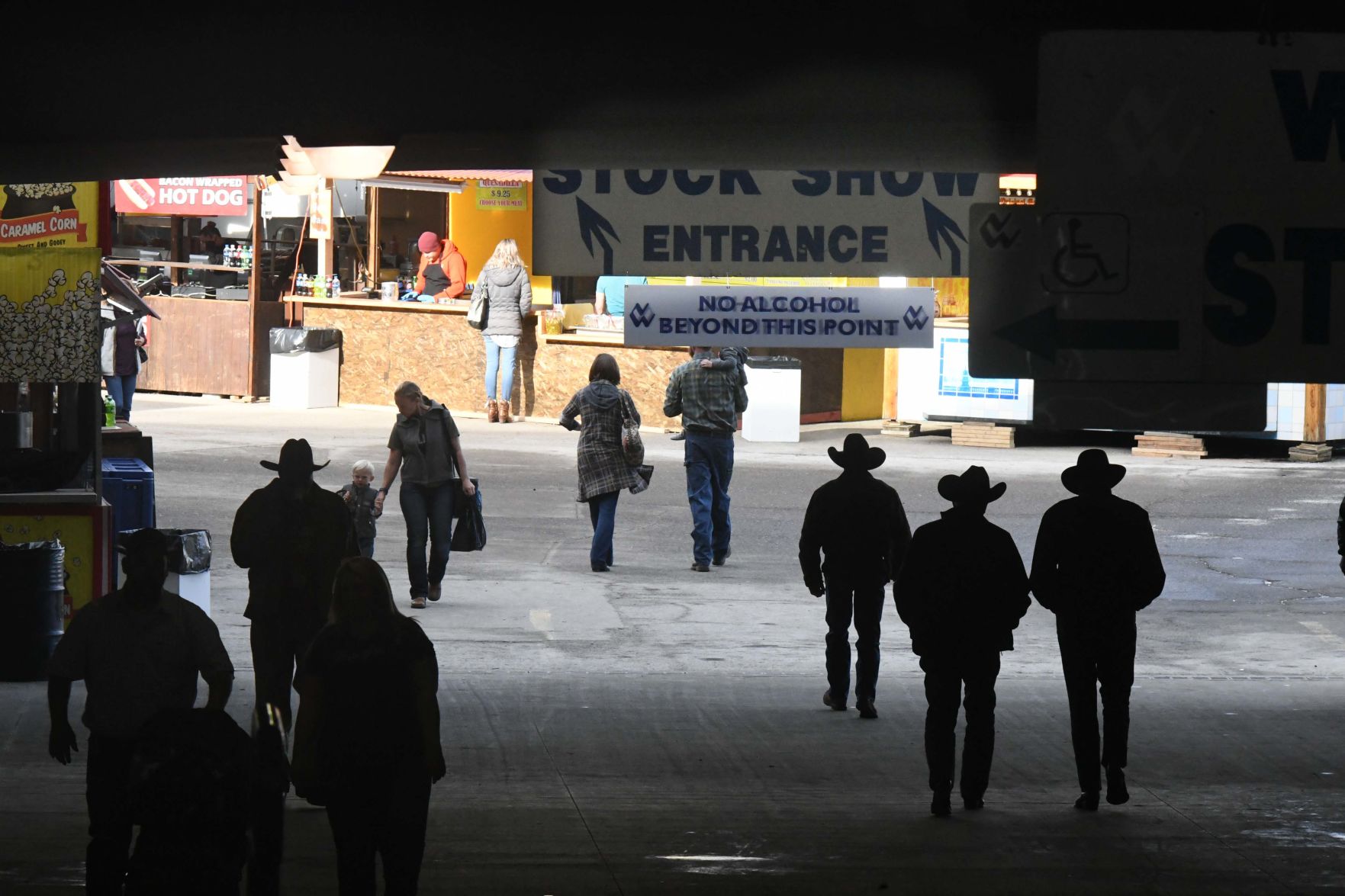
The Denver City Council on Monday made it easier to get your drink on at the National Western Center .
The council voted to allow adults to “consume malt, vinous or spirituous liquors” in approved areas at the redeveloping 250-acre complex at Interstate 70 and Brighton Boulevard.
Under current law, an alcoholic drink has to be consumed in an immediate designated area controlled by the holder of the liquor license – at the rodeo coliseum, for instance – but the patron couldn’t wander off elsewhere, drink in hand.
The new Denver law puts the National Western Center on par with the Colorado State Fair in Pueblo, where tipplers can tote their drink anywhere within the overall fairgrounds.
Though local and state politicians are reluctant to say it on the record, many predict the National Western Center will eventually be home to the state fair, as Pueblo has struggled to attract crowds and balance its books in recent years.
The fair this year, however, saw an uptick in attendance, with 466,380 visitors, which was 21,904 more people than the year before.
The old Denver stockyards have been home to the National Western Stock Show since 1906. A $1.1 billion redevelopment is underway to turn an expanded 250-acre site into a Colorado showplace, including eight new buildings, before 2023. The deal is financed by a tourism tax on hotel rooms and car rentals, passed by voters in 2015.
The legislature gave its blessing to more convenient drinking at the National Western Center when it passed Senate Bill 200 in April.
Budget talk
The council also took its first formal look at Mayor Michael Hancock’s proposed budget with a public hearing Monday night. The council is expected to vote on the final plan on Nov. 12.
Stephanie Karayannis Adams, the city budget and management director, told the council the city’s overall budget next year is expected to be $2.4 billion, an increase of 1.7% over last year, and a main operating budget of $1.49 billion, up 2%. The budget also maintains several rainy day funds and pays down debt.
RELATED: INSIGHTS | New Denver City Council takes a progressive view of homelessness
She lauded city agencies that have found savings elsewhere so money could be put into new projects, including climate change initiatives, affordable housing and public safety.
The council heard pitches to move money for law enforcement to affordable housing Monday night.
Denver Homeless Out Loud activist Terese Howard pressed the council to help provide housing for the homeless and others who are among the city’s poorest residents.
She said the budget, as its written, confine the homeless into remaining a low priority, and she asked the council to move money from jails, police and administration into housing.
“If we continue to prioritize profits over people, as the 2020 budget does, we will continue to have more and more people suffering and more people without housing sleeping on the streets,” Howard said.
Frequent candidate and council critic Stephan Evans, better known as Chairman Seku, also pressed for housing for the poor.
“In the words of Daffy Duck, this budget is despicable,” he said. “No one of any conscience or genuine care for the poor would even consider passing the budget.”
Oil and gas work
The council also approved contracts to maintain the 76 oil and gas wells on the 33,531-acre grounds of Denver International Airport. The city isn’t paying to pump, however.
The contracts are required to monitor and maintain the wells above and below the ground to keep regulators at bay, said Rachel Marion, the director of government affairs at the city-owned airport.
“They fulfill our environmental and safety regulatory obligations, so checking on them daily to see that leaks don’t happen and then responding in the case of any sort of emergency,” she explained. “What these contracts do not do is enable any sort of oil and gas production at the airport.”
ATP Oilfield Services will be paid $2.5 million for above-ground maintenance, monitoring and cleanup services, while Bohler Well Service has a $1.3 million contract for below-ground upkeep. Both deals are for three years with options for up to two one-year extensions.
RELATED: DIA advances $3.8M contracts for oil and gas well maintenance
Many of the well sites have existed since before the airport opened in 1995. All of them have been shut down since May 2018, but they have produced millions of dollars in oil and gas to help pay for airport operations, keeping costs lower for passengers and keeping DIA competitive.
Marion said the airport expects to cap five and abandon five wells this year, but to permanently close off all 76 would cost about $9 million.
One leak was reported since the wells were shut down, and the only previous instance was in 2014, she said.



Colorado officials urge stronger water safety after 6 drownings and multiple Front Range rescues
Elizabeth Pond
elizabeth.pond@denvergazette.com
Updated 2 hours ago
At least six people have drowned in Front Range waters since June, including two at Eleven Mile Reservoir, three at Cherry Creek Reservoir and one at Rockbridge Lake. In the wake of these deaths, law enforcement and rescue crews are...
10th Circuit sympathetic to Colorado consumer protection law governing interest rates
Michael Karlik
michael.karlik@coloradopolitics.com
Updated 3 hours ago
Members of the Denver-based federal appeals court appeared sympathetic on Tuesday to Colorado’s assertion that it can lawfully require certain out-of-state banks to abide by the state’s own ceilings on interest rates when they lend to consumers in Colorado. The...

Colorado justices to decide insurance companies’ obligation to disclose relevant policies
Michael Karlik
michael.karlik@coloradopolitics.com
Updated 30 minutes ago
The Colorado Supreme Court announced on Monday that it will decide whether an insurance company violated state law by withholding an at-fault driver’s policy for nearly a year when there was no dispute that the policy was not in effect...

Appeals court upholds limits on warrantless ICE arrests at churches
Kaelan Deese
kaelan-deese@coloradopolitics.com
Updated 6 hours ago
A federal appeals court on Tuesday upheld limits on warrantless U.S. Immigration and Customs Enforcement arrests at churches affiliated with a coalition of religious groups, ruling that the Trump administration’s policy likely violated a federal religious freedom law. The 4th...
Monument council rejects housing development bordering USAFA
Savannah Eller
savannah-eller@coloradopolitics.com
Updated 4 hours ago
The Monument Town Council on Monday rejected a 205-home project on the northern edge of the U.S. Air Force Academy. Called Santa Fe Meadows, the Classic Homes project for 135 single-family homes and 70 townhomes would have occupied 43 acres...

Wheat Ridge considering e-bike, scooter ordinances as usage increases in city
Matt Kyle
matt.kyle@denvergazette.com
Updated 6 hours ago
Wheat Ridge may soon pass regulatory ordinances on e-bikes as city officials say usage of such devices has increased within the city. The measures are proactive as e-bike usage has increased across the Denver metro area, according to city officials,...
District 49 dissolves longtime provider of special services
Eric Young
eric.young@gazette.com
Updated 4 hours ago
A longtime education service provider that has been subject to recent public and government scrutiny is shutting down. School District 49’s Board of Education approved the dissolution of the Education ReEnvisioned Board of Cooperative Education Services (ERBOCES) during a special...
District 49 dissolves longtime provider of special services
Eric Young
eric.young@gazette.com
Updated 22 hours ago
A longtime education service provider that has been subject to recent public and government scrutiny is shutting down. School District 49’s Board of Education approved the dissolution of the Education ReEnvisioned Board of Cooperative Education Services (ERBOCES) during a special...

Denver revenues rise despite expectations for flat year
Nico Brambila
nico.brambila@denvergazette.com
Updated 7 hours ago
Five weeks after Denver said it expected revenues to remain flat heading into 2027, stronger-than-expected collections are prompting finance officials to signal they may raise this year’s revenue forecast. General Fund revenue was up 2.3% through June compared with the...

Judicial performance evaluations released, Montezuma County judge disciplined | COURT CRAWL
Michael Karlik
michael.karlik@coloradopolitics.com
Updated 1 day ago
Welcome to Court Crawl, Colorado Politics’ roundup of news from the third branch of government. Colorado’s citizen-led judicial performance commissions released their voter narratives for the judges standing for retention in November, plus a disciplinary panel imposed consequences on a...
PREV
PREVIOUS

LYNN BARTELS | Rodriguez adds power to Latino voice in Colorado
On the third Saturday of each month, the Colorado Democratic Latino Initiative meets in a nondescript building on an industrialized stretch of Pecos Street just across the Denver County line in Adams County. The organization overseen by Mannie Rodriguez has played an outsize role in helping elect Democrats and encourage Latinos to run for office. […]

Poll: CORE Act goals receive thumbs-up from Western Slope voters
There is broad support for the goals of Colorado-specific conservation legislation on the Western Slope, a new poll found. Of 400 voters surveyed in Congressional District 3 and Chaffee and Fremont counties, two-thirds endorsed the designation of more public lands as wilderness areas, which is one of the aims of the Colorado Outdoor Recreation & […]