

Colorado sets two new weather records in 2019, officials say
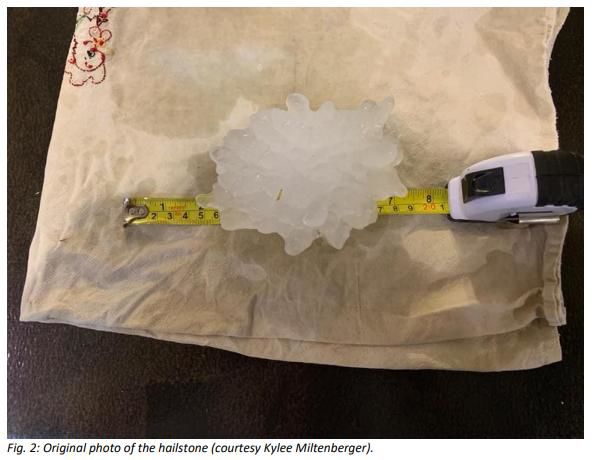
A new state record for the largest hailstone ever to fall in Colorado has been certified by state weather experts, and a second record – for the hottest day in the state’s history – is just days away from being official.
The 8.5-ounce hailstone fell eight miles north-northwest of Bethune, on Colorado’s Eastern Plains, on Aug. 13. Its diameter was measured at 4.83 inches, bigger than a baseball.
The Colorado Climate Center at Colorado State University reported the new record, saying the hailstone was produced by a “supercell” thunderstorm that hit the Eastern Plains in Kit Carson County. A team from the State Climate Extremes Committee, including representatives from the National Weather Service, examined several large hailstones, including the record-setter.
The previous, unofficial record was 4.5 inches in diameter. Hailstones of that size have fallen approximately 20 times since the mid-1900s, the Colorado Climate Center reported.
The record hailstone fell near the home of Kylee Miltenberger of Bethune, whose family discovered several large hailstones after a 3 p.m. storm on Aug. 13. Photos posted to social media, first reported by KKTV of Colorado Springs, indicated the record-breaking stone was even larger than was recorded by the SCEC, since Miltenberger picked up the stones about 30 minutes after they fell after waiting out the dangerous thunderstorm.
The Colorado Climate Center estimated the hailstone’s original size at larger than 5 inches in diameter, based on those social media posts.
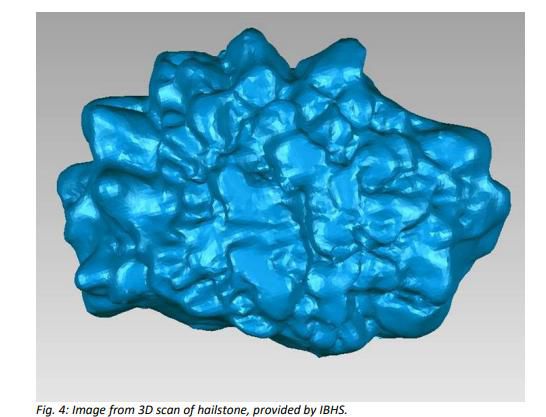
The hailstone was then sent to a cold lab at the National Center for Atmospheric Research in Boulder for preservation and further study, which included a 3D laser scan.
The other potentially record-breaking occurrence in Colorado this summer was the 115 degrees Fahrenheit temperature recorded at John Martin Reservoir in Bent County on July 19 by Ian Livingstone of US Tornadoes, a tornado-tracking service.
The current record of 114 degrees Farenheit has been reported twice – in Sedgwick, on the state’s northeastern border, on July 11, 1954, and in Las Animas, in southeastern Colorado, on July 1, 1933.
At the other end of the thermometer, the state’s record low of minus-61 degrees was set on Feb. 1, 1985, in Maybell, in northwestern Colorado.
Assistant State Climatologist Becky Bolinger of the Colorado Climate Center told Colorado Politics it’s more complicated to verify the record for the state’s hottest day than it is to measure a hailstone.
“If you save the hailstone, anyone can measure that. Measurements are easy,” she said.
“When you’re talking about temperature, there are nuances,” she said. For example, you could put three thermometers in the same spot to see if they all come up with the same reading. Officials also had to determine whether the sensor works at that high a temperature and what the observer recorded.
There’s also a question about siting – the sensor that recorded the 115-degree reading was in a sandy area, even though the preferred place for sensors is usually a big grassy, open field, Bolinger said. Another factor could be the local temperatures in the area, including nearby Lamar, which recorded a high that day of 111 degrees Fahrenheit.
The climatologists decided to check the sensor by putting it in an oven at CSU and cranking the oven up to 115 degrees. It turn out, Bolinger said, that the sensor was accurate.
After checking the sensor and other factors, she said, “we feel more certain about this than previous records.”
Once all the questions were answered, the decision to certify the hottest temperature was put to a vote. Those voting included Bolinger, State Climatologist Russ Schumacher, a meteorologist from the National Weather Service in Pueblo, and representatives of the High Plains Regional Climate Center, the National Oceanic and Atmospheric Administration and the National Center for Environmental Information.
Bolinger said they agreed the 115-degree reading was valid.
The record becomes official when NOAA publishes the report, sometime later this week, she added.
The Colorado Climate Center attributes the extremes to the state’s “interior continental location, combined with complex topography” that “results in dramatic climate differences from place to place and from year to year.”


Artificial intelligence working group agrees on framework to replace Colorado law
Marianne Goodland
marianne.goodland@coloradopolitics.com
Updated 2 hours ago
A group that has been working on artificial intelligence policy has reached an agreement on a framework that would replace the regulations adopted by Colorado legislators two years ago. The agreement has the backing of Gov. Jared Polis, who reluctantly...

Proposal to levy new fees on alcohol products in Colorado dies
Marissa Ventrelli
marissa.ventrelli@coloradopolitics.com
Updated 3 hours ago
The proposal to collect millions in new fees on alcohol products — dollars to be earmarked for Colorado programs aimed at addressing the behavioral and physical health effects of alcohol abuse — died on Tuesday. House Bill 1271 sought to...
The numbers that Republicans say show Democratic midterm targets are a ‘political hallucination’
Rob Crilly, Washington Examiner
rob.crilly.washington.examiner@gazetteedit.wpenginepowered.com
Updated 1 hour ago
Democrats keep expanding their battleground map of midterm target seats, but do they really have any chance in some of the districts they claim they can win? Of the 44 districts listed by the Democratic Congressional Campaign Committee as targets,...
Pam Bondi subpoenaed for April 14 House deposition on Epstein files handling
Kaelan Deese, Washington Examiner
kaelan.deese.washington.examiner@gazetteedit.wpenginepowered.com
Updated 3 hours ago
The House Committee on Oversight and Government Reform issued a subpoena Tuesday compelling Attorney General Pam Bondi to sit for a deposition on April 14 as part of an ongoing investigation into the Justice Department’s handling of the Jeffrey Epstein...
Capitol Police chief asks for record-breaking budget, citing 58% increase in threats to Congress
Emily Hallas, Washington Examiner
emily.hallas.washington.examiner@gazetteedit.wpenginepowered.com
Updated 4 hours ago
U.S. Capitol Police Chief Michael Sullivan on Tuesday argued sweeping threats against lawmakers justify his department’s historic budget request during a House Appropriations Committee hearing. Sullivan testified before the Legislative Branch Subcommittee on his budget proposal for fiscal 2027 funding....
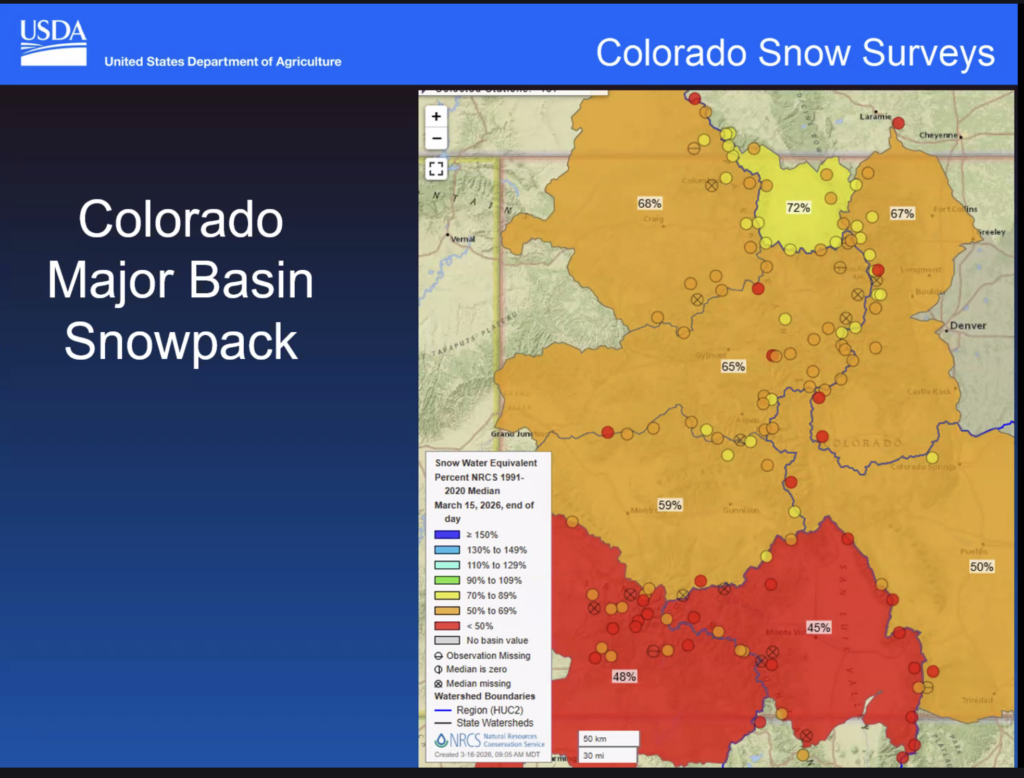
After ‘winter of defeat,’ Colorado hopes for wetter summer
Marianne Goodland
marianne.goodland@coloradopolitics.com
Updated 4 hours ago
With snowpack melt already peaking in some parts of the state and drought conditions worsening compared to last year, Colorado’s water watchers are hoping for a wetter summer, though they anticipate the situation deteriorating before getting better. Meanwhile, the governor...
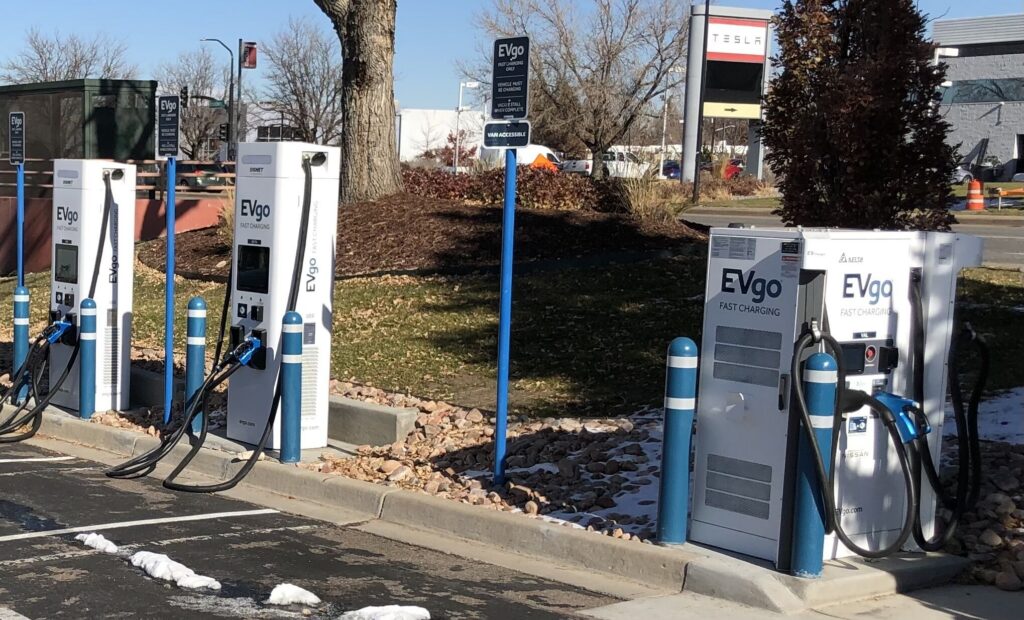
Colorado, Democrat states oppose proposal to require EV chargers be made with 100% domestic components
Scott Weiser
scott.weiser@gazette.com
Updated 5 hours ago
Colorado has joined a coalition of about 20 states in opposing a federal proposal that would require electric vehicle chargers funded with federal dollars to be made with 100% domestic components. The Federal Highway Administration is considering raising the domestic...
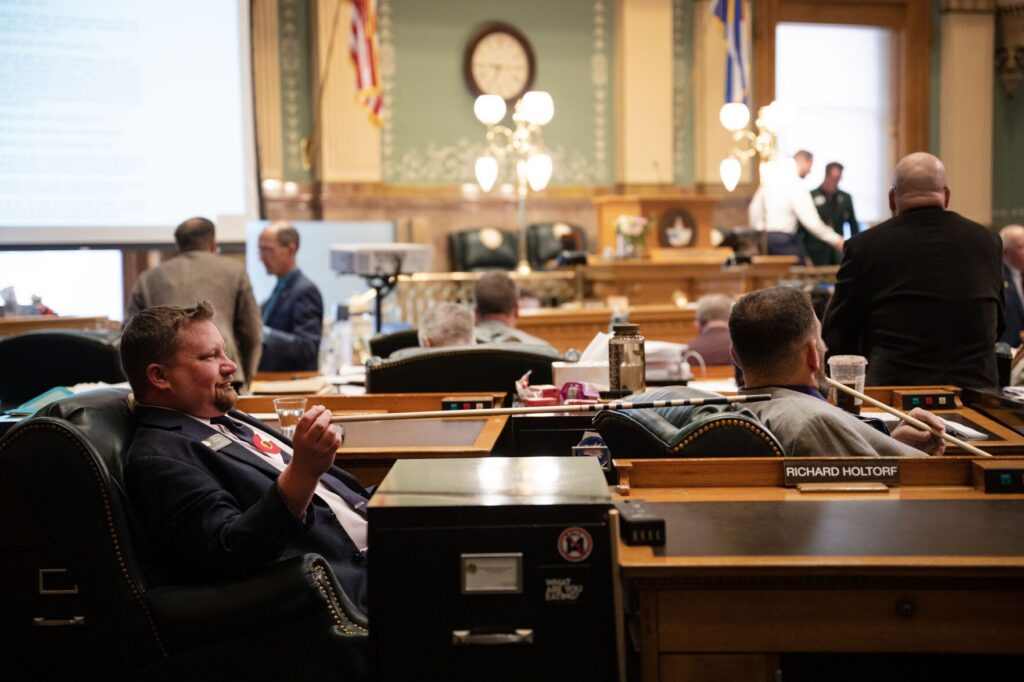
Colorado ethics panel tells legislator to attend sexual harassment training
Marianne Goodland
marianne.goodland@coloradopolitics.com
Updated 2 hours ago
Colorado’s House ethics panel admonished a Republican legislator over allegations he used a master key to access areas of the Capitol that he was not permitted to enter and that he had made sexually harassing comments to several female lawmakers....
Appeals court agrees defendant’s speech constitutionally protected against El Paso County judge
Michael Karlik
michael.karlik@coloradopolitics.com
Updated 3 hours ago
Colorado’s second-highest court agreed last week that a defendant’s critical statements toward a 4th Judicial District judge were constitutionally protected and could not form the basis of a retaliation charge. A three-judge Court of Appeals panel concluded that, in context,...
Colorado justices, 4-3, order new murder trial due to wrongfully excluded evidence
Michael Karlik
michael.karlik@coloradopolitics.com
Updated 10 hours ago
The Colorado Supreme Court agreed on Monday that a trial judge incorrectly faulted a defendant for refusing to cooperate in a mental health examination, even though the state’s hospital was the entity that botched its responsibility to evaluate her during...
PREV
PREVIOUS

Denver City Council takes up proposed regulations for tiny home villages tonight
The Denver City Council could pass new zoning rules for tiny home villages on Monday night. The council will hold a public hearing on a proposed zoning code change that would streamline the process for community groups and other organizations to open tiny home villages to house people experiencing homelessness. The villages would be allowed […]

Colorado Democratic Party chair blames Cory Gardner for Brett Kavanaugh
Colorado Democrats have another thing they’d like to pin on incumbent Republican Cory Gardner, who’s in the way of their party’s U.S. Senate majority. As the U.S. Supreme Court began its session Monday, Colorado state party chair Morgan Carroll put the responsibility on Gardner for Brett Kavanaugh, the Republican put on the high court last year […]