

Colorado School of Mines professor advocates in Congress for US rare earth minerals
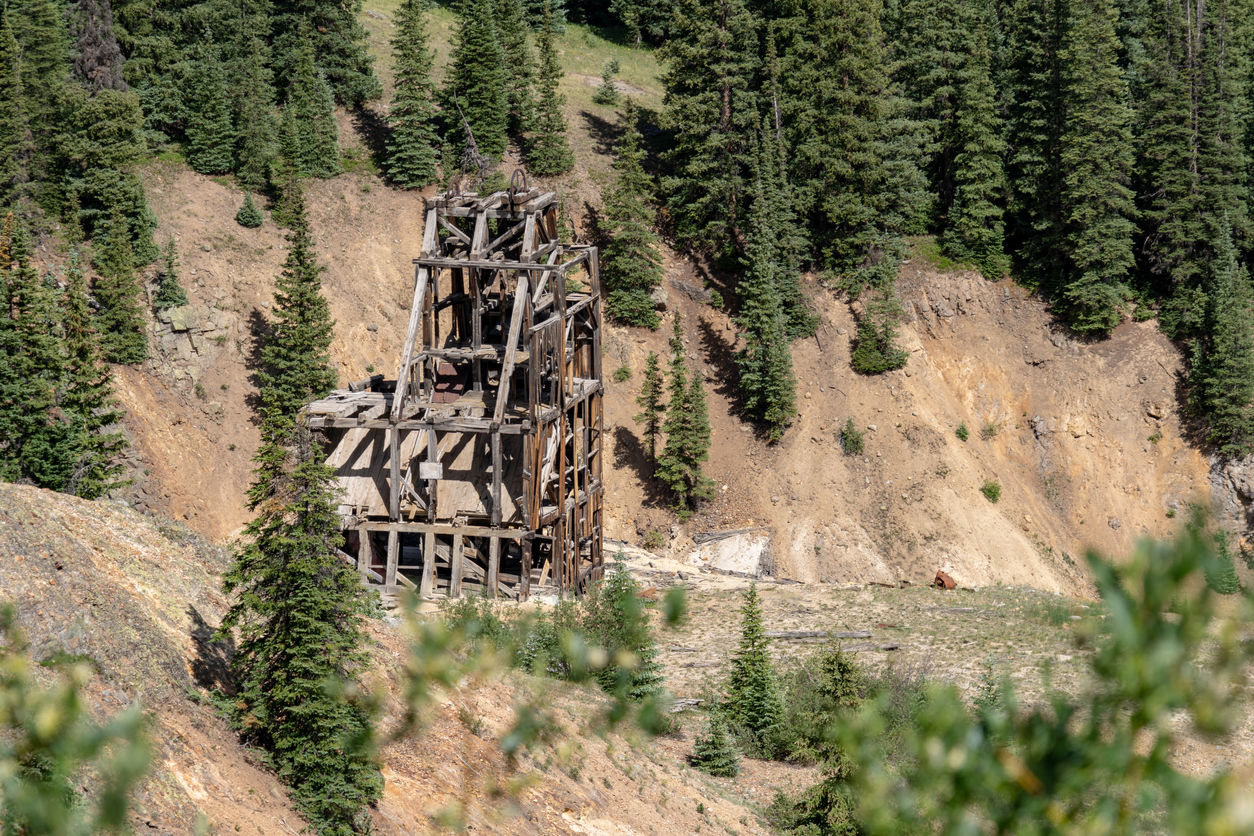
WASHINGTON – A Colorado School of Mines professor cautioned a Senate committee Tuesday that the United States needs to extract more of its own rare earth minerals to meet an increasing demand for clean energy technologies.
Top among them is the nation’s gradual switch to electric vehicles.
“Minerals and metals are central to the energy transition,” Morgan D. Bazilian said in his testimony. “But the economic, security and geostrategic implications are all in play, depending how the U.S. policy responds.”
Bazilian is director of the Payne Institute for Public Policy at the Colorado School of Mines in Golden.
He testified before the Senate Energy and Natural Resources Committee as it considers legislation that creates incentives for U.S. mining companies to extract more of the minerals to make rechargeable batteries, solar panels, wind turbines and consumer products.
Manufacturing them often requires use of minerals such as lithium, cobalt and yttrium.
Most rare earth minerals used in the United States come from China, where regulatory and environmental obstacles are less stringent and costly. Minerals commonly are extracted from open pit mines that are unlikely to win permits from U.S. regulatory agencies.
Nevertheless, new clean energy technologies cannot do without them, Bazilian said.
“The future energy system will be far more mineral- and metal-intensive than it is today,” he said in his Senate testimony. “Many of these advanced technologies require minerals and metals with particular properties that have few to no current substitutes.”
U.S. Geological Survey studies show large rare metal deposits in Colorado, particularly in the Wet Mountains and San Juan Mountains.
A leading legislative proposal in Congress to encourage more U.S. development of rare earth minerals is the American Mineral and Security Act, S. 1317.
It would require the Interior Department to maintain a list of minerals critical to U.S. economic prosperity and national security. Regulatory agencies also would be charged with improving processes to find, develop and use the minerals for industry.
Bazilian hinted at economic benefits from greater emphasis on U.S. rare earth mineral development when he said, “The opportunity for the mining industry is tremendous.”
The National Renewable Energy Laboratory in Golden uses some of the minerals for its clean energy projects.
Concerns about U.S. dependence on foreign suppliers have grown as the Trump administration embarked on a trade war with China.
President Donald Trump signed an executive order in 2017 requiring a study of strategic minerals as he seeks a way to wean the United States off a dependence on China.
“This dependency of the United States on foreign sources creates a strategic vulnerability,” the executive order stated.
The Chinese government has responded to Trump’s trade war by considering economic reprisals, such as reducing rare earth exports to the United States and restricting foreign investment in its mining industry.
Congress has demonstrated bipartisan support for more U.S. rare earth mineral production.
“China is consolidating control of the entire supply chain for clean technologies,” said Senator Lisa Murkowski, the Alaska Republican who chairs the Energy and Natural Resources Committee.
Senator Catherine Cortez Masto, a Nevada Democrat, said, “If we don’t start embracing this technology and growing with it, we are going to be left behind.”
Nevada is the nation’s largest mining state, particularly for the kind of copper used in solar panels.
Senator Joe Manchin, a West Virginia Democrat, agreed more U.S. mining of rare earth minerals is needed but said it needed to be done “responsibly.”
Colorado Republican Senator Cory Gardner is a member of the Energy and Natural Resources Committee but he did not speak during the hearing Tuesday.

With the deadline missed, Bureau of Reclamation plans to move forward on Colorado River operations
Marianne Goodland
marianne.goodland@coloradopolitics.com
Updated 9 hours ago
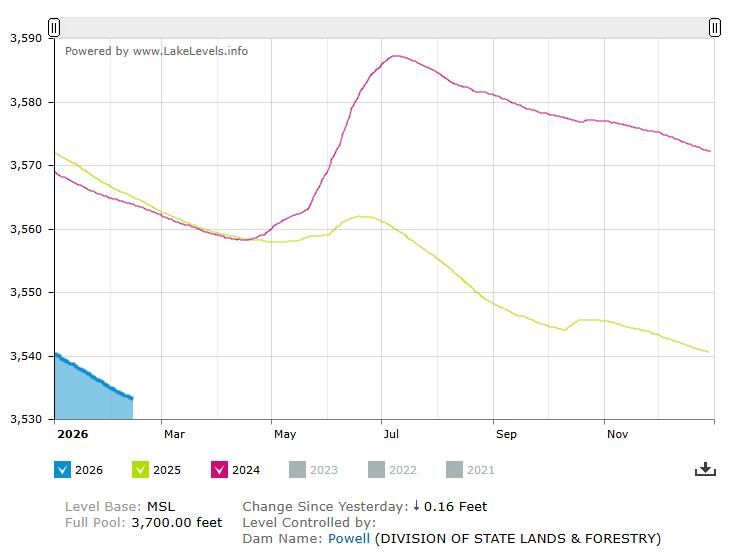
Feb. 14 was no Valentine for the seven states of the Colorado River, which failed to come up with an agreement by that deadline on how to manage the river beginning Oct. 1. The Department of the Interior and the...

Democrat Shannon Bird qualifies by petition for primary ballot in Colorado’s toss-up 8th CD
Ernest Luning
ernest.luning@coloradopolitics.com
Updated 8 hours ago
Former state Rep. Shannon Bird has qualified for the Democratic primary ballot in Colorado’s hotly contested 8th Congressional District by submitting a sufficient number of petition signatures, state election officials said this week. The winner of the Democrats’ June 30...
Colorado Supreme Court accepts cases about reliability of gun-to-bullet matching
Michael Karlik
michael.karlik@coloradopolitics.com
Updated 9 hours ago
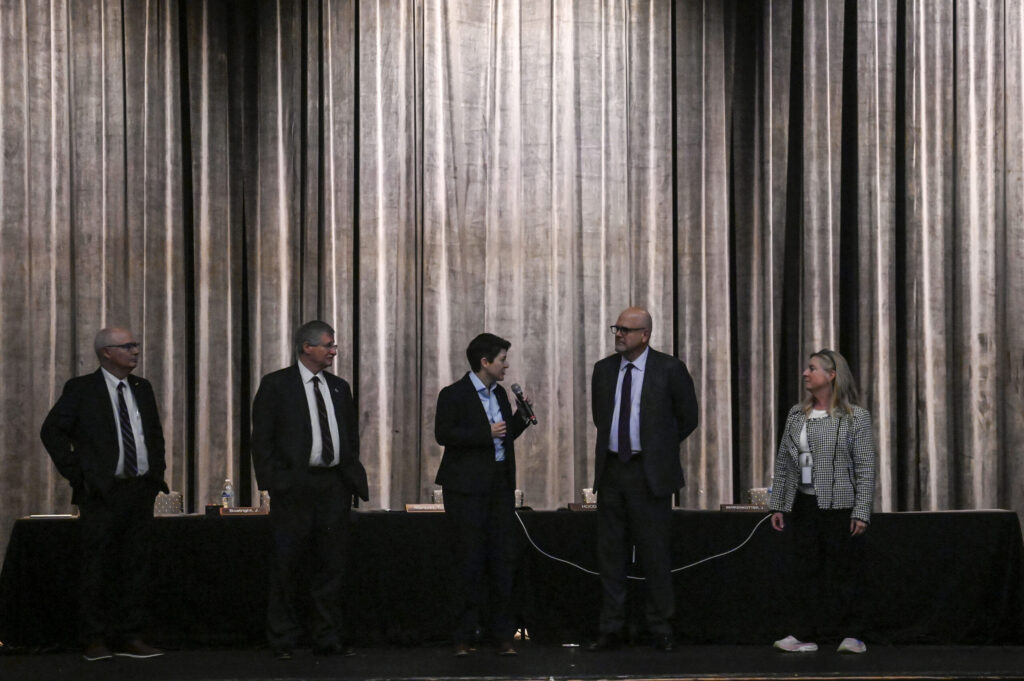
The Colorado Supreme Court announced on Monday that it will hear two cases questioning the reliability of expert testimony that purports to identify whether a specific bullet was fired from a specific gun. At least three of the court’s seven...
State Rep. Peña outlines significant inequalities in Colorado’s school finance law | A LOOK BACK
Rachael Wright, Special to Colorado Politics
rachael.wright@coloradopolitics.com
Updated 3 days ago
Forty-Five Years Ago This Week: In a guest column published in The Colorado Statesman, House Minority Leader Rep. Federico Peña, D-Denver, wrote that his greatest disappointment with the legislative process was “the inability, or unwillingness, of the General Assembly to...

Colorado Politics Calendar Feb. 16-22
Rachael Wright, Special to Colorado Politics
rachael.wright@coloradopolitics.com
Updated 2 days ago
CoPo’s weekly political calendar will help you find political and public-policy events throughout Colorado. It includes candidate and issue campaign events, public policy meetings, court hearings, state and local party conventions, assemblies, debates, rallies, parades, speaking engagements, traveling dignitary appearances,...
Michael Bennet and ‘the question’ | SONDERMANN
Eric Sondermann
eric-sondermann@coloradopolitics.com
Updated 5 hours ago
The train usually runs only one way. The route goes from the state Capitol to Washington, D.C. State legislators become members of Congress; governors become senators. See Hickenlooper, John. Including our junior senator, no matter his years, a total of...
Colorado District Attorneys unveil 2026 legislative priorities | WHAT’S YOUR AGENDA?
Marissa Ventrelli
marissa.ventrelli@coloradopolitics.com
Updated 2 days ago
Welcome to What’s Your Agenda?: The Colorado Politics’ weekly publication of trade association priorities for the state’s 2026 legislative session. The Colorado District Attorneys’ Council provides training, resources, and legislative support to every prosecutor in the state. In order to...

A day in the life of the Capitol: Capitol M | Week of Feb. 14, 2026
Marianne Goodland
marianne.goodland@coloradopolitics.com
Updated 2 days ago
The lighter side of the Capitol, usually. If you were walking around the Capitol on Feb. 12, there was plenty to see and to be amused (or delighted) by. Let’s start with the high school kids from Greeley’s District 6....
Appeals court clarifies what materials judges may rely on for postconviction decisions
Michael Karlik
michael.karlik@coloradopolitics.com
Updated 1 day ago
Colorado’s second-highest court clarified on Thursday that trial judges who are deciding whether to grant relief to convicted defendants may rely on the materials attached to, or referenced in, the parties’ arguments. In contrast to direct appeals of criminal convictions,...

Here’s what to know about the Homeland Security shutdown starting this weekend
Deborah Grigsby
deborah.smith@denvergazette.com
Updated 1 day ago
Another shutdown for parts of the federal government is expected this weekend, following an impasse over funding for the U.S. Department of Homeland Security amid a push by Democrats for changes in immigration enforcement. Funding for the federal agency is set to...
PREV
PREVIOUS

Hickenlooper, Colorado advocates charged up over Trump air quality move
Two of Colorado’s best-known advocates for vehicle emissions standards – one a former governor, the other the state’s largest environmental organization – were among the first to react when the Trump administration moved to block states from exceeding federal rules. When President Trump pulled the nation out of the international Paris Climate Accord coalition in 2017, then-Colorado […]

Judge dismisses retaliation lawsuit against Denver Mayor Hancock
A lawsuit against Denver Mayor Michael Hancock’s administration filed by a challenger in this year’s mayoral election has been dismissed by a federal judge. Former Denver mayoral candidate Lisa Calderón filed the suit in 2018, claiming that Denver had ended the contract with an organization she ran, the Community Re-Entry Project (CRP), over her criticisms […]