

Bad news about those constant campaign emails from Hickenlooper, Bennet, others: They work
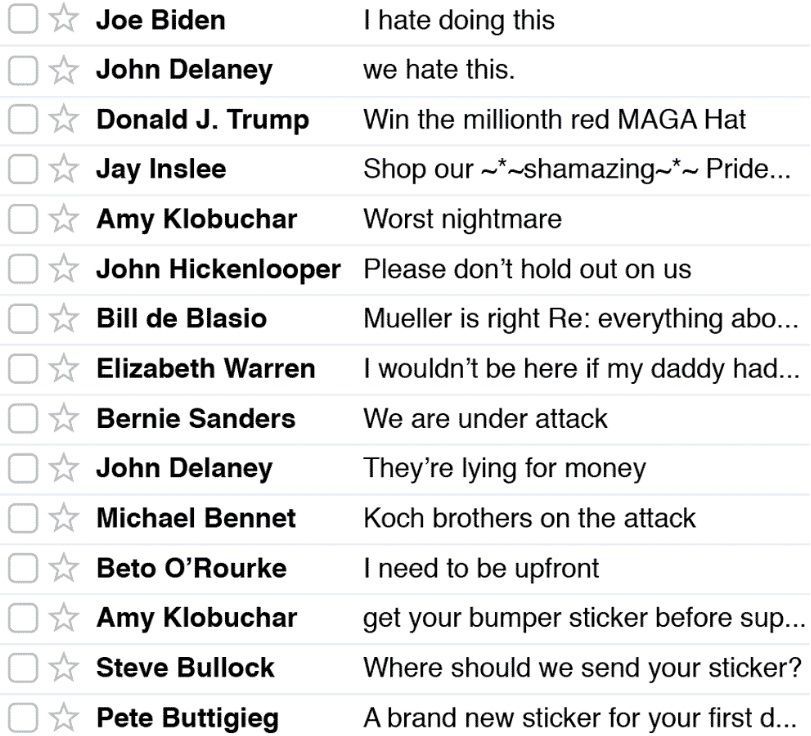
WASHINGTON – “Hey.” “Emailing again.” “Can I explain?” “I hate doing this.”
These aren’t email subject lines from a needy paramour. They’re from the presidential candidates.
They really want your money-even “$1 Just $1. That’s all it takes.”
One unfortunate side effect of a race bursting with two dozen Democrats seeking to challenge President Donald Trump is the spam-level volume of fundraising email it has produced.
Since April 1, candidates have sent a combined 1,730 messages, more than 19 a day, to supporters, according to a collection of presidential campaign emails maintained by The Wall Street Journal.
Last weekend alone, the presidential campaigns sent some 130 emails, a bumper crop thanks to the end of the second-quarter fundraising period Sunday. As the sun set, the emails took a similarly dark turn, with subject lines like, “This is it” and “Time is almost up” and “11:59:59 PM.”
Professional email consultants who have worked on presidential campaigns have bad news: There is no such thing as too much. And the more cringeworthy the content, the more likely you are to click and give money.
“What annoys you the most in your inbox is probably what’s doing the best for a candidate,” said Liz Zaretsky, who has written emails for presidential campaigns. “The campaigns don’t love everything they send, but it’s hard to argue with what’s raising money.”
She grudgingly appreciates the doomsday writing style, the awkward embedded GIFs, the novella-length subject lines and other gimmicks most politicians use.
The subject field of a recent dispatch from former Housing Secretary Julián Castro’s campaign clocked in at 44 words spread across four sentences.
The onslaught, and its increasingly desperate tone, is spurred by candidates who need to amass cash for a multibillion-dollar election season and build a roster of thousands of donors to show their grass roots bona fides.
There is an art and a science to political emails, which made their debut on the big stage 16 years ago when then-Democratic presidential candidate Howard Dean hired strategists from MoveOn.org, a liberal group that had early success raising money online.
Former President Barack Obama and Trump took email practices to a new level by personalizing messages and experimenting with contests and giveaways.
Trump’s campaign favors ALL CAPS and themes like “Democrats are TERRIFIED” in its subject lines, as digital strategists try to channel their outspoken boss. The campaign sent 54 emails in June, outpacing its Democratic rivals, the Journal’s email collection shows.
Not only can you have dinner with Trump, but you can sip whiskey with New York Sen. Kirsten Gillibrand or grab a beer with Massachusetts Sen. Elizabeth Warren (and her husband, Bruce, and her dog, Bailey) if you click on their emails and enter contests for those events. Campaigns can’t require donations as a condition of winning, but they hope you’ll chip in while on their websites.
Adding fuel to the inbox dumpster fire, the Democratic National Committee set donor thresholds as a way to participate in its nationally televised debates. If they didn’t meet the DNC’s polling requirements, candidates needed 65,000 donors across 20 states to make the stage in June and July; the tally doubles for the fall debates. That gives candidates an incentive to send more email, and ask for smaller donations.
At least 359 Democratic presidential campaign emails since April 1 have suggested throwing in just one buck, often providing readers with a big $1 donation button to click. Montana Gov. Steve Bullock was “humbly asking,” a recent email read, “for 1 minute of your time-and $1.”
The 2020 candidates have tried to infuse their emails with personality. For Vermont Sen. Bernie Sanders, that means talking up “a political revolution.”
For brewpub founder and former Colorado Gov. John Hickenlooper, it means lots of beer references. One subject line read: “Still down to grab a beer with John?”
The self-help author running for president, Marianne Williamson, recently shot a note that began, “I want to go to Washington to co-create with you.”
Colorado Sen. Michael Bennet and former Vice President Joe Biden are among those who have sent emails with no subject line at all. Everyone seems to dabble with emojis.
People who have added their names to New Jersey Sen. Cory Booker’s email list regularly hear from his mom. “Cory knows he can’t do this by himself,” Carolyn Booker wrote recently. Husbands and wives are frequent senders. South Bend, Ind., Mayor Pete Buttigieg asked people in June to sign a birthday card for his husband, Chasten.
“Onion goggles optional,” read the subject line of a fundraising email California Sen. Kamala Harris’ husband, Douglas Emhoff, sent on Valentine’s Day. The note suggested cooking for your beloved, and included a selfie of Emhoff in eyewear designed to keep you from crying while slicing onions.
“Doug is really into the campaign and wants to write his own emails, which is, um, fun, since he is not a professional email writer,” said Shelby Cole, the campaign’s deputy digital director. That email, she said, was “ridiculous but endearing and perfect. It was extremely Doug.”
Like the other presidential campaigns, Harris’ team declined to share information about how lucrative their emails are.
Zaretsky, who wrote fundraising emails for Obama’s re-election and for 2016 Democratic nominee Hillary Clinton, remembers feeling sheepish when the Obama team pushed the button on its sixth fundraising email in a single day.
The results, she said, shocked her. It raised more money than the previous ones and didn’t prompt the wave of unsubscriptions she had feared.
Varying the email sender and playing with the look of the subject line are two of the easiest ways to get people to click, said Lianna Patch, a New Orleans-based commercial email copywriter for 10 years who doesn’t work in politics.
“You want people to feel like they’re getting some sort of value from the emails – whether it is a coupon or an early look at a new product,” Patch said. “You’re not really supposed to just say, ‘Buy this, thanks.’ “
Campaigns seem far blunter than commercial brands about directly asking for money, she said. Hickenlooper’s campaign, in a recent email asking for $1, came straight to the point: “What’s the hangup here?”
– Anthony DeBarros of the WSJ contributed.
=
=
=
=
=

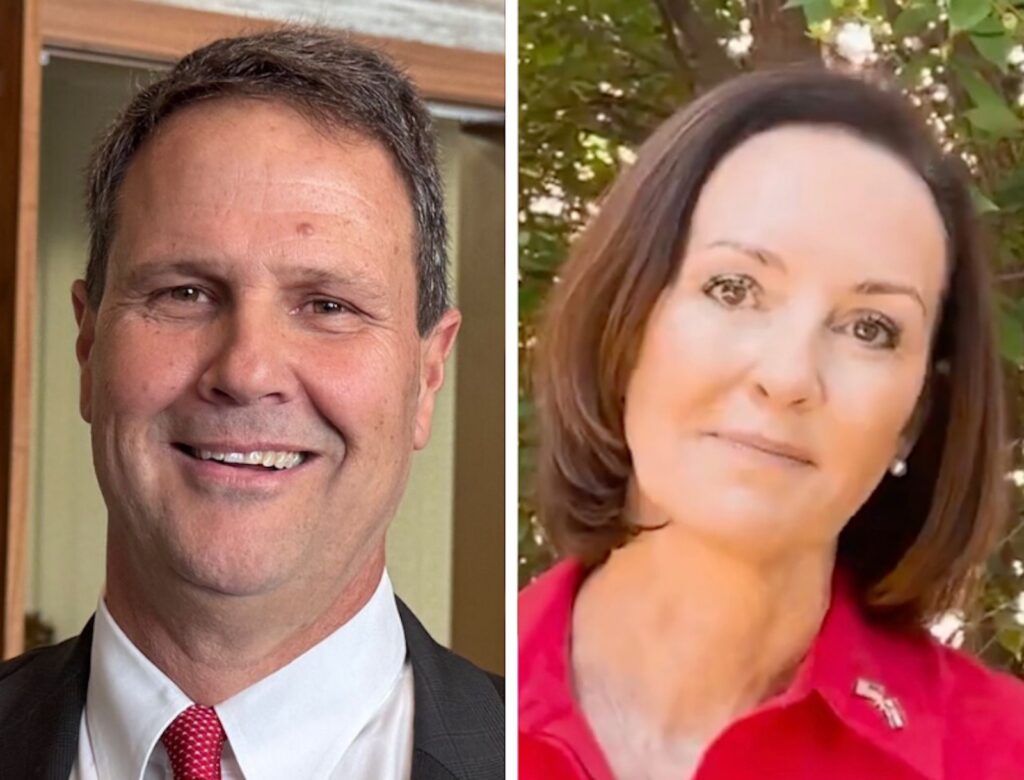
Jeff Crank, Jessica Killin set to face off in 2 debates in Colorado’s 5th Congressional District
Ernest Luning
ernest.luning@coloradopolitics.com
Updated 2 hours ago
Republican U.S. Rep. Jeff Crank and Jessica Killin, his Democratic challenger, have agreed to debate twice in the weeks leading up to the general election in Colorado’s 5th Congressional District, their campaigns have said. Crank is seeking a second term...
‘Ticked off’: Third-party U.S. Senate candidate in Colorado launches $1.3 million TV ad campaign
Ernest Luning
ernest.luning@coloradopolitics.com
Updated 17 hours ago
Bob Chew, the Forward Party nominee for U.S. Senate in Colorado, sends household objects flying in a TV ad set to run statewide through September, backed by $1.3 million in ad reservations across multiple platforms, his campaign told Colorado Politics....

Democratic group aims Spanish-language TV ad at Gabe Evans in Colorado’s battleground 8th CD
Ernest Luning
ernest.luning@coloradopolitics.com
Updated 3 days ago
A national group tied to House Democratic leadership launched a six-figure Spanish-language TV ad in Colorado this week targeting Republican U.S. Rep. Gabe Evans and the GOP’s signature budget legislation. The 30-second spot is part of $15 million in new...
Judge dismisses lawsuit seeking records from Colorado Democratic group
Marianne Goodland
marianne.goodland@coloradopolitics.com
Updated 7 days ago
A lawsuit seeking to obtain records from Democratic lawmakers affiliated with a caucus has been thrown out by a Denver District Court judge. On July 17, Judge Ericka Englert dismissed the April lawsuit filed by progressive activist Derrick Blanton, who...
Right-to-natural-gas proposal in Colorado qualifies for ballot
Marissa Ventrelli
marissa.ventrelli@coloradopolitics.com
Updated 1 week ago
A citizen initiative that seeks to enshrine the right to natural gas has qualified for the November ballot, Colorado’s election office confirmed on Thursday. Petitions containing signatures for Initiative No. 177 were turned in to the Secretary of State’s Office for review...
What happens if voters pass Colorado’s two competing income tax measures?
Marianne Goodland
marianne.goodland@coloradopolitics.com
Updated 1 week ago
The battle between two competing ballot measures — one seeking to cap Colorado’s income tax rate, the other pushing for a tiered system depending on income levels — might come down to whichever ballot proposal gets one more vote. The...

National House Democrats add Colorado seats held by Lauren Boebert, Jeff Hurd to target list
Ernest Luning
ernest.luning@coloradopolitics.com
Updated 4 days ago
The national House Democrats’ campaign arm on Wednesday added the Colorado congressional district held by Republican U.S. Reps. Jeff Hurd and Lauren Boebert to the list of targeted seats the party believes are vulnerable in this year’s midterms. The Democratic...
Bennet settles campaign finance complaints, admits violating state law
Marianne Goodland
marianne.goodland@coloradopolitics.com
Updated 1 week ago
U.S. Sen. Michael Bennet’s gubernatorial campaign has agreed to pay a $7,433 fine for using his Senate campaign account to pay for gubernatorial campaign travel expenses. The July 31 settlement includes an admission by Bennet and his campaign that they...
Federal judge rejects DOJ bid to force Colorado to hand over voter information
Marissa Ventrelli
marissa.ventrelli@coloradopolitics.com
Updated 1 week ago
A U.S. district court judge has dismissed a lawsuit filed by the U.S. Department of Justice against Colorado Secretary of State Jena Griswold for refusing to provide the agency with personal voter information. Last December, the DOJ’s Civil Rights Division asked...

Group submits signatures for proposed Colorado graduated income tax
Marianne Goodland
marianne.goodland@coloradopolitics.com
Updated 1 week ago
The measure, which eliminates Colorado’s flat tax, is expected to raise $2 billion in new revenue The proposal to amend the Colorado constitution to change the state’s flat rate into a graduated income tax came in under the wire Monday,...
PREV
PREVIOUS

COMMENTARY | The West is ready for a seat at the table — the head of the table
If you look at a map of where our presidents have hailed from, there’s an enormous blank space in America: the Rocky Mountain West. No president has come from our region, and only two presidents, Ronald Reagan and Richard Nixon – both from California, although only Nixon was born there – have hailed from west […]

Nebraska measure could tip the number of states with casinos
Nebraska voters may decide next year whether to legalize casino gambling in a ballot measure that could tip the number of states that allow commercial gambling into the majority. Supporters of legalized casinos have launched a petition drive to place the issue on the 2020 ballot with financial backing from the economic development corporation owned […]