

Supreme Court redistricting decision could reshape politics; ruling cites new Colorado system
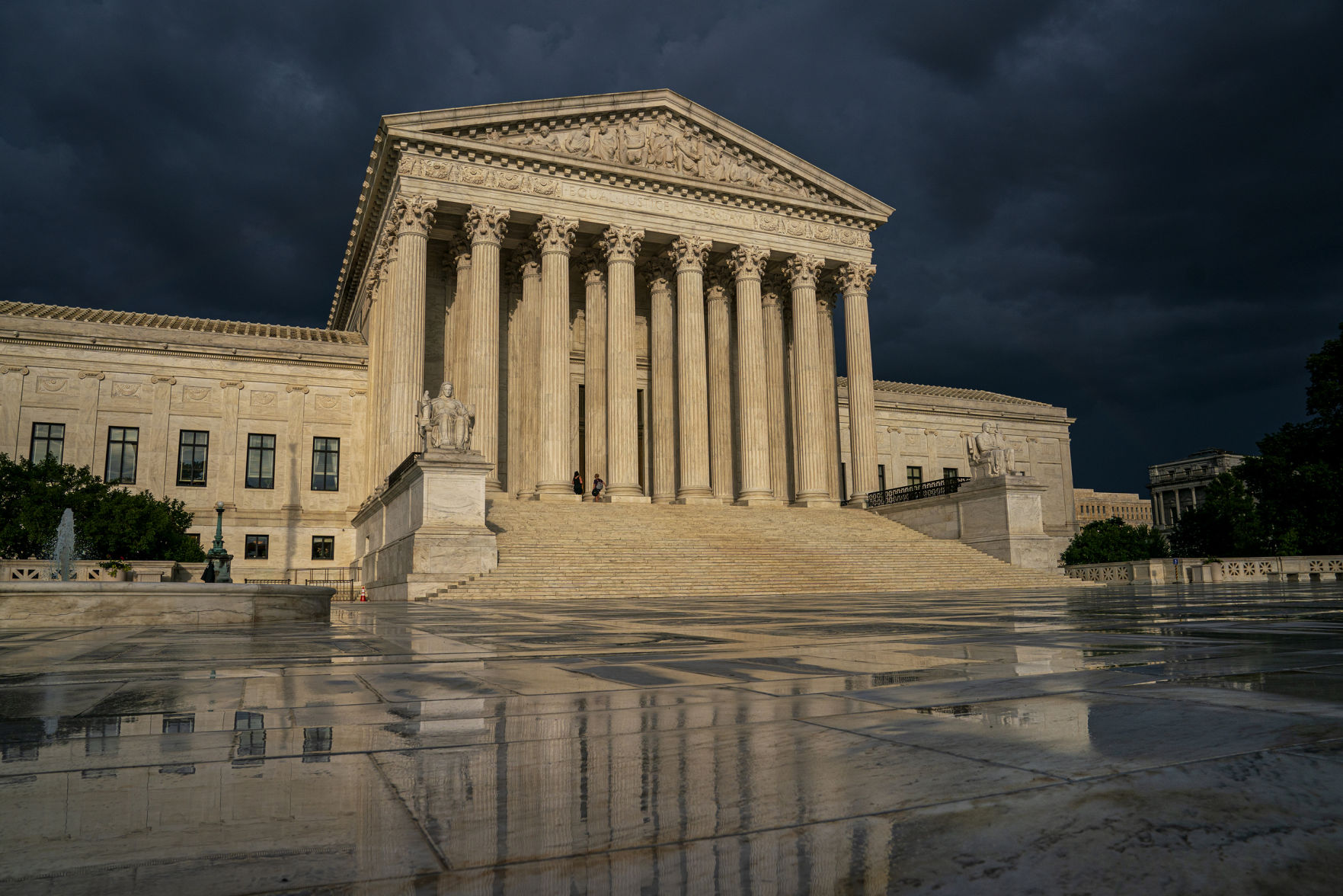
WASHINGTON – The U.S. Supreme Court says federal courts have no role to play in policing political districts drawn for partisan gain. The decision could embolden political line-drawing for partisan gain when state lawmakers undertake the next round of redistricting following the 2020 census.
The justices said by a 5-4 vote on Thursday that claims of partisan gerrymandering do not belong in federal court. The court’s conservative, Republican-appointed majority says that voters and elected officials should be the arbiters of what is a political dispute.
The ruling references Colorado, whose voters last year adopted a new system that aims to prevent partisan tricks in drawing districts.
The court rejected challenges to Republican-drawn congressional districts in North Carolina and a Democratic district in Maryland.
The decision was a major blow to critics of the partisan manipulation of electoral maps that can result when one party controls redistricting.
In dissent for the four liberals, Justice Elena Kagan wrote, “For the first time ever, this court refuses to remedy a constitutional violation because it thinks the task beyond judicial capabilities.”
Federal courts in five states concluded that redistricting plans put in place under one party’s control could go too far and that there were ways to identify and manage excessively partisan districts. Those courts included 15 federal judges appointed by Republican and Democratic presidents reaching back to Jimmy Carter.
But the five Republican-appointed justices decided otherwise.
The decision effectively reverses the outcome of rulings in Maryland, Michigan, North Carolina and Ohio, where courts had ordered new maps drawn and ends proceedings in Wisconsin, where a retrial was supposed to take place this summer after the Supreme Court last year threw out a decision on procedural grounds.
Proponents of limiting partisan gerrymandering still have several routes open to them, including challenges in state courts. There is a pending North Carolina lawsuit.
The North Carolina case has its roots in court decisions striking down some of the state’s congressional districts because they were illegal racial gerrymanders.
When lawmakers drew new maps as a result, Republicans who controlled the legislature sought to perpetuate the 10-3 GOP advantage in the congressional delegation. Democratic voters sued over the new districts, complaining that they were driven by partisan concerns.
The voters won a lower court ruling, as did Democrats in Wisconsin who challenged state assembly districts. But when the Supreme Court threw out the Wisconsin ruling on procedural grounds that did not address the partisan gerrymandering claims, the justices also ordered a new look at the North Carolina case. A three-judge court largely reinstated its ruling.
In Maryland, Democrats controlled redistricting and sought to flip one district that had been represented by a Republican for 20 years. Their plan succeeded, and a lower court concluded that the district violated the Constitution.
The high court agreed to hear both cases.
In Colorado, voters last year adopted a pair of ballot questions that place the drawing of electoral boundaries for Congress and the legislature in the hands of independent committees designed to be politically balanced.
In the majority opinion, Roberts noted that fact.
“… In November 2018, voters in Colorado and Michigan approved constitutional amendments creating multimember commissions that will be responsible in whole or in part for creating and approving district maps for congressional and state legislative districts,” he wrote.
Despite Colorado’s new system, Gov. Jared Polis decried Thursday’s ruling.
??”Partisan political gerrymandering erodes confidence in our elections and is destructive to our democracy,” the Democratic governor said in a statement. “Colorado has made progress on this issue and should serve as a model for other states in protecting the integrity of our representative form of government. Colorado has stepped up and done the right thing by making sure that politicians don’t draw their own districts and we are ready to help any state who would follow our lead.”
Democrat Michael Bennet, the state’s senior U.S. senator, said that the high court “does not appreciate the relentless assault on our democracy.
“The rise of extreme partisan gerrymandering has insulated politicians from real accountability and poisoned the public’s faith in our government,” he said in a statement. “Voters should choose their elected representatives, not the other way around.”
Colorado Politics contributed.


Judicial performance evaluations released, Montezuma County judge disciplined | COURT CRAWL
Michael Karlik
michael.karlik@coloradopolitics.com
Updated 8 hours ago
Welcome to Court Crawl, Colorado Politics’ roundup of news from the third branch of government. Colorado’s citizen-led judicial performance commissions released their voter narratives for the judges standing for retention in November, plus a disciplinary panel imposed consequences on a...
Colorado House Democrats’ caucus finances under scrutiny as ethics case against leader advances
Marianne Goodland
marianne.goodland@coloradopolitics.com
Updated 8 hours ago
Democratic lawmakers told a legislative ethics panel that a leader’s management of caucus finances left them with unanswered questions, disputed reimbursements and a breakdown in communication that ultimately triggered a formal complaint. The House Ethics Committee is examining a complaint...
Federal judge holds off on dismissing formerly bankrupt medical contractor from Jeffco jail death lawsuit
Michael Karlik
michael.karlik@coloradopolitics.com
Updated 10 hours ago
A federal judge declined on Monday to dismiss the formerly bankrupt medical contractor from a lawsuit over a detainee’s death in Jefferson County jail, but indicated she would do so if the plaintiffs’ attorneys go through the process to ensure...
Here are the 10 oldest members of Congress running for reelection
Lauren Green
lauren-green@coloradopolitics.com
Updated 11 hours ago
Capitol Hill has long been called a “retirement home,” as well over 100 House members and half the Senate are over the age of 65. That reputation doesn’t look due to change anytime soon — there are currently more than...
Fauci ignored reports of COVID vaccine side effects, new documents show
Gabrielle M. Etzel
gabrielle-m-etzel@coloradopolitics.com
Updated 13 hours ago
Dr. Anthony Fauci was made aware of possible COVID-19 vaccine complications by other senior-level public health officials in early 2021, according to new emails and text messages released by Senate Republicans on Sunday. Documents released by Sens. Rand Paul (R-KY)...

Majority of Americans say they’re worse off financially since Trump took office again: Poll
Emily Hallas
emily-hallas@coloradopolitics.com
Updated 13 hours ago
The majority of the public believes they are worse off financially than when President Donald Trump won a second term nearly two years ago, according to a new poll that painted an ominous picture of Republicans’ electability in the 2026...

Colorado River crisis: Lake Mead, Lake Powell inch closer to ‘dead pool’
Marianne Goodland
marianne.goodland@coloradopolitics.com
Updated 7 hours ago
In the past 10 days, both Lake Mead on the Arizona-Nevada border and Lake Powell roughly 300 miles northeast on the Utah-Arizona line have recorded their lowest water levels since the reservoirs were first filled. Lake Mead, the nation’s largest...

Colorado lieutenant governor candidate Markert says early discipline and key mentors set his course
Marianne Goodland
marianne.goodland@coloradopolitics.com
Updated 14 hours ago
Editor’s note: This is the first installment in a three-part series examining Colorado’s candidates for lieutenant governor. In this piece, Colorado Politics speaks with George Markert, the Republican running mate to gubernatorial candidate Victor Marx. Marx is competing against Democrat...

The hidden politics of time: How clocks, calendars — and now-contentious time zones — came to be
The Associated Press
the-associated-press@coloradopolitics.com
Updated 17 hours ago
NEW YORK (AP) — It flies. It heals all wounds. It can be of the essence, and it can be money. We thrill in the best of it, lament the worst. We’re warned not to waste it, since we can’t...

1 killed in flash flooding in Beulah: Pueblo County Sheriff’s Office
O'Dell Isaac
odell.isaac@gazette.com
Updated 15 hours ago
One person was killed in Beulah on Sunday after floodwaters swept him downstream, according to a news release from the Pueblo County Sheriff’s Office. The male victim, whose name was not released, was standing near Colorado 78 and Central Avenue...
PREV
PREVIOUS

Democratic presidential hopeful Bennet braces for a crowded debate: ‘You better not blink’
While 20 Democratic presidential hopefuls can rejoice in having qualified for their race’s first debate, one of them is acknowledging it could be tough to stand out on a crowded stage. “I tell people, ‘You better not blink, because it’s going to go by so fast,'” said U.S. Sen. Michael Bennet of Colorado, speaking on […]

TABOR author Douglas Bruce lashes out after town demolishes his building
Colorado tax activist Douglas Bruce is threatening to sue a small Pennsylvania town for demolishing his building, while simultaneously daring the municipality to file criminal charges against him. “I have to find a Pennsylvania attorney to sue them in federal court,” said Bruce, a former Colorado state representative and author of the Taxpayer’s Bill of […]