

COMMENTARY | Upcoming Trump visit recalls Nixon’s polarizing Air Force Academy speech (VIDEO)

Polarizing.
It describes a leader armed with the charisma, intelligence and inclination to divide America, where talent at polarizing leads to power, fame and riches. Abraham Lincoln and Franklin Delano Roosevelt were beloved and despised. So were Ronald Reagan and Barack Obama.
Today, Donald J. Trump polarizes, inspiring tension and loud fun at family dinners across America. Trump will speak Thursday at the U.S. Air Force Academy’s graduation.
ABOUT THE WRITER
David Ramsey is a columnist for The Gazette, the parent newspaper of Colorado Politics.
Fifty years ago, Richard M. Nixon reigned as America’s Polarizer in Chief, displayed his expertise with an aggressive and, yes, polarizing commencement address at Air Force Academy June 4, 1969.
Speaking in a calm voice, wearing a gray silk suit, hands still, jaw and shoulders jutting forward to emphasize a point, he praised his followers and ridiculed his critics. Those who opposed him, the president said in his 25-minute speech, were cowardly, dangerous and unworthy of their American heritage.
It was a bold message spoken in a time of turmoil. The Vietnam War inspired America’s young (and old) to question the virtue and wisdom of their leaders.
In the two weeks before Nixon spoke on a sunny, breezy morning at Falcon Stadium, 526 Americans died in Vietnam.
Nixon supported a new antiballistic missile system, which inspired full-page opposition newspaper ads that read, “From the people who brought you Vietnam – the antiballistic missile system.”
The president paid attention to every detail. He saw the ads.
“On the home front,” Nixon said to AFA’s class of 1969, “you are under attack from those who question the need for a strong national defense. … It is open season on the Armed Forces.
“Skeptics,” he said, “… see a danger in the power of the defenders.” Those skeptics had no “vision.” They would have “counted the costs” and remained in England instead of sailing to America. They would “turn away from American greatness.”
But the graduates sitting before Nixon were superior to those skeptics.
“Every member of this graduating class is … an idealist,” he said.
Far from the academy, the speech earned acclaim and scorn. Nixon, wrote a Time magazine columnist, showed “his worst side – the side that earned him the name Tricky Dicky.” The columnist reported a “few” of Nixon’s staff described his word choice as “unfortunate.” When Nixon read the column, he commanded his entire staff to be questioned.
Wally Moorhead sat among his graduating classmates that June morning. To his ears, the president was speaking truth. During Moorhead’s years at the academy, he watched the Vietnam War produce a canyon of strife in America. He listened to academy grads who returned to campus to reveal the reality of serving in Vietnam.
He knew what was ahead.
Moorhead, a Colorado Springs resident, served 38 years in the Air Force, retiring in 2006 as a three-star Lieutenant General. He served two perilous tours as a pilot in Vietnam.
“I’m 23 years old,” Moorhead said. “He’s the President of the United States, and he seems on the top of the food chain for me. I really was not paying much attention to his politics and everything.”
He was paying attention to Nixon’s encouragement and warning.
“He said this is going to be hard because the nation is not happy with what you’re going to do. You won’t be treated fairly. … You’re about to serve in a tough time. Stay the course, and thanks for what you’re doing.”
The president’s trip to Colorado Springs was brief and eventful. He landed, along with his family, at 5:15 the evening before his speech at Peterson Air Force Base. His flight arrived two hours late, and his family quickly waved at a crowd of 4,000 before flying away via helicopter.
Frank Ladwig, aviation director at Peterson, spent dozens of hours preparing for the president’s few minutes.
“You hope that it’s tomorrow,” Ladwig told a Gazette reporter, “when it’s all over.”
The helicopter took the Nixons to The Broadmoor hotel’s polo field. Nixon spent a restful night at the hotel, although it was not a calm night for security. Vandals busted into the hotel’s International Center and damaged 35 exhibits from the Colorado Dental Association. Authorities said they did not have the “slightest idea” who was responsible.
The Nixons departed The Broadmoor at 8:39 the next morning, taking a helicopter to the academy, where they enjoyed a brisk 35-minute tour. Organist J. Roger Boyd played Purcell’s “Voluntary in D” as Nixon entered the Cadet Chapel.
Nixon arrived at Falcon Stadium at 9:40, delivered his speech and by 11:42 returned to Peterson and boarded Air Force One for a flight to San Clemente, California, his Western headquarters.
The takeoff was delayed for a few frantic moments after Peterson workers spotted an object at the end of the airstrip.
It was a large piece of tar paper.
The Air Force speech offered a glimpse at Nixon’s essence. He escaped from Southern California poverty because of brilliance and bluntness. He was ridiculed by his critics. He ridiculed them right back. This fire explains his rise.
And his fall.
The speech offered a strong hint of his future. Nixon saw his opponents as enemies of America, and as president oversaw a crusade against those sinister “skeptics.”
This us vs. them crusade led to the Watergate scandal and ruin. On Aug. 9, 1974, little more than 62 months after speaking to a packed house at Falcon Stadium, Nixon became the only president to resign. He departed The White House in a helicopter, soaring away to long exile.
In 1978, I was home from college, eating with my family. Dad, a staunch Nixon supporter, enjoyed making announcements at the dinner table.
“I’m going out tonight to buy Nixon’s autobiography,” he said in his booming voice.
Mom, never a Nixon fan, instantly stopped eating. She believed my father worthy of ruling the entire world, with the notable exception of the house where we ate.
“No, you will not,” she said, just as loudly. “That book never will arrive in my home.”
Dad laughed. Yes, I will. Mom responded with a knowing smile. No, you won’t.
That autobiography, written by a towering and polarizing American, never arrived at mom’s cozy brick house in south Denver.
=
=
=

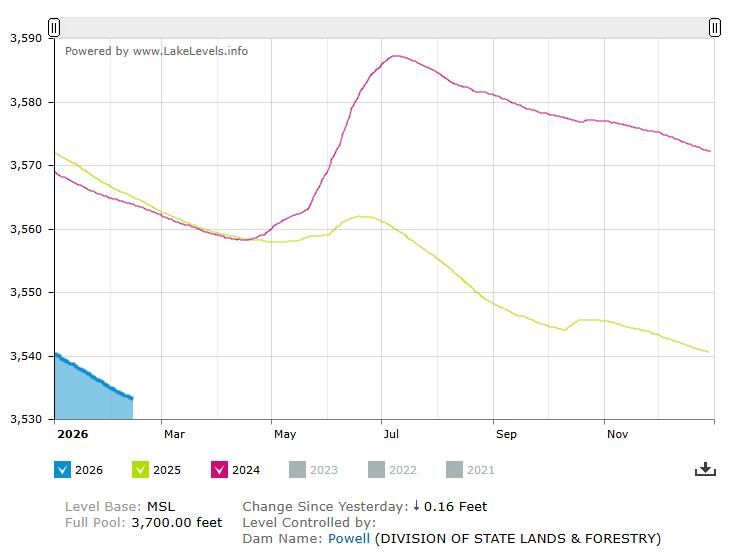
With the deadline missed, Bureau of Reclamation plans to move forward on Colorado River operations
Marianne Goodland
marianne.goodland@coloradopolitics.com
Updated 7 hours ago
Feb. 14 was no Valentine for the seven states of the Colorado River, which failed to come up with an agreement by that deadline on how to manage the river beginning Oct. 1. The Department of the Interior and the...
Democrat Shannon Bird qualifies by petition for primary ballot in Colorado’s toss-up 8th CD
Ernest Luning
ernest.luning@coloradopolitics.com
Updated 5 hours ago
Former state Rep. Shannon Bird has qualified for the Democratic primary ballot in Colorado’s hotly contested 8th Congressional District by submitting a sufficient number of petition signatures, state election officials said this week. The winner of the Democrats’ June 30...
Colorado Supreme Court accepts cases about reliability of gun-to-bullet matching
Michael Karlik
michael.karlik@coloradopolitics.com
Updated 7 hours ago
The Colorado Supreme Court announced on Monday that it will hear two cases questioning the reliability of expert testimony that purports to identify whether a specific bullet was fired from a specific gun. At least three of the court’s seven...
State Rep. Peña outlines significant inequalities in Colorado’s school finance law | A LOOK BACK
Rachael Wright, Special to Colorado Politics
rachael.wright@coloradopolitics.com
Updated 3 days ago
Forty-Five Years Ago This Week: In a guest column published in The Colorado Statesman, House Minority Leader Rep. Federico Peña, D-Denver, wrote that his greatest disappointment with the legislative process was “the inability, or unwillingness, of the General Assembly to...

Colorado Politics Calendar Feb. 16-22
Rachael Wright, Special to Colorado Politics
rachael.wright@coloradopolitics.com
Updated 2 days ago
CoPo’s weekly political calendar will help you find political and public-policy events throughout Colorado. It includes candidate and issue campaign events, public policy meetings, court hearings, state and local party conventions, assemblies, debates, rallies, parades, speaking engagements, traveling dignitary appearances,...
Michael Bennet and ‘the question’ | SONDERMANN
Eric Sondermann
eric-sondermann@coloradopolitics.com
Updated 3 hours ago
The train usually runs only one way. The route goes from the state Capitol to Washington, D.C. State legislators become members of Congress; governors become senators. See Hickenlooper, John. Including our junior senator, no matter his years, a total of...

Colorado District Attorneys unveil 2026 legislative priorities | WHAT’S YOUR AGENDA?
Marissa Ventrelli
marissa.ventrelli@coloradopolitics.com
Updated 2 days ago
Welcome to What’s Your Agenda?: The Colorado Politics’ weekly publication of trade association priorities for the state’s 2026 legislative session. The Colorado District Attorneys’ Council provides training, resources, and legislative support to every prosecutor in the state. In order to...
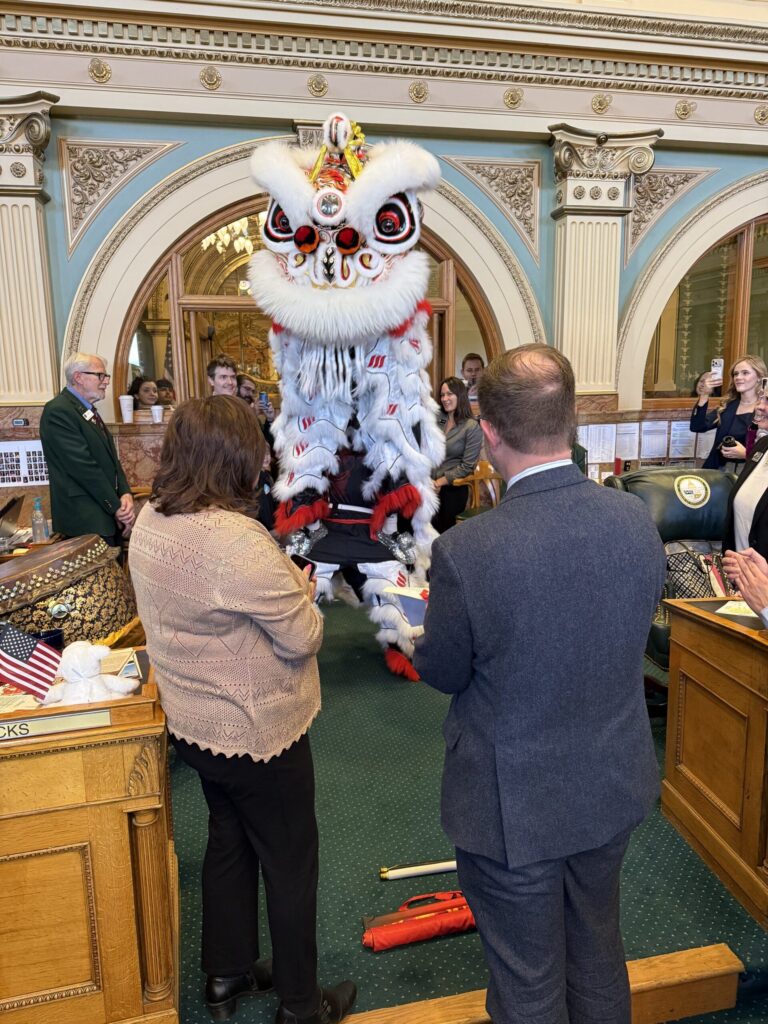
A day in the life of the Capitol: Capitol M | Week of Feb. 14, 2026
Marianne Goodland
marianne.goodland@coloradopolitics.com
Updated 2 days ago
The lighter side of the Capitol, usually. If you were walking around the Capitol on Feb. 12, there was plenty to see and to be amused (or delighted) by. Let’s start with the high school kids from Greeley’s District 6....
Appeals court clarifies what materials judges may rely on for postconviction decisions
Michael Karlik
michael.karlik@coloradopolitics.com
Updated 1 day ago
Colorado’s second-highest court clarified on Thursday that trial judges who are deciding whether to grant relief to convicted defendants may rely on the materials attached to, or referenced in, the parties’ arguments. In contrast to direct appeals of criminal convictions,...
Here’s what to know about the Homeland Security shutdown starting this weekend
Deborah Grigsby
deborah.smith@denvergazette.com
Updated 1 day ago
Another shutdown for parts of the federal government is expected this weekend, following an impasse over funding for the U.S. Department of Homeland Security amid a push by Democrats for changes in immigration enforcement. Funding for the federal agency is set to...
PREV
PREVIOUS

One-time Denver school board president won’t run again for an open seat
After leaving his job to explore a run for the Denver Public Schools board, one-time board president Nate Easley said he won’t throw his hat in the ring after all. “It’s hard to change a brand,” said Easley, who served on the DPS board from 2009 to 2013. “My brand is ‘aggressive reform-oriented guy from […]

INSIGHTS | Dark money always shines on someone else
Let the games begin. U.S. Sen. Cory Gardner is more than a year away from having a Democratic opponent in his re-election bid, and Democrats, instead of vetting the best possible challenger, are unhooking their kitchen sinks to throw at the Republican from Colorado. First up: Campaign money — where he gets his, but not […]