

Polis, Democrats want to ask Colorado voters to tax vaping products, boost tobacco tax

Gov. Jared Polis and Democratic lawmakers want to ask voters to increase Colorado’s tax on tobacco and put in place a new tax on popular nicotine vaping products.
If approved in November, the tax measure could bring in an estimated $300 million a year, with funds earmarked for health and education programs.
But the proposal’s backers say a key aim of the tax is to discourage smoking and vaping – particularly among young residents – which cost taxpayers millions in added health care costs.
The proposal would increase the state tax on cigarettes by $1.75 per pack and raise the tax on other tobacco products to 62%. It would also apply the same 62% tax rate to e-cigarettes and other nicotine vaping products, which don’t currently face levies beyond routine sales tax.
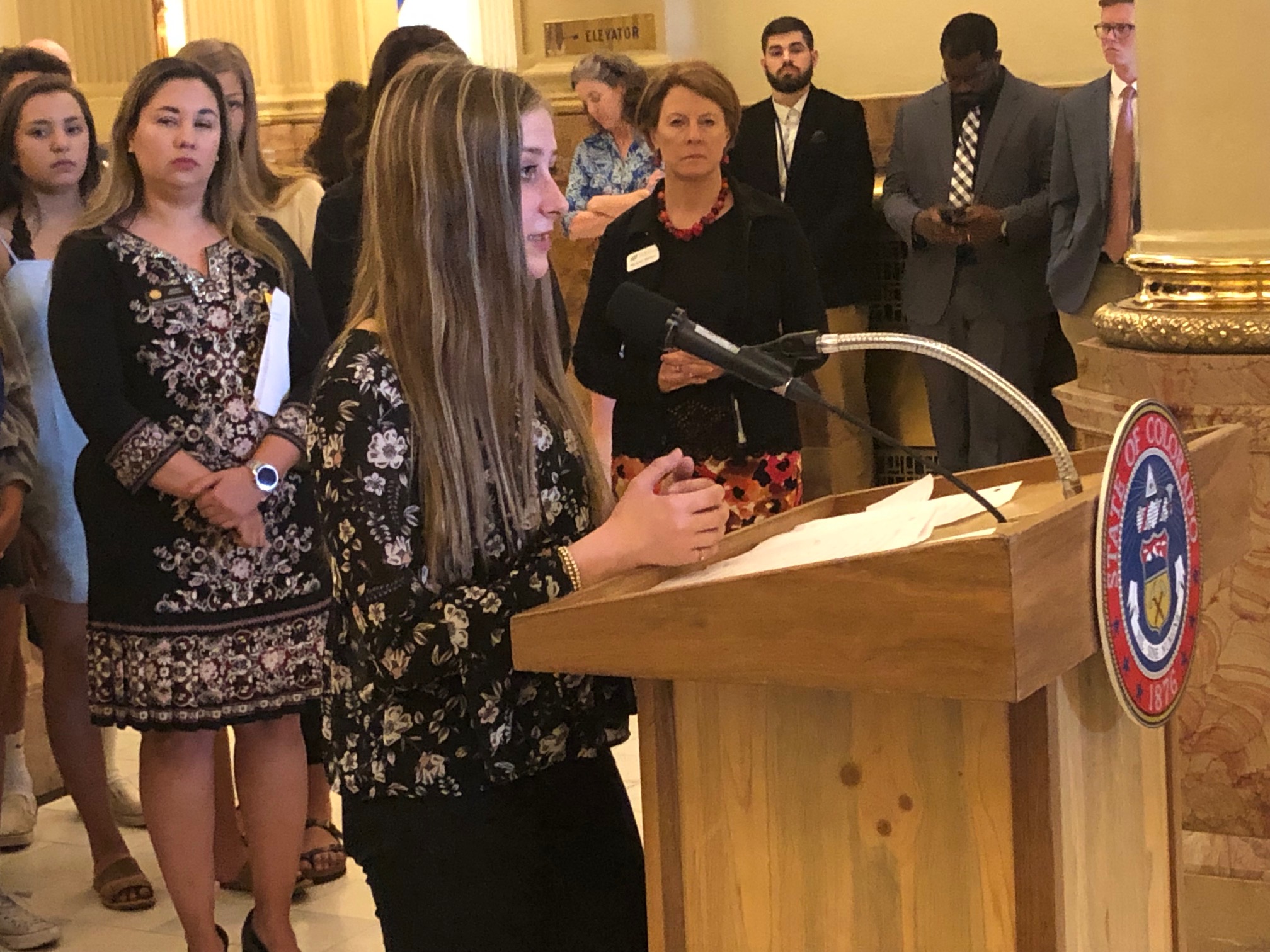
The Democrats unveiled the proposal Wednesday at a news conference at the state Capitol attended by health advocates and youngsters who warned about an “epidemic” of vaping among their peers.
Lawmakers have nine days to pass legislation to put the measure on the November ballot before the General Assembly must adjourn on May 3.
“Colorado currently has the highest rate of teen vaping in the nation,” Polis said. “This isn’t a statistic we’re proud of. This measure would help keep tobacco products out of the hands of kids and put more resources toward schools, tobacco prevention and cessation efforts, and toward reducing health care costs.”
He pointed to a recent study that says every 1% reduction in smoking nationally would save Medicaid $2.6 billion annually.
“In Colorado, effectively we are all paying for the externality of that health impact from smoking, so it’s appropriate that the people that are smoking are paying for those externalities,” Polis told The Gazette on Tuesday, before announcing the ballot measure.
He added that any money saved in health care costs by reducing the over-all smoking rate could be spent on expanding or improving Medicaid services.
“That will be direct savings to the state for the lower smoking rate and, of course, to all families in terms of better health outcomes, lower heart disease, lung cancer, and the demonstrable connection between that tax rate and the smoking rate,” Polis said.
The proposed tax would move Colorado’s tax rate on tobacco products from one of the lowest rates in the country – it ranks 37th, according to a Legislative Council report – to around 15th or 20th nationally, Polis said. (Several other states are considering increasing their taxes on the products this year.)
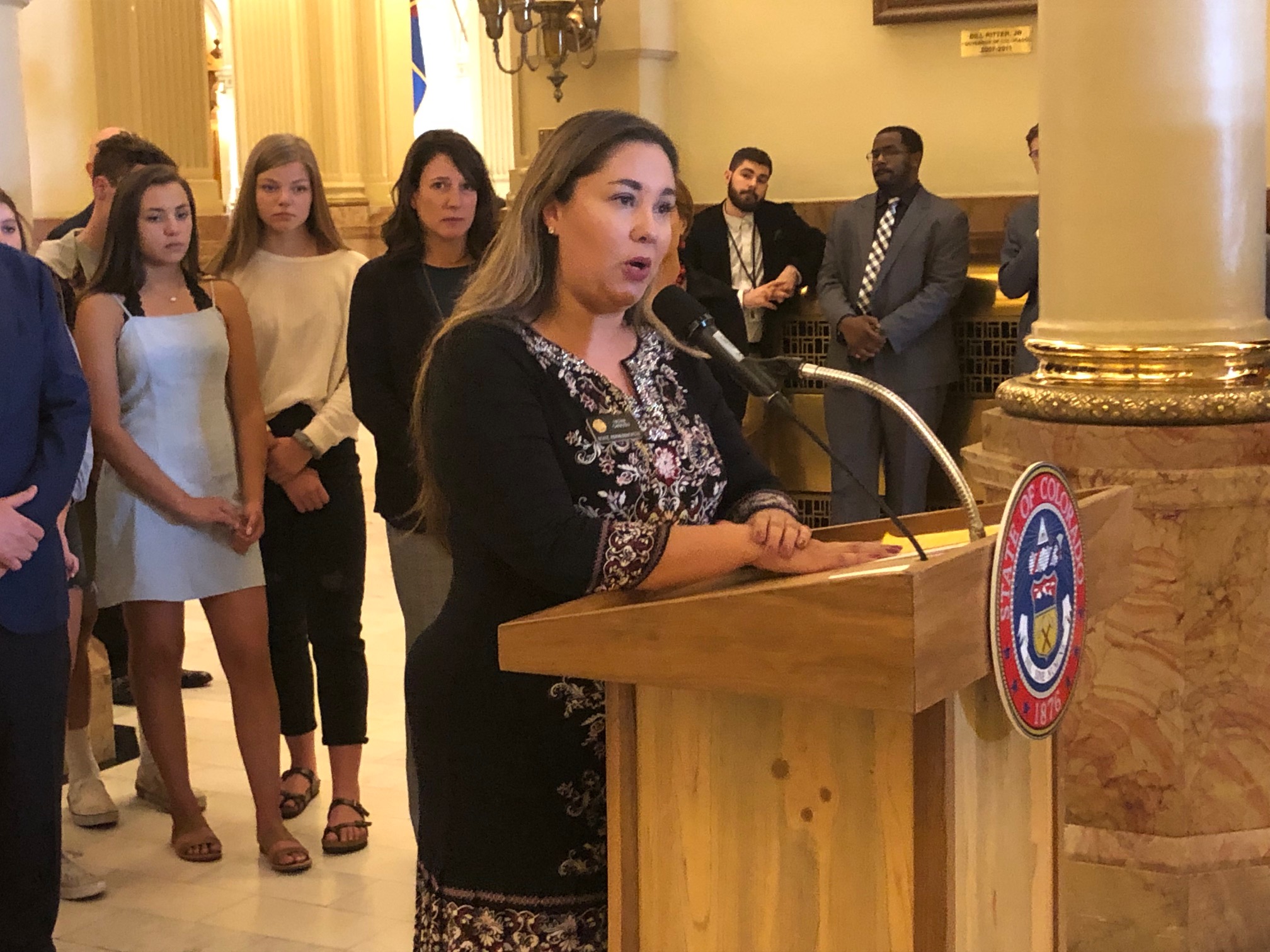
Proceeds from the Colorado tax would be split evenly, with half going to pay for a raft of health care programs – including smoking and vaping cessation programs and mental health programs – and half paying for preschool and after-school programs, said state Rep. Yadira Caraveo, D-Thornton, a pediatrician and one of the bill’s sponsors.
“The big thing for me and for all of us around increasing the price of these products is youth use,” Caraveo said. “I’m a pediatrician, and so I see this issue in clinic every single day – kids as young as 11 who are admitting to me that they or their classmates are vaping, even in class; their teacher has no idea about it.”
She pointed to studies that show every 10% increase in cigarette prices reduces smoking by about 7% among youths and overall use by 4%, with price hikes considered “especially effective” among black, Hispanic and lower-income populations.
“We really have a huge problem with [vaping] in Colorado, especially among youth, and it really has big health impacts,” Caraveo said, noting that one study showed 26% of Colorado high school students said they vape – the highest rate in the nation and twice the national average.
Dr. Robin Deterding, director of the Breathing Institute at Children’s Hospital, which helped put together the proposal, called vaping use among youth “an epidemic that’s come upon us.”
“Kids are very price sensitive,” she said. “This tax will at least help decrease the opportunity that they’ll get these products. … We’ve got to do everything in our power to protect this generation of kids from addictions, and I think this will help do it.”
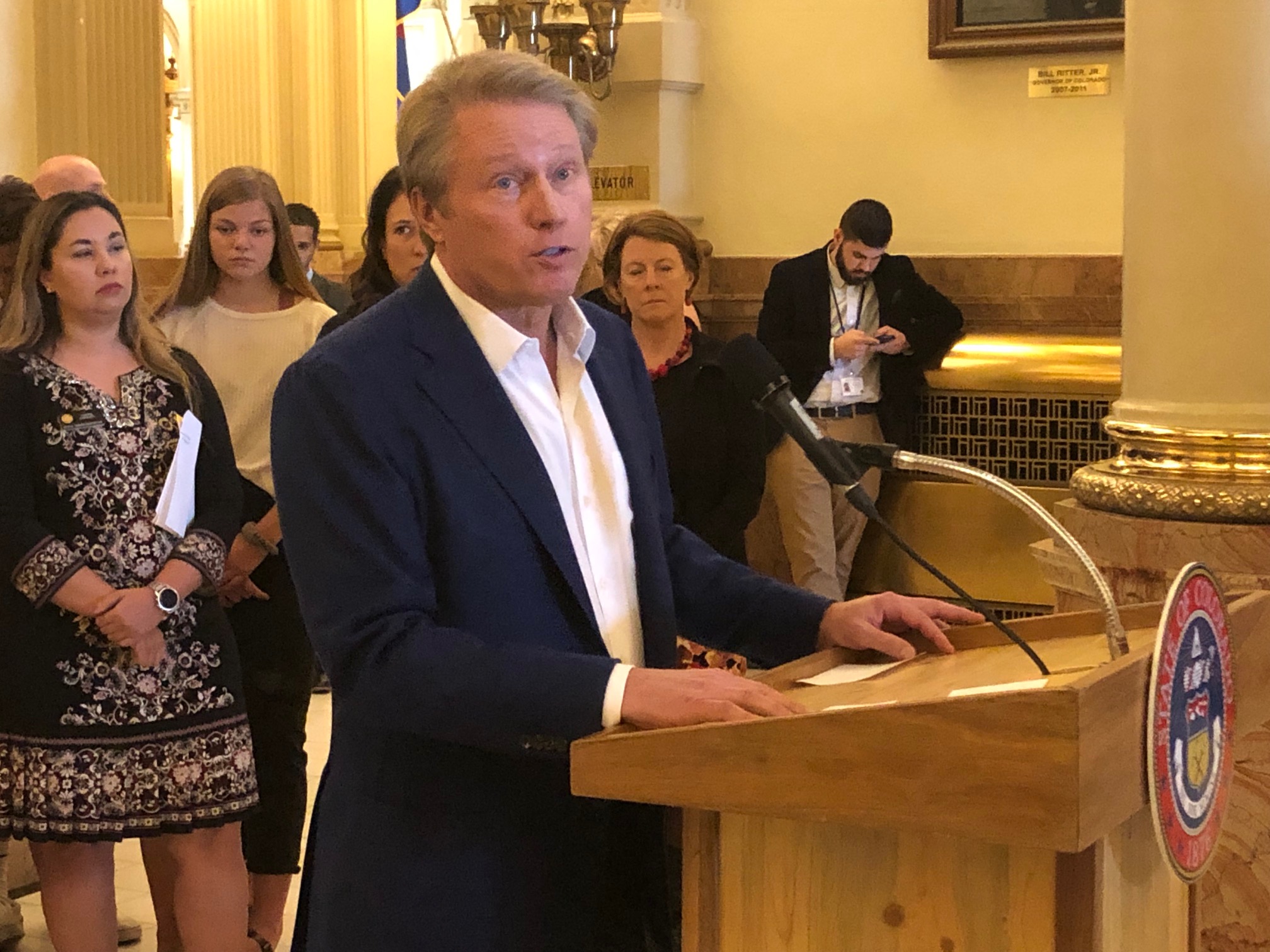
Kent Thiry, the CEO of Denver-based medical company DaVita Inc., has been tapped to lead the November ballot initiative to raise taxes on tobacco and vaping. Thiry also helped lead last year’s successful campaign to pass a pair of ballot measures reforming the way Colorado draws its congressional and legislative boundaries.
The vaping industry plans to oppose the measure, lobbyist Joe Miklosi, a former Democratic state representative, told Colorado Politics.
“A 62% tax increase will force me to close my five small vaping stores, lay off 46 people, and prevent the vaping industry from helping hundreds of thousands of people quit smoking,” said Amanda Wheeler, who owns two JVapes stores in Colorado and three other retail establishments in Arizona and Oklahoma, in a statement provided by Miklosi.
The Rocky Mountain Smoke Free Alliance and the Vaping Technology Association will be opposed to the measure, he added.
Jake Williams, executive director of Healthier Colorado, called nicotine addiction a nonpartisan issue and said “the tobacco and e-cigarette industries don’t get veto power over the future of our kids.”
Senate Republican Leader Chris Holbert, however, framed his distaste for the proposal along ideological and partisan lines.
Said Holbert: “Any libertarian streak that I had hoped for from this governor has evaporated. The proposed 62% tax on vaping products will limit access and increase costs for the most effective smoking cessation tool in history.
“Furthermore, the attempt to ram this through at the end of the legislative session is irresponsible. I’m encouraging members of the Senate Republican caucus to oppose this bad idea.”
The tobacco and vape tax proposal could be the third tax measure referred to the November ballot this session by the Democratic-controlled legislature.
Lawmakers plan to ask voters to approve permanently lifting state revenue limits under the Taxpayer’s Bill of Rights. They’re also fashioning a proposal to establish sports gambling, which would include a tax dedicated to funding the state’s water plan and other entities.
In 2016, Colorado voters defeated Amendment 72, a proposed tobacco tax increase, by a 6 percentage point margin. The ballot initiative would have raised taxes on cigarettes by $1.75 per pack to pay for health-related measures and tobacco education and cessation programs.



Colorado Supreme Court signals intervention in dispute over treatment for trans children
Michael Karlik
michael.karlik@coloradopolitics.com
Updated 9 hours ago
The Colorado Supreme Court ordered Children’s Hospital Colorado on Tuesday to explain why it should not direct the organization to resume providing certain types of services to transgender children in compliance with the state’s non-discrimination law. Last month, a Denver...
Trump faces first domestic test on Iran conflict with Senate war powers vote
Ramsey Touchberry, Washington Examiner
ramsey.touchberry.washington.examiner@gazetteedit.wpenginepowered.com
Updated 10 hours ago
Administration officials are scrambling to sell members of Congress on President Donald Trump’s military operations in Iran ahead of bipartisan attempts to limit his war powers in the Middle East without approval from lawmakers. The Senate and House are set...
Supreme Court hands California parents win over secret gender transition policy
Jack Birle, Washington Examiner
jack.birle.washington.examiner@gazetteedit.wpenginepowered.com
Updated 10 hours ago
The Supreme Court gave California parents a significant victory late Monday when it kept in place a lower court’s block of the Golden State’s public school policy hiding students’ gender identity and preferred pronouns from parents. A 6-3 majority on...

Judge nixes latest policy requiring 7 days’ notice for Congress members to visit ICE facilities
Michael Kunzelman
michael.kunzelman@associatedpress.com
Updated 10 hours ago
WASHINGTON (AP) — A federal judge agreed on Monday to temporarily suspend the latest version of a Trump administration policy that requires members of Congress to provide a week’s notice before they can visit immigration detention facilities. U.S. District Judge...
Judge nixes latest policy requiring 7 days’ notice for Congress members to visit ICE facilities
Michael Kunzelman
michael.kunzelman@associatedpress.com
Updated 8 hours ago
WASHINGTON • A federal judge agreed on Monday to temporarily suspend the latest version of a Trump administration policy that requires members of Congress to provide a week’s notice before they can visit immigration detention facilities. U.S. District Judge Jia...

Gov. Polis, Upper Basin states criticize federal draft plan for managing the Colorado River
Marianne Goodland
marianne.goodland@coloradopolitics.com
Updated 11 hours ago
With no agreement among the seven Colorado River states and federal deadlines now passed, the Upper Colorado River Commission on Monday sharply criticized the U.S. Department of the Interior’s draft plan for managing the river after current guidelines expire this...
Ballot access, dual-office ban bills move swiftly through Colorado legislature
Marianne Goodland
marianne.goodland@coloradopolitics.com
Updated 11 hours ago
With an eye on the 2026 election cycle and mounting tensions with the Trump administration, Colorado lawmakers are fast-tracking a pair of election bills they say will protect the state’s mail ballot system and tighten rules for elected officials. The...
Colorado GOP chair Brita Horn loses ‘no-confidence’ vote, vows to refocus on ‘mending that divide’
Ernest Luning
ernest.luning@coloradopolitics.com
Updated 6 hours ago
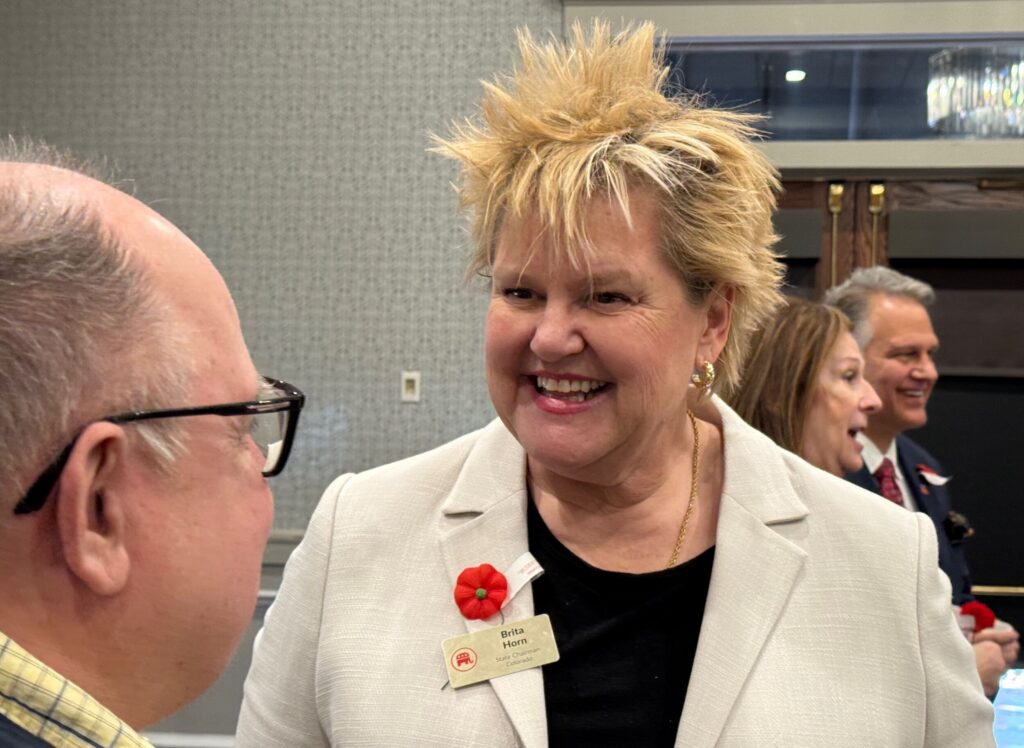
The Colorado Republican Party’s state central committee approved a resolution expressing “no confidence” in state chair Brita Horn in a landslide late Monday night near the end of an online meeting marked by rancor and confusion. Almost 80% of the...

Trump to attend White House Correspondents’ Dinner for first time as president
Washington Examiner Staff, Washington Examiner
washington.examiner.staff.washington.examiner@gazetteedit.wpenginepowered.com
Updated 14 hours ago
President Donald Trump announced on Monday that he accepted an invitation to this year’s White House Correspondents’ Dinner. It would mark the first time Trump has attended the dinner, in either term, since he’s been president. Trump announced the decision...
Primary rival sues to prevent Democrat Eileen Laubacher from going through assembly in Colorado’s 4th CD
Ernest Luning
ernest.luning@coloradopolitics.com
Updated 16 hours ago
Democratic congressional candidate Trish Calvarese on Monday asked a judge to prevent one of her primary rivals, Eileen Laubacher, from participating in the caucus and assembly process to seek the nomination to challenge Republican U.S. Rep. Lauren Boebert in Colorado’s...
PREV
PREVIOUS

Youth voter turnout is already high in Colorado; state House Democrats want it even higher
Charley Olena, advocacy director for New Era Colorado, has a grudge with the state of Minnesota. Her organization works to register and turn out young voters in Colorado. In the last midterms, voting became the hottest new millennial trend, catching on like a houseplant that serves avocado toast. About 41 percent of Colorado 18- to […]

University of Denver business dean named president of struggling Florida school
Bethune-Cookman University in Florida has selected the dean of the University of Denver’s Daniels College of Business as its next president. Elrie LaBrent (Brent) ChriteDU Daniels College of Business The Daytona Beach News-Journal reports that Elrie LaBrent (Brent) Chrite will take over as the Florida university’s seventh president on July 1. The Daytona Beach school […]