

HUDSON | Legislation would lend a voice to Colorado’s state workers
Surprisingly, House Bill 1273, the Colorado Partnership for Quality Jobs and Services Act, slipped through the House State Affairs Committee with little notice two weeks ago. It currently languishes in the House Appropriations Committee where it is likely to be released soon and must undertake a sprint through floor debate and then on to the Senate for approval before the Legislature calls it quits for the year. This bill will find itself locked in a cage match with other late bills, all hustling for passage during the final two weeks of the session. Sponsors will be jockeying for advantage in their efforts to stuff 10 pounds of advancing legislation into what is little more than a five-pound bag of remaining legislative days. Strategic Republican foot-dragging is likely to consign more than a few of these to the limbo of indefinite postponement.
Just last week, Democratic state Reps. Chris Kennedy and Mike Weissman threw in the towel on their effort to restructure Colorado’s senior property tax exemption, extending a wistful promise to return next year with an improved, vitamin-enriched approach. Speculation at the Capitol is that the Family Leave Medical Insurance Act, which still seeks an exit from the Senate, may itself be on life support.
Acknowledged public policy problems rarely lend themselves to either swift or simple solutions. Entire ecosystems of barely visible legal and marketplace stakeholders always encrust the status quo. Much to the disappointment of freshmen legislators, big changes often have to be introduced several years running before they succeed – then several more before that solution achieves grudging acceptance.
HB 1273, sponsored by JBC member Daneya Esgar and Senate President Leroy Garcia, is intended to formalize the partnership arrangement between state workers and the administrative appointees of the governor by restoring statutory authorization for collective bargaining and payroll withholding of union dues. The bill was moved out of committee on a party line vote, but no Republican argued state workers should be happy with their plight. The rot in Colorado’s civil service system is way too apparent to be denied. Employee turnover is at record highs, approaching 30 percent annually in some departments, and it is proving increasingly difficult to fill vacant positions many having remained unfilled for six months or more. State wages have been largely frozen for nearly 20 years, benefits reduced and salary compression (resulting from a failure to provide pay-for-performance raises) has each contributed to declining morale and an exodus from state jobs since our economy improved.
Esgar and Garcia are not attempting to provide workers with a newfound right to strike, although there is always a chance for a walkout when conditions grow sufficiently noxious. Their bill is intended to address the imbalance that currently exists between workers and managers. There is virtually no voice speaking for state workers in either the budget process or work rule decisions. It isn’t even clear who is ultimately in charge. State employees work for the taxpayers of Colorado, but, more directly, they are the workforces provided by the legislature. They may report to the governor and his appointees, but governors come and go throughout every career. State workers serve to implement the programs and enforce the laws approved by the legislature. Few of these positions are glamorous and many are largely janitorial in character. Their efforts should be appreciated.
There is an inherent tension between the executive and the state workforce, irrespective of party. Democratic governors have proven only marginally more supportive of Colorado’s civil service than Republicans. It was Bill Ritter who reneged on a commitment to formalize the partnership agreements between Colorado WINS and his staff. And it was John Hickenlooper who tripled the number of patronage positions in the senior executive service, closing off many career-capping promotions for long-serving state workers. Following the extensive damage to state highways caused by Front Range floods, CDOT workers rebuilt our washed out bridges and roads in mind-bogglingly short order – working seven days a week and living in tent encampments with the National Guard. I was standing with a senior CDOT maintenance manager as Gov. Hickenlooper praised his troops for their genuinely amazing achievements. He sarcastically and somewhat bitterly remarked to me, “Who knew he felt that way?”
State law promises state workers a prevailing wage, comparable to equivalent compensation for similar work in the private sector. If state workers fail to win a seat at the table again this year, it’s only a matter of time before a class-action lawsuit demands the legislature comply with the law – a suit I suspect workers will win.
Miller Hudson is a public affairs consultant and a former state legislator. He can be reached at mnhwriter@msn.com.

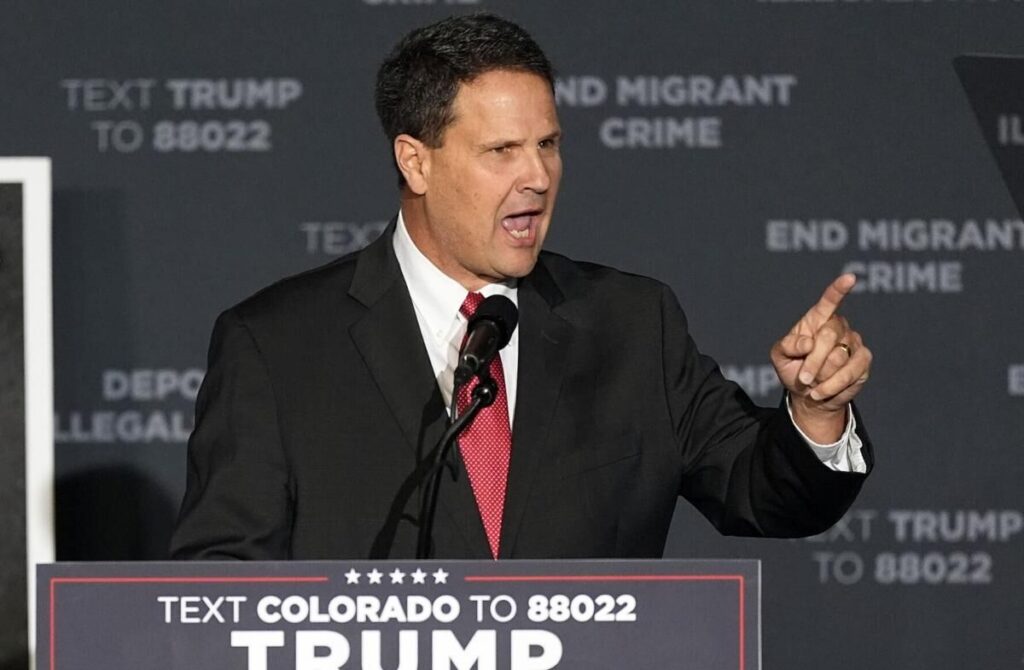
Rep. Jeff Crank thinks Democrats are too focused on Trump, not enough on Colorado Springs
Vince Bzdek
vince.bzdek@gazette.com
Updated 6 hours ago
By Vince Bzdek For Congressman Jeff Crank, who’s unopposed in the Republican primary for the 5th Congressional District but the main target of both candidates in the lively Democratic primary, the big question in the midterms is not who will...
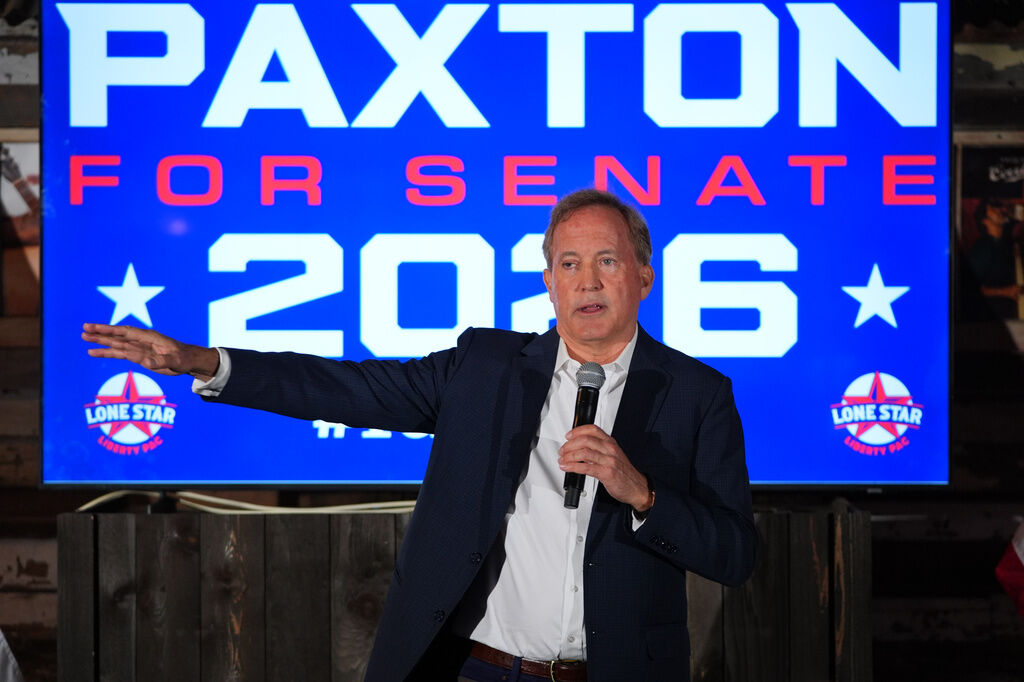
Does character matter anymore? | SONDERMANN
By Eric Sondermann
by-eric-sondermann@coloradopolitics.com
Updated 3 days ago
The last few weeks have been illuminating in the manner of a headlamp pointing the way to some deep, dark, murky netherworld. Graham Platner, a hero to the populist set on the Democratic side, became his party’s Senate nominee in...

Private equity has no place in health care | GUEST COLUMN
Colorado Politics
colorado-politics@coloradopolitics.com
Updated 2 days ago
By Miah Ntepp Of all the financial pressures placed on working people in this country, the skyrocketing costs of health care rank near the top. As families struggle under the cuts to Medicaid made by the Trump administration, they are...
Some pointed questions for the gubernatorial hopefuls | George Brauchler
George Brauchler
george-brauchler@gazette.com
Updated 3 days ago
Earlier this month, the Republican and Democratic candidates for governor participated in a televised interview moderated by well-known, left-leaning legacy media folks. Predictably, the questions asked of the GOP candidates were more aggressive, pointed, biographical and almost entirely disconnected from...
Chaotic funding throws monkey wrench into governor’s-race money madness | Paula Noonan
Paula Noonan
paula-noonan@coloradopolitics.com
Updated 3 days ago
Chaos Monkey, Inc., gave a trifle $20,000 donation to Rocky Mountain Way (RMW), the independent expenditure committee (IEC) supporting U.S. Sen. Michael Bennet for Colorado governor. But why, Coloradans should ask, would a guy who has assigned his contributor name...

Lindsay Datko on school safety, misconduct and transparency in Jeffco schools | The OpEdge Podcast
Tony Olivero
tony.olivero@gazette.com
Updated 4 days ago
Jeffco Kids First founder Lindsay Datko joins The OpEdge to explore concerns about school safety, staff misconduct and transparency in Jefferson County Schools. Datko tells host and investigative columnist Jimmy Sengenberger why she believes Colorado’s second-largest district has too often...

Candidate’s disturbing anti-animal agriculture history | Rachel Gabel
Rachel Gabel
rachel-gabel@coloradopolitics.com
Updated 6 days ago
Rep. Manny Rutinel has busted out a cowboy hat for campaign photos and has thrown it into the ring to represent Colorado’s 8th Congressional District in D.C. He is endorsed by U.S. Sen. Cory Booker, a New Jersey democrat who serves on the Committee...

Marx, Bottoms, a primary death wish for Colorado GOP | Dick Wadhams
Dick Wadhams
dick-wadhams@coloradopolitics.com
Updated 6 days ago
Colorado Republicans stand on the brink of total irrelevance and embarrassment if they nominate one of the two nonsensical, buffoonish candidates running for governor, Victor Marx and Scott Bottoms. Republicans are already in a very defensive, tenuous position as Democrats...

Remember the grassroots reason for DEI | Miller Hudson
Miller Hudson
miller-hudson@coloradopolitics.com
Updated 5 days ago
The Trump administration’s jihad against Diversity, Equity and Inclusion (DEI) programs has metastasized into the most unexpected corners of American life. Yet, before examining this policy “incursion,” it’s worthwhile to examine the roots of DEI which reach back more than...

Why I’m voting Democrat | Jon Caldara
Jon Caldara
jon-caldara@coloradopolitics.com
Updated 1 week ago
It makes no sense to be a Republican in Colorado. Or a Democrat for that matter. On the day I turned 18, even before I bought my first legal 3.2 beer (remember 3.2 beer?), I went to the courthouse and...
PREV
PREVIOUS

'Let’s not doom ourselves to another Columbine'
Don Lee It seems as though it was just yesterday, when I represented a grieving community in the Colorado State Legislature, attempting to make sense of a senseless act; the Columbine massacre. In just my third month in office I experienced what I pray you will never experience in your community: the random murder and […]

BIDLACK | Why white supremacists have no place in our armed forces
Hal Bidlack Some of the trickier lessons to teach cadets at the Air Force Academy, at least for me, were the lessons we spent on the Bill of Rights, and the First Amendment in particular. My goal was to convince the cadets that the only way free speech is truly protected is when people are […]