

School Finance Act may provide break to Colorado’s rural schools

The annual School Finance Act is being reviewed Thursday by the Senate Education Committee — and there’s good news for rural schools.
An announcement last week that the state’s residential assessment rate for property taxes would not drop as precipitously as feared meant $107.6 million more is available, and at least $55 million of that showed up in the School Finance Act this week.
Sources tell Colorado Politics those numbers are almost a sure bet to change before the bill gets to the Senate floor. What’s available for public education is about $99 million. The other $8.6 million will be devoted to covering senior and veteran property tax homestead exemptions.
The School Finance Act, Senate Bill 246, sets aside $25 million in one-time-only money, split 55/45 between large rural and small rural school districts. Large rural school districts are defined by the Department of Education as those with between 1,000 and 6,500 students; small rural districts have less than 1,000 students.
The Rural School Alliance, which advocates on behalf of rural schools, had hoped for $30 million, the same amount rural school districts got in both the 2017 and 2018 budget. Instead, another $5 million is reserved for behavioral health services for all schools, at about $20,000 per school district.
> RELATED: With school finance act on the horizon, rural schools hope for another one-time push
“We think it’s a solid funding package,” said Michelle Murphy of the Rural School Alliance. She said she is especially grateful to the bill’s sponsors, as well as Republican Sens. Bob Rankin of Carbondale and Jerry Sonnenberg of Sterling. “With the full-day kindergarten money” and a larger buydown of the budget stabilization factor, it will be a good boost for rural schools, Murphy said.
The budget stabilization factor — formerly called the negative factor — is a budget-balancing formula adopted during the Great Recession that reduced state school funding based on how much tax revenue was available each year. The reduced funding is carried on the books as a debt to public schools.
Under the bill, all school districts will receive an increase of $182.76 per pupil, for a total base per-pupil funding, on average, of $6,951.53.
There’s more good news for districts, thanks to the change in property tax assessments, and that’s another reduction in the budget stabilization factor debt.
The 2019-20 state budget, which was sent to Gov. Jared Polis this week, included a $77 million reduction in the debt, to just under $600 million. The debt started out in 2010 at $1 billion and lawmakers have been chipping away at it for the past three years.
The School Finance Act reduces that debt by another $25 million, but that’s raising concerns for some lawmakers because that’s not one-time money; it’s a permanent change to the funding base for K-12 public education.
Amie Baca-Ohlert, president of the Colorado Education Association, welcomed the buydown of the debt in a statement Wednesday.
“Our 38,000 members are pleased that the Public School Finance Act includes an additional $25 million reduction to the budget stabilization factor,” Baca-Ohlert said. She noted the $25 million in one-time funds for rural schools and $5 million for behavioral health needs also included “are desperately needed.”
But she said students would also benefit “from additional Special Education funding should more revenue become available. We now call on lawmakers to pass the proposed legislation as a first step toward reversing the chronic underfunding of Colorado public schools over the last decade.”
One thing may slow the bill down a bit: the General Assembly, by law, has to adopt a bill setting the new residential assessment rate. That bill — Senate Bill 255, was introduced late Wednesday nad is headed for Senate Finance. The $107.6 million available from the new residential assessment rate isn’t actually there yet until that bill is passed.



Space Force should measure workforce needs, as it prepares to double in size, GAO report says
Mary Shinn
mary-shinn@coloradopolitics.com
Updated 24 minutes ago
The Space Force needs more people. It’s just not precisely sure how many more. A Government Accountability Office report released earlier this month found that the youngest and smallest military branch does not have a process to consistently or accurately...

Colorado schools receive $24 million to fully implement Healthy School Meals for All
Marissa Ventrelli
marissa.ventrelli@coloradopolitics.com
Updated 41 minutes ago
The Colorado Department of Education is providing Colorado schools with nearly $24 million in grant funding to fully implement the Healthy School Meals for All program. Approved by voters in 2022, the Healthy School Meals for All provides free breakfast...

Secret Service agent placed on administrative leave after arrest for near-deadly hazing ritual
Claire Carter
claire.carter@washingtonexaminer.com
Updated 1 hour ago
A Miami Secret Service agent in Florida was placed on administrative leave following his arrest on Sunday in connection with a near-deadly hazing incident at a University of Miami fraternity. Marquez Christopher Pinder, 29, was arrested alongside two other individuals...
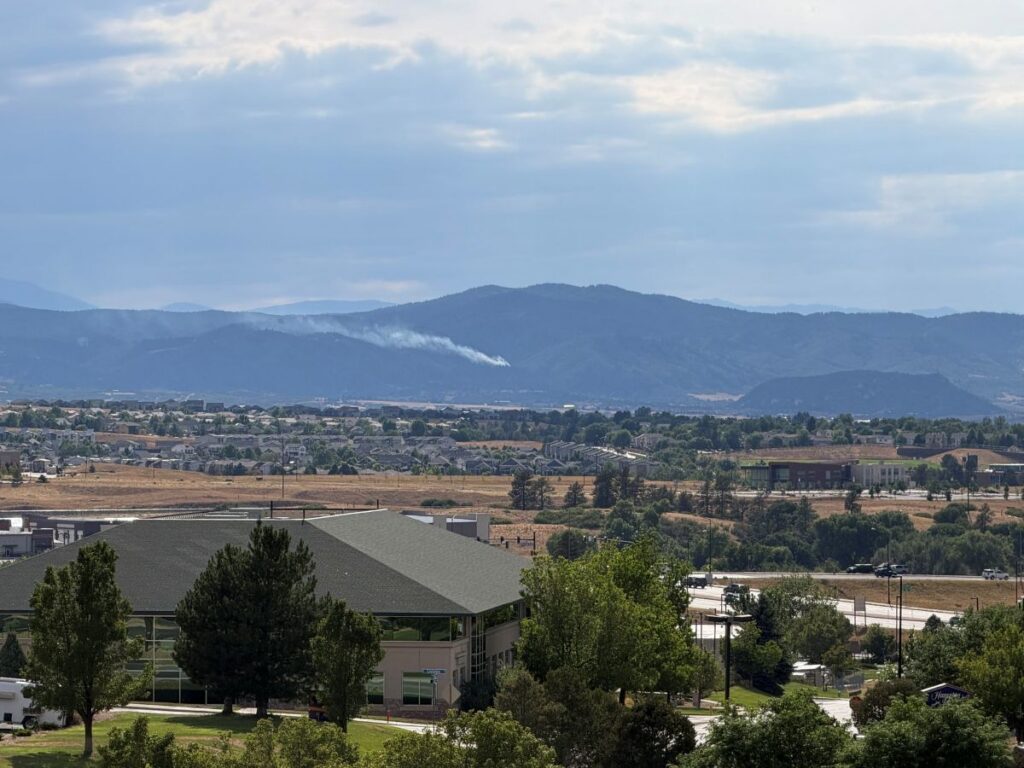
Forest fire west of Sedalia prompts evacuations in Douglas County
Nicholas Fogleman
nicholas.fogleman@denvergazette.com
Updated 4 hours ago
Emergency crews are responding to a forest fire burning west of Sedalia, prompting evacuation orders for nearby residents Sunday afternoon. At about 5 p.m. Sunday, the Douglas County Sheriff’s Office issued an evacuation order for residents within a 2-mile radius...

Airstrikes have paused and talks are pressing forward. But can the US and Iran take the off-ramp?
The Associated Press
the-associated-press@coloradopolitics.com
Updated 3 hours ago
WASHINGTON (AP) — The U.S. military has paused its airstrikes on Iran after nearly two weeks of intensifying bombing, while diplomatic efforts have pushed forward to try to avert a return to all-out war. But it remains to be seen...

Penrose fortune paved the way for Colorado Springs to be a military, space and sports town
Mary Shinn
mary-shinn@coloradopolitics.com
Updated 4 hours ago
Colorado Springs is always working to catch the next big economic wave. “We’re always trying to figure out what the next thing is going to be,” explained Matt Mayberry, director of the Colorado Springs Pioneers Museum. In the early days,...

Colorado Politics Calendar July 27-Aug. 2
Rachael Wright, Special to Colorado Politics
rachael.wright@coloradopolitics.com
Updated 5 days ago
CoPo’s weekly political calendar will help you find political and public-policy events throughout Colorado. It includes candidate and issue campaign events, public policy meetings, court hearings, state and local party conventions, assemblies, debates, rallies, parades, speaking engagements, traveling dignitary appearances,...

The through line from Donald Trump to Victor Marx | SONDERMANN
By Eric Sondermann
by-eric-sondermann@coloradopolitics.com
Updated 5 days ago
Over 10 years ago, before Donald Trump could ever defeat Hillary Rodham Clinton, he had to first engineer a hostile takeover of the Republican Party. Prior to his descent of that golden escalator, the previous seven Republican presidential nominees had...

Colorado districts prepare for school year amid mental health cuts. But will less cellphone distractions help?
Marissa Ventrelli
marissa.ventrelli@coloradopolitics.com
Updated 3 days ago
The signs of a new school year are everywhere — buses in the shop, teachers unpacking boxes, families ticking through supply lists — but behind the familiar rituals, Colorado districts are preparing for a year defined less by routine than...
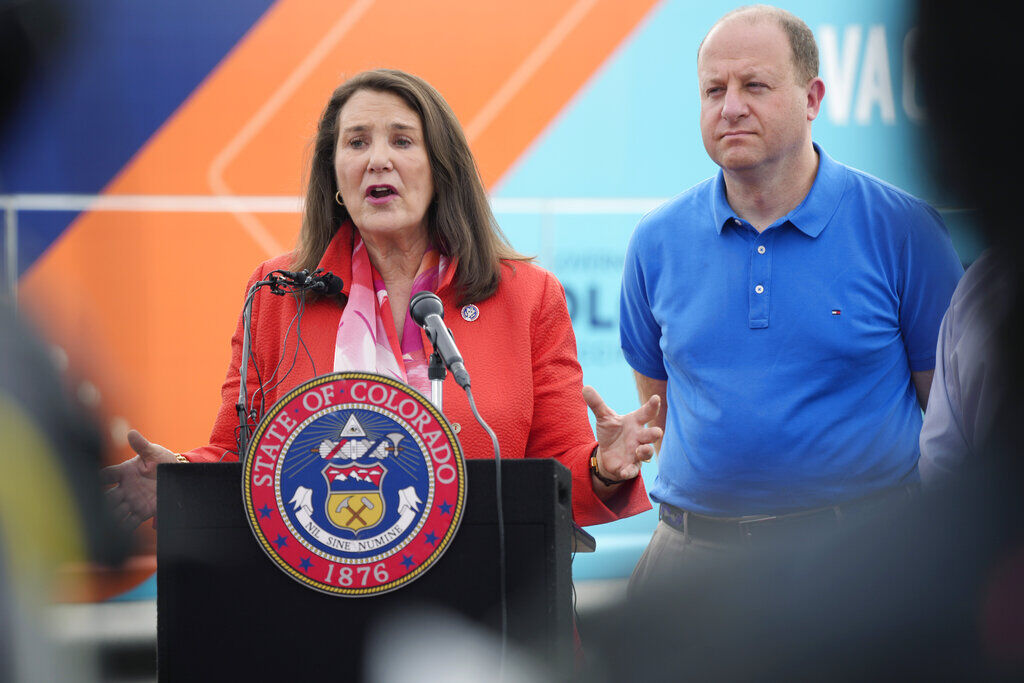
Armstrong staffer considers congressional bid, DeGette angers rural communities with wilderness act | A LOOK BACK
Rachael Wright, Special to Colorado Politics
rachael.wright@coloradopolitics.com
Updated 4 days ago
Forty-five years ago this week: If the lines were drawn just right, Republican Sen. Bill Armstrong stood the chance of losing his office manager, Ruth Fountain. Fountain admitted she was seriously thinking about running for Colorado’s new congressional seat in...
PREV
PREVIOUS

COVER STORY | Meet Lisa Calderón, candidate for Denver mayor (AUDIO)
This is the fourth in a series of profiles of Denver mayoral candidates. Much of what Denver mayoral candidate Lisa Calderón has talked about on the campaign trail traces back to her life experience. When she talks about her interest in criminal justice matters, she recalls her experience when, she claims, her then-15-year-old son was […]

New Colorado Springs Councilman Wayne Williams sees no problem with wife on county board
Sure, Wayne Williams now sits on the Colorado Springs City Council while his wife, Holly Williams, serves as an El Paso County commissioner, but the newly minted councilman and former Colorado secretary of state is hard-pressed to see an issue. Spouses, partners and friends aside, conflicts of interest are ever-present, Wayne Williams said. But elected […]