

Congress discusses legislation seeking wider use of biofuels

WASHINGTON – Congress took a look Tuesday at a proposal on renewable fuels that moves toward the kind of policy Colorado Governor-elect Jared Polis advocates for his administration.
The House Energy and Commerce subcommittee on environment held a hearing on a bill that seeks to create an incentive for motorists to use more biofuels.
Colorado U.S. Rep. Diana DeGette, D-Denver, is a member of the subcommittee.
The subcommittee called the hearing to get comments on the bill, called the 21st Century Transportation Fuels Act, from trade associations and other industry representatives.
One of them was Geoff Cooper, president of the trade group Renewable Fuels Association. He liked the bill’s goal of promoting high-octane fuels that use ethanol, but said the congressional authors offer too few incentives to automakers and motorists.
Ethanol is a form of alcohol most commonly made from corn. It can be found in about 98 percent of the nation’s motor fuels.
“While a good conversation starter, this discussion draft does not provide the long-term certainty and growth path that America’s renewable fuel producers, farmers, automakers and consumers need,” Cooper said.
The proposed legislation is supposed to be a better version of the Renewable Fuel Standard (RFS) program that Congress created under the Energy Policy Act of 2005. The RFS program is a national policy that requires a certain volume of renewable fuel to replace or reduce petroleum-based transportation fuel, heating oil or jet fuel.
Acceptable fuels under the RFS program include biomass diesel, cellulosic or other biofuels, and some renewable fuels that do not need to be blended with gasoline.
Congressional sponsors of the 21st Century Transportation Fuels Act say their proposal would increase the amount of biofuel Americans use in their cars.
The bill would set a national octane standard for gasoline that could be achieved by adding enough ethanol to help the fuel achieve a higher-octane rating than current standards. Octane is a highly flammable hydrocarbon used as a component of gasoline.
Auto manufacturers could then make high compression-ratio engines designed to run on fuels meeting the high-octane standard, thereby improving fuel economy and reducing greenhouse gas emissions. The bill’s sponsors also say the new national standard would create new market opportunities for biofuel producers.
However, the draft legislation also tries to preserve consumer choice on which fuel they can purchase as a means of holding down gasoline and vehicle costs.
Some industry leaders who testified before Congress Tuesday were unconvinced the draft version of the bill would succeed in winning wider use of biofuels.
“Future fuel policy should augment the RFS program, not simply replace it,” Cooper said in his testimony.
Republicans who spoke during the hearing Tuesday said they want to protect consumers as much as the environment.
“I am most concerned about what makes sense for the interests of consumers, especially as it relates to access to, pricing for, and the availability and quality of the engines and fuels that consumers demand or that federal legislation requires,” said Rep. Greg Walden, R-Oregon.
Whether the bill succeeds or fails in Congress, it is aimed at the same objective that Polis, a Democrat, is promoting as he plans his upcoming governorship.
He wants 100 percent of Colorado’s energy to come from renewable sources by 2040. Polis said renewable fuels would create thousands of jobs and save Colorado residents money on energy.
Chet Thompson, president of the American Fuel & Petrochemical Manufacturers, only cautiously supported parts of the draft legislation in his testimony to Congress.
He said the proposed new octane standard would result in a 3- to 4-percent improvement in engine efficiency, which would be the equivalent of replacing more than 700,000 conventional vehicles with extremely low emission electric vehicles.
However, he said consumers would pay for the greater efficiency with higher costs.
“New or additional requirements will add cost and uncertainty and undermine the intent of the policy proposal,” Thompson said.
Some of the strongest support for the draft legislation came from Steve Zimmer, executive director of the U.S. Council for Automotive Research, who said in his testimony, “Setting a national minimum octane standard is a necessary step towards the continuing development of the next generation of high efficiency vehicles.”


U.S. Supreme Court clears the way for Trump mail voting order in advance of midterms
Wire Services
wire-services@coloradopolitics.com
Updated 22 minutes ago
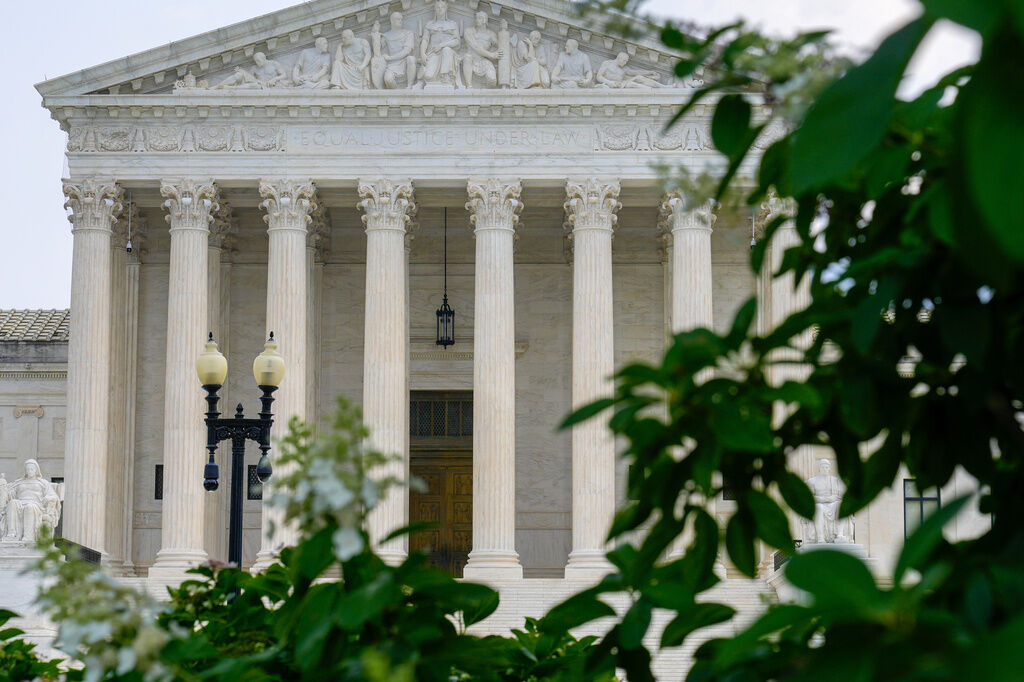
WASHINGTON • The U.S. Supreme Court on Monday cleared the way for President Donald Trump to move ahead with his executive order restricting mail-in voting. The decision appears to leave room for additional court challenges that could slow Trump’s order....

Colorado Supreme Court intervenes in Weld County prosecution dismissed due to Missy Woods misconduct
Michael Karlik
michael.karlik@coloradopolitics.com
Updated 4 hours ago
The Colorado Supreme Court ordered a Weld County trial judge last week to respond to the district attorney’s claim that he improperly dismissed a criminal case because of “outrageous” conduct by the Colorado Bureau of Investigation. Daniel Lee Eatinger stood...

Trump opens ‘economic D-Day’ offensive against Iran as war nears six-month mark
Christian Datoc
christian-datoc@coloradopolitics.com
Updated 4 hours ago
President Donald Trump is seeking to increase the financial pressure on Iran with new secondary sanctions on nations and foreign actors propping up the regime’s economy as the war between the United States and Tehran nears the six-month mark. Treasury...

Trump announces 50% tariffs on Canadian cars, auto parts, and steel
Naomi Lim
naomi-lim@coloradopolitics.com
Updated 4 hours ago
President Donald Trump escalated the trade war with Canada after talks collapsed last week, announcing Monday that the United States would impose 50% tariffs on cars, trucks, automotive components, and steel starting Jan. 1, 2027. “Canada has been ripping off...

Iran puts out propaganda video tracking Barron Trump’s location, offering $10 million for his assassination
Timothy Nerozzi
timothy-nerozzi@coloradopolitics.com
Updated 6 hours ago
The Islamic Revolutionary Guard Corps is putting a hit out on President Donald Trump’s son, Barron Trump, with an inflammatory video claiming to track his location. State-run television in Iran is broadcasting a propaganda video claiming to show the locations...

Nevada sues Trump administration over Colorado River cuts
Marianne Goodland
marianne.goodland@coloradopolitics.com
Updated 5 hours ago
On Monday, the state of Nevada filed a lawsuit against the Trump administration and Interior Secretary Doug Burgum, seeking to block the Colorado River management plan. On Friday, Burgum released a “record of decision” that would reduce water allocations to...

Healthcare Freefall: Longer drives, fewer options for maternity care in Colorado
Thelma Grimes
thelma.grimes@coloradopolitics.com
Updated 8 hours ago
Editor’s Note: Colorado’s healthcare system is entering a period of accelerating instability — a “tsunami,” as multiple leaders describe it — driven by collapsing hospital finances, shrinking Medicaid reimbursements, disappearing services and a political fight over who is responsible for...
Polis requests federal disaster declaration for Colorado wildfires and floods
9News
9news@coloradopolitics.com
Updated 1 hour ago
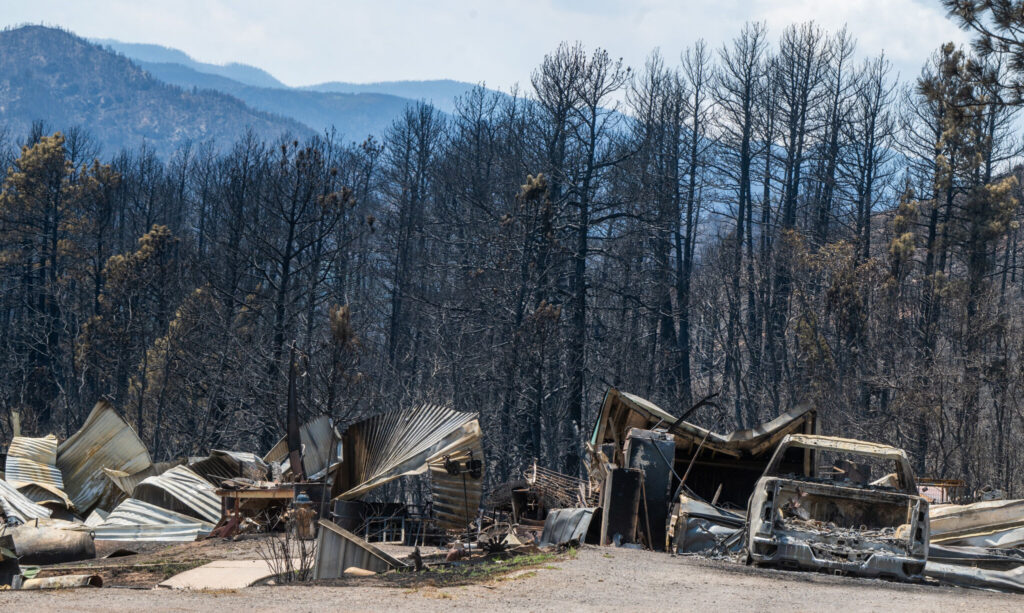
On Sunday, Gov. Jared Polis officially requested a Major Disaster Declaration from President Donald Trump and the Federal Emergency Management Agency to support recovery from two wildfires and the subsequent flooding and debris flows on both burn scars. Polis requested a declaration...

US strikes another boat in eastern Pacific, killing two, Pentagon says
The Associated Press
the-associated-press@coloradopolitics.com
Updated 9 hours ago
U.S. forces have struck another vessel in the eastern Pacific, killing two people the Pentagon says were trafficking drugs. The U.S. Southern Command announced the strike in a social media post early Monday. The death toll from the Trump administration’s...

Fishing closures are becoming routine as record heat warms rivers in the US West | OUT WEST ROUNDUP
Ernest Luning
ernest.luning@coloradopolitics.com
Updated 3 days ago
MONTANA Fishing restricted as rivers warm LIVINGSTON — Trout need cool water to survive, but record heat this summer has driven water temperatures to lethal levels for fish. Wildlife officials are banning fishing during certain hours on rivers and streams...
PREV
PREVIOUS

A word with Hickenlooper's speechwriter: 'I just want to make a difference'
When former Hillary Clinton speechwriter Case Button joined John Hickenlooper’s staff two years ago, the press saw it as a tip-off that Colorado governor had eyes on the White House. And, sure enough, he does. Button’s trip into Colorado politics hasn’t followed the sometimes-crooked lines of campaign strategy, but rather that of a person who […]

Trump administration moves to rescind Waters of the US rule, cheered by farmers, booed by environmentalists
The Trump administration this week began the process of rescinding the controversial Waters of the USA (WOTUS) rule, part of the federal Clean Water Act, to the delight of the agricultural community – and to the dismay of environmentalists and other clear water advocates. The 1972 Clean Water Act set up a structure regulating pollution discharge […]