

Colorado judge graded ‘F’ for bias and rudeness; panel recommends ouster

An El Paso County judge is counting on voters to look past a scathing performance review in his bid for four more years on the bench.
Of 128 Colorado judges up for retention in November, Judge Christopher E. Acker is one of two who received a failing grade from the Colorado Commission on Judicial Performance, a state body that evaluates judges before they stand for retention.
El Paso County’s panel voted 4-1 to recommend Acker’s ouster, finding that the 15-year veteran judge is “biased” in favor of prosecutors, rude to people who appear before him and “formulaic” in his approach to justice.
“Judge Acker’s demeanor and apparent lack of compassion for those that appear before him are of grave concern to the commission,” the panel said in issuing him a failing grade before the November election.
The harsh words are included in this year’s voter’s guide, commonly known as the blue book, which started arriving in Colorado households this month. Three other El Paso County Court judges and eight 4th Judicial District judges earned positive marks from the panel.
In a 100-word response printed alongside the evaluation, Acker describes himself as a “law and order judge” who incarcerates dangerous drivers, punishes probation violators and holds to the letter of the law.
“I have not been overturned on appeal in a criminal case in well over a decade, which shows I understand the law and follow it,” Acker said. He did not respond to repeated messages left for a clerk asking for additional comment.
Acker is just the third El Paso County judge to earn an “F” since Colorado implement its judicial performance assessments in 1988.
Although rare, the failing grades haven’t moved El Paso County voters to issue a pink slip, raising questions whether the reviews go unnoticed.
In 2012, El Paso County Court Judge Karla Hansen survived a retention bid despite the commission’s recommendation that she not be retained, also amid concerns of bias in favor of prosecutors. (Hansen earned a positive review four years later before securing another term.)
In 1994, then-county Judge Geoffrey deWolfe likewise survived a retention vote despite a negative job review.
Those findings do not account for judges who opted to retire or resign rather than have the review made public. The commission doesn’t disclose how often that happens, saying the program is designed to allow judges to “self-select” based on the commission’s findings.
The primary goal of judicial performance evaluations is to give judges feedback, said Kent Wagner, executive director of the Colorado Office of Judicial Performance Evaluations.
“Our evaluations are used by the judges to change and improve their performance on the bench over time,” Wagner said. “Once we do that it’s really left to the voters to make that choice.”
The state’s largest professional organization of attorneys, the Colorado Bar Association, likewise seeks to stay above the fray.
“We don’t usually get involved in that process,” said spokeswoman Heather Clark. “We just try to point the public to those evaluations, and let the public decide.”
Each judicial district is assigned a performance review board, generally with 10 members, consisting of four attorneys and six nonattorneys. Members are appointed by the chief justice of the Colorado Supreme Court, the governor, the speaker of the House and the president of the Senate.
The board interviews each judge and examines their written opinions and decisions and caseload statistics. Evaluators also make courtroom observations and review independent surveys by attorneys and nonattorneys.
El Paso County’s other judges up for retention received mostly constructive criticism, along with heady praise.
Teller County District Judge Lin Billings Vela was among this year’s highest scorers, the commission said, and El Paso County District judges Larry Schwartz and Robert Lowrey were each described as “exceptional.”
Acker earned an endorsement in 2014 despite similar concerns over lack of neutrality and rudeness.
“In the past, the commission considered such comments to be aberrational. It can no longer do so,” his panel said in its latest write-up.
Said Acker in his response: “Following the law does not equate to lacking compassion.”



Federal judge advances lawsuit seeking overtime compensation for Aurora firefighter trainees
Michael Karlik
michael.karlik@coloradopolitics.com
Updated 1 hour ago
A federal judge gave preliminary approval earlier this month to a class of Aurora firefighter trainees who may sue the city over allegations that they were denied overtime pay in violation of federal law. Joseph Elias, who attended Aurora’s fire...
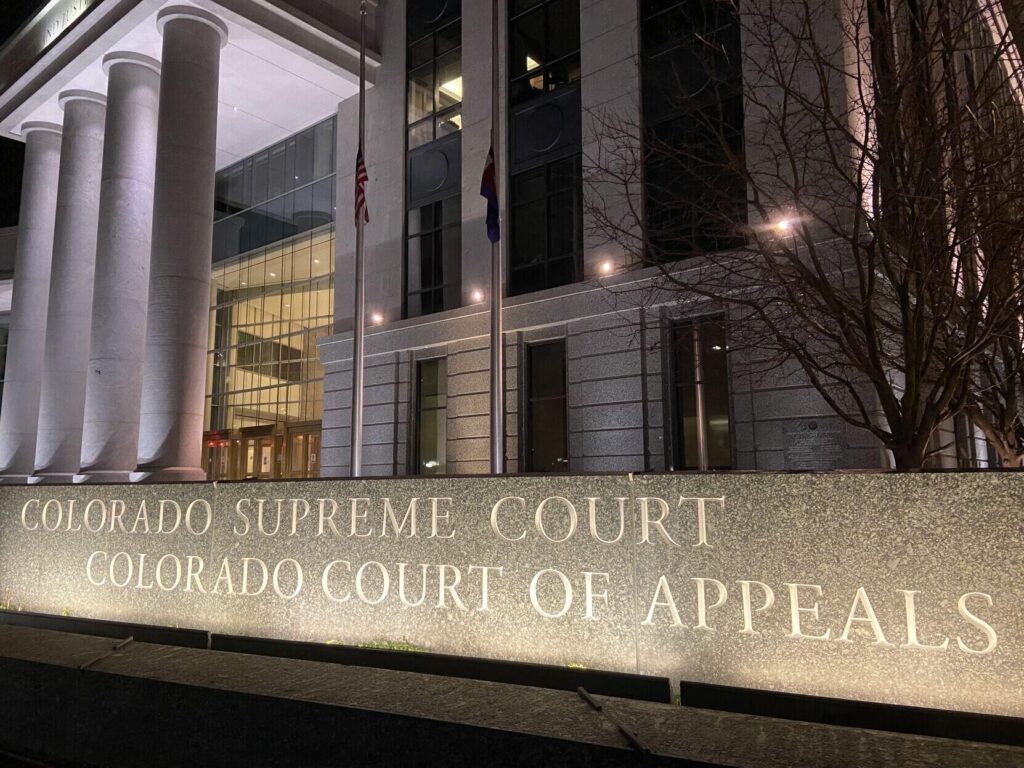
Appeals court says jury not obligated to apply discounts to determine value of stolen merch
Michael Karlik
michael.karlik@coloradopolitics.com
Updated 2 hours ago
Colorado’s second-highest court concluded on Thursday that it was up to a Douglas County jury to determine the value of stolen merchandise at a defendant’s theft trial, after both sides presented different estimates of the items’ value. Under state law,...

Trump switches endorsement back to Jeff Hurd, says Hope Scheppelman is ending run in Colorado’s 3rd CD
Ernest Luning
ernest.luning@coloradopolitics.com
Updated 2 hours ago
In a surprise twist, President Donald Trump on Friday said he was again endorsing Republican U.S. Rep. Jeff Hurd after pulling his support from the Grand Junction Republican last month and instead backing Hurd’s primary challenger in Colorado’s 3rd Congressional...

Set appropriate state guidelines for critical surveillance technology | OPINION
Colorado Politics
colorado-politics@coloradopolitics.com
Updated 13 hours ago
I admit it: I’m worried. I’m hearing a lot about surveillance in the public arena. I hear cameras are capturing my car’s license plate wherever I drive, my face as I go in and out of stores and health facilities,...

Puppy trafficking bill promotes inhumane breeding | OPINION
Colorado Politics
colorado-politics@coloradopolitics.com
Updated 12 hours ago
By Patti Strand When Justice Thurgood Marshall wrote “The Constitution does not prohibit legislatures from enacting stupid laws,” he wasn’t wrong. He was referring to a political process sometimes ill-equipped to deal with complex issues that require subject-matter knowledge and a...
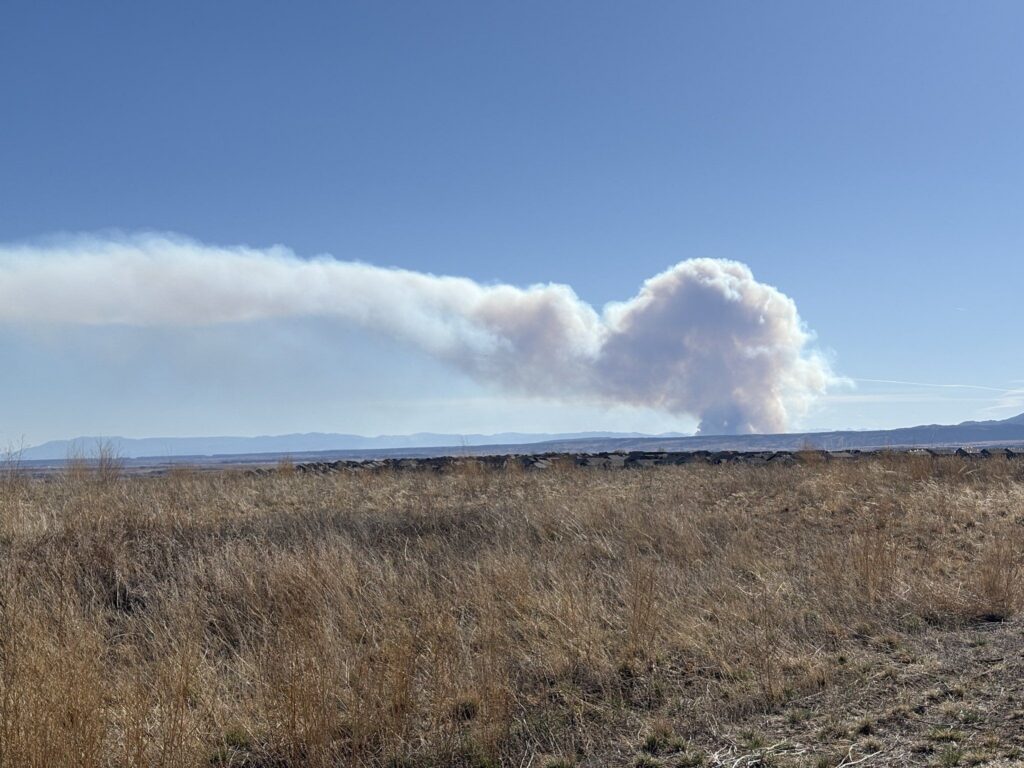
Highway 115 fire blows up, road closed south of Colorado Springs
Nick Smith
nick-smith@coloradopolitics.com
Updated 19 minutes ago
A fast-moving fire burning along Colorado 115 south of Colorado Springs blew the containment line Thursday, spreading farther east onto Fort Carson and scorching nearly 700 acres, officials said. The blaze, known as the 24 fire, was fully uncontained as...
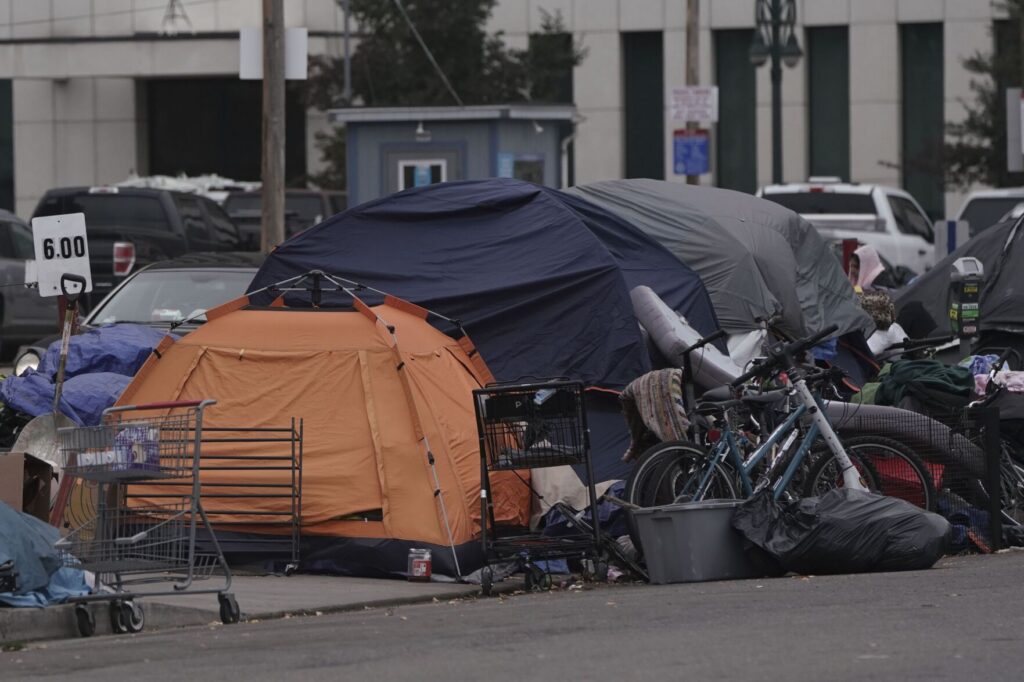
No oversight: Denver’s homeless plan cost $20 million more than previously reported, auditor says
Deborah Grigsby
deborah.smith@denvergazette.com
Updated 3 hours ago
Mayor Mike Johnston’s campaign to curb homelessness has cost the city an estimated $20 million more than previously reported, Denver’s auditor concluded. The audit determined that the mayor’s initiative was poorly planned, with underreported expenses, no monitoring plan, inadequate “equity”...
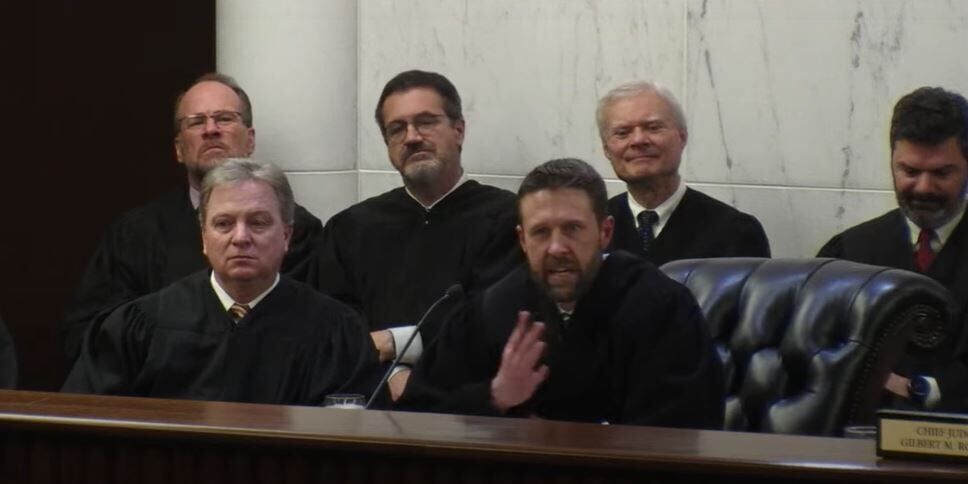
Public figures have limited path to sue over accusations of criminality, says appeals court
Michael Karlik
michael.karlik@coloradopolitics.com
Updated 4 hours ago
Colorado’s second-highest court ruled last week that a public figure cannot sue for defamation solely because a person publicly accuses them of committing a crime, as the statement may be constitutionally protected opinion. A three-judge Court of Appeals panel narrowed...
Proposed data center regulation in Colorado draws critics, backers
Scott Weiser
scott.weiser@gazette.com
Updated 18 hours ago
A packed marathon hearing at the state Capitol in Colorado highlighted the sharp divide between two competing approaches to the effects of data centers, one of America’s fastest-growing technology sectors. Data centers are the physical facilities that host the servers,...

Conservation Colorado proposes measures aimed at oil and gas companies
Marissa Ventrelli
marissa.ventrelli@coloradopolitics.com
Updated 20 hours ago
The environmental group Conservation Colorado has introduced four ballot measures it says are in response to an initiative that aims to enshrine Colorado businesses’ and consumers’ right to purchase and sell natural gas in the state’s Constitution. Filed with the...