

NORAD boss retiring after facing down missile tests, natural disasters, nuclear threats

COLORADO SPRINGS – She’s faced down North Korean missiles and Russian bombers. The worst hurricane season in decades and raging wildfires couldn’t make her flinch. It takes a lot to scare Gen. Lori Robinson, who has led the North American Aerospace Defense Command and U.S. Northern Command through one of the busiest times.
But, what’s happening Thursday at Peterson Air Force Base is something she finds daunting, if not terrifying: retirement.
She’s ending a 36-year Air Force career. For the first time in her adult life, Robinson won’t have to worry about America’s defense. After a few final salutes, she’s off to a boat and a beach.
Thursday morning, with Defense Secretary James Mattis presiding, Robinson will hand off her leadership role to Air Force Gen. Terrence J. O’Shaughnessy, who comes to the new job after leading Air Force efforts in the Pacific and Asia.
She wants Thursday to be a celebration of O’Shaughnessy’s achievement in reaching the top rather than something that marks the end of her career.
“This is all about the new guy and setting the conditions for Gen. O’Shaughnessy to make sure he succeeds,” she said, “He’s earned it.”
Making way for the new guy is a hard shift for Robinson, America’s highest-ranking woman in uniform and the first woman to lead one of the nation’s major commands. After an unplanned military career led to her meteoric rise, retirement seems like falling off a cliff.
“It is a little eye-opening,” she admitted.
It’s not that Robinson is frail in the face of tough decisions.
Last year, she had to decide whether to risk Navy ships in the path of a hurricane to deliver rapid assistance to Puerto Rico or to move them to a safer location to make sure they could deliver help. The move cost time, a critical element in a crisis. But not making the move would have jeopardized the vessels.
“How can you ensure you don’t do more damage by leaving it there?” she asked.
Robinson moved the ships, and the assistance arrived, later but safer. She took some criticism; it rolled off her back.
Robinson earned that tough exterior. She joined the Air Force in 1982 after giving up her dream of becoming a teacher. An air battle manager, she learned how to orchestrate the sweeping attacks by scores of planes that were first on display in the Persian Gulf War.
She was a woman in a field dominated by men. It didn’t bother Robinson, she treated her comrades as so many big brothers.
Managing air battles is a cerebral field that requires officers like Robinson to translate a two-dimensional radar screen into a three-dimensional understanding.
“As an air battle manager, I had the ability to see things from a theater view versus a cockpit view,” she said.
Robinson proved she had plenty of brains for the job – in addition to her Air Force educational accolades, she’s earned a pair of master’s degrees, worked at a Washington, D.C., think tank and won a fellowship at Harvard.
While brain power matters, leadership wins battles. That a skill Robinson had in spades, with squadron, wing and group commands on her resumé along with a pair of Bronze Star Medals and three Distinguished Service Medals, the highest Air Force honor for service not involving combat.
Robinson says her rack of medals and other honors stem from serving with great troops.
“They’re awesome,” she said,
Robinson said she’s seldom had better subordinates than the crew she led at the Colorado Springs command, which scans the skies above the U.S. and Canada for threats and offers Pentagon support for disaster relief efforts across the United States.
Robinson said the universal trait at NORAD and Northern Command is a laser-like focus on defending the continent.
“Every single person realizes what a sacred responsibility it is,” she said.
That’s part of what has Robinson dreading retirement – that responsibility is only growing with rising threats.
In the past two years, she’s had to stay on call 24 hours a day.
“I tell everybody I sleep with my cellphone,” she said.
It rang at night many times, due in part to North Korean dictator Kim Jong Un’s missile tests, nuclear tests and threats to lob a warhead at American shores.
Robinson is optimistic about White House efforts to broker a deal with North Korea that would ease nuclear tensions. But Kim Jong Un, for now, is a top threat.
“He has tested very quickly,” Robinson said. “He has increased his capability very quickly.”
The other issue that kept Robinson up at night was a string of unprecedented natural disasters. Ten hurricanes, including Harvey which deluged south Texas, Maria, which wrecked Puerto Rico and Irma, which slammed the Virgin Islands, taxed the command’s resources as the military rushed medical aid, food, water, and other resources to back up civilian authorities.
The command was simultaneously coordinating military help in battling wildfires that blackened more than 10 million acres across the country in 2017.
Robinson said the command learned form the fires and floods.
“It was a lot of good lessons,” she said.
In all roles, Robinson said NORAD and Northern Command must be ready to react quickly and adjust for change.
“The world doesn’t stand still,” she said.
Being in charge in such troubled times cost Robinson plenty of sleep, but she has no regrets.
“These two commands are incredibly complex, but they serve a common purpose,” Robinson said. “To have had the privilege of commanding them both is an absolute honor.”
She’s accepting the fact that her time at the top of those command is ending.
She’s found aspects of the change that she’ll cherish.
“I’m looking forward to spending time with the kids and the grandkids,” she said.
To get ready for the ceremony Thursday, Robinson went through old pictures. They ranged from her childhood to her career. Each new rank was documented. Every step came with an image.
That’s part of why looking forward is so tough.
“When I sat back and I’m looking over from when I was a baby on my dad’s lap, I feel like I’m the luckiest person in the world. I just hope I made a difference.”

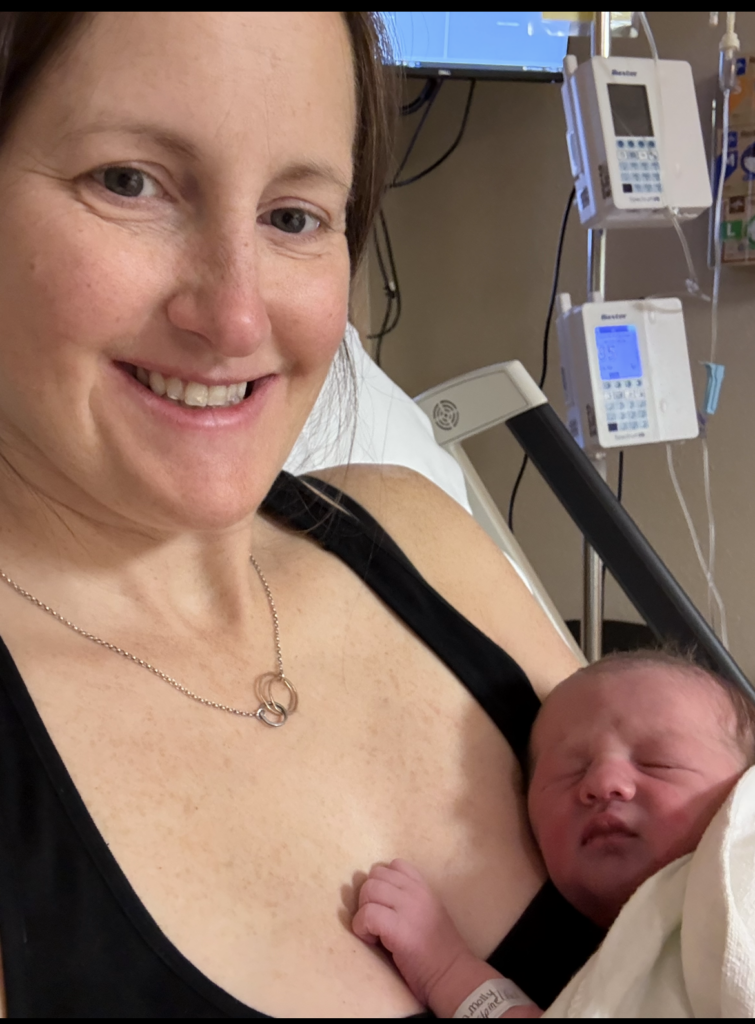
Healthcare Freefall: Telluride mother’s roadside birth underscores shrinking access to OB care in Colorado
Rachael Wright, Special to Colorado Politics
rachael.wright@coloradopolitics.com
Updated 4 minutes ago
Editor’s Note: Colorado’s healthcare system is entering a period of accelerating instability — a “tsunami,” as multiple leaders describe it — driven by collapsing hospital finances, shrinking Medicaid reimbursements, disappearing services and a political fight over who is responsible for...

Appeals court upholds Park County trophy hunting conviction
Michael Karlik
michael.karlik@coloradopolitics.com
Updated 1 hour ago
Colorado’s second-highest court clarified on Thursday that a defendant may stand convicted under the state’s trophy hunting laws if he abandons a bear carcass but returns later to remove the meat. Under Colorado law, it is a felony to detach...

Healthcare Freefall: Longer drives, fewer options for maternity care in Colorado
Thelma Grimes
thelma.grimes@coloradopolitics.com
Updated 5 minutes ago
Editor’s Note: Colorado’s healthcare system is entering a period of accelerating instability — a “tsunami,” as multiple leaders describe it — driven by collapsing hospital finances, shrinking Medicaid reimbursements, disappearing services and a political fight over who is responsible for...

Healthcare freefall: Breast cancer survivor shares strain of rural treatment travel
Hap Fry, Special to The Gazette
hap-fry@gazette.com
Updated 15 minutes ago
Editor’s Note: Colorado’s healthcare system is entering a period of accelerating instability — a “tsunami,” as multiple leaders describe it — driven by collapsing hospital finances, shrinking Medicaid reimbursements, disappearing services and a political fight over who is responsible for...

Judge grants partial injunction to GEO in fight against state health inspection law
Kyla Pearce
kyla.pearce@gazette.com
Updated 16 hours ago
A judge ruled Thursday that The GEO Group does not have to follow parts of a new state law requiring more frequent health and safety inspections at the U.S. Immigration and Customs Enforcement processing center in Aurora. Under the order...

Parker man faces 20 years to life for serial sexual assaults
Nicholas Fogleman
nicholas.fogleman@denvergazette.com
Updated 18 hours ago
A 25-year-old Parker man who sexually assaulted three women in 2025 pleaded guilty Wednesday and will serve 20 years to life in prison. Javier Rodriguez-Andrade pleaded guilty to charges stemming from three sexual assaults involving women ages 19 to 24. ...

Buttigieg performs best among Democrats against Rubio or Vance in possible 2028 contest: Poll
David Zimmermann
david-zimmermann@coloradopolitics.com
Updated 20 hours ago
Former Transportation Secretary Pete Buttigieg appears to be the Democratic Party’s best chance at winning the presidency against Secretary of State Marco Rubio or Vice President JD Vance in 2028, according to a poll released on Thursday. In hypothetical matchups...

Douglas County moves to Stage 1 fire restrictions following recent rain
Nicholas Fogleman
nicholas.fogleman@denvergazette.com
Updated 18 hours ago
Douglas County has downgraded its fire restrictions from Stage 2 to Stage 1 on Thursday following recent rainfall and moderate fire conditions, according to the Douglas County Sheriff’s Office. The change applies to unincorporated Douglas County, as well as the...

Divided appeals court upholds warrantless DNA collection in Colorado cold case, cautions of government overreach
Michael Karlik
michael.karlik@coloradopolitics.com
Updated 17 hours ago
Colorado’s second-highest court upheld the warrantless collection of a suspect’s DNA from a discarded soda can as constitutional on Thursday, while warning about potential abuse of DNA privacy in the absence of further guardrails. By 2-1, a three-judge Court of...

Democratic gubernatorial candidate Phil Weiser promises to appoint rural outreach director, water adviser
Marianne Goodland
marianne.goodland@coloradopolitics.com
Updated 17 hours ago
Democratic gubernatorial candidate and current Attorney General Phil Weiser told the Colorado Water Congress Thursday he intends to appoint a rural outreach director and a water policy adviser should he win the election in November. Weiser’s speech at the Steamboat...
PREV
PREVIOUS

Bill expanding private care for veterans goes to Trump
WASHINGTON – Congress has approved expanding private care for veterans as an alternative to the troubled Veterans Affairs health system. A Senate vote on Wednesday sent the bill to President Donald Trump, who has championed the idea of giving veterans such options. The sweeping measure would allow veterans to see private doctors when they don’t […]

Company, families settle after fatal Colorado gas explosion
DENVER – Anadarko Petroleum said Wednesday it has reached legal settlements with the families of two men killed in a northern Colorado home explosion that was linked to one of the company’s wells. The April 2017 explosion killed Mark Martinez and Joey Irwin, who were in Martinez’s home in the town of Firestone, about 30 […]