

Q&A with Morgan Carroll: ‘There is no greater calling than fighting for people, our rights and our planet’
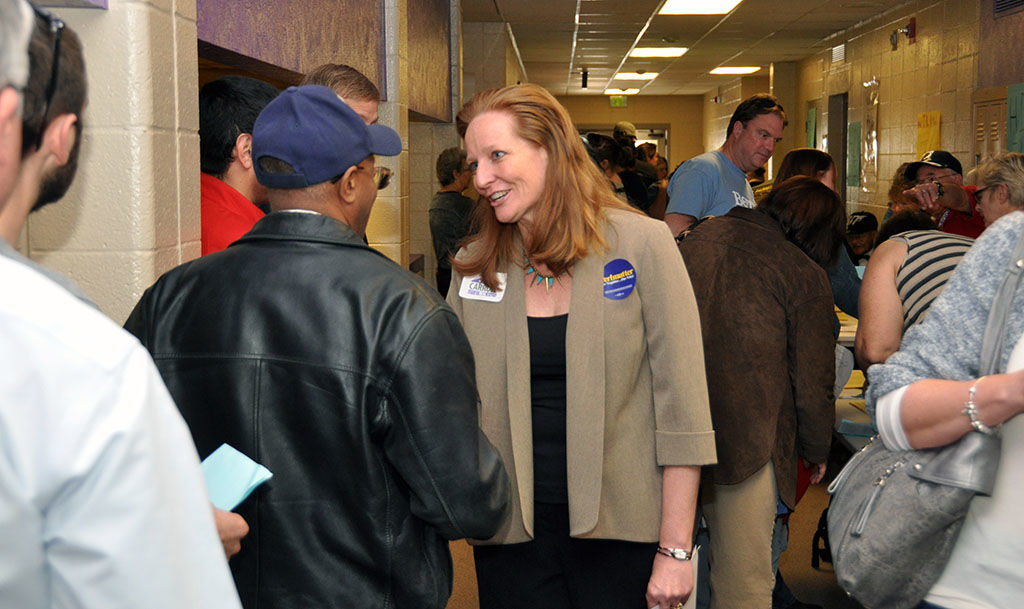
Regardless of their politics, those who have served in elected office alongside Morgan Carroll will tell you she’s one politician who doesn’t flinch. Now the chair of the state Democratic Party, Carroll is a veteran of the campaign trail who carved out a reputation as a dogged warrior. After years in the legislature, where she was known as a forceful voice for her caucus and her party platform, she now brings her combat skills to a new calling that also will require her to be a unifier. Have Democrats closed ranks since 2016’s smackdown between the supporters of Bernie Sanders and Hillary Clinton? And what are the party’s prospects in a state where unaffiliated voters outnumber either Democrats or Republicans? Carroll takes on those and other questions in today’s Q&A.
Colorado Politics: To say the least, you’ve been battle-tested in the political trenches. You ran a tough race last year against 6th Congressional District Republican incumbent Mike Coffman and before that were repeatedly elected to the state House and Senate. You’ve also won posts in legislative leadership, culminating in the Senate presidency. In other words, you’re hardly a desk-bound party functionary; you’re a fighter who’s seen years of live action. All the more to the point, then: Why party chair – a notoriously thankless post that operates far from the public eye and reputedly wins at least as many enemies as friends? What motivated you to seek the post, and what do you feel you bring to the position that will make a difference?
Morgan Carroll: I believe that right now – in this moment in time – everything I believe in and have ever fought for is in dire jeopardy. I believe every measure of progress over the past 100 years is hurtling backward under right-wing hegemony in D.C. This is bigger than me and bigger than any one race. I ran for party chair because I think there is no greater calling than fighting for people, our rights and our planet. The job is thankless but I know every day there is nothing more important I could spend my time on pertaining to the future of our state and our country. We can’t let Republicans throw all of that progress away to give tax cuts to millionaires or fan the flames of hate and discrimination.
CP: As noted in media accounts of your congressional bid last year, your campaign was able to bridge the divide between Democratic presidential contender Bernie Sanders and eventual party nominee Hillary Clinton. Where do you feel the state party is now in that regard, a year after the election? Do you ultimately align more with one camp or the other?
Carroll: People are united in their outrage over what they are seeing in D.C. and have been more active than ever, fighting for our values at every level of public office. We have needed to acknowledge our differences within the party by listening and learning from each other’s experiences so we can move forward as a stronger party fighting for our progressive values. My ultimate goal is empowering people and improving the party, which everyone can agree on.
CP: Here’s a question we asked your counterpart, Jeff Hays with the state GOP: How do Colorado’s surging rolls of unaffiliated voters affect your party’s long-term strategy in the state? Do you believe Democrats have an advantage with unaffiliated voters and if so, why? Will Proposition 108 make much of difference in the next election?
Carroll: I think this is a challenge and an opportunity for us. We will need to reach out and connect more than ever with unaffiliated voters. Voters are paying more attention now because of the chaos and dysfunction in D.C., and we see in our polling that unaffiliated voters are almost as disgusted with Trump as Democrats are. But our message can’t just be that Trump is bad. Our message to unaffiliated voters is that we’re focused on solutions for middle-class and working families. Meanwhile, every time the Republicans are in power, all they want to do is cut taxes for millionaires, billionaires and corporations. We know that our message resonates, but we have to be persistent to break through in the media. It’s hard to get a message out when the only political news is Trump chaos.
Morgan Carroll
CP: And here’s a question we ask a lot of people: Can you name some elected officials in the other party, past or present, whom you’ve respected and could work with?
Carroll: I have found that if you listen long enough you will find some genuine common ground with anyone. The people I have worked well with probably don’t want me to name them or it could end their Republican political career. 🙂
CP: You’ve written a book about politics, “Take Back your Government: A Citizen’s Guide to Grassroots Change.” If you’ll pardon the comparison, Colorado’s 4th Congressional District U.S. Rep. Ken Buck recently authored a book espousing a related theme, “Drain the Swamp: How Washington Corruption is worse than you think.” Though penned by members of opposing parties, both books speak to the alienation of government from voters – the sense government has been hijacked – and appear to be part of a populist wave sweeping through both the left and the right. Do you see yourself as part of that wave? Was a resurgence of populism overdue and perhaps inevitable in U.S. politics?
Carroll: I have always considered myself a progressive populist and an activist at heart. I believe that when people aren’t involved, government doesn’t work, but when people are involved, we get better candidates and policies that respond to the needs of everyday people. I think Democrats will ultimately benefit from a resurgence of populism, because populism – as opposed to serving the big corporate elite – has been our brand ever since the New Deal.
CP: Who or what inspired you to enter politics?
Carroll: My mom – who was willing to take risks in helping Jewish refuseniks escape the former Soviet Union for religious freedom in America and my dad who was relentless in fighting for “David” over “Goliath,” taking on the longest of odds for people and causes he felt were just – in the Courtroom or at the Capitol – and winning. I was raised with the notion that the greatest moral failing is apathy and doing nothing when other people are being persecuted. That inevitably points to a moral responsibility to be politically engaged.
CP: Your parallel career is as an attorney. If you had to pick any other profession, what would it be?
Carroll: My other two serious career considerations were to be a Rabbi or a psychologist as I felt both were other ways to help people and also make a difference in improving people’s lives.


Michael Dougherty is literally running for attorney general in Colorado Democrat’s 1st TV ad
Ernest Luning
ernest.luning@coloradopolitics.com
Updated 14 hours ago
Democratic attorney general candidate Michael Dougherty, the Boulder County district attorney, runs laps around the judicial complex in Denver that houses the office he’s seeking in a TV ad released Friday that includes a subtle dig at one of his...

Group aims to add right to hunt and fish to Colorado Constitution
Marissa Ventrelli
marissa.ventrelli@coloradopolitics.com
Updated 11 hours ago
A group is seeking to make Colorado the 25th state in the nation with an established constitutional right to hunting and fishing through a proposed ballot initiative. Backed by the International Order of T. Roosevelt, a group dedicated to preserving...

Colorado Politics Calendar June 15-21
Rachael Wright, Special to Colorado Politics
rachael.wright@coloradopolitics.com
Updated 4 days ago
CoPo’s weekly political calendar helps you find political and public policy events throughout Colorado. It includes candidate and issue campaign events, public policy meetings, court hearings, state and local party conventions, assemblies, debates, rallies, parades, speaking engagements, traveling dignitary appearances,...

A primary brings out primal instincts | SONDERMANN
Eric Sondermann
eric-sondermann@coloradopolitics.com
Updated 3 days ago
There are no Stanley Cup finals or NBA title showdowns involving local teams this June. In their place, we are inundated with primary election campaign ads. Coloradans can be excused for missing the diversion and alternate programming. But life can...
Dem-GOP tension dominates 1,000-bill legislative session | A LOOK BACK
Rachael Wright, Special to Colorado Politics
rachael.wright@coloradopolitics.com
Updated 3 days ago
Forty-Five Years Ago This Week: “I can honestly say that until now, we got along well with the governor’s office,” said House Minority Leader Federico Peña, D-Denver. “We visited frequently with the staff. And you didn’t see certain legislators speaking...
Hickenlooper lands endorsements from Elizabeth Warren, Ministerial Alliance in US Senate primary
Ernest Luning
ernest.luning@coloradopolitics.com
Updated 1 day ago
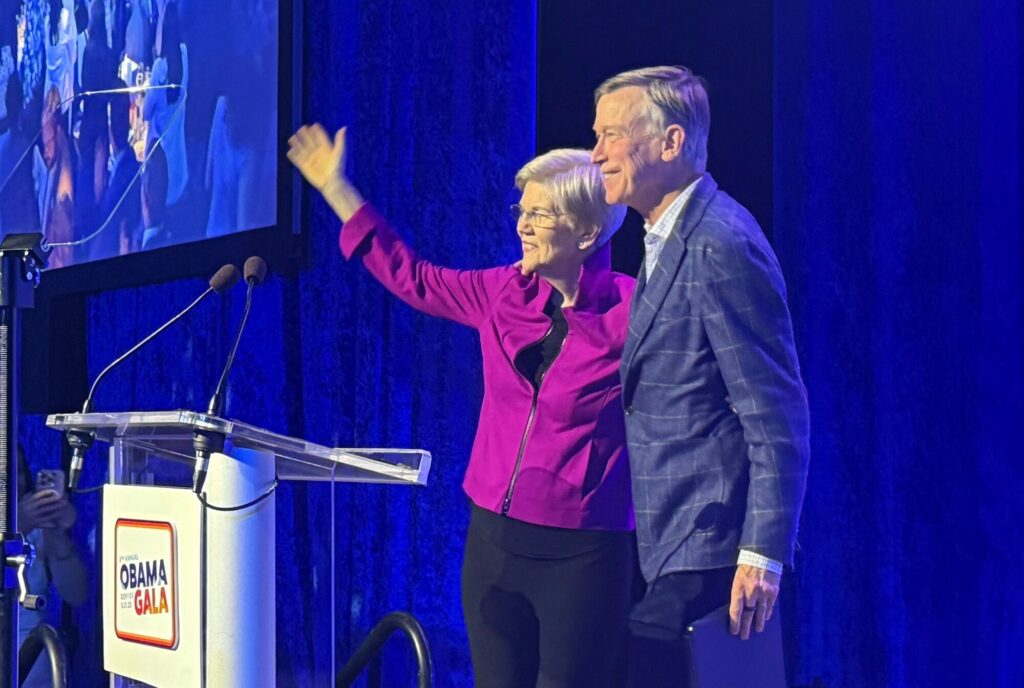
U.S. Sen. John Hickenlooper won endorsements this week from a progressive Democratic colleague and a coalition of metro-area African American faith leaders as voting began in Colorado’s primary election. U.S. Sen. Elizabeth Warren of Massachusetts and the Greater Metro Denver...
Colorado justices say insurers may access policyholders’ medical info in denied-benefits litigation
Michael Karlik
michael.karlik@coloradopolitics.com
Updated 1 day ago
The Colorado Supreme Court declined on Monday to expand its narrow prohibition on insurance companies accessing policyholders’ medical information, clarifying that a dispute over an insurer’s bad-faith decision to deny benefits is the only situation where a company is limited...

House District 14: Businesswoman, consultant square off in GOP primary
Mary Shinn
mary-shinn@coloradopolitics.com
Updated 2 days ago
Firearms training company owner Ava Flanell will face Troy Vanderhule, the chief fundraising officer for Dobson Philanthropic, in the June 30 Republican primary for state House District 14, an area in northern Colorado Springs. Flanell was appointed to the seat...
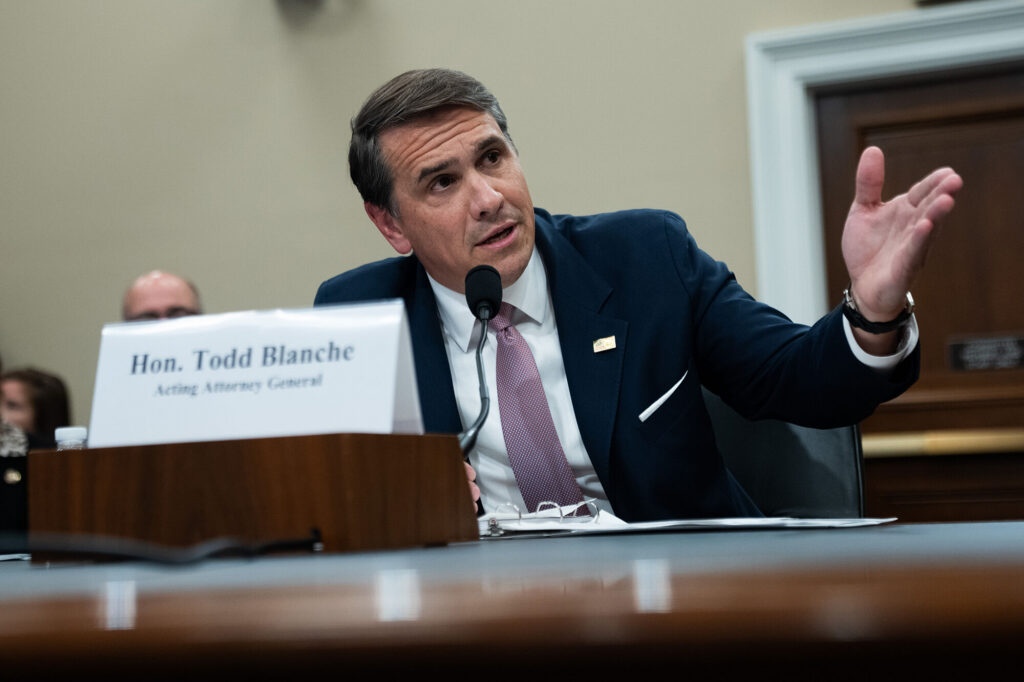
Federal judge wants Todd Blanche to swear in writing anti-weaponization fund won’t be revived
Jack Birle, Washington Examiner
jack.birle.washington.examiner@gazetteedit.wpenginepowered.com
Updated 1 day ago
A federal judge maintained a block on the Department of Justice’s $1.776 billion anti-weaponization fund Friday, despite the DOJ claiming they have abandoned the planned fund aimed at compensating allies of President Donald Trump and others who say they were politically targeted by...
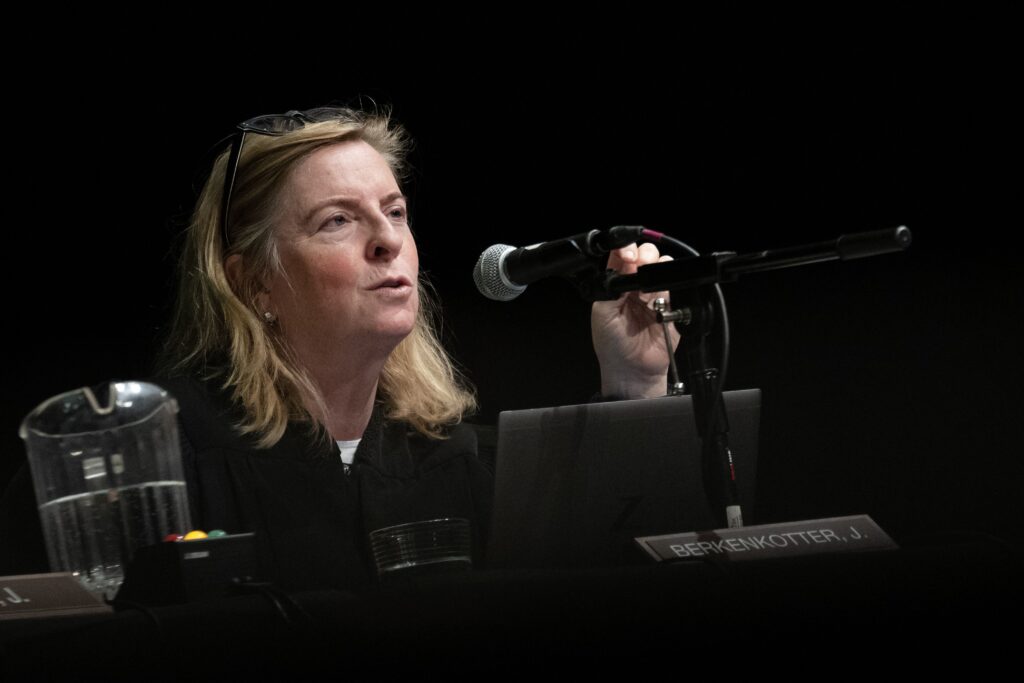
Colorado Supreme Court declines to loosen requirements for insurance company defendants
Michael Karlik
michael.karlik@coloradopolitics.com
Updated 11 hours ago
The Colorado Supreme Court declined last week to reconsider its longstanding expectations for insurance company defendants, and agreed that an insurer failed to properly raise its defenses against a policyholder’s breach-of-contract lawsuit. When an insured driver has an accident with...
PREV
PREVIOUS
'Do you speak English?’: Twitter erupts after Mike Coffman tweets about DACA in Spanish
U.S. Rep. Mike Coffman must have struck a nerve when he tweeted Friday that he planned to appear on a Spanish-language radio talk show to discuss legislation he supports to protect certain young immigrants from deportation. In the tweet, the Aurora Republican urged listeners to tune in – his tweet even included an emoji of […]

Retired Army Lt. Gen. Ed Anderson of Monument lauded for international leadership
Retired Army Lt. General Ed Anderson of Monument was honored in Washington last week by the U.S. Global Leadership Coalition. Anderson is the former deputy commander of the U.S. Northern Command and vice commander of the U.S. Element at the North American Aerospace Defense Command at Peterson Air Force Base. He retired in 2004. After […]