

DougCo board publishes resolution to end voucher program
The Douglas County School District published a resolution Saturday that begins the process to rescind the Choice Scholarship program and put to an end the legal fight over the controversial voucher program.
The district’s board of education will vote on the resolution at a special meeting on Monday at 5:30 p.m.
Four new board members – Chris Ciancio-Schor, Anthony Graziano, Krista Holtzmann and Kevin Leung – were elected to the seven-member board barely three weeks ago. All four campaigned on a pledge to repeal the voucher program.
Monday’s resolution states that with the board’s approval, the district will rescind the program and a related school choice grant program, as well as “repeal all policies specifically related” to those two programs. The resolution directs the board president and/or the interim superintendent to “end the litigation challenging the Choice Scholarship program.”
That last section refers to the legal battle that has plagued the program since its inception.
The Choice Scholarship was put into place in March 2011, the work of a conservative education reform majority elected in 2009 and backed with tens of thousands in donations by wealthy Republicans who favor taxpayer-funded vouchers.
Under the program, a Douglas County student who has lived in the county for one year and attended a county public school can receive a voucher, valued at about $5,000, to attend a private school, including schools not located in Douglas County. Unlike almost all other voucher programs around the nation, DougCo’s has no income qualifier.
The voucher was never put to use by DougCo students; a legal fight ensued almost immediately, launched by the parents’ group Taxpayers for Public Education. The group won an injunction from a Denver District Court that blocked the program’s implementation. The district won an appeal from the state Court of Appeals. Taxpayers for Public Education appealed to the Colorado Supreme Court, which in 2015 ruled the program unconstitutional under the state’s Blaine Amendment, which forbids the use of taxpayer dollars for religious education.
The district headed to the U.S. Supreme Court, but that court never ruled on the appeal. The court instead took up a similar case from Missouri, Trinity Lutheran Church of Columbia v. Comer. In that lawsuit, a Lutheran church sued the state of Missouri for denying it a grant for playground materials. The denial came from the state’s Department of Natural Resources, which cited the state’s prohibition on taxpayer funding for religious purposes. After ruling in favor of the church, the Court sent the DougCo case back to the Colorado Supreme Court to reconsider its previous ruling. The school district was expected to file a brief in the appeal by December 18.
The district has covered its legal expenses for the voucher program with $1.8 million in donations, with all but $30,000 of that coming from the Daniels Fund and the Walton Family Foundation, according to open records information obtained from the district.
Monday’s meeting will be attended by six of the board’s seven members. Leung received permission last Tuesday to skip the meeting because he does not intend to participate in the deliberations nor vote on the voucher program repeal, as he is a plaintiff in the lawsuit against the district.

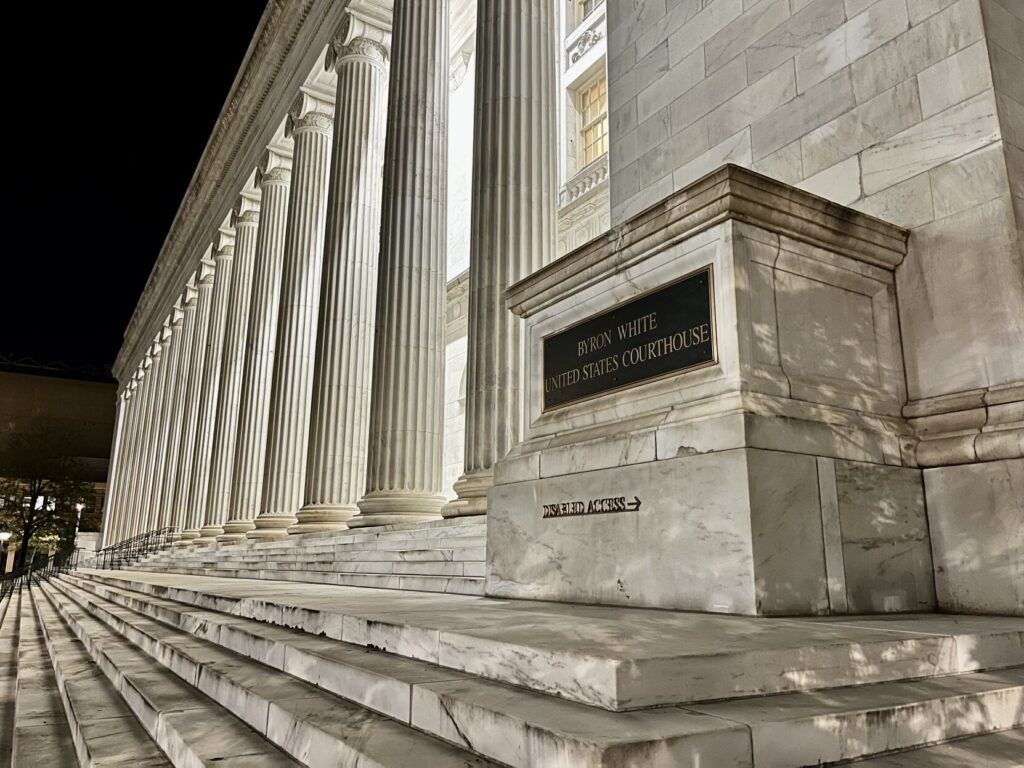
10th Circuit orders second look at immunity for Kiowa County deputy over fatal vehicle crash
Michael Karlik
michael.karlik@coloradopolitics.com
Updated 12 minutes ago
The Denver-based federal appeals court directed a trial judge on Tuesday to further analyze whether a Kiowa County deputy and the sheriff’s office may be sued for a fatal vehicle collision. The Colorado Governmental Immunity Act generally shields government entities and public...
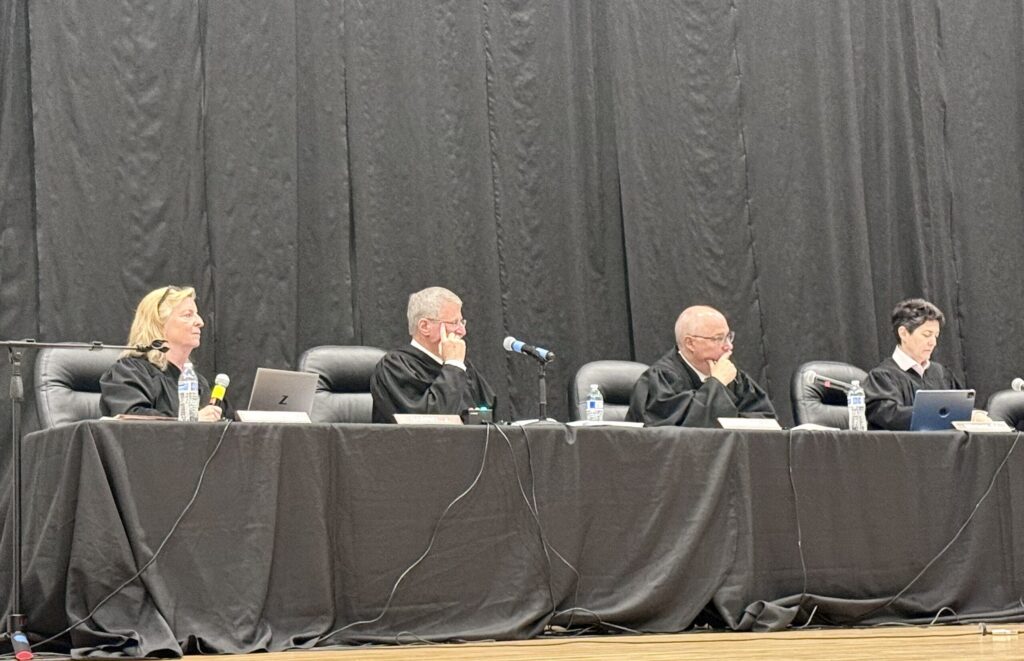
Colorado justices to hear appeal in Kendrick Castillo death lawsuit, ‘fugitive’ rule
Michael Karlik
michael.karlik@coloradopolitics.com
Updated 18 hours ago
The Colorado Supreme Court announced on Tuesday that it will decide whether it was proper to dismiss a lawsuit over the 2019 shooting death of Kendrick Castillo after the defendants paid the maximum amount of damages available to Castillo’s parents,...

Two more wolves killed by Colorado wildlife staff
Marianne Goodland
marianne.goodland@coloradopolitics.com
Updated 19 hours ago
Two yearling wolves from the Copper Creek and Three Creeks packs in Pitkin and Rio Blanco counties, respectively, were killed by Colorado Parks and Wildlife staff on Monday. That brings to 19 the number of wolves that have died under...

Federal judge dismisses Douglas County’s challenge to collective bargaining law
Nicholas Fogleman
nicholas.fogleman@denvergazette.com
Updated 3 hours ago
A federal judge dismissed claims brought by the Douglas County Board of Commissioners alleging that a state law granting county employees the right to organize and join labor unions violates free speech protections and conflicts with federal labor law. Douglas...

U.S. Rep. Lauren Boebert calls Trump’s 90-day wolf-delisting review ‘real progress’
Marianne Goodland
marianne.goodland@coloradopolitics.com
Updated 17 hours ago
President Donald Trump has directed Interior Secretary Doug Burgum to launch a 90-day review on whether gray wolves and Mexican wolves should be removed from Endangered Species Act protections. The order drew mixed reactions for Colorado’s wolf-reintroduction effort, with ranchers...
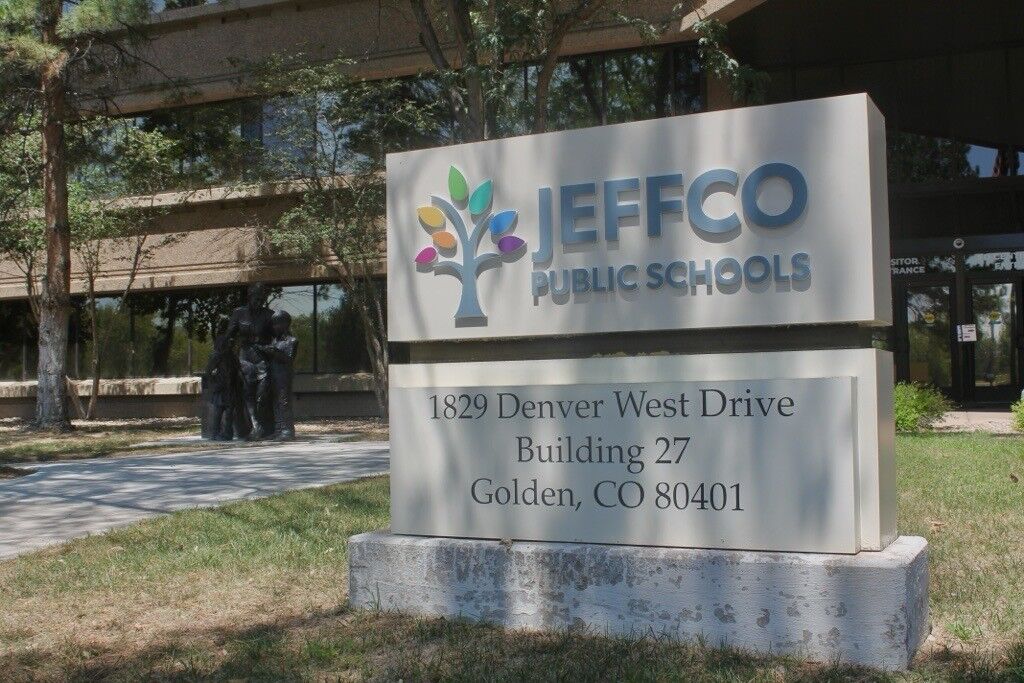
Jeffco Public Schools eliminated 350 jobs as part of budget cuts
Matt Kyle
matt.kyle@denvergazette.com
Updated 3 hours ago
Jeffco Public Schools eliminated 350 full-time positions as part of ongoing budget cuts between last school year and this school year. The district has operated in a budget deficit in the range of tens of millions of dollars over the...

Arapahoe County judge’s frustration with defense lawyer not grounds for new trial
Michael Karlik
michael.karlik@coloradopolitics.com
Updated 19 hours ago
Colorado’s second-highest court decided last week that an Arapahoe County judge’s repeated rebukes of a defense attorney and orders to “be quiet” did not rise to the level of bias or a violation of the defendant’s due process rights. A...

Divided appeals court upholds vehicle theft conviction despite unclear origin of car’s value
Michael Karlik
michael.karlik@coloradopolitics.com
Updated 16 hours ago
Colorado’s second-highest court upheld a defendant’s conviction for aggravated motor vehicle theft last week, even though it was unclear how the Thornton Police Department estimated the value of the stolen car. Officer Marc Faivre encountered Ashley Shelee Gibbens-Martinez in a...
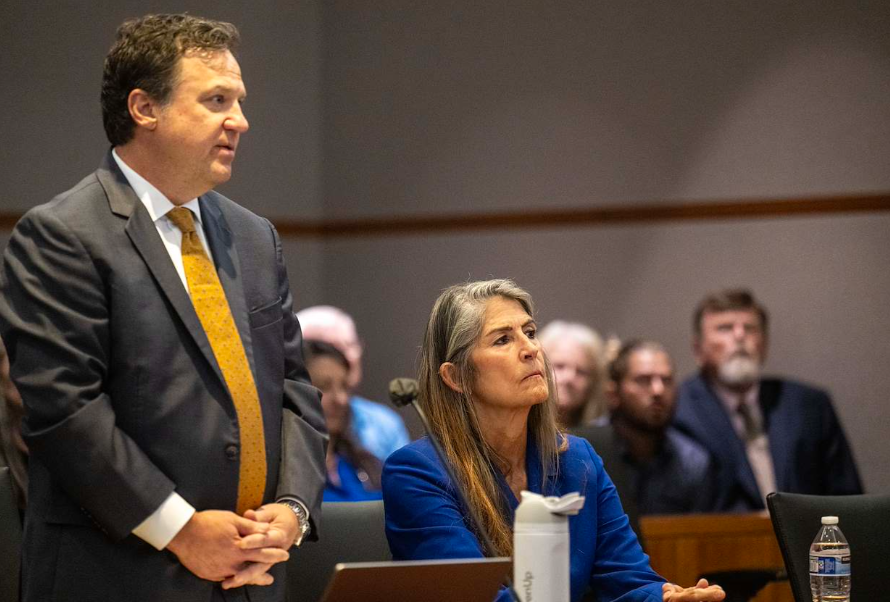
Disgraced ex-CBI analyst Missy Woods sentenced to prison in DNA scandal
Jenny Deam
jenny.deam@gazette.com
Updated 19 hours ago
A Jefferson County district court judge on Tuesday sentenced a disgraced former Colorado Bureau of Investigation DNA analyst to a decade in prison for altering and deleting data in scores of criminal cases over several years. Jefferson County District Judge...
Lindsay Clancy’s attorney makes plea for pardon from Trump
Emily Hallas
emily-hallas@coloradopolitics.com
Updated 1 day ago
Lindsay Clancy’s attorney urged President Donald Trump on Tuesday to give her a pardon before her murder case could head for another trial. Clancy is a Massachusetts woman who admitted to strangling her three young children in 2023 but argued...
PREV
PREVIOUS

Gazette editor accompanying Defense chief on four-nation Mideast tour
OVER THE ATLANTIC OCEAN – Defense Secretary James Mattis launched a four-nation Mideast tour Saturday amid growing concerns that ISIS is creeping more and more into Africa as it is chased out of Syria and the Mideast. “Across Africa, we see increased concern about this,” Mattis told reporters aboard his plane on the way to […]
How Colorado’s congressional delegation voted this week
H.R. 3017: Brownfields Enhancement, Economic Redevelopment, and Reauthorization Act of 2017 This was a vote to pass H.R. 3017 in the House. H.R. 3017 represented an effort to reauthorize the funding and authorizations for the expiring law that paid for redevelopment of brownfield sites. The original Brownfields Revitalization Act was signed into law by President […]