

Insights: Redistricting isn’t rocket science, but tilts toward political gravity
Ken Wright doesn’t think politics is rocket science, but it could be improved quite a bit with math, geometry and physics. Today it’s driven by political science.
Ken is the founder and the 88-year-old chief thinker at the venerable Denver firm of Wright Water Engineers. He unraveled the Incas’ hydraulic wonders at the lost city of Machu Picchu, and he co-authored a book about it. He did the same at Mesa Verde in southwest Colorado.
So if anybody could figure out the lines and curves of Colorado’s political districts, it should be Ken. He did it before. He handed lawmakers and the courts a tool to extract some of the politics from of the art of redistricting in 1982.
The same year Flock of Seagulls hit the charts with “I Ran,” Colorado Republicans tried to force three incumbent Democrats to run against each other in a proposed Senate district. Ken was hired to come up with a formula to measure the political compactness of a district, one of the most important features lawmakers are supposed to consider (instead of political advantage). Compactness means designing the district so most of the constituents live as close together as possible, not a handful over here and a handful over there to politically stack the deck.
One of Ken’s friends, Barbara Holme, was one of those “three good Democrats,” as he called them. Holme also happened to be the Senate minority leader at the time, which meant using redistricting to help her lose was good motivation for the Republican majority, or at least an enjoyable byproduct. It was only coincidental that Ken’s wife, lawyer and environmental policy champ Ruth Wright, served in the House of Representatives, he said.
After legislators knotted up over the partisan plan 35 years ago, the Colorado Reapportionment Commission used Ken’s formula, which the Colorado Supreme Court cited as correct when it blessed the resulting district boundaries.
Ken injected the polar moment of inertia to redistricting. After I took several flailing stabs at getting it, he explained it to me in an e-mail a few days later using a picture of a skater spinning in a tight circle.
“‘Moment of inertia’ measures how tightly or loosely grouped an object’s mass is around its center,’ he wrote in the e-mail. “Spinning figure skaters can reduce their moment of inertia by pulling in their arms, allowing them to spin faster due to conservation of angular momentum.”
Districts should strive for that kind of communal inertia, Ken and the courts agreed. Partisanship in the current system just makes people dizzy.
The U.S. Supreme Court on Tuesday will hear plenty about redistricting in the case of Gill v. Whitford, which looks at whether Wisconsin Republicans showed their political hand when they redrew districts in 2011. The shady practice is called gerrymandering, which doesn’t exist, if you ask any incumbent officeholder who benefits from it.
Gerrymandering is like having a Sasquatch sleeping on your sofa. Yeah, it’s obvious and smells bad, but if it’s yours you hate to get rid of it.
How obvious?
Only four of the 65 seats in the Colorado House have a puncher’s chance of flipping from one party to the other because of the way the boundaries are drawn, according to Fair Districts Colorado, a bipartisan coalition that hopes to ask voters next year to put the map-drawing in the hands of an independent commission, as other states have done.
Opponents cite earnest concerns.
Communities of interest can pick up a few seats in the existing process. Those interests have no voice at all, however, in other non-competitive districts. Tough luck if you’re a minority living there. Those who differ argue that without pooling these communities they might not have enough votes to pick up any seats at all. That doesn’t seem likely in the Colorado legislature, however. The membership is diverse in race and gender, as well as a strong LGBTQ coalition, from the back bench to the leadership. It’s hard to imagine a benefit of gerrymandering, other than to whet a partisan edge which, in turn, insures gridlock, because candidates fear the extremist primary voters in their own party more than a fairly fought general election.
Gerrymandered districts are a short-term answer to a long-term question for the General Assembly. Competitive districts would tell us how far Colorado has come as an electorate on diversity in leadership, whether the field is politically engineered or not. I bet we’ve come pretty far. Some politicos aren’t willing to risk it.
But don’t hire Ken Wright to engineer a mathematical solution to those political angles.
“I would say I’m not ready to tell you about that,” he said, when I asked for a solution to rigged representation. “I’m not that kind of an expert.”

Colorado state Senate: Meet the primary election candidates
Marianne Goodland
marianne.goodland@coloradopolitics.com
Updated 45 minutes ago
Colorado’s June 30 primary will feature a slate of state Senate contests, with several incumbents stepping aside and competitive fields emerging in both parties. These are some of the races to watch as voters begin to submit ballots. Senate District...

Top five hot mic moments from world leaders at G7 Summit
David Zimmermann Washington Examiner
davidzimmermannwashingtonexaminer@wpstage.coloradopolitics.com
Updated 22 minutes ago
As the 52nd annual G7 Summit came to a close on Wednesday in France, world leaders not only discussed diplomacy front and center, but also engaged in lighter conversations on the sidelines. There were many hot-mic moments in which President Donald...
Appeals court clarifies offense of impersonating a peace officer
Michael Karlik
michael.karlik@coloradopolitics.com
Updated 4 hours ago
Colorado’s second-highest court clarified this month that a person commits the offense of impersonating a peace officer if they engage in “any conduct” while pretending to be law enforcement. In a case out of El Paso County, Richard James Coulier...
Hickenlooper raises $900K since April, heads into primary with almost $3 million on hand
Ernest Luning
ernest.luning@coloradopolitics.com
Updated 3 hours ago
U.S. Sen. John Hickenlooper raised just over $900,000 for his reelection bid in the 10-week pre-primary reporting period, the Colorado Democrat’s campaign said Wednesday. The campaign finished the period with almost $3 million in the bank, with more than 80%...
Four takeaways from Georgia, DC, Alabama, and Oklahoma primary elections
Rena Rowe, Washington Examiner
rena.rowe.washington.examiner@gazetteedit.wpenginepowered.com
Updated 2 hours ago
Voters across the country delivered a mixed verdict in a series of high-profile primary contests Tuesday, elevating political outsiders, boosting progressive candidates in deep-blue jurisdictions, and offering fresh clues about President Donald Trump’s hold on the GOP ahead of the...
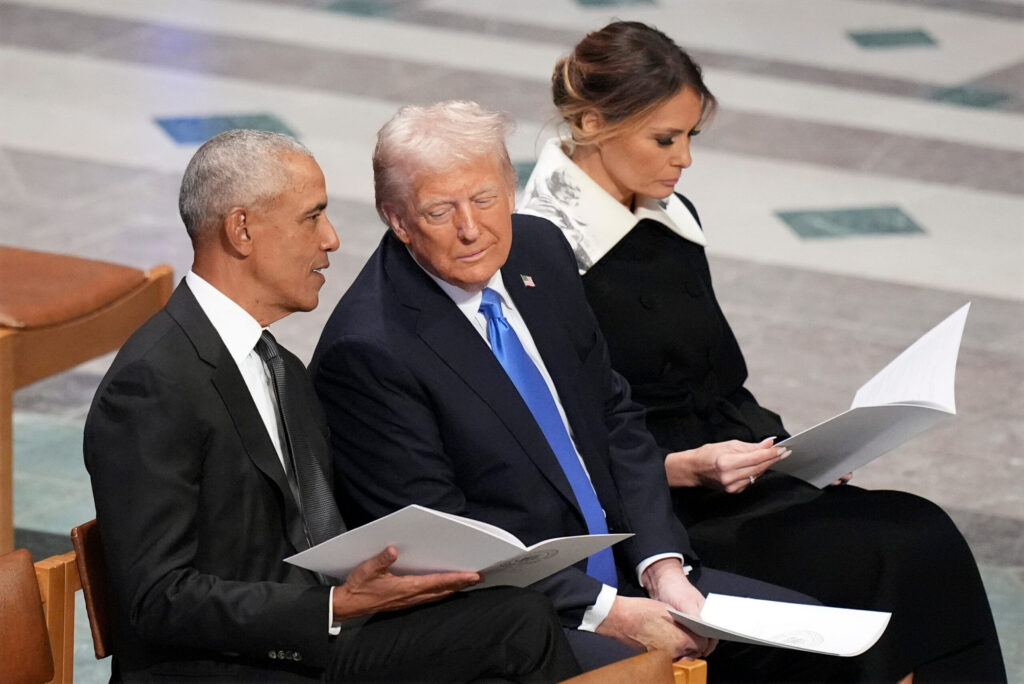
Trump and Obama lock horns as White House tries to sell new Iran deal
NAOMI LIM Washington Examiner
naomi-lim-washington-examiner@coloradopolitics.com
Updated 2 hours ago
Former President Barack Obama‘s reemergence is looming over President Donald Trump‘s peace deal with Iran as the incumbent tries to sell his deal to an increasingly skeptical public after the nearly four-month war. Obama’s return to the headlines as he...

Littleton approves $1M for Starlight affordable housing project
Nicholas Fogleman
nicholas.fogleman@denvergazette.com
Updated 6 hours ago
The Littleton City Council on Tuesday approved a $1 million funding request to support construction of a new affordable housing development known as the Starlight Apartments. The council authorized the contribution from the city’s Affordable Housing Fund for the project,...
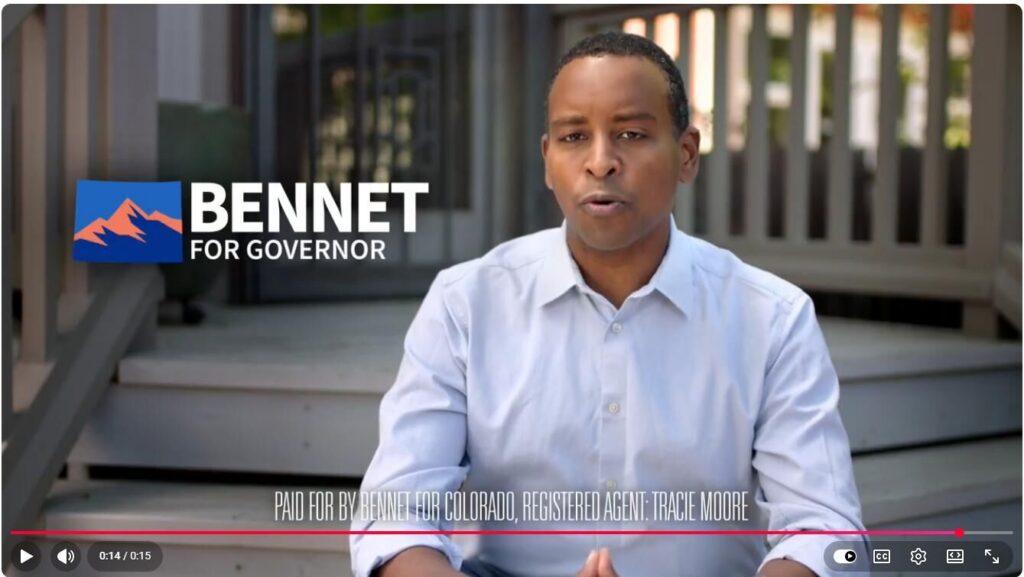
Bennet’s gubernatorial ads say U.S. Senate committee paid for them
Marianne Goodland
marianne.goodland@coloradopolitics.com
Updated 44 minutes ago
Update: as of Wednesday morning, at least one of the ads, featuring Colorado’s Democratic congressional delegation, has been changed to include the disclaimer “paid for by Bennet for Governor.” A series of TV commercials for U.S. Sen. Michael Bennet’s gubernatorial...

Democratic candidates for the 8th Congressional District: Meet Manny Rutinel and Shannon Bird
Thelma Grimes
thelma.grimes@coloradopolitics.com
Updated 23 hours ago
Colorado’s 8th Congressional District is once more the site of a hard‑fought Democratic primary, with candidates competing for the chance to challenge Republican incumbent Gabe Evans this November. A once‑crowded field has narrowed to state Rep. Manny Rutinel and former...
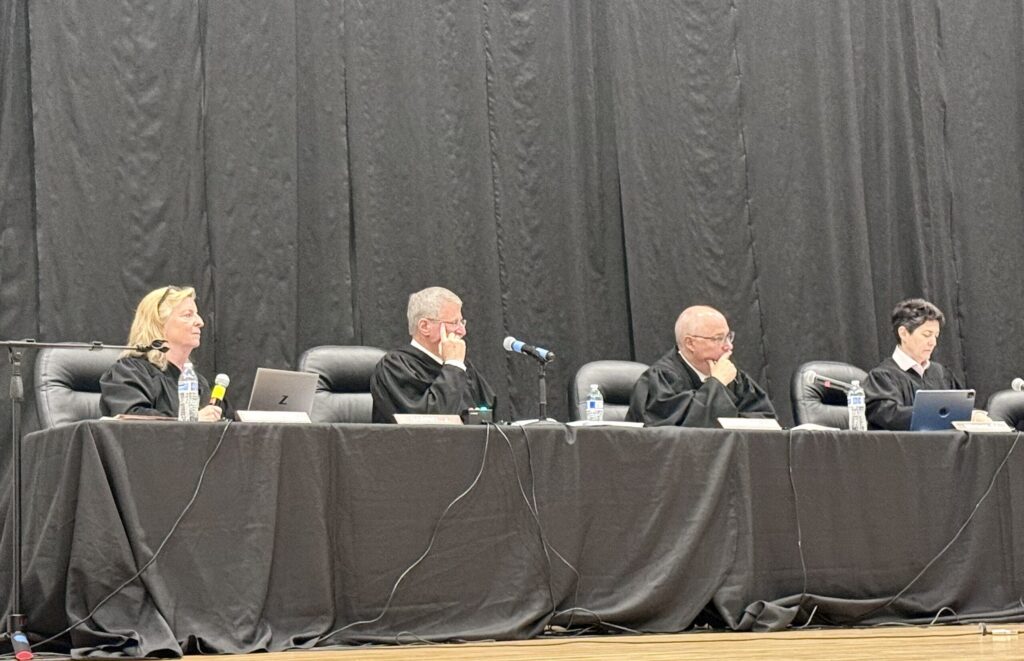
Colorado Supreme Court reverses 2 Chaffee County judges for imposing fee on habeas petitioner
Michael Karlik
michael.karlik@coloradopolitics.com
Updated 24 hours ago
The Colorado Supreme Court rejected two separate appeals earlier this month from an incarcerated defendant seeking immediate release from prison, but concluded that two Chaffee County judges incorrectly required him to prepay filing fees for his cases. David J. Gottorff...