

Lawsuit aims at expanding treatment for Colorado prisoners suffering from Hepatitis C
The ACLU of Colorado filed a federal class action lawsuit last week aimed at pressuring the Colorado Department of Corrections to expand treatment for prisoners with Hepatitis C.
The civil rights group says as many as 2,200 prisoners are suffering from the life-threatening illness.
“Colorado has an immense public health crisis in its prisons,” said Mark Silverstein, legal director for the ACLU of Colorado.
He pointed out that one-in-nine prisoners suffers from Hepatitis C. Complications from the disease kill nearly as many Coloradans in custody every year as drug and alcohol abuse, homicide, and suicide combined, Silverstein said.
“Highly effective treatment is available that could prevent deaths and fight the spread of the virus, but DOC’s cruel and arbitrary standards deny that treatment to all but a select few prisoners, in violation of established medical standards and the Eighth Amendment,” Silverstein said.
The Department of Corrections says it has cared for 80 prisoners with new treatment options over the past two years. The department is working to expand treatment needs.
Hepatitis C is a chronic communicable disease that attacks the liver, causing diminished function, cirrhosis, and liver failure. It is the most deadly infectious disease in the U.S., killing more Americans than the next 60 infectious diseases combined.
Early stages of the disease involves chronic fatigue, depression, arthritis, as well as an increased risk of heart attacks, diabetes, nerve damage, jaundice, and various cancers.
The FDA has approved breakthrough medications over the past four years that can cure the disease in more than 90 percent of cases. Colorado prisons officials are working to expand implementation of the drugs.
But the ACLU of Colorado says prisoners suffering from Hepatitis C are not considered for treatment until they have sustained significant liver damage. Prisoners are required to enroll in alcohol and drug therapy that can take more than two years to complete, a requirement that, according to the ACLU complaint, has no medical justification.
The ACLU’s complaint alleges that DOC officials are deliberately allowing the vast majority of prisoners who are not selected for treatment to suffer and die from untreated Hepatitis C.
Based on the Department of Correction’s current schedule, it would take more than 10 years to treat the 735 prisoners that are currently eligible for the new drugs, according to the ACLU complaint.
“Despite the availability of a cure, DOC plans to leave thousands of prisoners untreated, to continue releasing those untreated prisoners back to the community with a communicable disease, and to accept years of additional deaths and serious medical complications from untreated Hepatitis C,” Silverstein said. “Not only is that dangerous for public health, it is a cruel way to save some money in the short term that may end up costing taxpayers a lot more in the long term.”


Tiered or capped? Battle over Colorado’s income taxes might come down to one number
Marianne Goodland
marianne.goodland@coloradopolitics.com
Updated 3 hours ago
The battle between two competing ballot measures — one seeking to cap Colorado’s income tax rate, the other pushing for a tiered system depending on income levels — might come down to whichever ballot proposal gets one more vote. The...
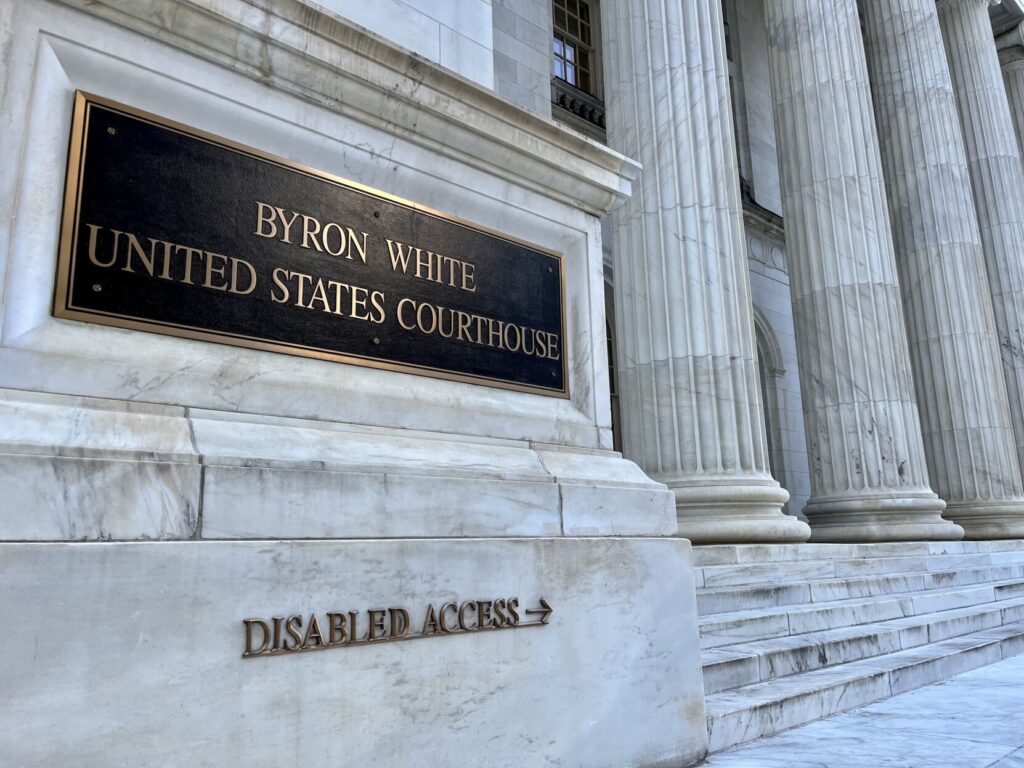
10th Circuit says landowner cannot sue ex-Routt County judge for statements in decision
Michael Karlik
michael.karlik@coloradopolitics.com
Updated 5 hours ago
A Routt County landowner cannot sue a former judge for his allegedly inaccurate statements in a case where the landowner was not a party, the Denver-based federal appeals court decided on Wednesday. Anne Fitzsimmons, who lives in Germany, owns a...

Rubio crushes Vance in Western Conservative Summit 2028 straw poll
Kiara Moore
kiara.moore@washingtonexaminer.com
Updated 9 hours ago
Secretary of State Marco Rubio came out on top in this past weekend’s nonpartisan straw poll at the Western Conservative Summit, outpacing a packed field of would-be 2028 presidential hopefuls. Hosted by the Centennial Institute, Colorado Christian University’s public policy...

Supreme Court to open next term with major climate change case
Jack Birle
jack-birle@coloradopolitics.com
Updated 9 hours ago
The Supreme Court’s next term will begin in October with major cases about costly climate change lawsuits and immigration. The high court announced the cases it will hear in the first month of its upcoming term, as the justices remain...

New Colorado laws going into effect cover AI disclosures, medical marijuana access and gambling limits
Marissa Ventrelli
marissa.ventrelli@coloradopolitics.com
Updated 10 hours ago
More than 100 new Colorado laws take effect Aug. 12, bringing changes to chatbot safety rules, psychedelic research, campus wellness checks and sports betting restrictions. Here is a look at some of those laws set to take effect. The law:...

National House Democrats add Colorado seats held by Lauren Boebert, Jeff Hurd to target list
Ernest Luning
ernest.luning@coloradopolitics.com
Updated 7 hours ago
The national House Democrats’ campaign arm on Wednesday added the Colorado congressional district held by Republican U.S. Reps. Jeff Hurd and Lauren Boebert to the list of targeted seats the party believes are vulnerable in this year’s midterms. The Democratic...

Bennet settles campaign finance complaints, admits violating state law
Marianne Goodland
marianne.goodland@coloradopolitics.com
Updated 5 hours ago
U.S. Sen. Michael Bennet’s gubernatorial campaign has agreed to pay a $7,433 fine for using his Senate campaign account to pay for gubernatorial campaign travel expenses. The July 31 settlement includes an admission by Bennet and his campaign that they...

Colorado to implement new laws on jail standards, safe haven rules, and agricultural labeling
Marissa Ventrelli
marissa.ventrelli@coloradopolitics.com
Updated 11 hours ago
In mid-August every year, a slew of recently passed laws in Colorado go into effect 90 days after the end of the legislative session. This year, all bills without a specified effective date or safety clause — a provision stating...
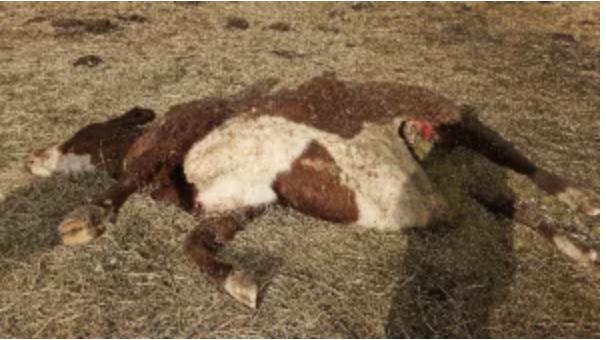
Colorado records 17th wolf death, a yearling tied to livestock losses
Marianne Goodland
marianne.goodland@coloradopolitics.com
Updated 7 hours ago
A yearling male wolf in Grand County has become the 17th wolf to die in Colorado in the past two years. Colorado Parks and Wildlife announced that its staff killed the wolf on Aug. 4 because it was believed to...
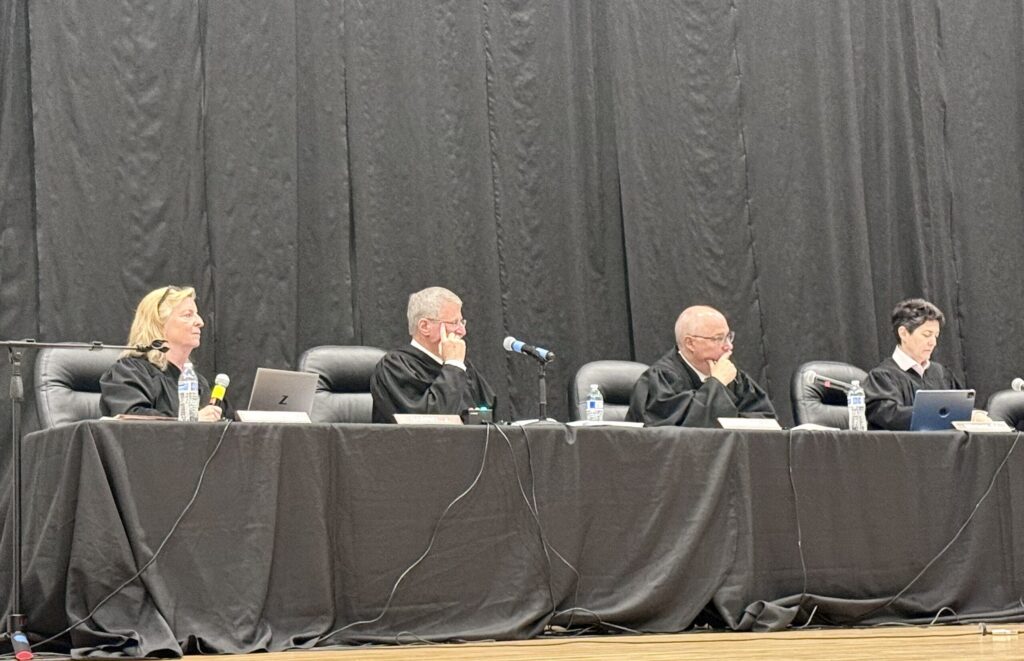
Parole, appeals deadlines and restitution: Colorado justices accept cases
Michael Karlik
michael.karlik@coloradopolitics.com
Updated 1 day ago
The Colorado Supreme Court announced on Monday that it will determine how a defendant’s parole-eligibility date should be calculated in instances where a new trial results in a sentence being imposed retroactively to the date of the original, since-overturned sentence....