

Electronically available public records passes key Senate committee
A bill to make public records available electronically passed the Senate State, Veterans and Military Affairs Committee Wednesday, a milestone for a controversial bill.
“It has indeed been an interesting journey and a work in progress,” said Senate Bill 40‘s sponsor, John Kefalas, D-Fort Collins,
After similar legislation, Senate Bill 37, died in committee last year, Secretary of State Wayne Williams stepped in. His office opposed the bill last year but led a 16-member working group to develop this year’s compromise bill.
The compromise carves out exemptions for small towns or agencies that cannot meet the request for information without investing in software and other allowances.
More amendments to safeguard sensitive information were tacked on in committee. Sens. Vicki Marble, R-Fort Collins, and Lois Court, D-Denver, voted for the bill with “reservations,” both said.
The bill passed 4-1 and heads next to the Senate Appropriations Committee.
Sen. Jerry Sonnenberg, R-Sterling, said the bill was improved by compromises and amendments, but said it’s still a muddled mess.
Williams provided open records electronically whenever possible to support public records laws and because it made good business sense not to belabor the CORA request.
“It’s faster and cheaper to provide it that way,” Williams said. “If someone asks for something, send it off in an e-mail and be done.”
Journalists and news organizations testified about the laborious task of searching written records that effectively makes public information unavailable to the public and the press, much less cross-reference information. In most cases the data already is in a digital form.
“Government data is hugely important,” said Brian Gryth, a board member with Colorado Common Cause. “This bill helps bring Colorado into the fold of being in compliance and into the modern era of providing open data.”
Sen. Ray Scott, R-Grand Junction, chairman of the committee, called Colorado Open Records Act a trainwreck and called for it to be rewritten to accommodate many of the concerns he head Tuesday.
He said the federal Freedom of Information Act is better than Colorado’s law.
“It’s not perfect, by any means, but it’s a heck of lot better than CORA,” he said. “In my mind, it wouldn’t be that big a deal to cut and paste and say, ‘Boom, here we go,’ but that’s my opinion.”
Opponents said the bill would open the door to data-mining companies to request volumes of information or access to databases to build their customer lists or more nefarious purposes.
While companies could get those records on paper now, the ability to electronically search records and associated databases was risky. The University of Colorado has 25,000 employees and scores of associated databases.
Doug Kemper, executive director of the Colorado Water Congress, said the bill amplifies weaknesses in existing open records laws and could make the state’s water system vulnerable to terrorism.
Richard Orf, representing the Associated Governments of Northwest Colorado, said that even with the exceptions local government, private information and proprietary data are still at risk.
Redacting that information is not as simple as supporters suggest, when it comes to small towns and counties.
The rural governments he represents are not at the technological level of big cities and probably don’t have the expertise to redact information from complex databases, spreadsheets or e-mails with enough proficiency to make sure private information can’t be recovered through metadata, so mistakes are bound to happen.
Orf said even with the exceptions, small government agencies still could wind up in court over the new law, “which is time-consuming and expensive.”
He said most operations of government – meetings, the budget and so forth – usually are already available online.
“The information we’re worried about accidentally releasing are Social Security numbers, county health records, personal information that isn’t public information,” Orf said. “It’s the data of private individuals, that’s people. Some of it is public information, but it’s inherently tied to information that is private or proprietary.”
He said data-mining companies could use the information to build customer lists, for example.

Colorado, some Coloradans make appearances in the Epstein Files
RACHAEL WRIGHT Special to The Gazette
rachael-wright-special-to-the-gazette@coloradopolitics.com
Updated 52 minutes ago
With the U.S. Department of Justice’s release of 3 million more files pertaining to convicted sex felon Jeffrey Epstein, multiple written mentions of alleged connections to Colorado towns and business owners have come to light. A word search of the documents for “Colorado” generates 1,485 hits, with inquiries for cities including Denver and Aspen generating several thousands more. Chad...
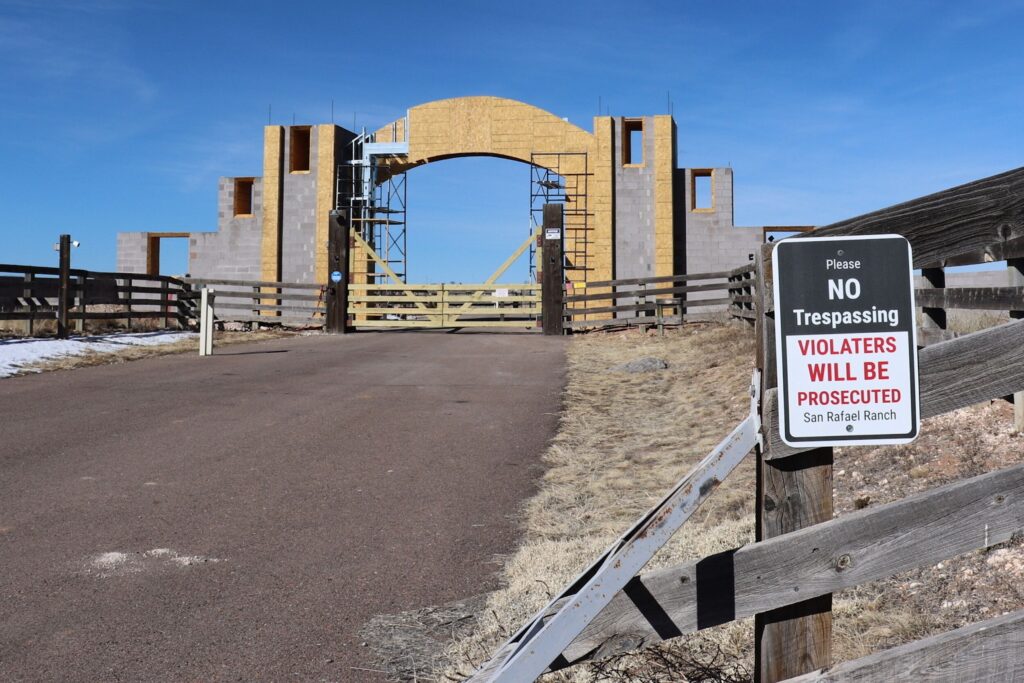
New Mexico launches ‘truth commission’ investigation into Jeffrey Epstein’s ranch | OUT WEST ROUNDUP
The Associated Press
the-associated-press@coloradopolitics.com
Updated 4 days ago
NEW MEXICO State investigates Epstein’s ranch SANTA FE — State legislators in New Mexico launched an investigation on Feb. 17 into past activity at a secluded desert ranch where financier and sex offender Jeffrey Epstein once entertained guests and whether...
Colorado’s federal judges maintain approach to immigration detentions while escalating warnings
Michael Karlik
michael.karlik@coloradopolitics.com
Updated 12 hours ago
Colorado’s federal judges are maintaining their view that the government’s assertion of broad immigration detention authority is unlawful, casting aside a recent appellate decision to the contrary as “unpersuasive” and out of step with the predominant interpretation by the judiciary....
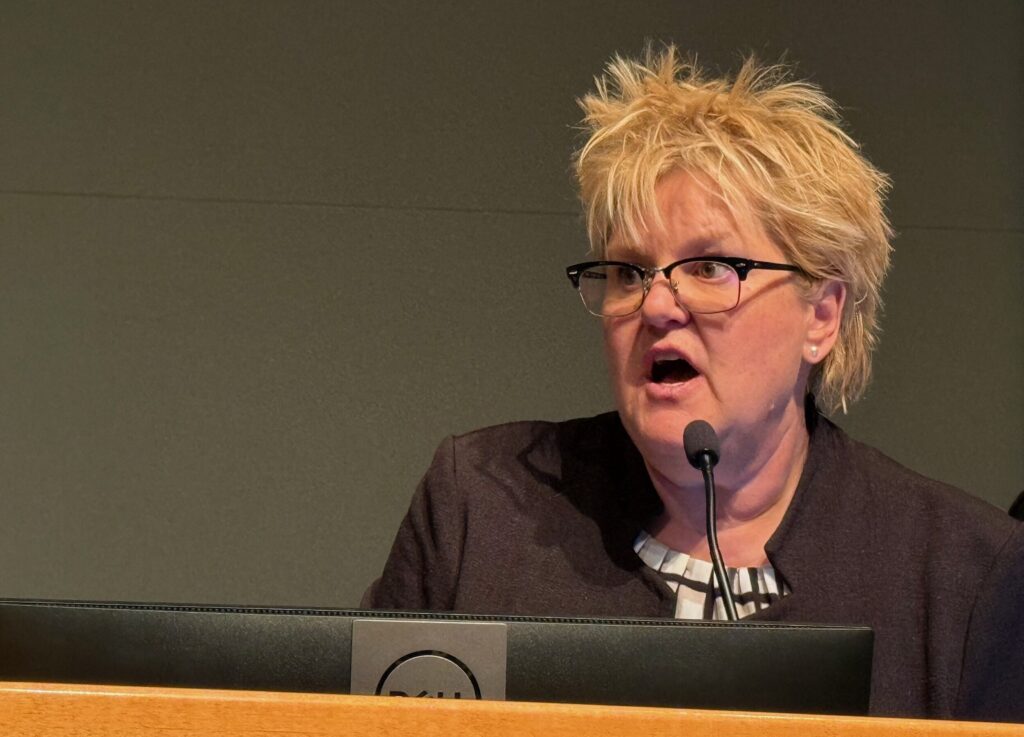
In a meeting Colorado GOP chair Brita Horn calls ‘illegal,’ Republicans vote to demand her resignation
Ernest Luning
ernest.luning@coloradopolitics.com
Updated 14 hours ago
Roughly half the membership of the Colorado Republican Party’s state central committee on Saturday voted overwhelmingly to approve a resolution expressing “no confidence” in state GOP Chairman Brita Horn’s leadership and calling for her immediate resignation in an online meeting...

Colorado Medicaid probe uncovers millions of dollars in alleged transport fraud ring
Nico Brambila
nico.brambila@denvergazette.com
Updated 18 hours ago
Colorado Medicaid officials detected $25 million in abnormal billing over just four months two years ago — a surge that prompted a new state law and the suspension of dozens of providers in what authorities now describe as an organized...
One small step for dialing back the partisanship | SONDERMANN
Eric Sondermann
eric-sondermann@coloradopolitics.com
Updated 3 days ago
Much ink, including a good deal of my own, has been spilled on the excesses of super-charged, toxic partisanship in this current era. Except for true believers along with those who profit from this all-consuming poison, there is broad agreement...
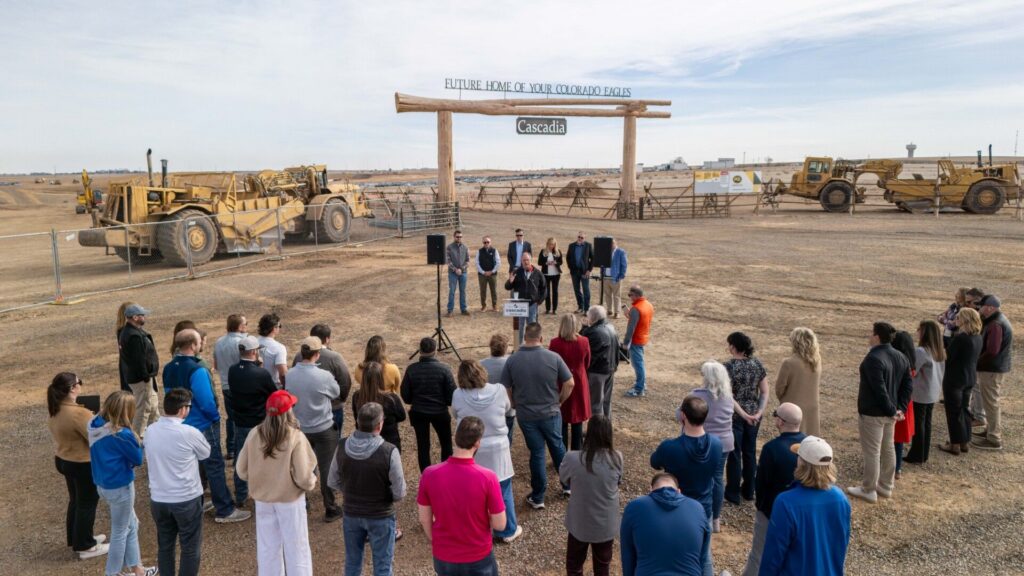
Greeley voters to decide fate of project that includes minor league hockey arena
Hap Fry, Special to The Gazette
hap-fry@gazette.com
Updated 18 hours ago
GREELEY • The fate of the Cascadia development — and quite possibly the future direction of the city — is in the hands of Greeley voters this Tuesday during a special city election on whether the landscape-altering project should be...

Colorado Politics Calendar Feb. 23-Mar. 1
Rachael Wright, Special to Colorado Politics
rachael.wright@coloradopolitics.com
Updated 4 days ago
CoPo’s weekly political calendar helps you find political and public policy events throughout Colorado. It includes candidate and issue campaign events, public policy meetings, court hearings, state and local party conventions, assemblies, debates, rallies, parades, speaking engagements, traveling dignitary appearances,...
Meeker rancher leads one of Colorado’s earliest attempts to transfer federal lands | A LOOK BACK
Rachael Wright, Special to Colorado Politics
rachael.wright@coloradopolitics.com
Updated 3 days ago
Forty-Five Years Ago This Week: Former state Rep. Nick Theos, R-Meeker, was one of several people testifying before the Senate Agriculture Committee on Senate Bill 81-170, which would transfer ownership of public lands from the federal government to state control....
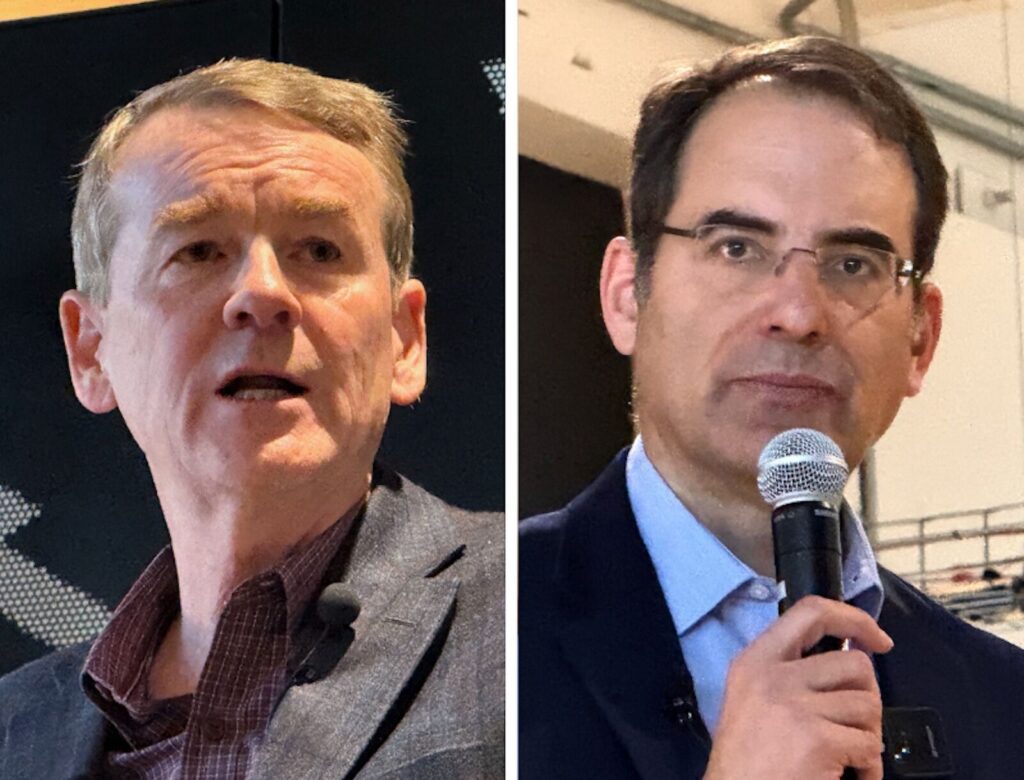
Democrats Michael Bennet, Phil Weiser make their cases to be Colorado’s next governor ahead of primary
Ernest Luning
ernest.luning@coloradopolitics.com
Updated 2 days ago
Nearly eight months before ballots will be counted in Colorado’s race for the its open gubernatorial seat, voters are lining up behind two of the state’s leading Democrats, who are facing off in a primary that will likely determine which...