

Colorado industry group, AG not backing down to White House hint of legal marijuana crackdown
The Justice Department will step up enforcement of federal law against recreational marijuana, White House spokesman Sean Spicer said Feb. 23, offering the Trump administration’s strongest indication to date of a looming crackdown on the drug, even as a solid majority of Americans believe it should be legal.
“I do believe you’ll see greater enforcement of it,” Spicer said in response to a question during a news conference. But he offered no details about what such enforcement would entail. President Donald Trump does not oppose medical marijuana, he added, but “that’s very different than recreational use, which is something the Department of Justice will be further looking into.”
But Colorado’s Marijuana Industry Group says it plans to stand up to the feds.
“Marijuana Industry Group supports the will of the voters of the state of Colorado, and the legitimacy of the medical and recreational programs,” said the organization’s executive director, Kristi Kelly in a statement. “The Colorado cannabis programs are heavily regulated, heavily taxed and heavily enforced by state and local governments. Resources are better spent pursuing illegal cartels than state- and locally-licensed, tax-paying business operators.”
Enforcement would shift away from marijuana policy under the prior Obama administration, which said in a 2013 memo that it would not intervene in state’s marijuana laws as long as they keep the drug from crossing state lines and away from children and drug cartels.
But the memo carried no force of law and could be rewritten by Attorney General Jeff Sessions, who has consistently said he opposes legal marijuana but has not indicated what he might do.
In addition to Colorado, seven states and Washington, D.C. have legalized marijuana for recreational use. The Justice Department has several options available should it decide to enforce the law, including filing lawsuits on the grounds that state laws regulating pot are unconstitutional because they are pre-empted by federal law. Enforcement could also be as simple as directing U.S. attorneys to send letters to recreational marijuana businesses letting them know they are breaking the law.
“The total economic impact of Colorado’s cannabis market was over $1.3B in sales which represents over $3B in economic impact and approximately 20,000 direct jobs in 2016, and $199M in taxes in fees, the vast majority of which came from recreational marijuana,” said Kelly. “This money was allocated to public school construction projects and public health and safety priorities. Deconstruction of this market would likely cause a recession in the state.”
Colorado Attorney General Cynthia Coffman added her voice to the marijuana debate this week in an exclusive interview with The Colorado Statesman, telling the administration she will see it in court if the Department of Justice tries to crack down on the state’s legalized marijuana.
“My position has been – and I used to talk about this while I was campaigning – I will protect the constitution of the state of Colorado, especially when the voters put something in the constitution under the initiative process,” Coffman said. “It’s the state AG’s job to stand up for the voters and what they wanted.”
Coffman added that she would be discussing marijuana policy with other states that have legalized the substance at the winter conference of the National Association of Attorneys General in Washington, D.C
Kevin Sabet, head of the anti-marijuana group Smart Approaches to Marijuana, said pot enforcement is a matter of public safety.
“The current situation is unsustainable,” Sabet said in a statement. “This isn’t an issue about states’ rights, it’s an issue of public health and safety for communities.”
Spicer’s comments came the same day as a Quinnipiac poll said 59 percent of Americans think marijuana should be legal and 71 percent would oppose a federal crackdown.
Pot advocates said they hoped Spicer’s prediction would not come to pass.
“It is hard to imagine why anyone would want marijuana to be produced and sold by cartels and criminals rather than tightly regulated, taxpaying businesses,” said Mason Tvert, communications director for the Marijuana Policy Project.
States have been flouting the U.S. Controlled Substances Act since at least 1996, when California voters approved marijuana for sick people, a direct conflict with federal guidelines barring the use of marijuana for medical purposes.
And presidents since Bill Clinton have said the federal government unequivocally rejects a state’s ability to modify federal drug law.
However, three presidents over the last 20 years have each concluded that the limited resources of the U.S. Department of Justice are best spent pursuing large drug cartels, not individual users of marijuana.
Associated Press writers Kristen Wyatt in Denver and Gene Johnson in Seattle continued to this report. This story was edited to include Colorado-based policy comment by Statesman Editor Jared Wright.


Colorado Politics Calendar Sept. 14-20
Rachael Wright, Special to Colorado Politics
rachael.wright@coloradopolitics.com
Updated 3 days ago
CoPo’s weekly political calendar will help you find political and public-policy events throughout Colorado. It includes candidate and issue campaign events, public policy meetings, court hearings, state and local party conventions, assemblies, debates, rallies, parades, speaking engagements, traveling dignitary appearances,...
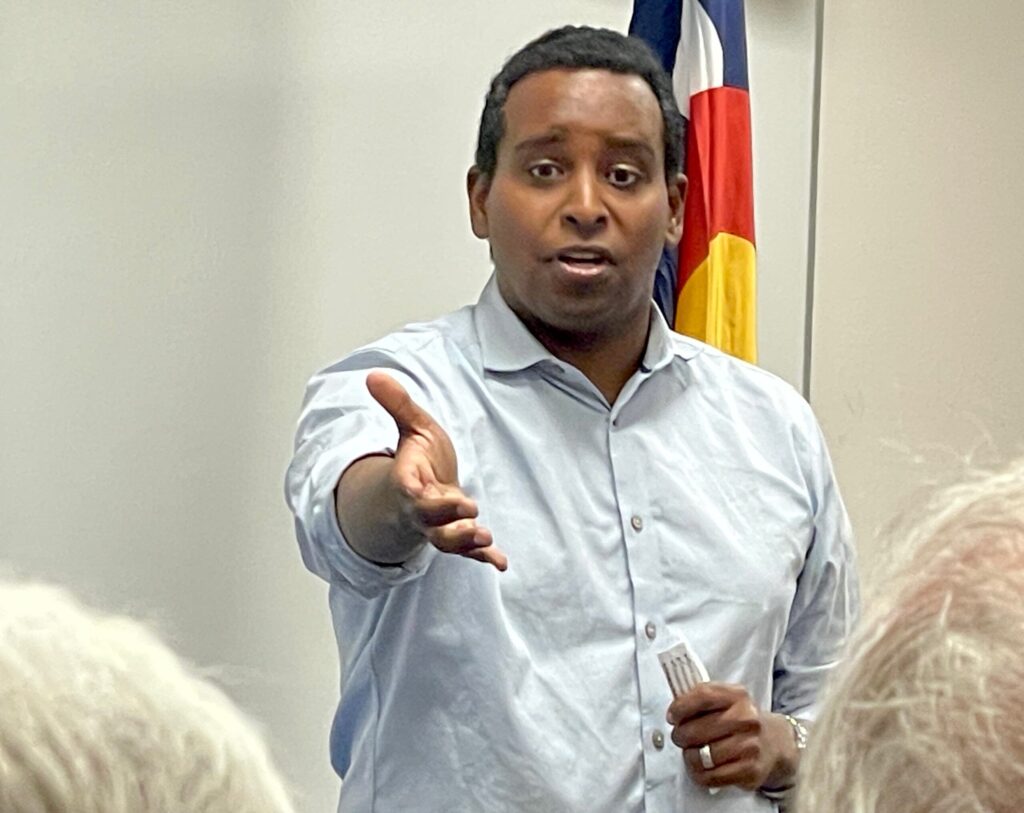
The African roots of three Colorado leaders | SONDERMANN
Eric Sondermann
eric-sondermann@coloradopolitics.com
Updated 2 days ago
Colorado’s political transformation is measured in many ways. A once reliably red state (with asterisks) became purple and is now a rather deep blue. For better or worse, probably the latter, power is ever more consolidated along the Front Range...
Federal judge green-lights civil trial against ex-Fort Collins DUI officer
Michael Karlik
michael.karlik@coloradopolitics.com
Updated 14 hours ago
A federal judge ruled on Thursday that Fort Collins’ former “DUI officer” will face a civil trial for allegedly investigating a motorist for impaired driving without any reasonable suspicion to do so. In recent years, several people arrested by Officer...

Denver police reopen 13 sex assault cases after retesting Missy Woods’ CBI work
Jenny Deam
jenny.deam@gazette.com
Updated 12 hours ago
Thirteen previously closed Denver sexual assault cases have been reopened after the city’s crime lab retested DNA evidence once analyzed by former Colorado Bureau of Investigation forensic analyst Yvonne Woods. A police spokesperson told The Denver Gazette the once-closed cases...

Ballot measure aims to shift Colorado sporting-goods tax revenue to land, water and wildfire projects
Marissa Ventrelli
marissa.ventrelli@coloradopolitics.com
Updated 16 hours ago
Colorado voters this November will decide whether to direct a share of sales tax revenue from sporting goods — including bicycles and skiing equipment — toward land and water conservation, wildfire prevention and expanding outdoor recreation. Supporters say the measure...

Colorado Supreme Court suspends Mesa County judge pending misconduct investigation
Michael Karlik
michael.karlik@coloradopolitics.com
Updated 18 hours ago
The Colorado Supreme Court suspended Mesa County Court Judge Michael J. Grattan on Thursday amid a misconduct investigation. The court’s Sept. 10 order gave Grattan 21 days to explain why his paid suspension should not continue through the end of...

Trump honors the fallen of the 9/11 terrorist attacks during Pentagon speech
Mabinty Quarshie
mabinty-quarshie@coloradopolitics.com
Updated 18 hours ago
President Donald Trump and first lady Melania Trump honored the roughly 3,000 Americans killed during the Sept. 11, 2001, terrorist attacks during a ceremony at the Pentagon. The event marking the 25th anniversary of the deadliest attack on American soil...

Immigration reporting measure fuels debate over Colorado’s role with ICE
Marissa Ventrelli
marissa.ventrelli@coloradopolitics.com
Updated 13 hours ago
A coalition of advocacy groups and several district attorneys rallied outside the Colorado Capitol on Thursday to oppose a ballot measure that, if approved by voters in November, would require state and local law enforcement to cooperate with federal immigration...
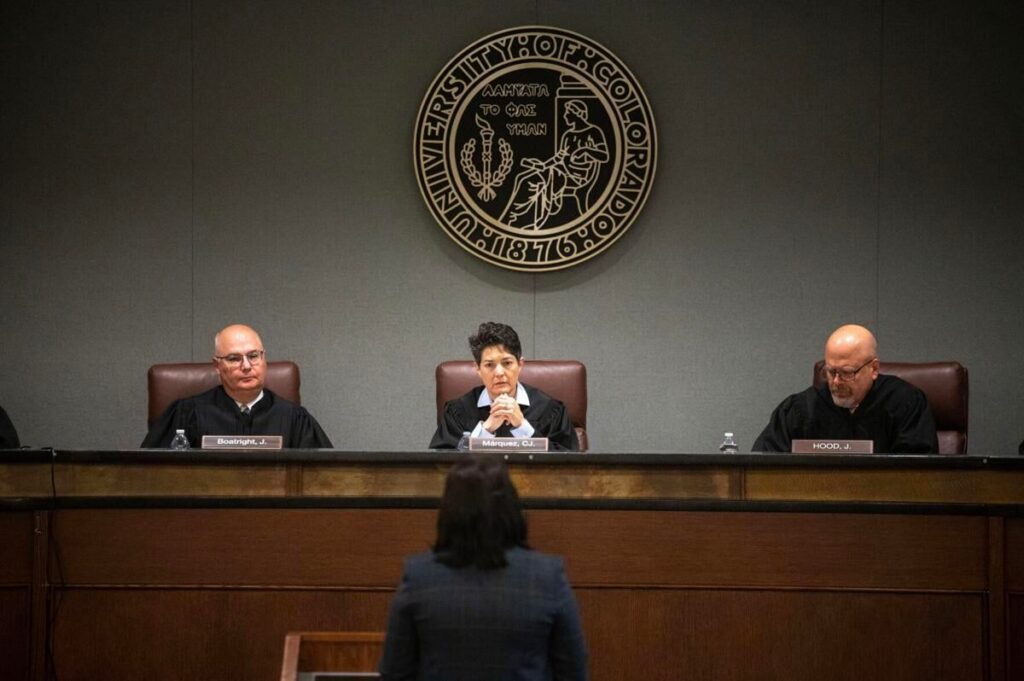
Colorado Supreme Court changes course, dismisses case about special district bonds
Michael Karlik
michael.karlik@coloradopolitics.com
Updated 14 hours ago
The Colorado Supreme Court declined on Friday to decide a dispute between a large-scale Commerce City development and the various districts financing it, after initially showing interest in the ongoing case. Colorado has roughly 2,800 special districts, which are local...

Colorado leaders express outrage and pain following 9/11 attacks | A LOOK BACK
Rachael Wright, Special to Colorado Politics
rachael.wright@coloradopolitics.com
Updated 23 hours ago
Twenty-Five Years Ago This Week: “Responding to the 9/11 terrorist attacks, Colorado Gov. Bill Owens told reporters in a statement, “I join all Coloradans in expressing outrage and horror at the senseless terrorist bombings in New York and Washington D.C....