

Uncertainty surrounds renewed talk of red-light cameras in Colorado Springs
Talks to restore red-light cameras to help curb traffic violations in the city are just that – talks, according to the Colorado Springs Police Department.
After Police Chief Pete Carey said Tuesday that he was considering bringing the cameras back, his department spokesman Lt. Howard Black clarified the department is still “in very preliminary conversations internally.” The move would have to be approved by City Council before going into effect.
The city once supported such cameras meant to catch red-light runners, but shut them down after Carey, then interim police chief, said they weren’t improving traffic safety. City Council President At-Large Merv Bennett did not respond to requests for comment.
The question the police department is asking about the cameras now, Black said, is, “Is this process something that could be beneficial for the safety of our community, especially with the staffing issues we’re dealing with and writing fewer traffic tickets?”
Estimates show about 36 percent fewer traffic tickets have been written since the department went through a September reorganization last year meant to fill holes in the patrol unit, Black said.
Part of that reorganization reassigned the eight traffic crash investigators within the department’s patrol division to street duty, dismantled other specialized units to put more bodies on patrol, and removed the goal for each officer to write a traffic ticket each shift. The motorcycle unit’s primary duty remains traffic safety.
What, if any, impact those changes had on traffic crashes in the city is not yet known. Official statistics for 2016 have not yet been released.
Unofficial data presented in CSPD’s 2016 semiannual report in July, however, indicate crashes were on par with the year before. The report was released two months before the reorganization, but showed that even amid what Carey was calling a “critical” staffing shortage that already took officers away from traffic duties, the second quarter of 2015 had 5,099 crashes and the second quarter of 2016 had 5,098 crashes.
The number of injuries in those crashes had fallen from 363 to 307, the report said. Fatalities have remained steady in the 30 range since 2011, the year the city ended its red-light camera program.
Carey’s claim that the cameras weren’t effective was contradicted by a report city officials used to tout the program’s success.
The report analyzed traffic violations at the four intersections where the cameras were mounted: Bijou Street and Nevada Avenue; Circle Drive and Platte Avenue; Murray Road and Platte; and Oro Blanco Drive and Barnes Road.
It found violations steadily dropped at three of the four intersections from October 2010 to August 2011. Overall, red-light violations at the four intersections dropped from 1,520 to 1,040, the report said.
It also brought in more than $175,731 in fines to the city.
Still, Carey said the benefit didn’t outweigh the cost of lending two to three of his employees to monitor the program. He also said public opinion and talks with the mayor’s office contributed to his decision to end the program.
Red-light cameras haven’t been favored at the state level, either.
Republicans and Democrats in the legislature have passed bills in the last two sessions to curb the use of red-light cameras, but each time Gov. John Hickenlooper, has blocked them.
Last year, Hickenlooper blocked a bill that would have imposed an outright ban. In 2015 he vetoed two red-light camera bills: a House bill that would have allowed voters in each municipality to decide whether to allow them at major roads and intersections and a Senate bill to ban them.
Rep. Steve Lebsock, a Democrat from Thornton who sponsored the bills, said the cameras invade people’s privacy and civil liberties while serving as a revenue source for cities. But after both bills were defeated, he says he won’t try again this year.
“The legislature passed solid bills the last two years with bipartisan support, and the governor chose to veto them.” Lebsock said Tuesday. “At this point, we might have to wait until we get another governor.”
Hickenlooper is prevented by term limits from running again next year.


Colorado Politics Calendar July 27-Aug. 2
Rachael Wright, Special to Colorado Politics
rachael.wright@coloradopolitics.com
Updated 4 days ago
CoPo’s weekly political calendar will help you find political and public-policy events throughout Colorado. It includes candidate and issue campaign events, public policy meetings, court hearings, state and local party conventions, assemblies, debates, rallies, parades, speaking engagements, traveling dignitary appearances,...

The through line from Donald Trump to Victor Marx | SONDERMANN
By Eric Sondermann
by-eric-sondermann@coloradopolitics.com
Updated 4 days ago
Over 10 years ago, before Donald Trump could ever defeat Hillary Rodham Clinton, he had to first engineer a hostile takeover of the Republican Party. Prior to his descent of that golden escalator, the previous seven Republican presidential nominees had...

Colorado districts prepare for school year amid mental health cuts. But will less cellphone distractions help?
Marissa Ventrelli
marissa.ventrelli@coloradopolitics.com
Updated 2 days ago
The signs of a new school year are everywhere — buses in the shop, teachers unpacking boxes, families ticking through supply lists — but behind the familiar rituals, Colorado districts are preparing for a year defined less by routine than...

Armstrong staffer considers congressional bid, DeGette angers rural communities with wilderness act | A LOOK BACK
Rachael Wright, Special to Colorado Politics
rachael.wright@coloradopolitics.com
Updated 3 days ago
Forty-five years ago this week: If the lines were drawn just right, Republican Sen. Bill Armstrong stood the chance of losing his office manager, Ruth Fountain. Fountain admitted she was seriously thinking about running for Colorado’s new congressional seat in...
10th Circuit dismisses woman’s lawsuit following 10-year attempt to undo restraining order
Michael Karlik
michael.karlik@coloradopolitics.com
Updated 2 days ago
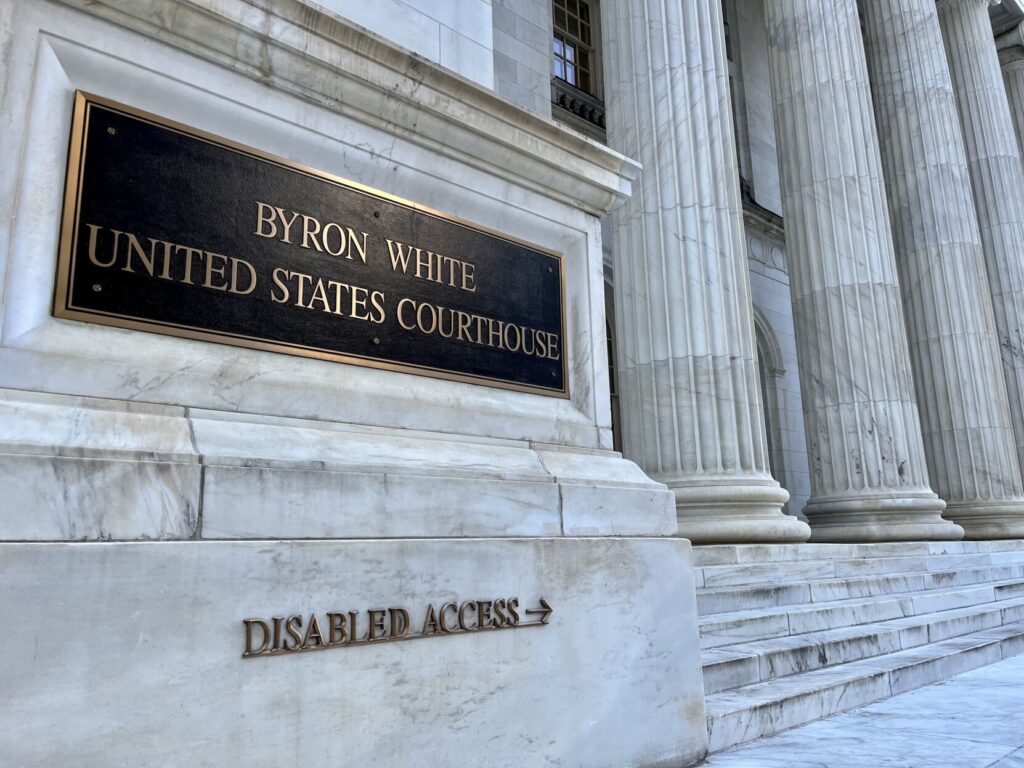
The Denver-based federal appeals court rejected a woman’s challenge on Friday to a restraining order imposed on her more than a decade ago, finding that she cannot credibly claim she will be prosecuted for violating the restraining order through her...
10th Circuit dismisses woman’s lawsuit following 10-year attempt to undo restraining order
Michael Karlik
michael.karlik@coloradopolitics.com
Updated 2 days ago
The Denver-based federal appeals court rejected a woman’s challenge on Friday to a restraining order imposed on her more than a decade ago, finding that she cannot credibly claim she will be prosecuted for violating the restraining order through her...
Surprise candidate Shimon Blau cleared to face off against Melat Kiros in November
Ernest Luning
ernest.luning@coloradopolitics.com
Updated 2 days ago
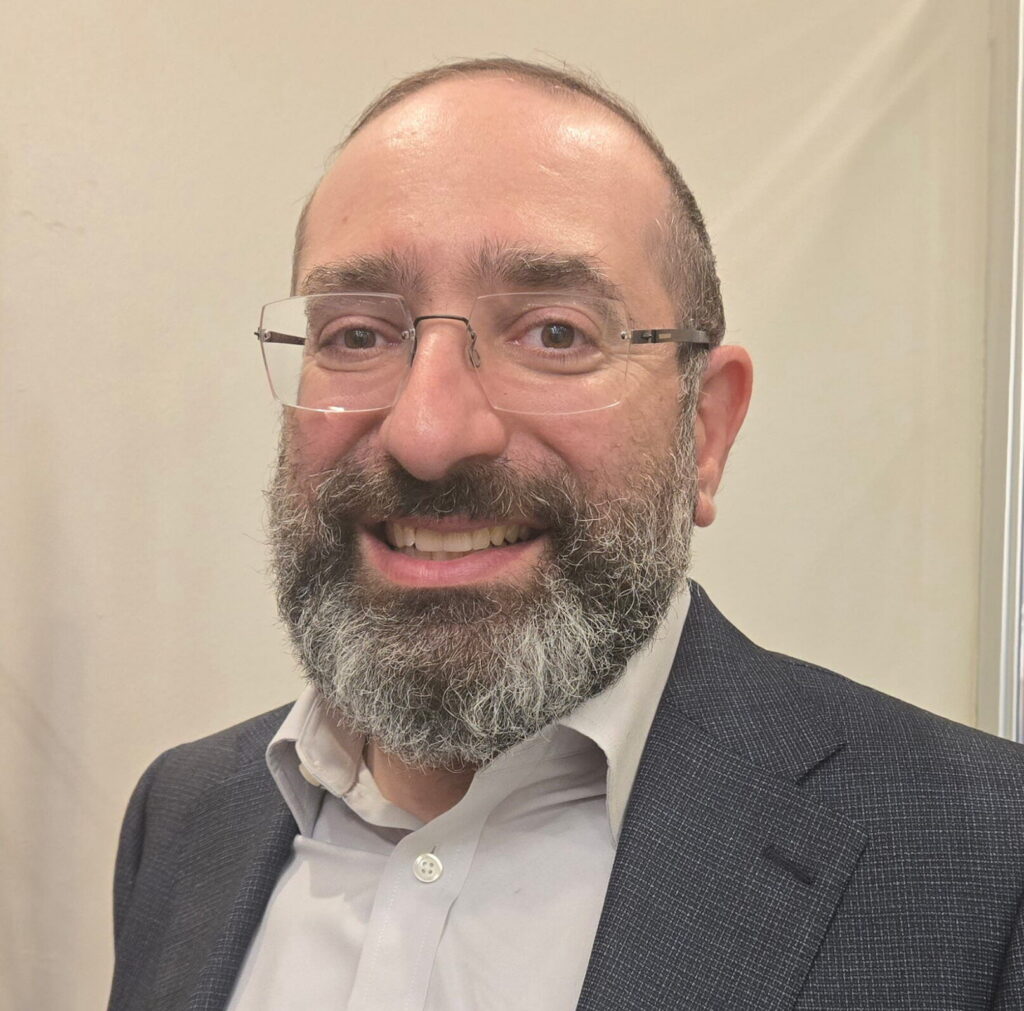
Unaffiliated congressional candidate Shimon Blau, a Denver doctor, has qualified by petition for the general election in Colorado’s 1st District, where Democrat Melat Kiros defeated 15-term U.S. Rep. Diana DeGette in last month’s primary, the Colorado Secretary of State’s Office...

Colorado produce not tied to nationwide cyclospora outbreak, agriculture officials say
Marissa Ventrelli
marissa.ventrelli@coloradopolitics.com
Updated 1 day ago
There is no indication that the recent outbreak of cyclospora, a fecal parasite that has contaminated food and water across nearly every state, can be linked to produce grown in Colorado, according to the state’s Department of Agriculture. “Colorado growers...

UNC opens College of Osteopathic Medicine
Marissa Ventrelli
marissa.ventrelli@coloradopolitics.com
Updated 2 days ago
The University of Northern Colorado held a grand opening for its new College of Osteopathic Medicine on Friday, with Gov. Jared Polis in attendance to celebrate the culmination of a two-year, $127.5 million project. The project was funded through legislation...
Colorado equal pay law does not require plaintiffs to allege gender-based retaliation, appeals court finds
Michael Karlik
michael.karlik@coloradopolitics.com
Updated 1 day ago
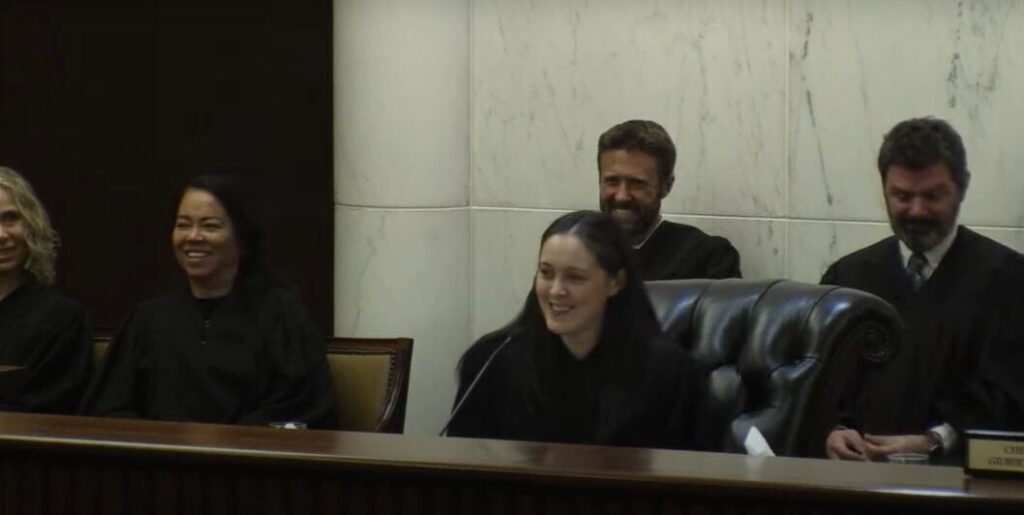
The 2019 Colorado law aimed at rooting out pay discrimination on the basis of sex does not require a plaintiff to allege their employer retaliated against them for sex- or gender-related reasons, the state’s second-highest court decided on Thursday. Lawmakers...