

Governor asks CDOT to establish ‘high priority’ project list to submit to feds
Colorado could get some help from the federal government to speed up highway construction projects, including the nettlesome bottleneck on Interstate 25 between Castle Rock and Monument, but transportation officials caution against expecting the pedal to hit the metal on the projects.
Gov. John Hickenlooper this week told the Colorado Department of Transportation to come up with a list of projects to submit to the feds for a potential “high priority” designation, the governor’s spokeswoman, Holly Shrewsbury, told The Colorado Statesman. The list will include the Monument-to-Castle Rock stretch, known as “The Gap,” she said.
The governor’s instructions to CDOT are in response to a request last week by several El Paso County Republican legislators, led by state Rep. Paul Lundeen, R-Monument, asking Hickenlooper to take advantage of an executive order signed by President Donald Trump intended to expedite some transportation and other infrastructure projects earmarked by the states. If federal authorities agree the projects are “high priority,” they’re supposed to put any required federal studies and reviews on a fast track.
“We’re all on board with seeing if there’s a way for us to have projects considered as high priority projects or projects that can expedite the environmental clearance,” CDOT Executive Director Shailen Bhatt told The Statesman.
He noted, however that some high-profile highway needs won’t be fulfilled any faster under the new federal guidelines, because the necessary studies have already been completed.
“We’ve already got a record of decision, for example, for widening I-25 north (from Denver) to Fort Collins,” Bhatt said. “There, accelerating the process doesn’t allow us to deliver the project any quicker.”
Likewise, he said, improvements to Interstate 70 westbound from the foothills outside Denver to the Eisenhower-Edwin C. Johnson Memorial Tunnel depend on financing, not speedier studies.
“We already have a record of decision that allows us to do certain things on I-70 and don’t need that expedited to get to work,” Bhatt said.
The biggest logjam on that stretch, he added, is at the bottom of Floyd Hill, where three lanes narrow on a sharp curve to two lanes in each direction. CDOT engineers know how to fix it, Bhatt said, but it’ll be expensive.
“We need to build a new viaduct and change the geometry of approach so drivers come at it at straight and then do a double stack of the highway through there – like the project recently completed in Glenwood Canyon -around that corner. That project,” he said, “is a $400-500 million project. I don’t need environment clearance for that one, I need $400-500 million.”
As for “The Gap,” the 17-mile stretch of two-lane road prone to congestion between Castle Rock and Monument, Bhatt said a nudge from the feds could speed that up, but not by a lot. Like the I-25 and I-70 projects north of Denver and into the mountains, respectively, widening “The Gap” also costs money the state doesn’t have.
There’s a good chance “The Gap” would get the “high priority” designation from the federal government, since it was one of two Colorado projects that appeared on a list circulated by the Trump transition team last month. The project would likely benefit, too, from an expedited federal review, Bhatt said, although the calendar might not move as much as proponents of the project anticipate.
CDOT last month teamed up with the Federal Highway Administration to expedite the review and study process, which is now expected to take about two years.
Once the approval is received, the department says, the road can be completed in another three years. (“I can’t change the three years of construction,” Bhatt noted. “You don’t build 17 miles on an existing interstate and not take a few years.”)
“Maybe there’s a way to get it even quicker through this process,” Bhatt acknowledged, but he stressed that it isn’t just the feds dragging their feet that takes so long.
“Some people say you’re looking at too many squirrels, or you’re looking at too many prairie dogs, but the other thing in the environmental clearance is you have to take property rights into account, and that’s a big, complicated deal for a 17-mile project,” he said. “For the property owners that’s a big deal. I don’t think they want us to say we’re going to disregard property rights.”
Still, he suggested the clearances could perhaps be finished in 18 months, but then CDOT would run into the same roadblock that stands in the way of the other major projects.
“Even if I got that environmental clearance – let’s say the Trump administration says we’re going to get this clear – there’s no funding for that project. Just like Floyd Hill, we don’t have the $300-400 million to finish that project.”
On an optimistic note, Bhatt said he was hopeful lawmakers can find the big-ticket transportation funding that has eluded the Legislature in recent years.
Leadership in both chambers call transportation funding – there’s an estimated $9 billion in identified needs across the state, officials have said – one of the session’s top priorities, although there doesn’t appear to be a consensus on the source of funds yet. Some are proposing a potential ballot referendum to ask voters to approve a tax hike of some sort, while others are demanding that lawmakers find the money in the state’s general fund.
“CDOT’s role is to say, if we got the money needed for this project, here’s the schedule for this project,” Bhatt said. “But the pressure is on the legislators to either find funding or provide a referred measure so we can go to the people of Colorado and they can get us the funding.”
“I’m always hopeful,” he added. “I’m more hopeful this year than I was last year because the conversation has intensified on both sides of the political spectrum, and I think that’s a function of the citizens of Colorado being fed up with potholes. But, as always, the devil is in the details.”
– ernest@coloradostatesman.com

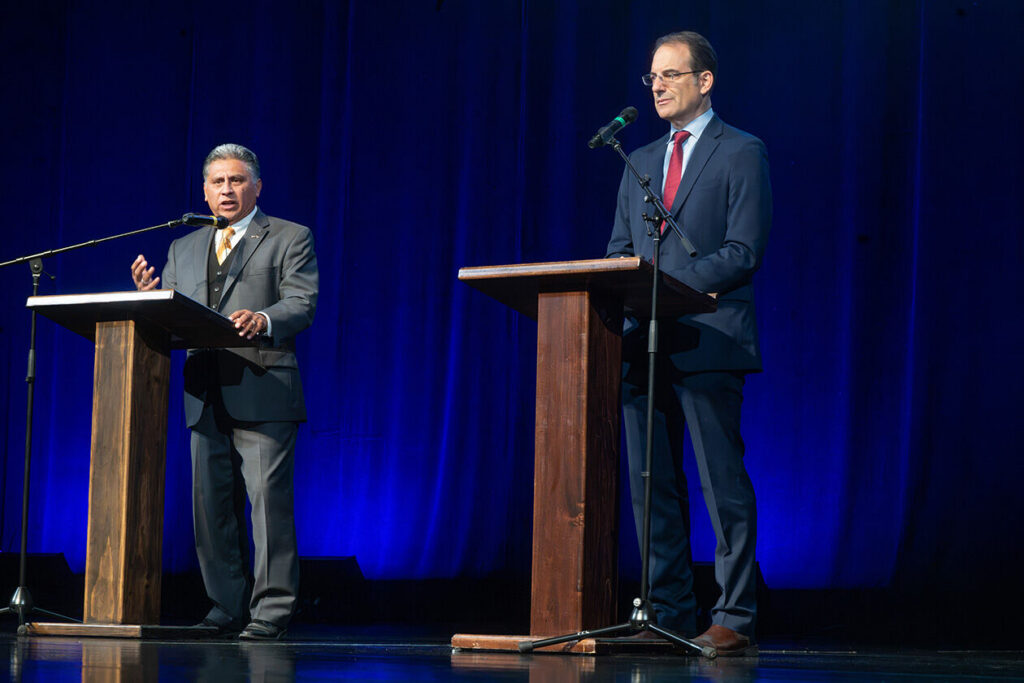
Gubernatorial candidates Phil Weiser, Greg Lopez spar, as Marx skips debate
Deborah Grigsby
deborah.smith@denvergazette.com
Updated 4 minutes ago
Two of the candidates for Colorado governor squared off in a televised debate on Thursday night, when Attorney General Phil Weiser, the Democratic nominee, and former U.S. Rep. Greg Lopez, an unaffiliated candidate, delved into issues of affordability, data center...
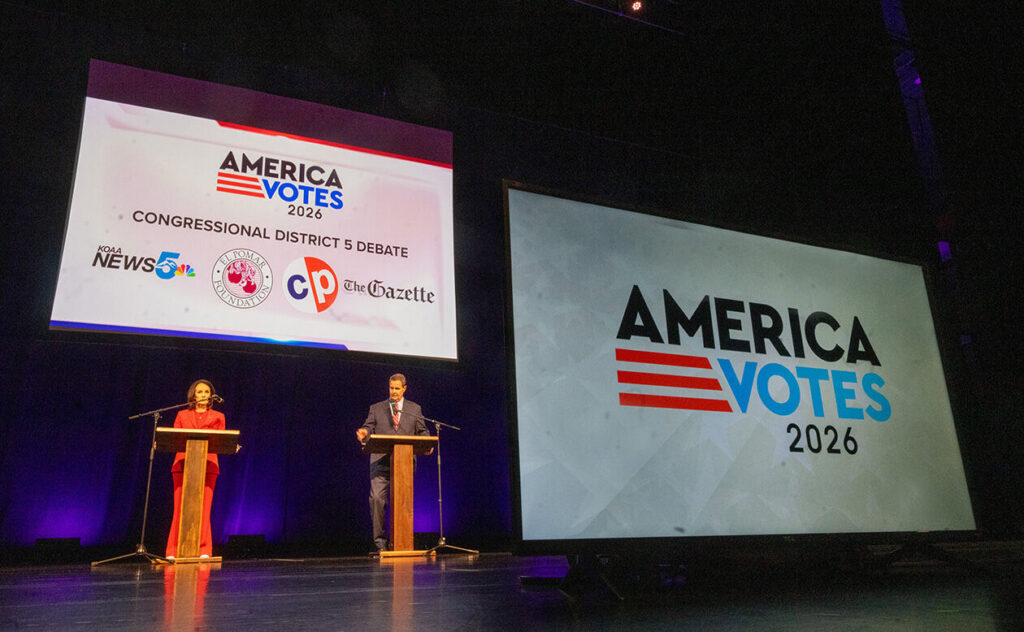
Troops, taxes, war dominate Colorado’s 5th CD debate between Jeff Crank, Jessica Killin
Deborah Grigsby
deborah.smith@denvergazette.com
Updated 1 hour ago
Republican U.S. Rep. Jeff Crank and Democratic challenger Jessica Killin on Thursday night clashed over the war in Iran, the federal budget and healthcare when they took the stage in Colorado Springs for a sold-out debate in the race to...
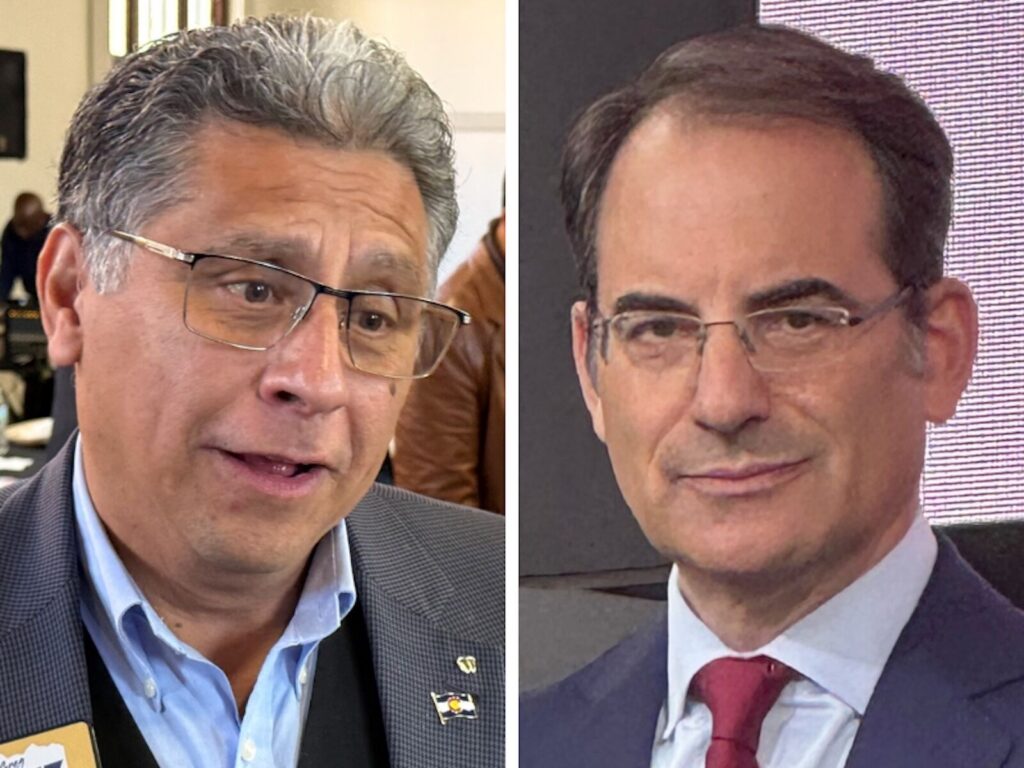
WATCH: Colorado gubernatorial candidates Phil Weiser, Greg Lopez face off Thursday in televised debate
Ernest Luning
ernest.luning@coloradopolitics.com
Updated 2 hours ago
Two of the candidates for governor of Colorado are set to square off in a televised debate for the first time Thursday night, when Attorney General Phil Weiser, the Democratic nominee, and former U.S. Rep. Greg Lopez, an unaffiliated candidate,...
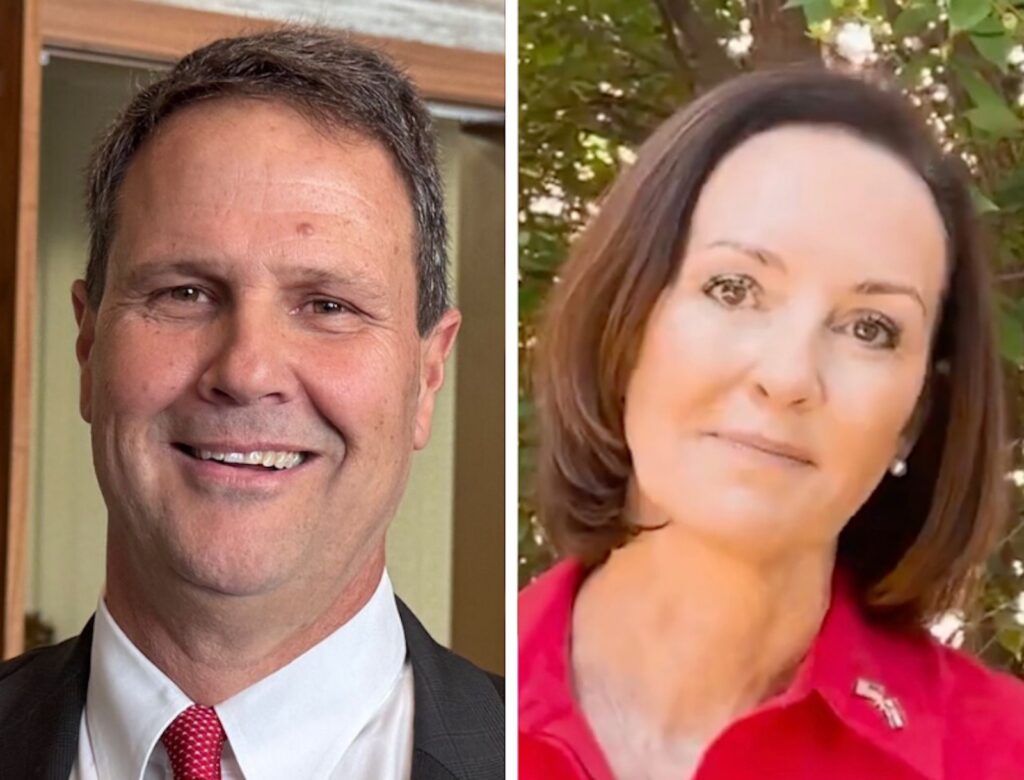
WATCH: Republican US Rep. Jeff Crank, Democratic challenger Jessica Killin debate in Colorado’s 5th CD
Ernest Luning
ernest.luning@coloradopolitics.com
Updated 4 hours ago
Republican U.S. Rep. Jeff Crank and Jessica Killin, his Democratic challenger, are scheduled to meet for a televised debate in the race to represent Colorado’s 5th Congressional District on Thursday night. The candidates are set to take the stage at...
Colorado State Fair youth golf tournament celebrates 11 years
Marianne Goodland
marianne.goodland@coloradopolitics.com
Updated 6 hours ago
Twenty-eight teams tee off Friday at Walking Stick Golf Course in Pueblo for a tournament supporting 4-H, Future Farmers of America and capital improvements at the Colorado State Fair. Now in its 11th year, the Partners of Youth in Ag...

Controversial two-bag furbearer limit heads to CPW meeting under legal threat
Marianne Goodland
marianne.goodland@coloradopolitics.com
Updated 6 hours ago
Next week’s Colorado Parks and Wildlife Commission meeting in La Junta is likely to open under the cloud of threatened legal action. Safari Club International and the Sportsmen’s Alliance Foundation warned the commission this month that its July vote imposing...
Democratic-aligned poll shows big majority of swing-seat voters support routine childhood vaccines
Ernest Luning
ernest.luning@coloradopolitics.com
Updated 9 hours ago
A new poll conducted by Democratic-aligned groups found that voters in competitive U.S. House districts — including a battleground seat in Colorado — support routine childhood vaccinations by a wide margin and oppose a recent order by President Donald Trump...
Some Colorado hunters oppose measure establishing constitutional right to hunt, fish proposal, group says
Marissa Ventrelli
marissa.ventrelli@coloradopolitics.com
Updated 3 hours ago
A group that says it represents hunters and anglers from across Colorado announced its opposition to a ballot measure that would establish the right to hunt and fish in Colorado’s constitution, saying it could result in the overturning of bans...
Coalition drops Colorado transportation ballot measure after securing deal
Marissa Ventrelli
marissa.ventrelli@coloradopolitics.com
Updated 4 hours ago
The proposed constitutional amendment seeking to dedicate all transportation-related revenue to Colorado’s roads and bridges will no longer appear in this November’s ballot after its proponents reached an agreement with lawmakers following months of negotiations. Initiative No. 175, backed by...
Iran and Oman come to agreement to open Strait of Hormuz, but await US buy-in
Claire Carter
claire.carter@washingtonexaminer.com
Updated 10 hours ago
Iran and Oman reached an understanding on a temporary shipping corridor through the Strait of Hormuz, clearing a major hurdle to reopening the critical waterway, but Tehran says implementation depends on the United States meeting a series of demands. The...