

Devil’s truly in the details when implementing voter-approved ‘Raise the Bar’
State and county elections officials are scrambling to put together a system to accommodate new requirements for qualifying constitutional ballot proposals.
County clerks and the secretary of state’s office feels a sense of urgency to implement the Raise the Bar initiative, pointing out that proponents already are organizing ballot questions for the 2018 election cycle.
Amendment 71, adopted by the state’s voters on Nov. 8, makes it more difficult to amend the state constitution.
It will take signatures from all 35 state Senate districts to make the ballot. Of the total required signatures, the number collected from each district would need to equal at least 2 percent of the registered voters in those districts to make the ballot.
It currently takes 98,492 valid signatures to qualify for the ballot.
Proposed constitutional amendments making the ballot would then need 55 percent of the vote to pass on Election Day, rather than a simple majority.
Existing provisions in the constitution could be repealed by a simple majority under the Raise the Bar directive.
The ballot question did not alter the statutory ballot-initiative process. Statutory ballot questions are easier to amend because language is not locked into the state constitution.
Meeting Thursday, the bipartisan Election Advisory Committee discussed the complicated nature of implementing the new requirements.
“Regardless of where you collect the petition signatures, there is no guarantee that people live in that area,” explained Secretary of State Wayne Williams, a Republican. “And if you’re in the metro area, who knows what Senate district the King Soopers is in that you go to. You may have crossed a Senate district line.”
Williams was referring to the fact that petition gatherers often collect signatures at supermarkets in local communities.
Proponents argue that the new requirements will help engage rural Colorado. Most signatures currently come from heavily populated urban areas of the state, like Denver, where petition gatherers can collect large chunks of signatures quickly, and relatively easily, if they have the money to pay circulators. The initiative forces proponents to consider the entire state.
Critics of the proposal-largely led by special-interest groups-argued that the measure will have a chilling effect on the democratic process.
On Thursday, Elena Nunez, executive director of Colorado Common Cause, raised concerns with how the petition format will look, and how the secretary of state’s office will go about validating signatures.
State elections officials acknowledged that they still have to figure out the process, and that additional information may be required on the petition form.
“We definitely have thought about how can we get folks to organize their petitions in a manner that we can actually see that they’ve collected signature from all 35 Senate districts,” said Ben Schler, manager of internal operations for the state’s Elections Division.
Given the confusion over what Senate district a voter might reside in, one idea on the table includes requiring petition circulators to look up each individual’s district when signing a form. But that could be a burden and complicated.
In many cases, circulators will have to rely on voters to state what district they live in, and many may not know.
Another idea is to provide circulators with district maps, but that could be time consuming and confusing, as there would be many maps that can be difficult to read.
“I’d like to figure out a way to do it, I just can’t come up with a way,” Williams said. “That’s why we’re stuck on the backend.”

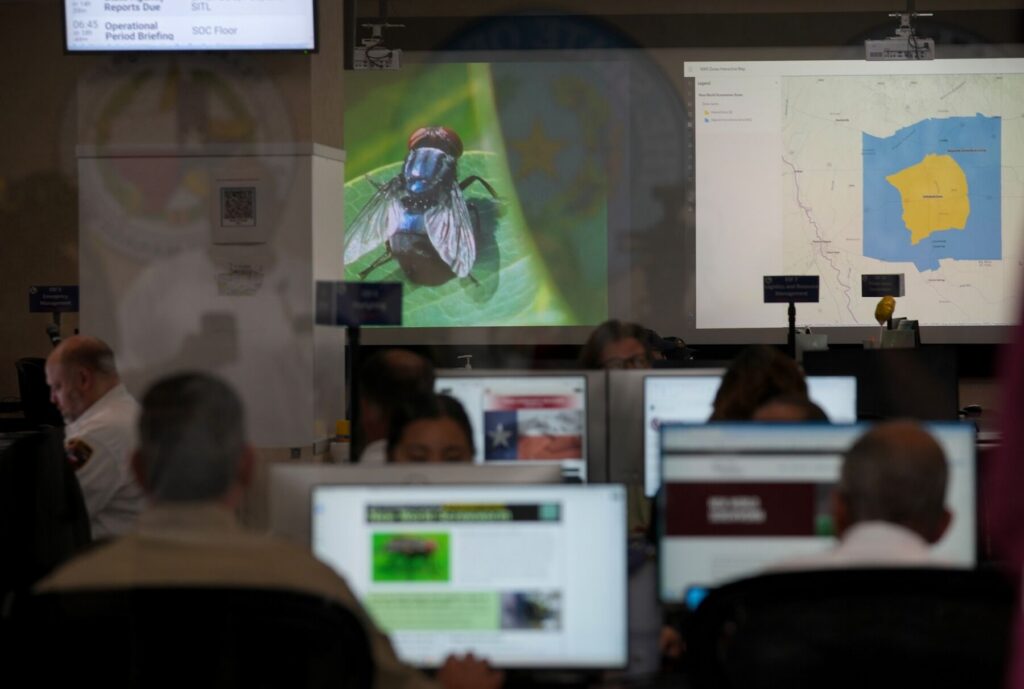
Flesh-eating cattle parasite spreads beyond Texas as new screwworm cases found | OUT WEST ROUNDUP
The Associated Press
the-associated-press@coloradopolitics.com
Updated 3 days ago
NEW MEXICO Screwworm spreads beyond Texas Three more cases of the New World screwworm have been confirmed, including one found in a dog in New Mexico, outside the main cluster in Texas, demonstrating the difficulty of stopping a resurgent pest...

Michael Dougherty is literally running for attorney general in Colorado Democrat’s 1st TV ad
Ernest Luning
ernest.luning@coloradopolitics.com
Updated 18 hours ago
Democratic attorney general candidate Michael Dougherty, the Boulder County district attorney, runs laps around the judicial complex in Denver that houses the office he’s seeking in a TV ad released Friday that includes a subtle dig at one of his...

Group aims to add right to hunt and fish to Colorado Constitution
Marissa Ventrelli
marissa.ventrelli@coloradopolitics.com
Updated 15 hours ago
A group is seeking to make Colorado the 25th state in the nation with an established constitutional right to hunting and fishing through a proposed ballot initiative. Backed by the International Order of T. Roosevelt, a group dedicated to preserving...

Colorado Politics Calendar June 15-21
Rachael Wright, Special to Colorado Politics
rachael.wright@coloradopolitics.com
Updated 4 days ago
CoPo’s weekly political calendar helps you find political and public policy events throughout Colorado. It includes candidate and issue campaign events, public policy meetings, court hearings, state and local party conventions, assemblies, debates, rallies, parades, speaking engagements, traveling dignitary appearances,...

A primary brings out primal instincts | SONDERMANN
Eric Sondermann
eric-sondermann@coloradopolitics.com
Updated 3 days ago
There are no Stanley Cup finals or NBA title showdowns involving local teams this June. In their place, we are inundated with primary election campaign ads. Coloradans can be excused for missing the diversion and alternate programming. But life can...
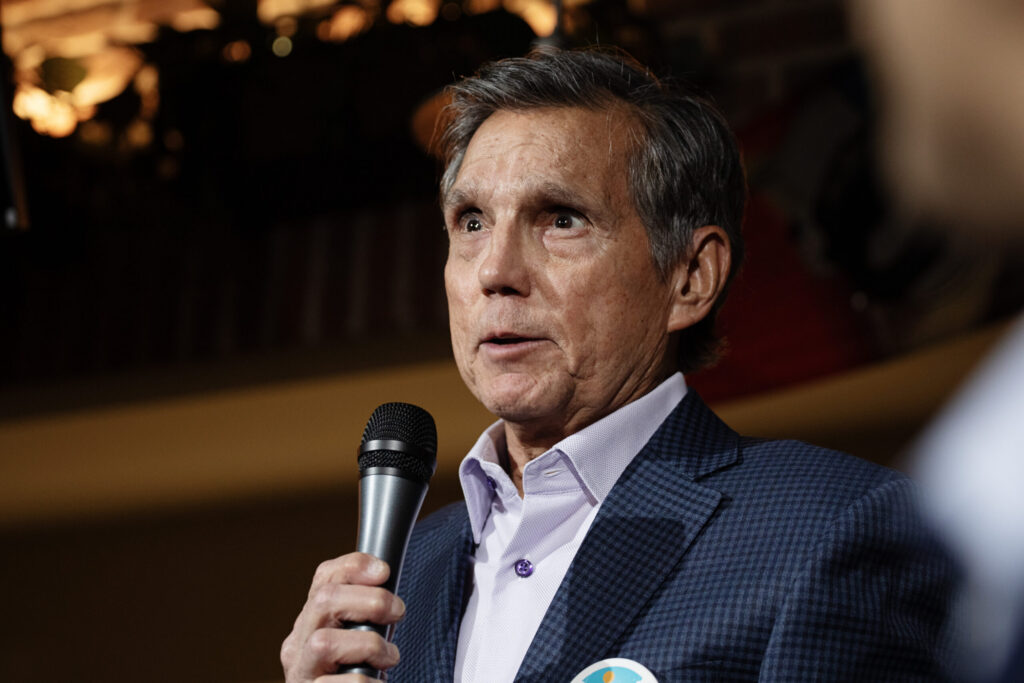
Dem-GOP tension dominates 1,000-bill legislative session | A LOOK BACK
Rachael Wright, Special to Colorado Politics
rachael.wright@coloradopolitics.com
Updated 3 days ago
Forty-Five Years Ago This Week: “I can honestly say that until now, we got along well with the governor’s office,” said House Minority Leader Federico Peña, D-Denver. “We visited frequently with the staff. And you didn’t see certain legislators speaking...

Hickenlooper lands endorsements from Elizabeth Warren, Ministerial Alliance in US Senate primary
Ernest Luning
ernest.luning@coloradopolitics.com
Updated 2 days ago
U.S. Sen. John Hickenlooper won endorsements this week from a progressive Democratic colleague and a coalition of metro-area African American faith leaders as voting began in Colorado’s primary election. U.S. Sen. Elizabeth Warren of Massachusetts and the Greater Metro Denver...
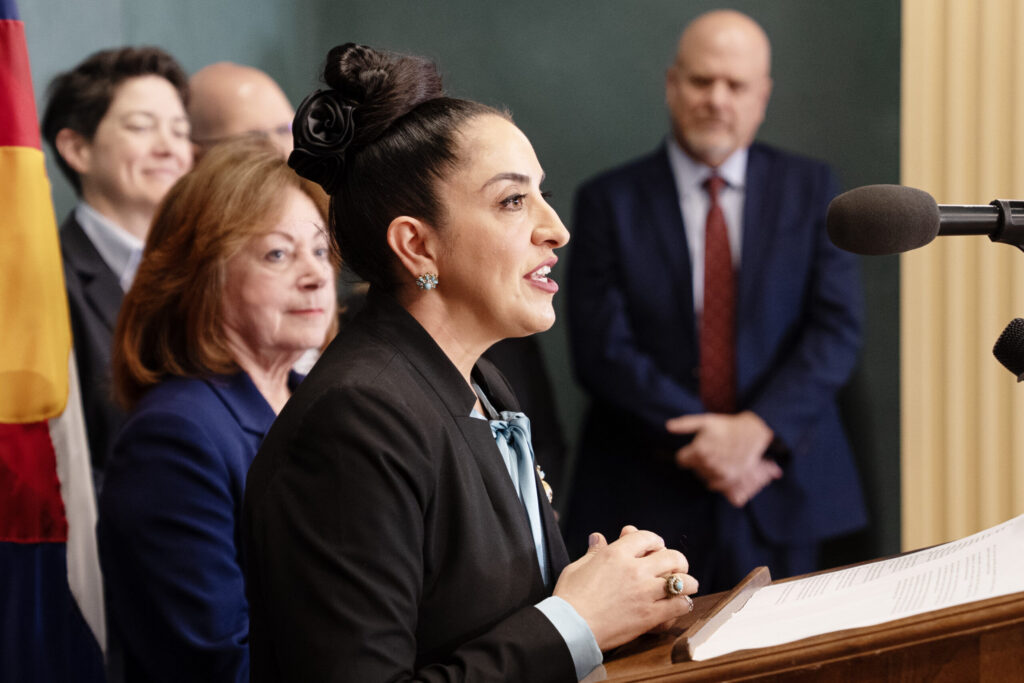
Colorado justices say insurers may access policyholders’ medical info in denied-benefits litigation
Michael Karlik
michael.karlik@coloradopolitics.com
Updated 2 days ago
The Colorado Supreme Court declined on Monday to expand its narrow prohibition on insurance companies accessing policyholders’ medical information, clarifying that a dispute over an insurer’s bad-faith decision to deny benefits is the only situation where a company is limited...

House District 14: Businesswoman, consultant square off in GOP primary
Mary Shinn
mary-shinn@coloradopolitics.com
Updated 2 days ago
Firearms training company owner Ava Flanell will face Troy Vanderhule, the chief fundraising officer for Dobson Philanthropic, in the June 30 Republican primary for state House District 14, an area in northern Colorado Springs. Flanell was appointed to the seat...
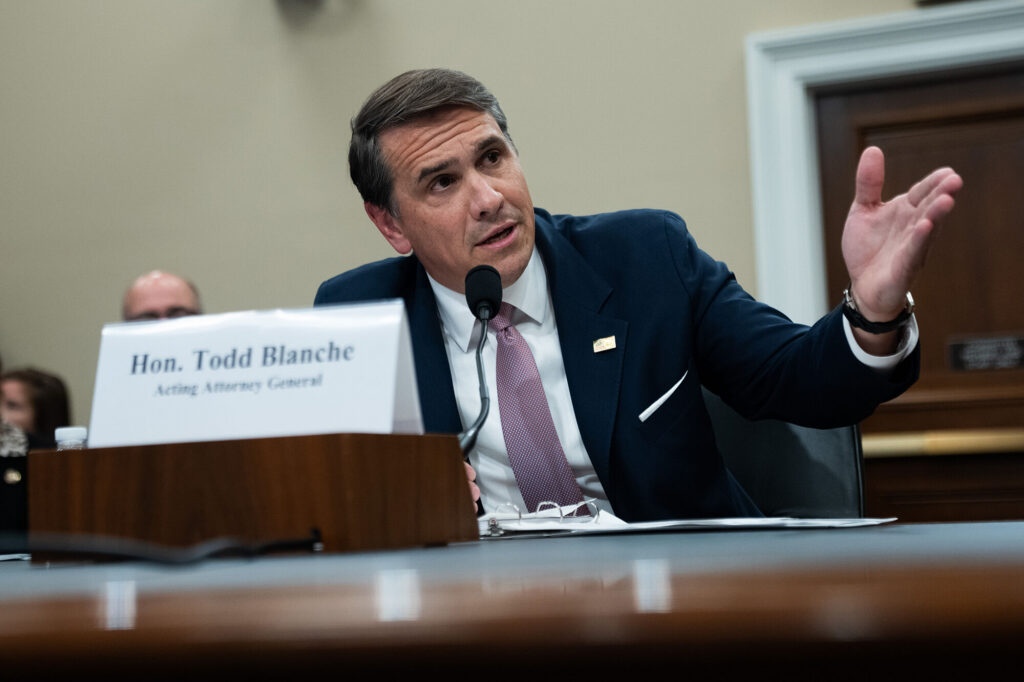
Federal judge wants Todd Blanche to swear in writing anti-weaponization fund won’t be revived
Jack Birle, Washington Examiner
jack.birle.washington.examiner@gazetteedit.wpenginepowered.com
Updated 2 days ago
A federal judge maintained a block on the Department of Justice’s $1.776 billion anti-weaponization fund Friday, despite the DOJ claiming they have abandoned the planned fund aimed at compensating allies of President Donald Trump and others who say they were politically targeted by...