

Now that primaries are open, talk turns to cost, implementation
State and county elections officials are concerned with how to implement a recently approved directive from voters to let unaffiliated voters participate in primary elections.
The bipartisan Election Advisory Committee met on Thursday to begin implementing propositions 107 and 108, which voters backed last month to allow unaffiliated voters to participate in presidential and non-presidential primary elections.
But fears over cost and how to design the system are worrying county clerks and the secretary of state’s office ahead of the 2018 election, when unaffiliated voters will first participate in non-presidential elections.
“Our goal in the rule-making process is to hopefully get a lot of this done preliminarily by the summer because clerks have to submit budgets to county commissioners in July… So we want to be able to have preliminary rules to look at so they can assess how much this is going to cost,” said Secretary of State Wayne Williams, a Republican.
Estimates for the new system fall between $5 million and $7 million.
The biggest concern, beyond cost, is how to implement the tabulation system to account for unaffiliated voters participating in upcoming primary elections.
An issue is how to deal with combined ballots from unaffiliated voters and how to design the tabulation system so that it can determine whether unaffiliated voters are playing by the rules, while also offering the opportunity to cure ballots that were submitted incorrectly.
The presidential primary would be conducted by mail, no later than the third Tuesday in March.
Unaffiliated voters would receive a combined ballot that shows candidates from each party. But unaffiliated voters would be allowed to vote for a candidate of only one political party. Voting for candidates of more than one party would spoil the ballot.
The winner of a party’s presidential primary would receive all delegates to the national convention, and the delegates would be bound.
For non-presidential primaries, voters would receive a combined ballot that shows all candidates for elected office for each political party in the June election. The combined ballot would be separated by party, so that unaffiliated voters only vote in contests for one political party. Similar to presidential primaries, voting for multiple parties would spoil the ballot.
In some cases, clerks might choose to send unaffiliated voters two separate ballots, which would be divided by party. Unaffiliated voters would return only one of the ballots. Elections officials are considering separating the ballots by color so that it’s easier for voters to identify. Republican ballots would be red, Democratic ballots would be blue, presumably.
Minor parties, such as the Green Party and Libertarian Party, would be included on the combined ballot.
There is an option for major parties to opt out of holding a primary election that is open to unaffiliated voters. It would take a three-fourths majority vote of the state party’s central committee.
If the party opts out, then it would nominate candidates in a partisan assembly or convention.
Many county clerks have already invested in new tabulation equipment, so officials will need to work with system providers to update equipment so that it can account for the new system and the rules within it. Clerks are adamantly opposed to purchasing new equipment, and are hopeful that updates can accommodate the new unaffiliated voter primary system.
Rep. Dan Pabon, D-Denver, who attended Thursday’s meeting, said he worries about how the legislature will come up with the money to help counties in implementing the new system.
“In order to accommodate this new system, something is going to have to be cut,” Pabon said. “I’m not sure if the voters contemplated that.”
Arapahoe County Clerk and Recorder Matt Crane expressed similar anxiety on the local level.
“It will be difficult for large counties as well,” Crane said. “And we are very concerned about the effects of this on small -and medium-sized counties.”


Colorado officials urge stronger water safety after 6 drownings and multiple Front Range rescues
Elizabeth Pond
elizabeth.pond@denvergazette.com
Updated 15 hours ago
At least six people have drowned in Front Range waters since June, including two at Eleven Mile Reservoir, three at Cherry Creek Reservoir and one at Rockbridge Lake. In the wake of these deaths, law enforcement and rescue crews are...
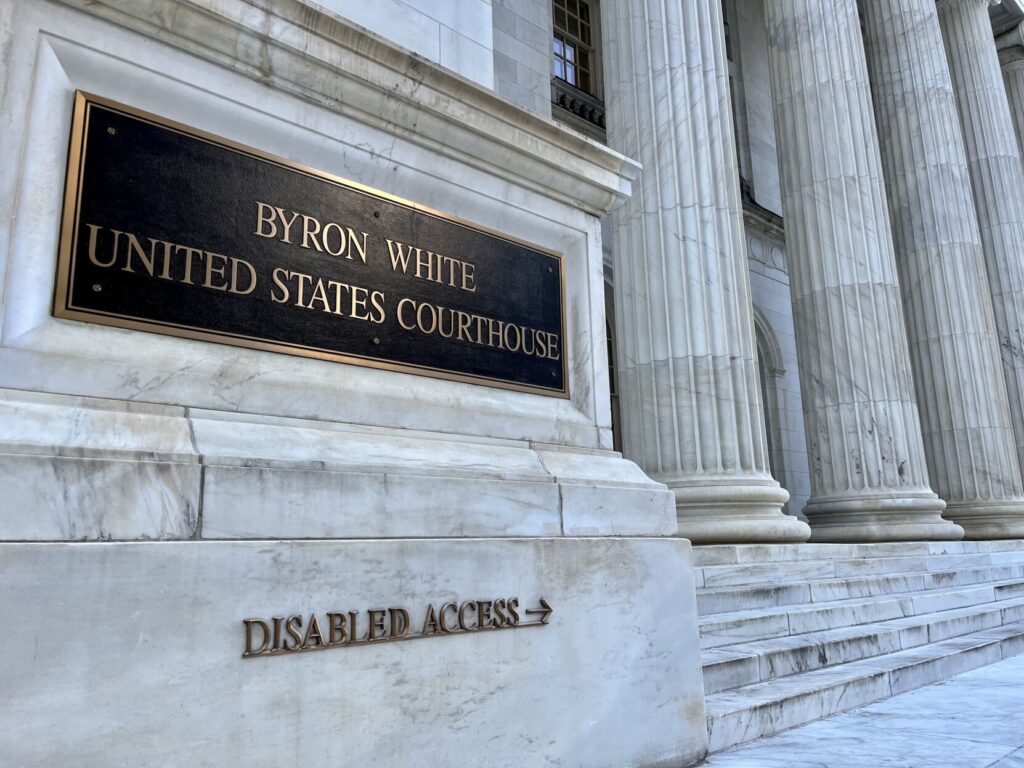
10th Circuit sympathetic to Colorado consumer protection law governing interest rates
Michael Karlik
michael.karlik@coloradopolitics.com
Updated 15 hours ago
Members of the Denver-based federal appeals court appeared sympathetic on Tuesday to Colorado’s assertion that it can lawfully require certain out-of-state banks to abide by the state’s own ceilings on interest rates when they lend to consumers in Colorado. The...
Colorado justices to decide insurance companies’ obligation to disclose relevant policies
Michael Karlik
michael.karlik@coloradopolitics.com
Updated 44 minutes ago
The Colorado Supreme Court announced on Monday that it will decide whether an insurance company violated state law by withholding an at-fault driver’s policy for nearly a year when there was no dispute that the policy was not in effect...

Appeals court upholds limits on warrantless ICE arrests at churches
Kaelan Deese
kaelan-deese@coloradopolitics.com
Updated 18 hours ago
A federal appeals court on Tuesday upheld limits on warrantless U.S. Immigration and Customs Enforcement arrests at churches affiliated with a coalition of religious groups, ruling that the Trump administration’s policy likely violated a federal religious freedom law. The 4th...

Monument council rejects housing development bordering USAFA
Savannah Eller
savannah-eller@coloradopolitics.com
Updated 17 hours ago
The Monument Town Council on Monday rejected a 205-home project on the northern edge of the U.S. Air Force Academy. Called Santa Fe Meadows, the Classic Homes project for 135 single-family homes and 70 townhomes would have occupied 43 acres...

Wheat Ridge considering e-bike, scooter ordinances as usage increases in city
Matt Kyle
matt.kyle@denvergazette.com
Updated 19 hours ago
Wheat Ridge may soon pass regulatory ordinances on e-bikes as city officials say usage of such devices has increased within the city. The measures are proactive as e-bike usage has increased across the Denver metro area, according to city officials,...
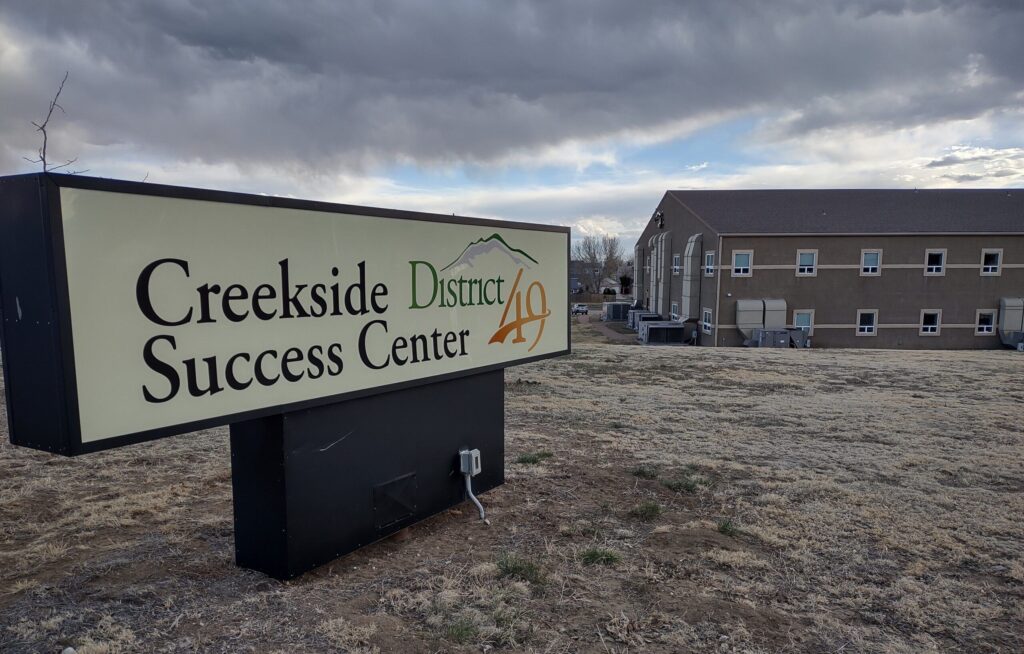
District 49 dissolves longtime provider of special services
Eric Young
eric.young@gazette.com
Updated 17 hours ago
A longtime education service provider that has been subject to recent public and government scrutiny is shutting down. School District 49’s Board of Education approved the dissolution of the Education ReEnvisioned Board of Cooperative Education Services (ERBOCES) during a special...
District 49 dissolves longtime provider of special services
Eric Young
eric.young@gazette.com
Updated 1 day ago
A longtime education service provider that has been subject to recent public and government scrutiny is shutting down. School District 49’s Board of Education approved the dissolution of the Education ReEnvisioned Board of Cooperative Education Services (ERBOCES) during a special...

Denver revenues rise despite expectations for flat year
Nico Brambila
nico.brambila@denvergazette.com
Updated 19 hours ago
Five weeks after Denver said it expected revenues to remain flat heading into 2027, stronger-than-expected collections are prompting finance officials to signal they may raise this year’s revenue forecast. General Fund revenue was up 2.3% through June compared with the...

Judicial performance evaluations released, Montezuma County judge disciplined | COURT CRAWL
Michael Karlik
michael.karlik@coloradopolitics.com
Updated 2 days ago
Welcome to Court Crawl, Colorado Politics’ roundup of news from the third branch of government. Colorado’s citizen-led judicial performance commissions released their voter narratives for the judges standing for retention in November, plus a disciplinary panel imposed consequences on a...