

Threats, harassment a grim part of public life, lawmakers say
A side effect of taking public policy positions in 21st century politics – being threatened
Capitol veterans and lawmakers on both sides of the aisle greeted news that a 21-year-old Arvada man had been arrested and charged with threatening to shoot state Sen. Laura Woods with sympathy for the Arvada Republican and a grim acknowledgement that facing threats has become a familiar part of public life.
“The reality is, we’ve moved into an area of politics that has become very hate-filled,” said Kristin Forseth, who was chief of staff to Senate Democrats in the contentious 2013 session, when death threats and obscene vitriol ricocheted around the Capitol during tense debates over gun-control legislation.
State Rep. Rhonda Fields, an Aurora Democrat and sponsor of 2013 bills to require universal background checks for gun purchases and ban high-capacity magazines, regularly received threats during that session. Authorities arrested a Colorado Springs man on charges of harassment involving ethnic intimidation and attempting to influence a public servant for a series of profanity-laden emails and voice messages left for Fields.
“My heart goes out to Laura Woods and her family, because when we sign up to do this kind of work, one of the things I never anticipated is that someone would threaten me for my position or my thoughts,” said Fields, who eventually won a permanent protective order against Franklin Sain. The former information technology company executive lost his job and moved out of state after the incident spawned headlines for months.
“When someone threatens you on any level – bullying, in cyberspace – we need to make sure we take all those things seriously,” Fields said. “You never know who’s going to be acting out on those negative, evil thoughts.”
Fields recalled recently that she was inundated with nasty messages – her staff began screening incoming emails and voice mails – during the gun debate, including some calling her and her daughter “some vile and vicious names.” But it was a reference to Gabby Giffords, the former Arizona lawmaker who was shot by a gunman while meeting constituents, that made Fields fear for her family’s safety. One email sent by Sain expressed hope that someone would “Giffords” Fields and state Rep. Beth McCann, D-Denver, another lawmaker sponsoring gun-safety legislation that year.
“They took it a step further, they brought in Gabby Giffords and said there was going to be a lot of blood,” Fields said, her voice sounding steely. “When you’ve already lost a child and they’re going to go after mine, that’s when I took the threats seriously.” Fields entered public life after her son, Javad Marshall-Fields, and his fiancée, Vivian Wolfe, were murdered before he was set to testify in another homicide case in Aurora.
Even then, Fields remembers, it was Gov. John Hickenlooper and his staff that considered the threats serious enough to bring in the state troopers tasked with protecting lawmakers and others at the Capitol. “They made sure I had the protection,” Fields said. “It wasn’t anything I asked for – I was just, ‘I can handle this’- but it was the action of the governor’s office and his staff that after investigating the threats I received, their thorough investigation, they took it seriously, they took it to the next level. It was professionals who determined there was merit to those threats and provided the protection. They were able to follow where the threats were coming from, and they were able to follow it to (the person) who was making the threats from his workplace.”
McCann, the Democratic nominee for Denver’s district attorney in the November election, noted that, while she was mentioned in one of the threatening emails that invoked Giffords, she didn’t feel threatened the way Fields was.
“I think that we are public figures, we take positions, and people sometimes don’t agree with them, and people are sometimes not very polite about that. I think it to some extent comes with the territory,” McCann said, adding that if she felt someone was capable of acting on a threat, she would notify the State Patrol to determine if there was a need for extra protection.
“There is a distinction between vigorous debate and precise threats to cause harm to someone,” she said. “In law enforcement you have to look at the circumstances of the situation and how specific the threat is. The threats with (Fields) were pretty specific about what he wanted to do. People are entitled to protest, they’re entitled to say what they think. (Denver District Attorney) Mitch Morrissey has had protesters outside his house. If they’re on public property, they can protest. If they start threatening, that’s a different situation. People can express their disagreement, they can use foul language and be nasty, but once it moves into threatening specific harm, we need to take it seriously as a threat.”
Fields, who for a time kept a police radio nearby to call officers if she felt endangered, agreed that there was a clear difference between invective and threats.
“If anybody’s thinking about threatening anybody, they need to know you will get caught, and there’s consequences for words that you use to try to intimidate or threaten people,” Fields said.
Arvada police arrested Dylan Hopkins on Sept. 17 on a charge of misdemeanor harassment after he admitted sending Woods, an Arvada Republican, a Facebook message threatening to “grant you and your family a Bullet straight to the head!” (Hopkins was charged under a section of the law sponsored by Fields making it clear threats delivered by electronic message were crimes.)
A judge released Hopkins on a personal recognizance bond, which one of his parents was required to co-sign, and continued his arraignment until Oct. 12. The court also issued a protective order forbidding the suspect from having any contact with Woods.
Tom Raynes, director of the Colorado District Attorney’s Council, said in an interview that the line can sometimes be hazy between a threat and overly angry discourse.
“If the statement is, ‘I’m going to hurt you and your family,’ that doesn’t fall under protected political speech – that’s a threat,” he said. He noted that it’s prosecutors, not the recipients of perceived threats, who decide what charges to file. “It’s always up to the prosecutor, and part of that determination is, ‘Do I have a reasonable likelihood of conviction?’ You can say, this is bad stuff but, given the statute and the jury issues and the politics intertwined … but a threat is a threat is a threat and that’s always going to be investigated seriously.”
“I stand with Sen. Woods, and there’s just no tolerance for that in our line of work,” said state Rep. Gordon Klingenschmitt, who was barraged with death threats in emails and over the phone soon before the Republican won election to his Colorado Springs seat two years ago.
In the months before he took office, the steadfastly conservative Klingenschmitt – under the name Dr. Chaps, he has hosted the Pray in Jesus’ Name show for years, regularly drawing anger from the targets of his preaching – had recently gotten attention for an email comparing U.S. Rep. Jared Polis to ISIS militants, suggesting the gay Democrat wanted to behead Christians. “I will slit your … throat,” said a profanity-dominated voice message left for Klingenshmitt. “You prick! I’ll kill you!” the caller concluded. “You would be wise to grow eyes in the back of your head freak,” said an email.
(In the Legislature, Klingenschmitt sponsored a successful amendment to grant a First Amendment exception to the harassment statute Fields sponsored, although he wanted it made clear that a threat is a threat: “I certainly agree with Rhonda Fields – in this case, it seems like people who issue threats of violence aren’t exercising First Amendment rights, they are directly threatening public safety and I think they should be prosecuted to the fullest extent of the law.”)
After Klingenschmitt turned the threats over to authorities, police reached the Texas man who had left the angry voice message – his phone number had shown up on Caller ID – and the man admitted he’d placed the call but said he had been drunk and regretted it terribly, promising never to do it again. Given the circumstances, Klingenschmitt said that both he and the police decided to let it drop.
Still, in part because of the reach of his national TV show – “Clips are aired on atheist blogs and homosexual blogs nationally almost every month, if not every month,” Klingenschmitt noted – he remains a frequent recipient of threats.
“I take each one very seriously. I don’t think it’s appropriate for any person, whether you’re a preacher or you’re a politician, to be threatened for your speech,” Klingenschmitt said in a recent interview. “It’s a way to intimidate us for speaking the truth. I will not be silenced, I will not be intimidated. I continue to speak the truth boldly.”
Noting that he has a concealed carry permit to protect himself and home security to protect his wife, he added, “I don’t want to be dismissive, but part of being so much in the public and so outspoken on the issues as I am, is I’m going to stir up a few evil demons inside of people, and they react. That doesn’t mean I’m wrong, that means they have something going on inside of them.”
State Rep. Joe Salazar, a Thornton Democrat, is another lightening-rod lawmaker – on the other side of the political spectrum – who doesn’t shy away from controversy and routinely receives messages threatening him and his family.
“I’ve gotten threats about the American Indian legislation I’ve run,” he said in a recent interview, “particularly the mascot bill, and the Columbus Day bill, and gun legislation. One guy from Conifer gave his name and address and said if I did anything to vote against his gun rights and his family and they got hurt by a cougar, he was going to come after me.”
During the 2013 gun debate, Salazar recalled, a man showed up at the Capitol with a gun asking to see him, but the State Patrol turned him away. There have also been instances, he said, when harassing tweets mentioned his children and named the schools they attend. “It was ridiculous that they should even bring children into it,” he said with a weary sound to his voice.
“There have been a few times I felt my family has been in danger and/or felt there was some sort of physical threat, but I gotta say, the State Patrol is pretty awesome.” He added that troopers have suggested Thornton police increase patrols around his house on several occasions.
“By and large, a lot of people are really angry, and that’s how they project themselves on social media and in emails,” Salazar said. “But there are a couple – it’s better safe than sorry.”
Nonetheless, he said it’s never crossed his mind to champion less contentious causes.
“If every legislator were to pull back based off threats of one sort or another, absolutely nothing would get done,” Salazar said. “We’re there for a purpose and we’re there for our constituents. Someone may not be in agreement with it, but we can’t stop things from moving forward because of that. I still run controversial bills.”
Another frequent target of harassing and sometimes explicitly threatening messages during her time in the Legislature said this week that she spent some time reconsidering her decision to lead the charge on the 2013 gun bills.
“Did I have second thoughts?” said former state Sen. Evie Hudak, D-Arvada. “Yes, yes. But it was too late. It’s sort of like the genie was out of the bottle. Ultimately, I did resign. I guess you could call that the big back-down. And a day or two after that, (the threats) pretty much stopped.”
Under threat of a recall – led by Woods – Hudak stepped down later that year and a Democratic committee appointed Rachel Zenzinger to fill the vacancy, although she was unseated in the next election by Woods.
Hudak was deluged with obscene messages – her staff used keywords to sort many of the threatening emails and divert them into a separate folder – but said she hesitated to turn them over to law enforcement. “But when they got to the level of death threats and threatening to rape my daughter, that’s when I had the State Patrol do some investigation,” she recalled. Investigators weren’t able to pierce the emails’ anonymity, however. (Forseth noted that the Capitol phone system was so antiquated that lawmakers and staff were unable to trace incoming calls using even simple Caller ID, adding that it’s been updated since the 2013 session.)
“I was scared,” Hudak said. “The sergeants would walk me to my car if I was at the Capitol late. My friends were concerned for me. Somebody yelled at me when I was shopping with a friend, and she said, ‘Maybe you should wear a bullet-proof vest,’ and I said, ‘No, I’m not going to do that. I don’t want to live in fear.'”
Not all threats to lawmakers are verbal.
Former state Sen. Jeanne Nicholson, D-Black Hawk, recalled that state troopers regularly escorted her to her car during the 2013 session and that a sheriff’s patrol would follow her as she entered Coal Creek Canyon on her drives home at the height of the tension over the gun debate, but it was while campaigning for re-election in 2014 that she felt most threatened.
She’d been walking door-to-door in Littleton and noticed her car made a strange sound, like there was a flat tire, but her tires looked fine every time she got out to check. Then, when Nicholson arrived at her son’s house, her daughter-in-law noticed a lug nut was missing. Upon closer inspection, it turned out every one of her lug nuts were loose. After her mechanic told her it had to have been intentional, she said the incident only hardened her resolve.
“OK, what that means is, I don’t quit campaigning. What it does mean is I get locking lug nuts installed,” Nicholson said with a determined chuckle. “It’s like what Michelle Obama said – when they go lower, we go higher. We don’t quit.”
She said she felt for Woods and, at the same time, lamented the state of public discourse.
“It doesn’t solve anything for us to turn to violence for any reason,” Nicholson said. “We have to learn to engage in meaningful dialogue and make sure we’re listening to each other and we’re trying to address each other’s needs as much as we possibly can. I don’t think we gain anything with violence, but I do think we gain something by really, truly listening to each other and taking action to make sure people don’t feel left out.”
Fields, for her part, said she hopes people put the anger and tension surrounding the election in perspective.
“I would encourage everyone to take a deep breath – this is a very different kind of election cycle, emotions are pretty high, but we should be able to have civil discourse without threatening one another.”

Final Lap: Gov. Jared Polis outlines his 2026 agenda for Colorado as he nears the end of his term
Marianne Goodland
marianne.goodland@coloradopolitics.com
Updated 14 hours ago
A year from now, Gov. Jared Polis will wrap up eight years as the state’s chief executive officer, take off the governor’s mantle and go back to private life. The governor recently reflected on what remains to do in his...

Ski patrollers end strike against Telluride
RACHAEL WRIGHT Special to The Gazette
rachael-wright-special-to-the-gazette@coloradopolitics.com
Updated 14 hours ago
After 13 days, the longest ski patrol strike in U.S. history has come to an end. On Dec. 27, the 72-member Telluride Professional Ski Patrol Association voted to go on strike after approaching Telluride Ski Resort (Telski) owner Chuck Horning...
Appeals judge urges restraint in labeling new offenses serious across board
Michael Karlik
michael.karlik@coloradopolitics.com
Updated 15 hours ago
A member of the state’s second-highest court urged his colleagues on Thursday to pump the brakes before declaring new offenses “grave or serious” in every possible scenario. The Eighth Amendment’s prohibition on cruel and unusual punishment means sentences cannot be...
Federal judge opens new front in effort to increase magistrate judge handling of civil cases
Michael Karlik
michael.karlik@coloradopolitics.com
Updated 15 hours ago
One of Colorado’s federal judges rang in the new year with a new effort to spread out the U.S. District Court’s civil caseload among its roster of magistrate judges. “NOTICE ENCOURAGING CONSIDERATION OF CONSENT,” Judge S. Kato Crews has written...

Vance announces new assistant attorney general position to focus on fraud
Christian Datoc, Washington Examiner
christian.datoc.washington.examiner@gazetteedit.wpenginepowered.com
Updated 18 hours ago
Vice President JD Vance announced Thursday that President Donald Trump is creating a new attorney general position to lead government efforts to investigate and prosecute fraud cases. Vance joined White House press secretary Karoline Leavitt at an unscheduled briefing Thursday...

House rejects effort to override presidential veto for Colorado Water Project
Marianne Goodland
marianne.goodland@coloradopolitics.com
Updated 14 hours ago
The U.S. House of Representatives on Thursday rejected a Colorado-led effort to override a Dec. 30 presidential veto of a measure that would have helped finance the Arkansas Valley conduit. The measure, known as H.R. 131 and sponsored by U.S....
As lawmakers return, federal pressure and fiscal stress could shape Colorado’s 2026 session
Marissa Ventrelli
marissa.ventrelli@coloradopolitics.com
Updated 16 hours ago
The eight months since lawmakers wrapped up the 2025 legislative session have been anything but quiet. Federal funding cuts, a flurry of presidential executive orders, an election year fast approaching, and a projected $1.2 billion budget shortfall are all converging,...
Senate Democrats announce committee assignments for 2026 session
Marissa Ventrelli
marissa.ventrelli@coloradopolitics.com
Updated 22 hours ago
Democratic Senate Majority Leader Robert Rodriguez, D-Denver, announced committee assignments for the 2026 legislative session on Wednesday. “Committees are crucial to the legislative process – they’re where we deliberate, hear from the public, and fine-tune policies so that they can...
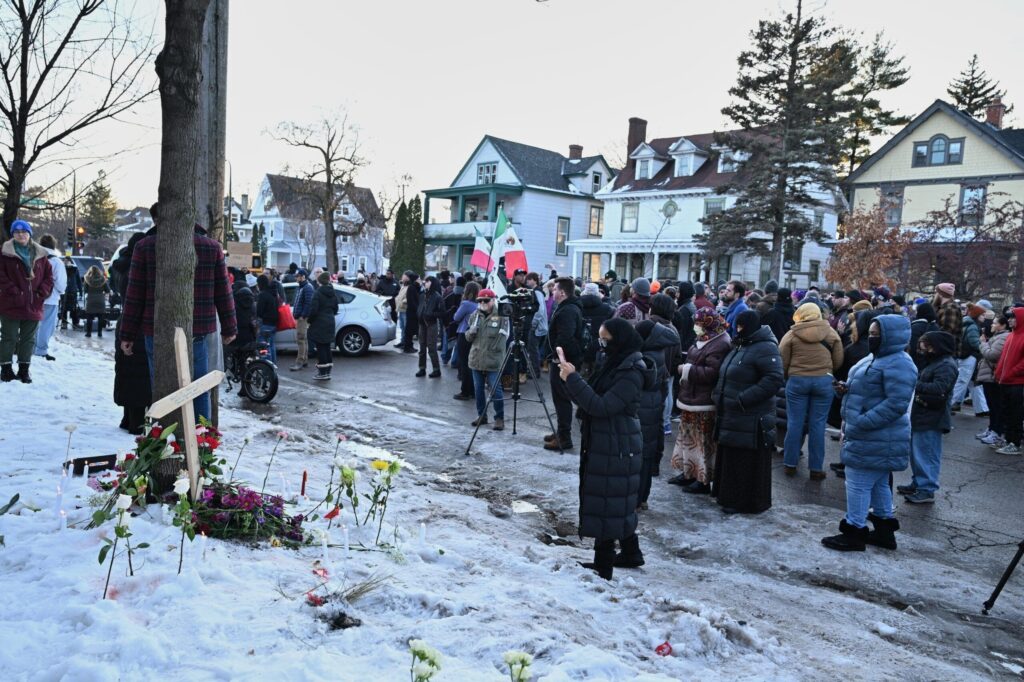
Jared Polis calls Minnesota ICE shooting ‘deeply disturbing,’ wants full investigation
Dan Boniface
dan.boniface@denvergazette.com
Updated 20 hours ago
Colorado Gov. Jared Polis on Wednesday characterized a fatal shooting involving federal immigration agents in Minnesota that took the life of a mother from Colorado as “deeply disturbing” and called for a full investigation. The shooting, captured on video in...
Colorado lawmakers hear from chief justice about security needs, new judges
Michael Karlik
michael.karlik@coloradopolitics.com
Updated 2 days ago
Chief Justice Monica M. Márquez asked members of the legislature’s Joint Budget Committee on Tuesday to stay the course and fund the 10 new trial judgeships that Colorado lawmakers approved last year, and also explained her vision for enhancing judicial...
PREV
PREVIOUS
Aurora council denies O&G support resolution
A resolution opponents described as supporting the oil and natural gas industry above others was defeated by Aurora City Council at their Sept. 26 meeting. Councilman Brad Pierce had asked that a resolution supporting the location of any lawful and legitimate industry within the city be considered, but his plan ran into opposition from two […]

Lobbying contract extended by Denver City Council
The City and County of Denver says Brandeberry-McKenna Public Affairs has been successful in lobbying state officials on behalf of Denver government over the last four years and rewarded the firm with a one-year extension to the Denver-based lobby firm’s contract. City Council approved the contract continuation, which will cost the city $180,833.38, at its Oct. 3 […]