

Veteran lobbyist Wanstrath says it’s all about building coalitions

Few Capitol denizens have spent as much time as Cathy Wanstrath prowling the hallways and corners of the building, but the longtime lobbyist will be the first to tell you she learns something new every day.
She got her start under the dome nearly 30 years ago after volunteering on Roy Romer’s first gubernatorial campaign and then joining his staff when the governor was sworn in for the first of three terms.
Initially, Wanstrath served as director of boards and commissions, a job she describes as “great fun, because the first year of a governor’s term you have a lot of seats to fill.” But she longed to work with lawmakers and within a year had the opportunity, raising her hand when Larry Kallenberger, the governor’s lobbyist, needed assistance.
“Now I was doing what I really wanted to do, which was live on the second floor,” Wanstrath said, leaning back with a big smile during a recent interview with The Colorado Statesman. “But you don’t just get to spend all your time on the second floor — you have to understand and evaluate every single bill.”
A year later, Kallenberger took on another position and Wanstrath was named the governor’s legislative director.
Working under Romer — “before the Energizer Bunny, there was Roy Romer,” she quips — could be a challenge, because his door was always open and he was happy to talk to any legislator who wanted to talk with him, virtually any time of day.
“It was great for good government. It was wonderful, so exciting, so challenging,” she says. “It was an exhausting job, though, because the governor’s level of energy. It was before anybody had a cell phone, so you’d work long hours up there and by the time you got home, the phone was ringing — ‘Hey, I’ve got another idea.’”
After three years, Colorado Legislative Services asked her to come aboard and Wanstrath took the leap, eventually working there for five years until there was a change of ownership at the lobbying firm.
“That was my cue I needed to go independently,” she recalls, moving out as a lobbyist on her own, fortunate enough to take a couple of her clients with her. “In those days, all you needed was business cards, a fax machine and a pager,” she recalls. “The latter two you don’t need anymore.” Wanstrath established her office at home, where she’s kept it ever since.
“The thing is about lobbying, from my point of view, is that coalitions are all,” she says. “You never do anything meaningful in this building unless it’s a collaboration. That’s what’s satisfying about this.”
Sometimes it’s easiest to put together those coalitions, she notes, with legislators whose districts she’s walked in election years, both because they appreciate the support and because there are few better ways to get to know one another.
“I’ve always done a lot of door-to-door walking,” she says. “I grew up at my grandmother’s knee — she was a district captain in North Denver. I still enjoy walking door-to-door with candidates. It’s how you learn more about what somebody’s district is like. You have a greater appreciation about what their situation is because you’ve walked with them.”
She says she’s glad to pound pavement for legislators from both parties — “to some extent, it’s who asks you,” she smiles — and has gone as far afield as Greeley and Grand Junction to knock doors.
Her current clients include the Colorado Optometric Association, the Land Title Association of Colorado, the Children’s Legislative Cooperative, the IGT gaming businesses, the Washington-based Personal Care Products Council, the law firm Dentons U.S., and the New York-based American International Group insurance company. Over the years, she’s also represented Pinnacol Assurance and the American Cancer Society.
It was representing the Cancer Society two decades ago when Wanstrath scored a memorable win, although she’s clear that the years-long campaign involved far-reaching coalitions with other lobbyists, lawmakers and numerous health-related organizations.
“In 1996, people smoked all throughout this building — everywhere,” she says, throwing up her hands. “I almost changed professions because I could not, physically, stand the smoke. People were smoking standing over the railings. Down in the cafeteria it was a total fog. In this day and age, it’s hard to believe this was so hard, but we finally got smoking banned in the building, though it was still allowed some places, until maybe 1999, when it was fully banned. There was a great coalition on that. The American Cancer Society was in the lead, but everybody who cared about health was involved.”
The process hasn’t changed much since, even with the advent of term limits and strict ethics rules that forbid buying lunch or a drink for lawmakers.
“You’ve got 100 people you need to know,” she says. “Every year, even if they’re in the last year of their eight years, there are still going to be issues they need to know about.” The biggest difference is that legislators have more staff, and more meetings take place in offices than at restaurants, but it’s still easy enough to ask for separate checks.
“Every year is different,” Wanstrath says. “The client may be running a bill or your client may be playing defense.”
When it comes time to take a client’s idea and attempt to get it written into law, she says, being able to bring together bipartisan sponsors can be key.
“Last year, I had an insurance bill where we worked with Tim Neville in the Senate, because he’s an insurance man, and Angela Williams, who is a retired insurance person, took it on the House side,” she recalls, pointing out that a multitude of topics covered by legislation often fall far outside partisan divides.
“Sometimes your first chamber sponsor might have a particular legislator they like to work with. If you’re working with something that’s specific to a locality, you’d probably have someone from that locality. But in the case of a title insurance bill,” she says, referring to a mostly technical bill she was putting together this session, “there wasn’t anyone obvious, so you go to someone who will understand the complexity of a bill.”
But bills that are easier to explain can be both challenges and triumphs, as well, she says, recalling legislation from last session.
“We had a lot of fun, a lot of satisfaction, as the lead on a big coalition, on the microbeads legislation,” spearheaded for the Personal Care Products Council over concerns the tiny things sometimes used in grooming products could get through water filtration systems and cause environmental problems.
“The retailers liked it because the bill had a time-frame built in, so they had time to phase it out. Denver Water, Trout Unlimited, all kinds of people were in support,” she says. “We passed the bill, it was signed in March. We were the fourth state to pass it, but then Congress got involved. In December 2015, Congress passed basically the same bill. Colorado’s bill is now null and void, but it’s federal law now.”
Considering what she does day-to-day, Wanstrath leans back and mimes rolling up her sleeves for a moment and nods.
“I think of it as a sales job — I’m a saleswoman,” she says. “I have to know my product, inside and out, like it was a vacuum cleaner, so I can explain it to a legislator. That part of it will never change. You have to understand your product. Sometimes you have to push back to your client and say, ‘Wait a minute, I don’t think we can go quite that far.’ ”
Then there are those coalitions, she says, casting her gaze around the basement cafeteria, where colleagues and lawmakers are coming and going.
“No one stands alone in this building, or you won’t stand for long. You have to approach the people who may oppose you and tell them first what’s going on. If you’re going to agree to disagree, at least you’re honest.” That, she reiterates, is crucial.
“That’s the same as being a salesman. Don’t exaggerate what your vacuum cleaner can do. They’ll find out sooner or later. Never, ever, ever tell a legislator or fellow lobbyist something that isn’t true. If you get something wrong, you go find that person as fast as you can and you tell them. You want your badge to be a badge of honesty, more than anything else. Win, lose or draw, if you’re honest, you’re going to live to fight another day down here.”
And at the end of the day — every workday — Wanstrath says there’s a reward beyond the paycheck or the bills signed into law.
“As long as I keep learning — there’s not one day when I don’t learn something about my clients or about the process,” she says. “I learn every day. What more could you ask of life, that you learn something new every day at your job?”

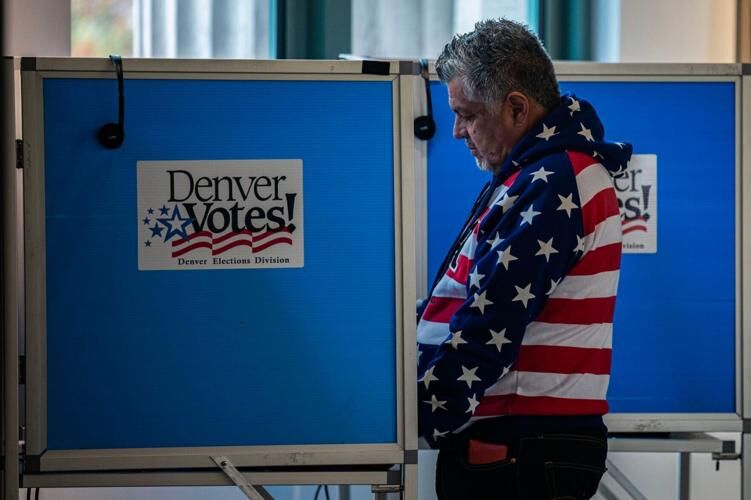
Denver sues Trump to block armed ICE agents from polling sites
Deborah Grigsby
deborah.smith@denvergazette.com
Updated 54 minutes ago
The city of Denver, along with several groups, sued the Trump administration Thursday, seeking to block U.S. Immigration and Customs Enforcement officers who are armed from polling sites during the upcoming midterm elections. In fact, there are no official orders...
Federal judge takes no action against ICE in Colorado after hearing about mistakes, not ‘blatant violations’
Michael Karlik
michael.karlik@coloradopolitics.com
Updated 3 hours ago
A federal judge declined to take action against U.S. Immigration and Customs Enforcement on Thursday after hearing that a pattern of alleged lawbreaking amounted to mistakes and a misunderstanding of the government’s position in court. For nearly a year, Colorado’s...
Colorado doctors, dentists challenge state law on gender‑transition services in new federal lawsuit
Marissa Ventrelli
marissa.ventrelli@coloradopolitics.com
Updated 2 hours ago
A group of Christian doctors and dentists has filed a federal lawsuit challenging a Colorado law they say requires them to provide gender‑transition services that conflict with their religious and ethical beliefs. The lawsuit, filed by the Christian Medical and...

Colorado Parks & Wildlife staff kill third wolf in 3 days
Marianne Goodland
marianne.goodland@coloradopolitics.com
Updated 2 hours ago
Colorado’s wildlife division on Thursday said that staff and contracted agents killed an uncollared female yearling wolf a pack after confirming she had been killing livestock in Grand County. Three wolves from three separate packs have been killed in the...

Vance strikes back at concern $5,000 Trump dividend will stoke debt: ‘Wealth will go back to the people’
Emily Hallas
emily-hallas@coloradopolitics.com
Updated 8 hours ago
Vice President JD Vance on Wednesday sought to deflect criticism that President Donald Trump’s newly proposed $5,000 dividend would further bankrupt the United States, arguing the handout would be offset by tariff revenue. Trump promised “every adult citizen” would receive...
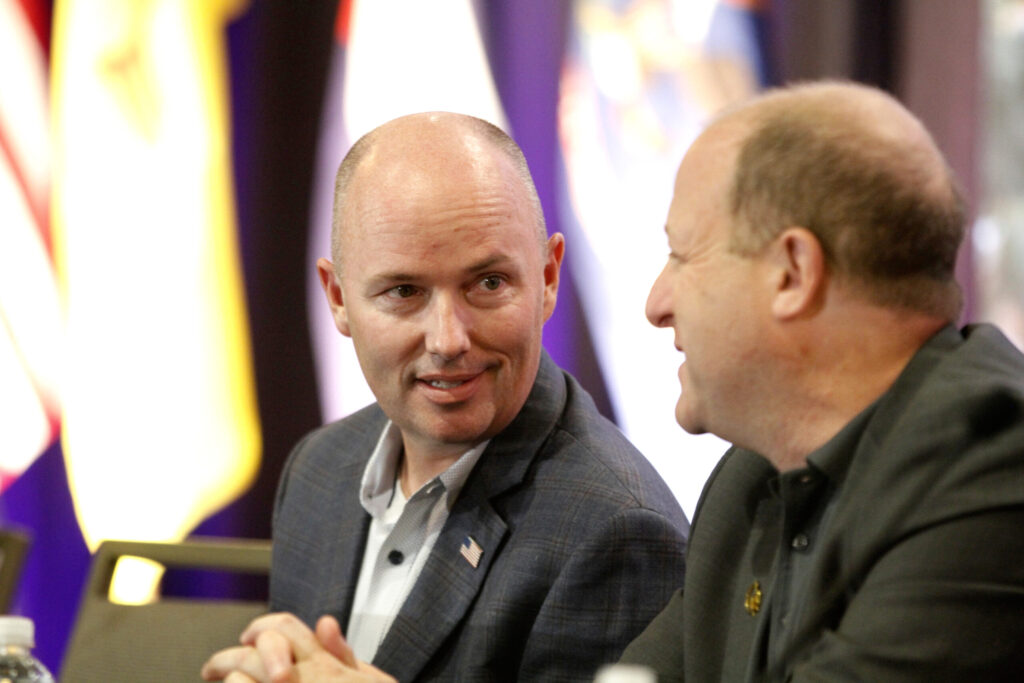
Utah governor renews call for ‘civility’ one year after Charlie Kirk assassination
David Sivak
david-sivak@coloradopolitics.com
Updated 8 hours ago
PHILADELPHIA — Spencer Cox, R-UT, the Utah governor who rose to national prominence with his calls for civility in the wake of Charlie Kirk’s assassination, used a stage in Philadelphia to argue that his message is just as salient one...
JD Vance faces big primetime moment at GOP midterm convention as Ted Cruz waits in the wings
Christian Datoc
christian-datoc@coloradopolitics.com
Updated 8 hours ago
Vice President JD Vance will take center stage on the final night of the Republican midterm convention on Thursday, giving him another opportunity to cement his standing as the early favorite to inherit President Donald Trump’s political movement in 2028....

How Charlie Kirk’s murder drove Trump’s crackdown on ‘radical-left lunatics’
Hudson Crozier
hudson.crozier@washingtonexaminer.com
Updated 8 hours ago
When Turning Point USA founder Charlie Kirk was gunned down in Utah a year ago, some leftists warned the killing could backfire for them. Far-left blogs and forums discussed how President Donald Trump would escalate law enforcement “repression” in the...
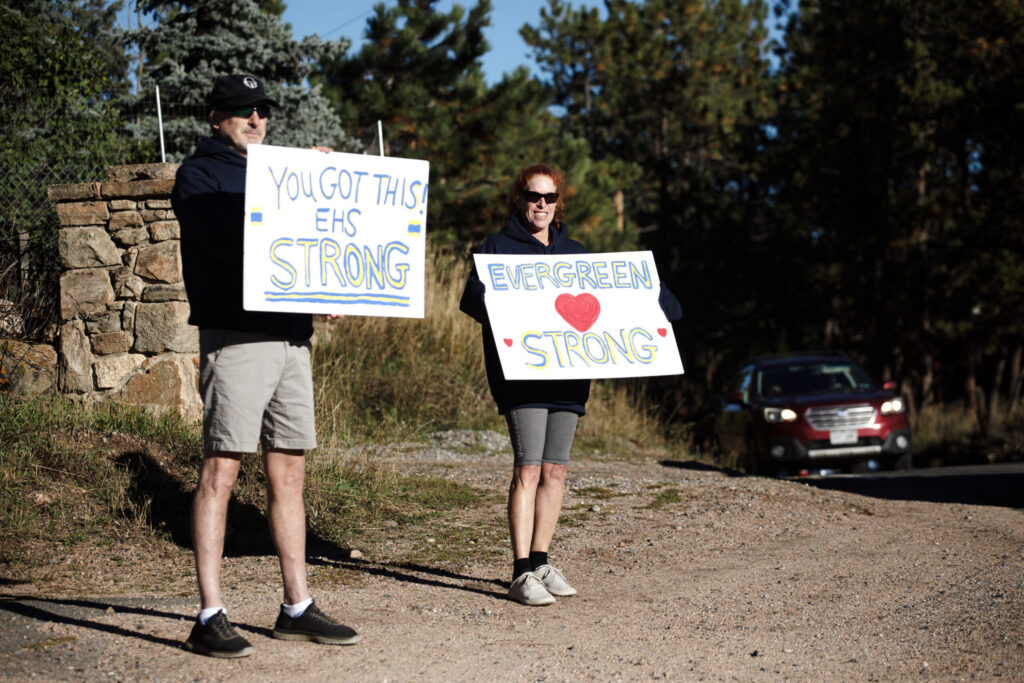
Evergreen High School marks one year since shooting on campus
Kyla Pearce
kyla.pearce@gazette.com
Updated 56 minutes ago
Thursday marks one year since the Evergreen High School shooting that injured two students and left the shooter dead. On Sept. 10, 2025, Desmond Holly, 16, entered the school armed with a Smith & Wesson .38 revolver and opened fire...
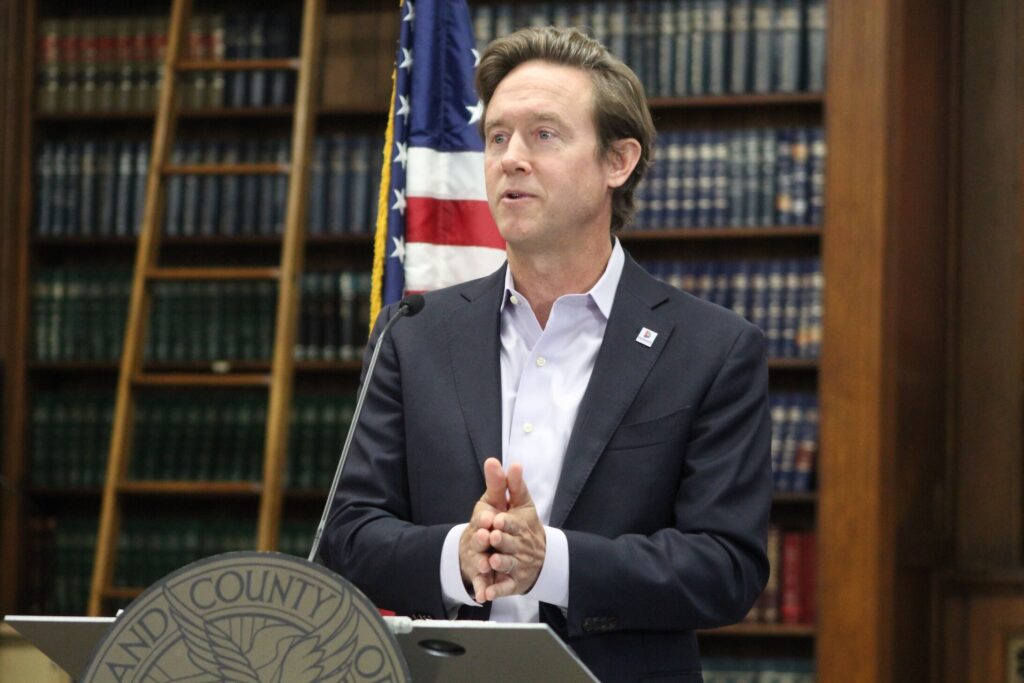
Denver mayor unveils 2027 budget after weeks of warning of tough choices
Nico Brambila
nico.brambila@denvergazette.com
Updated 30 minutes ago
Denver Mayor Mike Johnston unveiled his proposed 2027 budget Thursday after weeks of warning that the city is entering a tighter financial era despite stronger-than-expected revenue collections this year. The projected general fund revenue for 2027 is $1.684 billion, the...
PREV
PREVIOUS
Tax revenue from marijuana one step closer to reality in Littleton
The old saying goes, “If at first you don’t succeed then try, try again.” Proponents of recreational marijuana know the definition well. More than three years after the passage of Amendment 64 and more than two years living under a municipal ban of recreational marijuana in Littleton, proponents of pot – and the tax windfall […]

Salazar oil-and-gas liability bill makes bumpy way through House
The legislative showdown over oil and gas drilling had been headed to the full Colorado House for months, rumbling along like a low-grade temblor. When it finally hit the floor Thursday morning, it sent lawmakers out of their seats to the front of the chamber, where they faced off for more than two hours of […]