

Nicolais: High time for feds to allow marijuana banks
Marijuana is here to stay. Not just in Colorado — the butt of many envious jokes for the past few years — but across the country. Medical marijuana is legal in 18 states. Oregon and Alaska recently became the third and fourth states to legalize recreational use, while several others have de-criminalized by replacing criminal penalties with minor civil fines.
And even Washington, D.C., now allows citizens to partake.
Too bad a few more members of Congress and federal regulators haven’t taken advantage. Maybe if they’d relax a little and be a bit more open minded, we would be able to resolve one of the most moronic dilemmas in our country today. While it’s legal to buy weed in our nation’s capital, and it’s legal to smoke a bowl when you get home, the guy who sold it to you still can’t deposit the money you forked over into a bank.
It is ridiculous. It is dangerous. It is easy to fix. And it is the fault of our federal representatives (not named Jared Polis) that this problem has not been resolved.
Early last week, U.S. District Court Judge R. Brooke Jackson intimated that he would not be order the Federal Reserve Bank of Kansas City to grant a master account to a credit union created specifically to service marijuana retailers. While he understood the dilemma faced by retailers, his hands would be tied until the federal government changed its longstanding policies toward pot.
Judge Jackson is sharp, thorough, well respected, and experienced as a judge. He is (probably) not wearing tie-dye under his black robe. So it would behoove policy makers to take heed of his request to resolve the matter and treat the issue with more respect.
Look, it’s easy to see why progress hasn’t been made to date. It’s simply too easy to laugh off the issue with a joke and move on to “more pressing matters.” The stereotypes and perceptions are so ingrained that the industry struggles to get a serious reception.
That needs to change. And soon.
First, the organizing might of the marijuana industry has been nothing short of stupefying in the past five years. No group aside from the marriage equality movement has organized citizen-led changes on so many fronts in this decade. What is more, marijuana backers have done so without engendering the same pushback seen by marriage equality or gun-control advocates. Opposition forces simply haven’t grown and coalesced in the same manner. Given that clout, it shouldn’t be a surprise if as many as a dozen more states legalize marijuana in the next few years.
Second, there is a lot of money at stake. To quote the late, great Notorious B.I.G., “The more money we come across, the more problems we see.” As the credit union argued before Judge Jackson, without a depository for funds, marijuana retailers become a cash-only business. That makes them a target for criminals. The reaction leads to a need for increased security. More guys, more guns, more drugs, more money. Pablo Escobar would probably recognize this pattern.
But it’s a money problem for states and the federal government, too. Tracking taxes on cash businesses is not an easy task. It invites fuzzy math and concealment. Anyone who has ever dealt with an IRS inquiry knows that the first thing they want are bank statements. Can’t you just see a frustrated revenue officer sitting across from an edibles entrepreneur explaining how he’d provide bank statements, if only he could?
Assuming they aren’t stoned on the couch with a bag of potato chips, our leaders in Washington need to address marijuana banking reforms before the issue gets any bigger.
Mario Nicolais is an attorney and legal scholar at the Denver law firm of Hackstaff & Snow LLC.

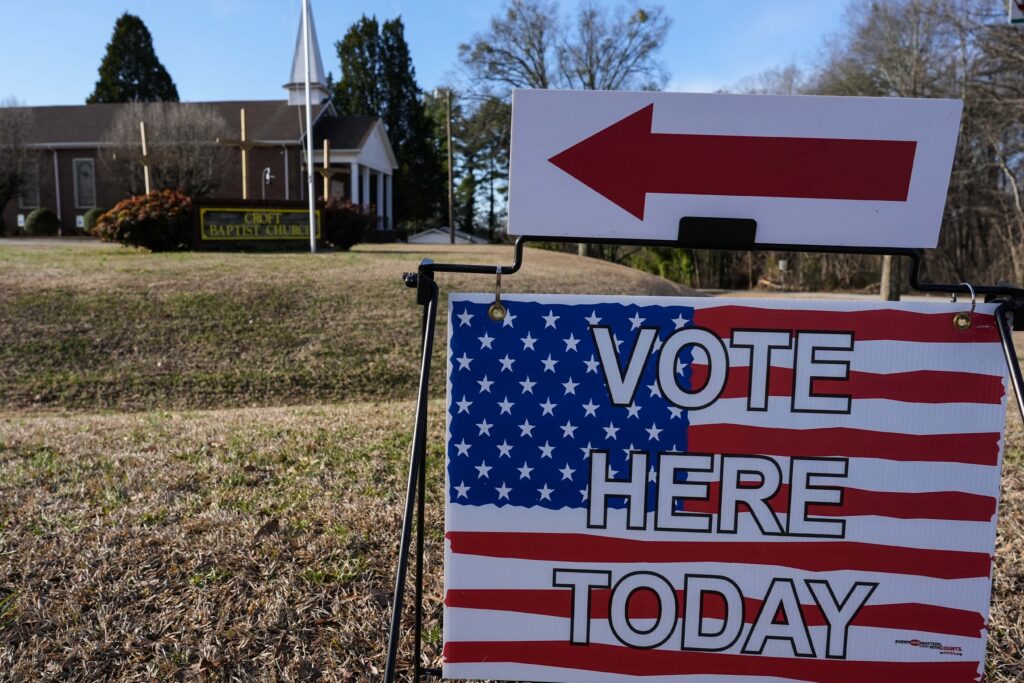
It’s time to let unaffiliated voters caucus | Vince Bzdek
Vince Bzdek
vince.bzdek@gazette.com
Updated 7 hours ago
There’s no getting around it: Colorado’s 3,000 county caucuses, which just wrapped up recently, left half the electorate out in the cold. Since unaffiliated voters now make up 51% of all Colorado voters, a majority of Colorado electors are barred...
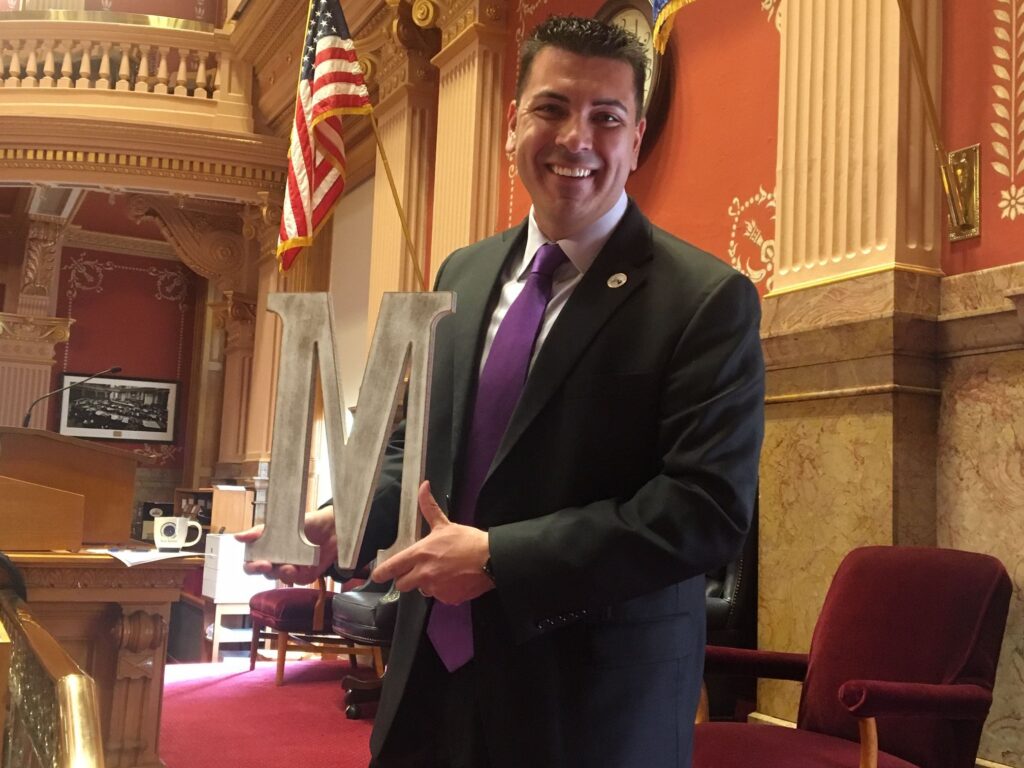
A Mile High, again: Capitol M | Week of March 21, 2026
Marianne Goodland
marianne.goodland@coloradopolitics.com
Updated 3 days ago
The lighter side of the Capitol, usually…. Local Journalism Day, except they forgot their very own local journalists. The state Senate on Thursday, March 19, passed a resolution recognizing Local Journalism Day. Everyone voted for it, which is good, because...

The insular bubble of caucuses and assemblies | SONDERMANN
Eric Sondermann
eric-sondermann@coloradopolitics.com
Updated 2 days ago
Nearly 30 years ago, then-Federal Reserve Chairman Alan Greenspan coined the term “irrational exuberance” to describe the overheated stock market. That descriptive phrase could also apply to much of the political realm. The hype in politics often grossly exceeds the...

Set appropriate state guidelines for critical surveillance technology | OPINION
Colorado Politics
colorado-politics@coloradopolitics.com
Updated 2 days ago
I admit it: I’m worried. I’m hearing a lot about surveillance in the public arena. I hear cameras are capturing my car’s license plate wherever I drive, my face as I go in and out of stores and health facilities,...

Puppy trafficking bill promotes inhumane breeding | OPINION
Colorado Politics
colorado-politics@coloradopolitics.com
Updated 2 days ago
By Patti Strand When Justice Thurgood Marshall wrote “The Constitution does not prohibit legislatures from enacting stupid laws,” he wasn’t wrong. He was referring to a political process sometimes ill-equipped to deal with complex issues that require subject-matter knowledge and a...

Penny wise but foolish by pounds | Paula Noonan
Paula Noonan
paula-noonan@coloradopolitics.com
Updated 2 days ago
Leadership of Colorado’s General Assembly introduced the Fiscal Year 2026-2027 Legislative Appropriation bill, HB26-1333, at $75.72 million. That will be the budget to run the state legislature next year. About $74 million comes out of the general fund and the...

Proposed evictions bill fails to improve housing stability while threatening higher rents | OPINION
Colorado Politics
colorado-politics@coloradopolitics.com
Updated 3 days ago
No landlord wants to evict a tenant for non-payment of rent. That is true for large housing providers, small “mom-and-pop” owners and nonprofit housing rental providers alike. Evictions are financially and emotionally costly for everyone involved. But when rent goes unpaid, eviction...

Prevention works — invest in conflict prevention with wolves | FEEDBACK
Colorado Politics
colorado-politics@coloradopolitics.com
Updated 2 days ago
The recent reporting on Colorado’s wolf depredation payouts exceeding $700,000 highlights a critical problem with the current approach to wolf recovery: current mainstream systems focus on compensation and ineffective reactive non-lethals. These systems are not designed to prevent conflict but attempts...
Colorado’s clean-energy future must be affordable for older adults | PODIUM
Colorado Politics
colorado-politics@coloradopolitics.com
Updated 2 days ago
By Jason DeaBueno Last winter, one of the older adults we serve at Silver Key shared something that has stayed with me. She begun turning her heat down at night — not because she wanted to, but because she was...
Why Denver should care about conservation easements — even if you’ve never set foot on a ranch | OPINION
Colorado Politics
colorado-politics@coloradopolitics.com
Updated 3 days ago
By Jason Swann I live in Denver. I drink tap water from my kitchen sink, hike close to home when I can, worry about wildfire smoke every summer, and try, like many families, to keep up with the rising cost...