

Proposal to change how district maps are drawn met with sharp criticism

A high-profile bipartisan group of former lawmakers and state officials are reworking and resubmitting a ballot initiative that would transform the process through which voting districts are drawn in Colorado.
The news comes after the project was unveiled last month with a splash, drawing approval from newspaper editorial boards but sharp criticism on the left — mainly from champions of ethnic minority communities who argue the new plan would unconstitutionally tamp down gains in electoral power made by the communities in recent decades.
James Mejia, spokesman for the proposal, said the rollout hasn’t been pretty, but that it was likely never going to be very pretty. “Hey, my compliments to the people have been involved in this and pushing it forward, really,” he said.
The proposal was submitted Nov. 17 and labeled Initiative 55 by the Legislative Council.
The ad-hoc group behind the plan includes mostly former lawmakers and officials. Republicans include former Gov. Bill Owens, former Secretaries of State Donetta Davidson and Gigi Dennis and former Speaker of the House Frank McNulty, R-Highlands Ranch. Democrats involved include former Gov. Dick Lamm, former Secretary of State Bernie Buescher and former Speaker of the House Mark Ferrandino, D-Denver.
The group is proposing to move the congressional redistricting process out of the hands of elected lawmakers at the General Assembly by establishing a commission made up of four Republican, four Democratic and four unaffiliated members who would work with legislative staff to draw new map lines. The commission would also take over the process of drawing the maps for state legislative districts, a feat now performed by a commission whose members are selected by legislative leaders, the governor and the chief justice of the Colorado Supreme Court.
Among the priorities the commission would be tasked with considering in drawing its maps, maintaining cohesion among communities of interest sits at the bottom. Communities of interest include “ethnic, cultural, economic trade area, geographic and demographic factors.”
Fears of disenfranchisement
Martha Tierney, general counsel for the state Democratic Party and a board vice chair for voting rights group Common Cause, said she thinks that, the way the initiative is written, it would put a ceiling on minority voting strength.
“I think the main problem is that the factors the commission has to consider are too rigidly ordered. They have to be nimble so that they can be applied in ways that can work for our diverse state. We are geographically and ethnically diverse. You don’t want to break up mountain communities on the West Slope who do business together, for instance, and you don’t want to break up ethnic communities,” Tierney told The Colorado Statesman.
Rep. Joe Salazar, D-Thornton, co-chairman of the Colorado Latino Caucus, has been a vocal opponent of the proposal.
“I can’t drive Initiative 55! That’s my phrase for this,” he said, referencing the hard-charging 1980s Sammy Hagar hit “I Can’t Drive 55.”
“They should have talked to people,” Salazar said, noting that he was vice chair of the House State Affairs Committee, which has considered numerous election bills. “I’ve seen enough of them to have an opinion, but we were kept totally in the dark until four weeks ago, when the language of the initiative was already submitted. When James (Mejia) called me to tell me about (the initiative), I felt like I was just a box he had to check off.”
Salazar has been joined in his criticism by other members of the Democratic Latino Caucus — including Senate Minority Leader Lucia Guzman, D-Denver, Sens. Jessie Ulibarri, D-Westminster, and LeRoy Garcia, D-Pueblo, House Majority Leader Crisanta Duran, D-Denver, and Rep. Dan Pabon, D-Denver.
Rep. Angela Williams, D-Denver, co-chair of the Black Democratic Legislative Caucus of Colorado — she was recently named a Legislator of the Year by the National Black Caucus of State Legislators — also voiced opposition. She said she was similarly contacted by Mejia in what she thought was a late stage of the process.
“It was very untimely,” she said. “I suspect they were working on this for months. I asked if we were going to have representations for communities of color, and he said, ‘Yeah, yeah.’ But then two days later the initiative was filed.”
Estimates in 2011 put the rising Latino population of Colorado at 21 percent. Latinos make up roughly 14 percent of voters and are considered an increasingly crucial voting bloc for candidates to win over.
Salazar and Williams helped organize a meeting at the Escuela Tlateloco Centro elementary school in Denver on Thursday for residents concerned with the proposal. Attendees said about 50 upset people gathered at the school and talked about next steps and about planning community actions.
“It’s a pretty traumatic initiative for us,” Salazar said. “People are really concerned that we are being targeted and that it’s a conservative effort to disenfranchise.”
Mejia said he understands where the complaints are coming from but that the spirit of the complaints misses the mark. He said the initiative authors are incorporating language that they believe would act as a backstop against maps that unfairly divide communities of interest. He said the Republican members of the group have agreed to accept language to that effect from a bill Democrats voted for in 2010. That legislation was sponsored by former House Majority Leader Paul Weissman, D-Louisville.
“I think some people were upset because they weren’t included in the process,” said Mejia. “I understand that. But if we had to do this by committee, it would be a five-year project. There would be no way to get this on the ballot this year — and you’re seeing evidence of that now.”
Mejia, a one-time leading candidate for mayor of Denver, is a Democrat and a former at-large Denver Public Schools board member. He is also a Latino pundit who is routinely tapped by media outlets to weigh in on state politics.
He said the plan was not intentionally exclusive.
“I wouldn’t be part of anything like that,” he said. “There’s no way we’re trying to dilute the Voting Rights Act. That has precedence.”
The right track
Former House Speaker McNulty, now an attorney in Denver at Spencer Fane, is taking the criticism in stride.
“We’re in the process of drafting changes. We went through the review and comments process with Legislative Council, and we’ll resubmit in the coming days,” he said. “We’re moving forward. We’re fully committed.”
McNulty is one of the lead authors of the proposal. He also shares billing as an official proponent of the initiative with Buescher.
“We’ve had a pretty fair smattering of criticism on both sides, which maybe suggests in this case that we’re on the right track,” McNulty said. “We certainly expected partisans on both sides to oppose it — people in office and the partisan political groups who want to do the bare-knuckle brawling.”
McNulty said the group intentionally didn’t reach out early to officeholders because they “have a vested interest in the outcomes of the maps.” He adds, however, that the draft language was circulated to “folks involved” and that the content shouldn’t really have surprised anyone.
“We’ve been having conversations for years about this. I would say we didn’t get a good nucleus together on (the initiative proposal) until late summer or early fall.”
Former House Speaker Ferrandino, now chief financial officer for Denver Public Schools, said it is long past time to update the process in a way that makes it less political.
“I think Frank (McNulty) and I started talking about this in 2009. I liked the Iowa model. Then this fall it really started to come together. I guess I didn’t see the final language until a week or so before it filed. Maybe we moved too fast. You know, lessons learned.
“But (the criticism) is a good thing,” Ferrandino said. “We’re not so ideological and rigid that we can’t hear valid concerns. We’re listening.”
Indeed, there seems to be a lot of work being done now behind the scenes on the proposal. Sources mentioned that U.S. Rep. Ed Perlmutter, a Jefferson County Democrat, has been involved in talks with Buescher, who has also consulted with Tierney. Former state Rep. Rob Witwer, a Jefferson County Republican politico who has written about the electoral strategies employed by Democrats to win majorities, is also reportedly lending advice.
As the crow flies
State Sen. Ellen Roberts, R-Durango, is the only current elected officeholder included on the list of early-stage supporters of the proposal. Roberts said she watched in dismay when her former House District 59 was redrawn after the 2010 census. She is passionate about the need for change.
“They ran a mountain range through the middle of my former district, which is pretty difficult to traverse now unless you’re a crow. That’s not fair to constituents, who will have trouble getting a lawmaker to come to a town hall meeting,” she said. “I just think we should stand on our own merits as candidates.”
House District 59 has flipped back and forth in recent elections between Republican incumbent J. Paul Brown and Democrat Mike McLachlan. When Brown defeated McLachlan to retake the seat in 2014, the election was decided by fewer than 200 votes out of more than 34,000 cast.
“I understand, people don’t want to lose an edge, but I’m tired of seeing partisan politics shape the process,” Roberts said.
She explained that she hasn’t been at the center of the discussions behind the initiative but that she is sure the intention was never to roll out a finished product nor to deliberately dilute the minority vote.
“You have to come out with something. Now we’re getting feedback. That’s the way it should be. We’ll get a better product and, if we’re listening, in the end, it will have the kind of impact we’re looking for.”
‘Feathers up’
Colorado Latina activist Nita Gonzales isn’t so sure.
“This initiative, it really got my feathers up. All of a sudden, after years of progress, we’re going to take the back seat on the bus?” she said. “They’re going to put us way down on the list of priorities and split up communities of interest? We have been fighting that for years.”
Gonzales said voting communities have to be included in any election reform process if the process is to gain legitimacy, no matter how complicated or drawn out the process might end up being.
“From the outside, this just looks like a bunch of white guys got together and drew this up for us, but we don’t need to be treated like children. If we’re going to do a voting initiative that affects us all, then we want to be involved. This is about the most basic right. We don’t want to see our rights slip away.”
Mejia says the group behind the proposal has yet to raise any money. He says he hasn’t been paid.
Once the proposal is approved and the language set by the state Title Board, supporters would have to gather 98,492 valid signatures to land the initiative on next year’s statewide ballot. Initiative groups normally turn in at least an additional 50,000 signatures or so beyond the required amount to be sure to clear the secretary of state’s vetting process. Many initiative campaigns pay signature gatherers to hit those numbers.


Group submits signatures for proposed Colorado graduated income tax
Marianne Goodland
marianne.goodland@coloradopolitics.com
Updated 2 hours ago
The measure, which eliminates Colorado’s flat tax, is expected to raise $2 billion in new revenue The proposal to amend the Colorado constitution to change the state’s flat rate into a graduated income tax came in under the wire Monday,...
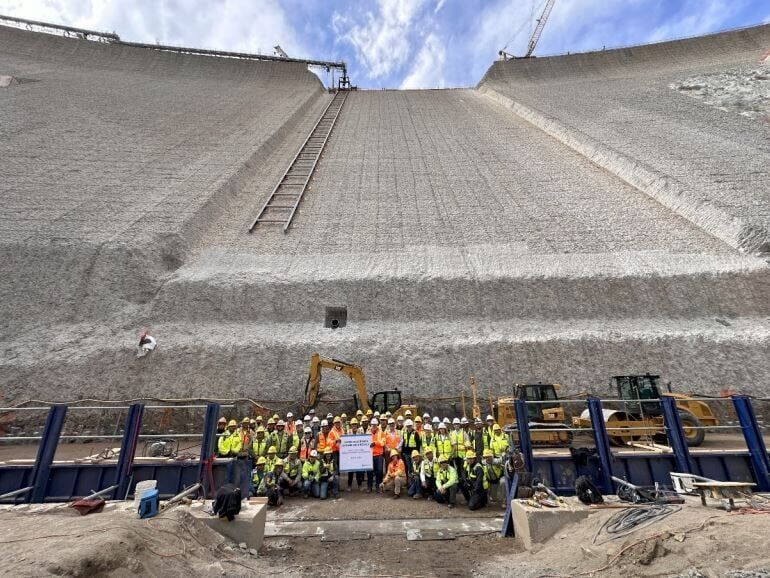
10th Circuit weighs Gross Reservoir expansion, judge’s ‘punishment’ of Denver Water
Michael Karlik
michael.karlik@coloradopolitics.com
Updated 39 minutes ago
Members of the Denver-based federal appeals court considered on Friday whether they could intervene in an ongoing infrastructure project to enlarge a Boulder County dam after a trial judge deemed the underlying permit unlawful nearly two years ago. Denver Water...

Democratic group maps out path to Colorado House and Senate supermajorities
Marissa Ventrelli
marissa.ventrelli@coloradopolitics.com
Updated 4 hours ago
A national organization that works to elect Democrats to state legislatures has its sights on Colorado, unveiling a road map to establish a supermajority in both the House and Senate. Democrats have held a majority in the House since 2013...

10th Circuit upholds federal prohibition on juvenile handgun possession
Michael Karlik
michael.karlik@coloradopolitics.com
Updated 5 hours ago
The Denver-based federal appeals court concluded on Monday that Congress acted within its constitutional powers to make it a crime for juveniles to possess handguns in most instances. The decision from the U.S. Court of Appeals for the 10th Circuit...

Board of Peace demands Netanyahu cease Gaza airstrikes
The Washington Examiner
the-washington-examiner@coloradopolitics.com
Updated 7 hours ago
The Board of Peace is struggling to get Israel on board with its peace plan for Gaza as Israeli militia airstrikes continue to bombard the war-torn strip despite expectations for a ceasefire and de-escalation. Gaza City was hit repeatedly by...

Trump wants to give Iran ‘last chance’ to strike a deal before ‘decapitation’
Christian Datoc
christian-datoc@coloradopolitics.com
Updated 8 hours ago
President Donald Trump said this week’s talks with Iran will be the “last chance” for the Middle Eastern country to avoid a severe escalation in the war. Trump called off plans to strike Iran’s energy infrastructure over the weekend after...
Fauci told Congress higher COVID-19 fatality rate than he calculated in diary: ‘More like 0.2-0.3%’
Mia Cathell
mia-cathell@coloradopolitics.com
Updated 8 hours ago
Dr. Anthony Fauci privately calculated that COVID-19 had a significantly lower fatality rate than what he told Congress a month later at the outset of the pandemic. On March 11, 2020, the day that the World Health Organization declared COVID-19...

Senate advances judicial nominee, Montezuma County judge agrees to discipline | COURT CRAWL
Michael Karlik
michael.karlik@coloradopolitics.com
Updated 9 hours ago
Welcome to Court Crawl, Colorado Politics’ roundup of news from the third branch of government. A U.S. Senate committee advanced a judicial nominee from Colorado, plus a Montezuma County judge agreed to receive discipline for his misconduct that stops short...
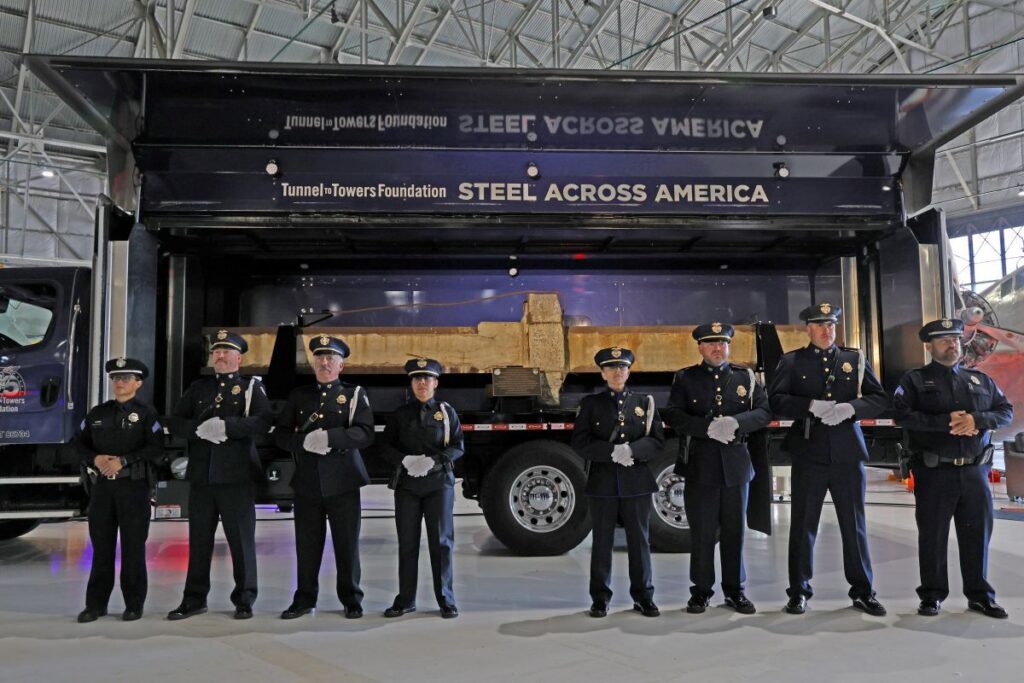
Tunnel to Towers brings 9/11 steel to Denver
Nicholas Fogleman
nicholas.fogleman@denvergazette.com
Updated 12 hours ago
A nationwide tour commemorating the 25th anniversary of 9/11 brought a piece of the World Trade Center to Denver on Saturday as the Tunnel to Towers Foundation hosted a ceremony at the Wings Over the Rockies Air & Space Museum....
Top officials in Arizona’s Maricopa County agree on how to oversee elections | OUT WEST ROUNDUP
The Associated Press
the-associated-press@coloradopolitics.com
Updated 5 days ago
ARIZONA Officials agree on election oversight PHOENIX — Election officials in Arizona’s most populous county reached an agreement a week before the state’s July 21 primary on how to jointly oversee the vote, ending a prolonged legal battle. Republican Maricopa...
PREV
PREVIOUS

Panel dismisses ethics complaint against Polis for gaming, fashion promotions
The House Ethics Committee on Monday dismissed a complaint that U.S. Rep. Jared Polis last year used public resources to act as fleeting pitchman for a video game company and for a Boulder-based men’s clothing designer. “I’m glad the ethics committee promptly and unanimously dismissed this matter and found no violation,” Polis said in a […]

Salazar ready to bring fight over drilling back to the Capitol
State Rep. Joe Salazar, D-Thornton, plans to introduce a bill in the upcoming legislative session that would force oil and gas companies to compensate residents for any loss in property value tied to drilling activities, including damage done by earthquakes linked to deep-earth wastewater injection wells. But state Sen. Jerry Sonnenberg, R-Sterling, has vowed to […]