

State may or may not be probing ballot fraud in Chaffee County
Colorado elections watchers who have been following the zig-zagging, on-again, off-again case of the 2012 Republican Primary Chaffee County ballots completed half in blue and half in black ink may get an answer soon whether or not state officials believe the ballots are evidence of election fraud.
Or they may get no answer at all.
That’s because the investigation was apparently left with the attorney general’s office at the beginning of 2013 – and the attorney general’s office may or may not be conducting an investigation at all.
A primary election and an investigation
The ballots were cast in the June 26, 2012, election that featured at the top of the ballots the contest between U.S. Rep. Doug Lamborn and Republican primary challenger Robert Blaha. Depending on your ballot, there was also the race for University of Colorado regent pitting Matt Arnold against Brian Davidson. And the one pitting Jim Wilson against Steve Collins for a state House seat, and Thom LeDoux against Dagna Van Der Jagt for local district attorney. There were also uncontested races for county commissioner.
According to the secretary of state’s office, 3,235 ballots were cast in the county election. Of those, 140 were marked partly in blue and partly in black ink, and another 43 were marked in varying ways – fully blackened squares side by side with dashed-off Xs, or neatly filled-in boxes alongside boxes scribbled over with messy scrawls – the kind of markings that show inconsistency and can raise suspicion that more than one person filled out a ballot.
In the fall of 2012 Marilyn Marks, a high-profile election integrity activist and proud thorn-in-the-side to election administrators, filed an open records request for ballots from several counties. She was concerned with the rules giving the public access to voted ballots and whether ballots could be traced to individual voters, in effect undermining the right to cast a secret ballot.
Chaffee County delivered color images of its ballots to Marks. And the images shocked her.
“They were so weird,” she said. “Here was one that was completed half in blue and then half in black. Well that’s odd, I think and move on. Then there’s another one. Then another one. What is going on here? I’m sure I said it out loud to myself.”
Marks showed the images to her lawyer and to fellow election activists, who agreed they were weird, and then she filed a complaint with the secretary of state.
A few weeks later, in the middle of October, secretary of state’s office investigator Michael Hagihara found himself visiting the Chaffee County clerk’s office, where he conducted a two-day investigation. He talked to the elections staff, studied voted ballots, sealed up elections office ballpoints with the ballots and reviewed video of the elections staffers tallying the votes.
In an October 24, 2012, memo, Hagihara reported on the investigation for Secretary of State Scott Gessler, Deputy Secretary of State Suzanne Staiert and Director of Elections Judd Choate. Hagihara did not believe the county elections administration staff was to blame for any irregularities – but he did find irregularities. He determined that 140 ballots out of roughly 3,235 were filled out partly with blue and partly with black ink. He said those ballots “created serious questions as to the legitimacy of the votes cast.”
It was as unclear then as it is now whether that is a high percentage of suspiciously marked ballots or even a high number of ballots marked with two different pens.
In an email from August of this year reviewing the case, secretary of state elections staffer Stefanie Mann reported to Staiert that office investigators actually found 183 ballots that bore irregular markings.
Emails also show that some of the staffers reviewing images of the ballots in 2012 thought that perhaps the scanning process had made them only appear to be marked in two different color inks. But Joyce Reno, who was Chaffee County clerk at the time, reportedly put those speculations to rest when she said the original ballots were marked in two colors.
Staiert recalled that she and elections division staffers Mann and Wayne Munster met with attorney general’s office representative Mike Dougherty in the fall of 2012 after the Hagihara investigation and briefed him on the case, handing over the file and at least most of the evidence compiled by the investigators.
“We told him we didn’t find any evidence that the county elections staff was involved in any way, that there were no process irregularities, nothing along those lines in what we reviewed, so we said it was not an election administration case. If anything, it was a criminal case.”
Dougherty now works as an assistant district attorney for Jefferson County, one of many players tied to the Chaffee County ballot complaint who has moved on from or been replaced in their position. He remembers the meeting with the secretary of state staffers much the same as Staiert does.
He adds this, though: “I recall they were going to be doing some follow-up,” he said. “Interview some people, maybe, and check again on the path the ballots may have taken… I’m not sure.”
Dougherty said that, after the meeting with Staiert and staffers, he met with then-Attorney General John Suthers and gave him a report, and that was the end of it as far as he was concerned. No investigation was opened up in the attorney general’s office at that time. Dougherty said he left the attorney general’s office in January 2013, and that the secretary of state’s office formally sent its investigation to the attorney general in February, the month after he left.
What happened to it then is hard to say. Indeed, it’s unclear whether the attorney general’s office ever even accepted the secretary of state investigation files. Written notes from Chaffee County Clerk Lori Mitchell asking about the state of the investigation last month say that secretary of state staffers looked for a receipt for the transfer of investigation records and couldn’t find one.
A cryptic spokesman
“We don’t comment on any investigations,” says Roger Hudson, spokesman for now-Attorney General Cynthia Coffman. “We don’t want to jeopardize any investigation that might be ongoing or one that we might potentially open up in the future.”
Hudson let a sliver more of light fall on the state of the case in a response to an open records request sent on September 9 by elections activist Mary Eberle. She asked for copies of any “writings to or from your office or within your office concerning the complaint or its topic – the election records from the 2012 Chaffee County Primary – including any document indicating whether you have accepted the complaint…”
Hudson said they were sending her no documents in response to her request “on the grounds that the records are subject to several exemptions including attorney-client communications and the work product privilege.” He also noted that any relevant records would fall under the Colorado Criminal Justice Records Act, which “allows a criminal justice agency to deny a request in order to pursue an ongoing investigation and to protect the privacy interests of persons who may be a part of an investigation.”
Eberle and other elections activists watching the case were baffled.
“Who would be the client and who would be the attorney?” she said. “Does the public have the right to know that much?”
In any event, the attorney general’s response is the kind of response that suggests an investigation is in fact underway – one that, if not part of a two-and-half-year intensive probe, may be at least a freshly started inquiry.
Marks and her Rocky Mountain Foundation filed a new complaint last month with the attorney general because she couldn’t get an answer whether or not the case responding to her initial complaint was being investigated – and also because the question had gained new urgency. She had learned that Chaffee County was planning to destroy the three-year-old ballots at the heart of the case. The ballots were reportedly taking up room and costing money to maintain.
“It’s the state’s job to conduct the investigation or to dismiss it,” said Marks.
Chaffee County Clerk Mitchell, who was deputy clerk in 2012 under then-Clerk Joyce Reno, said that earlier this month, in the wake of the latest Marks-Rocky Mountain Foundation complaint, two investigators came to Salida from the attorney general’s office in Denver to look over ballots from 2012.
Mitchell says she “doesn’t think the case is going anywhere.”
“If you look at it, it’s hard to see,” she said. “None of the races have been contested. It was an all-mail-ballot election and there were no drop-off centers. So voters overwhelmingly filled out their ballots and sealed them and dropped them here. Basically, no one outside this office was collecting them.”
“Hey, look, I understand what she’s saying,” said Marks. “We’re a volunteer organization. We don’t have the resources to run these ballots and see what kind of patterns might emerge. We don’t know whether there’s fraud or who might have committed it or why. That’s why we filed a complaint. The secretary’s office agreed with us, at least to the extent that they also saw the ballots as suspicious.”
Neglected evidenceand a public message
Eberle laments that it has taken three years to get any definitive answers in the case. She thinks the long delay without any public report only serves to fuel speculation at a time when voters are being warned every election season about fraud and in an era where new election rules, voting systems and technologies are being introduced at a fast clip.
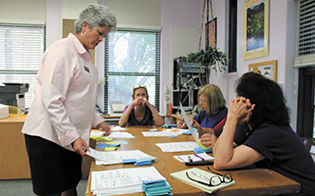
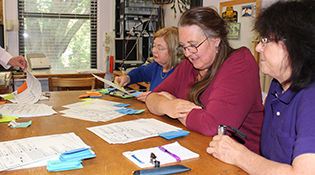
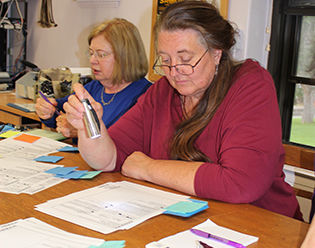
She and three other activists traveled to the Chaffee County Clerk’s office in Salida in August and reviewed the ballots themselves. They stayed all day and took copious notes.
“What happened here three years ago?” Eberle asked. “The ballots were odd. The secretary of state’s office found that they were odd. The briefest glance at the scans suggested irregularities – different inks, different methods of marking… You know, it’s fraudulent to re-mark a ballot in any way. You can’t rule out fraud in Chaffee County. You can’t rule out that state investigators didn’t follow through. You can’t rule out a cover-up.”
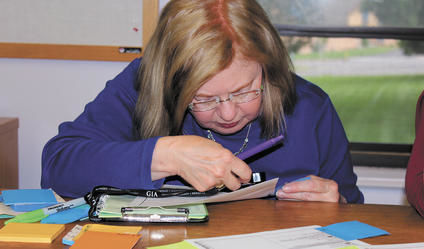
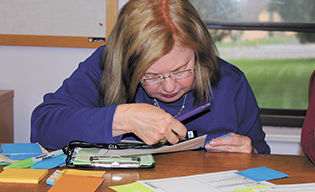
Eberle brought a magnifying glass to Salida. She peered close at the ballots, her face inches away from the surface. She stuck Post-Its to this ballot and that ballot and wrote descriptions in a notebook in tiny, neat handwriting.
Her inspection of the ballots has led her to believe that some of the ink may be fading or changing color. She thinks investigators should subject the ballots to “scientific tests” to see if the ink is “oxidizing,” as she put it, or whether the composition of the paper is reacting with the ink.
She doesn’t know. She is the first to say she is not a paper and ink expert and she’s not a chemist. She says what matters most is that people recognize that the case is about more than the blue-black ballots or the 2012 votes or the attorney general’s ongoing or not-going-anywhere investigation.
“This is about the fact that elections belong to the people, not the secretary of state, not the clerks, not the attorney general,” she says slowly, thinking about the words she is going to use. “The public has to learn to get involved in a hands-on way and bring problems forward so they can be addressed. You can’t just trust the government to tell us who has been elected to the government and have that just be the end of the story.”
– john.tomasic@gmail.com


Colorado Senate panel OKs bill named for Boulder teen cyclist killed in 2023 crash
Marissa Ventrelli
marissa.ventrelli@coloradopolitics.com
Updated 16 minutes ago
The Senate Judiciary Committee on Monday gave unanimous approval to a bill that would require law enforcement officers responding to crashes resulting in serious injury or death to offer drivers a voluntary breathalyzer test. Sponsors hope the measure would provide...

Fort Carson-based soldier killed in Iranian attack
Mary Shinn
mary-shinn@coloradopolitics.com
Updated 1 hour ago
A Fort Carson-based soldier is among the U.S. service members killed in an attack by Iran during Operation Epic Fury, according to a Department of Defense news release. Sgt. Benjamin N. Pennington, 26, died Sunday of injuries sustained during an...
Colorado open records bill dies in Senate committee
Marianne Goodland
marianne.goodland@coloradopolitics.com
Updated 33 minutes ago
Efforts to overhaul Colorado’s open records law stalled anew. A proposal that would have extended response times for public records requests and added accountability measures for late responses failed to advance out of its first committee and will not move...
Colorado Supreme Court blocks ballot initiative defining ‘fees’
Michael Karlik
michael.karlik@coloradopolitics.com
Updated 19 hours ago
The Colorado Supreme Court blocked a proposed ballot initiative on Monday that would have required voter approval for new fees above a certain threshold, while also enshrining a definition of “fee” into the state constitution for the first time. Chief...
Colorado joins multi-state call to keep ICE away from polling locations
Jacob Mauk
jacob.mauk@denvergazette.com
Updated 16 hours ago
Colorado Secretary of State Jena Griswold announced Monday that the state has formally requested written confirmation from the Department of Homeland Security that ICE agents will not be stationed at polling locations during the 2026 election cycle, according to a...

Colorado prostitution decriminalization bill shelved after sponsor says it lacks votes
Marianne Goodland
marianne.goodland@coloradopolitics.com
Updated 5 hours ago
A bill that would have decriminalized prostitution in Colorado will not move forward this year after its sponsor said it lacks the votes to pass its first committee. Sen. Nick Hinrichsen, a Pueblo Democrat, said he will ask to postpone...
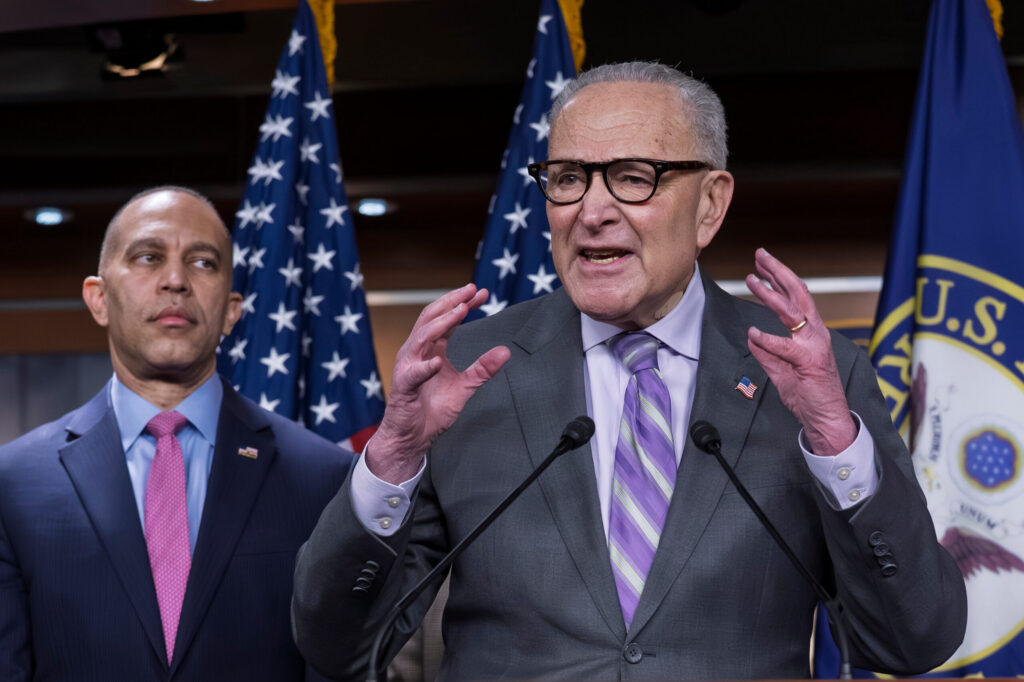
GOP senators push back against Schumer’s ‘Jim Crow 2.0’ description of SAVE Act
Asher Notheis, Washington Examiner
asher.notheis.washington.examiner@gazetteedit.wpenginepowered.com
Updated 20 hours ago
Sens. Rick Scott (R-FL) and Mike Lee (R-UT) pushed back on Senate Minority Leader Chuck Schumer’s (D-NY) framing of the SAVE America Act as “Jim Crow 2.0” on Sunday. President Donald Trump announced Sunday that he will not sign any...
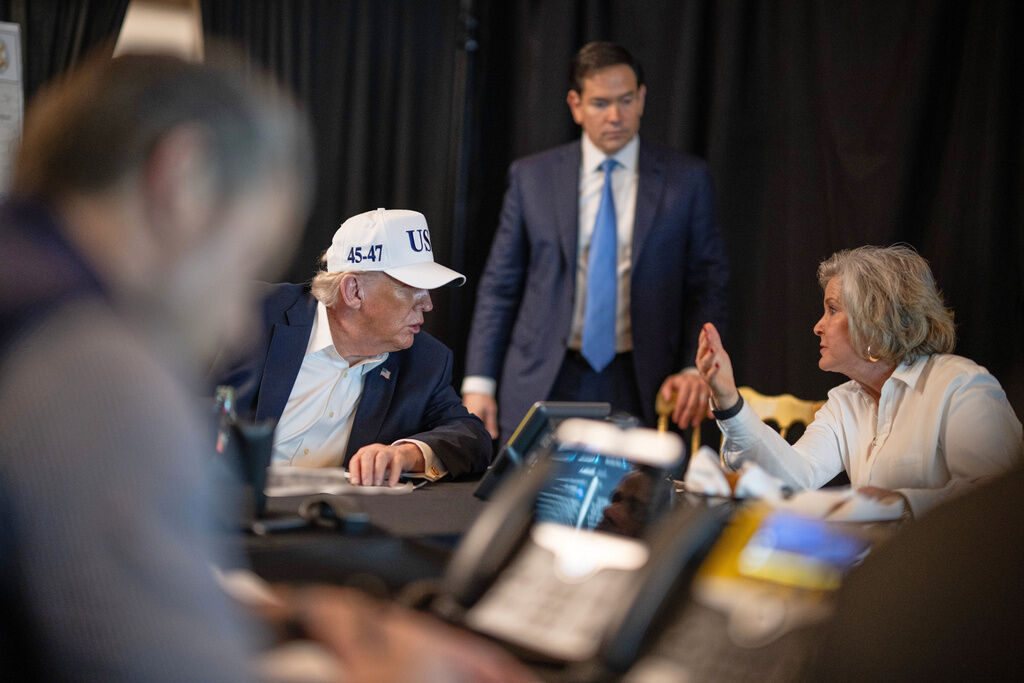
Rubio warns US will no longer tolerate ‘hostage diplomacy,’ claims Iranian military is ‘being eviscerated’
Timothy Nerozzi, Washington Examiner
timothy.nerozzi.washington.examiner@gazetteedit.wpenginepowered.com
Updated 20 hours ago
Secretary of State Marco Rubio is warning hostile state actors, Iran in particular, that the United States will no longer engage in “hostage diplomacy.” Rubio made the remarks ahead of a flag-raising ceremony at the State Department to mark U.S....
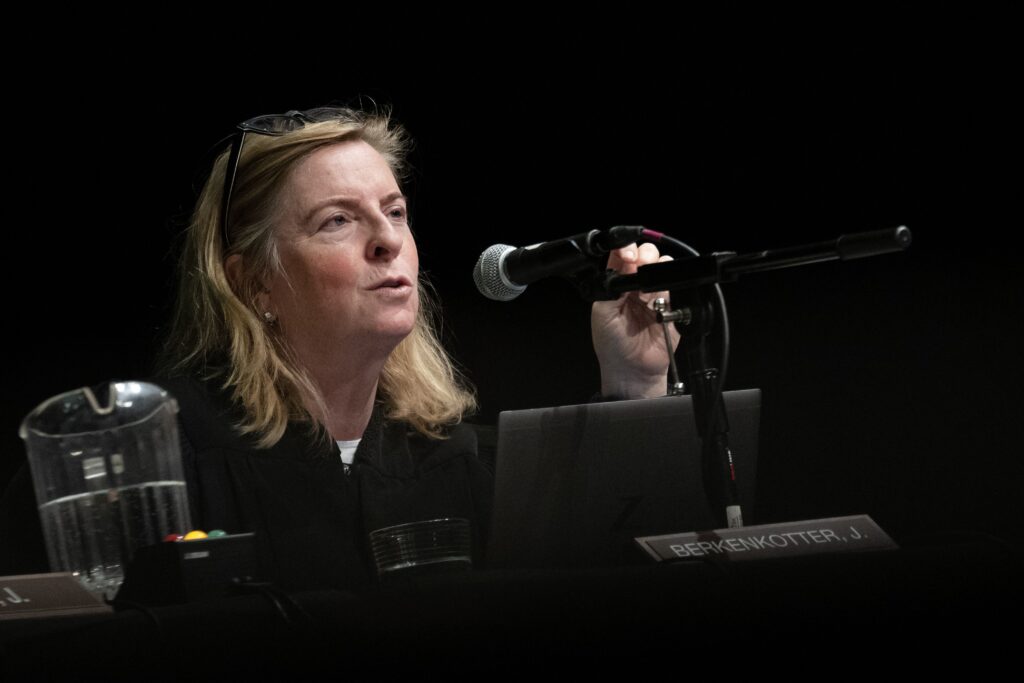
Colorado justices, by 5-2, say Longmont detective did not violate suspect’s Miranda rights
Michael Karlik
michael.karlik@coloradopolitics.com
Updated 21 hours ago
The Colorado Supreme Court’s majority ruled on Monday that a Longmont detective did not coerce a suspect into talking by making references to how a judge would look at his character, and by suggesting he may get out of prison...
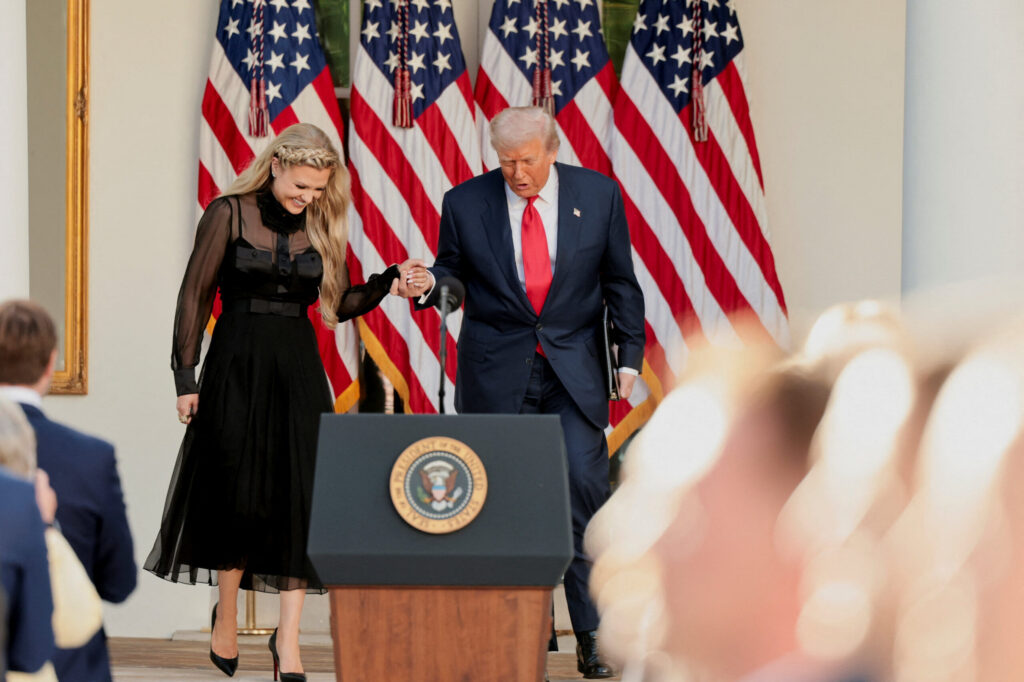
Trump appoints Erika Kirk to Air Force Academy board
Mary Shinn
mary-shinn@coloradopolitics.com
Updated 2 hours ago
President Donald Trump has appointed Erika Kirk, the widow of conservative activist Charlie Kirk, to fill a seat on the Air Force Academy’s Board of Visitors. Charlie Kirk, the founder of conservative group Turning Point USA, was a member of...
PREV
PREVIOUS

After 2 million visitors, Molly Brown House gets rehab
Historic Denver last week launched an extensive rehabilitation and restoration project at the venerable Molly Brown House Museum on Denver’s Capitol Hill.The preservation organization is also launching a $2 million building campaign. “”Without Historic Denver, much of the character that defines our unique city would have been lost forever,” said David and Stephanie Tryba, co-chairs […]

Whip the Vote
Public officials urged eligible Colorado residents to make sure they were registered to vote and that their registration information was current on Tuesday as part of National Voter Registration Day. It was the strongest push yet for the occasion, which launched in 2012, said Secretary of State Wayne Williams, who started a day full of […]