

Financial experts not alarmed by stock market correction
The wild ride by the stock market this week has people watching their 401(k)s in horror. But those with long-term strategies, including the state treasury and the Colorado Public Employees’ Retirement Association, are less worried about the market’s seesaws and declines, at least for now.
In the five trading sessions beginning last Thursday, the Dow Jones Industrial Average dropped more than 1,888 points, about 11 percent of its value. Similar percentage point declines also took place with the S&P 500 and the NASDAQ. (By mid-week, the market was posting robust gains.)
Financial experts have been warning since last year that this type of decline has been on the horizon. They view the recent decline as an expected “market correction,” rather than a descent into a bear – pessimistic – market situation. Some of the decline is due to the economic problems in Greece. But experts say this past week’s correction was more due to concerns over China’s slowing economy.
Overnight, according to NBC, China’s central bank cut interest rates in order to prop up the country’s economy. The market rebounded a little on Tuesday, but at the end of the day the Dow still lost another 204.91 points.
Keith Maskus of The University of Colorado Boulder, who teacher international economics and finance, told The Colorado Statesman that the situation in China is a catalyst for what’s going on in the markets.
“This is a market correction that’s been overdue for quite some time,” he said Tuesday. “You never know when it will happen, and it’s been more dramatic than I would guess.”
But Maskus says people ought to sit tight and be patient. This correction will hit bottom and start to recover, he said. “We’re at a level where people thought this was a good return on stocks a year ago.”
Maskus is eyeing structural issues in the global economy, which he says will make “for hard sailing, and stock prices will come up, but not as fast in the past.” He’s particularly interested in what happens in China and emerging markets in Brazil and Russia.
State Treasurer Walker Stapleton says he’s comfortable the state’s investments will weather the latest hiccup.
The state benefits from a “very conservative approach” that Stapleton said predates his time in office. The strategy has served the state well over the long term and has insulated the state from sharp market corrections, he told The Statesman on Tuesday. The state invests as a “fixed income investor,” he said, which translates to a preference for reinvesting rather than cashing out on an investment.
The treasurer’s assessment how the market correction will affect the state’s public pension plan is quite another matter, however.
Stapleton, an ex officio member of PERA’s board of trustees, said he believes the public pension plan will have a “significant exposure” – or risk – “to equities in their portfolio.” The pension plan also has an inflated investment assumption that economists don’t believe is realistic, said Stapleton, a persistent naysayer in the face of rosy PERA projections.
Almost two years ago, the PERA board voted to lower investment expectations from 8 percent to 7.5 percent per year, but Stapleton said they should lower it more than that. “As long as they have an inflated investment assumption, they will take risks in the market through equities or alternative investments,” he maintained.
Stapleton believes the market correction could hit PERA’s investment portfolio hard. “It underscores the need to have the retirement system with conservative investment assumptions so that Colorado can fulfill its promise to its retirees,” he said.
PERA spokeswoman Katie Kaufmanis said Monday that the pension plan is a “long-term investor with a well-diversified portfolio. This is different than a person with an individual 401(k) plan, where market fluctuations, even small ones, can have a significant impact on that person’s retirement savings and potentially their quality of life.”
If the market fluctuation has any impact on PERA, it will be disclosed when PERA issues its audited annual financial report next June, she said.
– marianne@coloradostatesman.com


Immigration reporting measure fuels debate over Colorado’s role with ICE
Marissa Ventrelli
marissa.ventrelli@coloradopolitics.com
Updated 2 hours ago
A coalition of advocacy groups and several district attorneys rallied outside the Colorado Capitol on Thursday to oppose a ballot measure that, if approved by voters in November, would require state and local law enforcement to cooperate with federal immigration...

Colorado Politics Calendar Sept. 14-20
Rachael Wright, Special to Colorado Politics
rachael.wright@coloradopolitics.com
Updated 3 days ago
CoPo’s weekly political calendar will help you find political and public-policy events throughout Colorado. It includes candidate and issue campaign events, public policy meetings, court hearings, state and local party conventions, assemblies, debates, rallies, parades, speaking engagements, traveling dignitary appearances,...
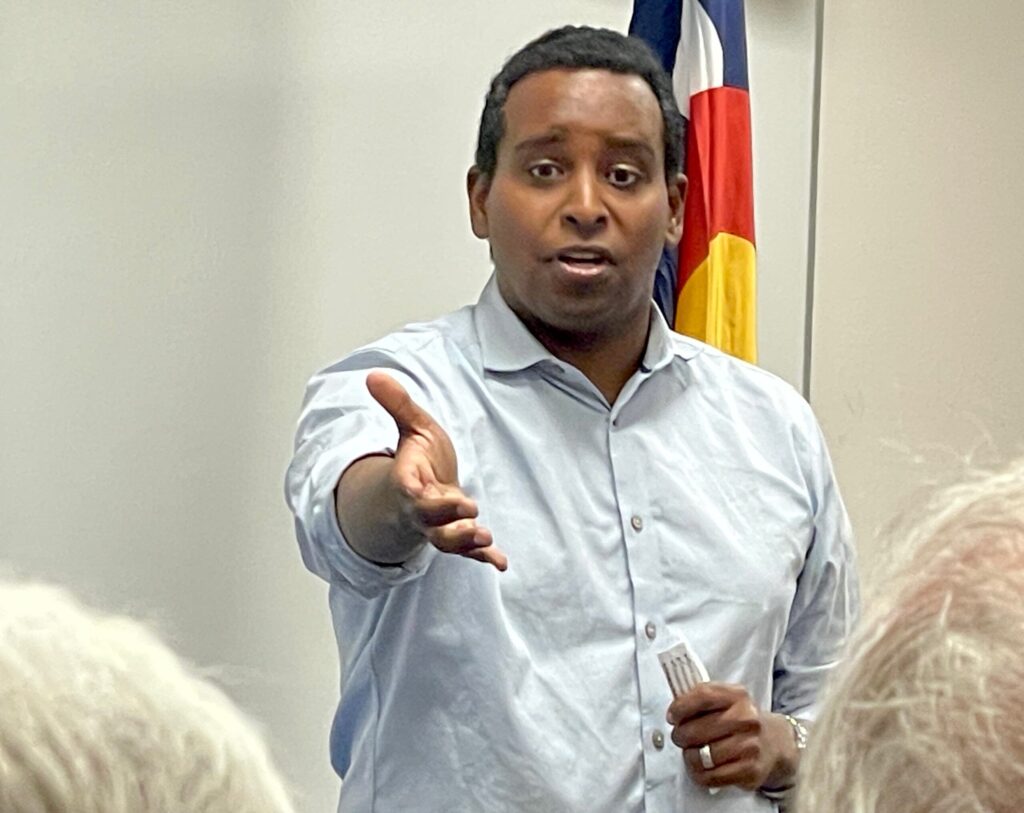
The African roots of three Colorado leaders | SONDERMANN
Eric Sondermann
eric-sondermann@coloradopolitics.com
Updated 2 days ago
Colorado’s political transformation is measured in many ways. A once reliably red state (with asterisks) became purple and is now a rather deep blue. For better or worse, probably the latter, power is ever more consolidated along the Front Range...
Federal judge green-lights civil trial against ex-Fort Collins DUI officer
Michael Karlik
michael.karlik@coloradopolitics.com
Updated 1 day ago
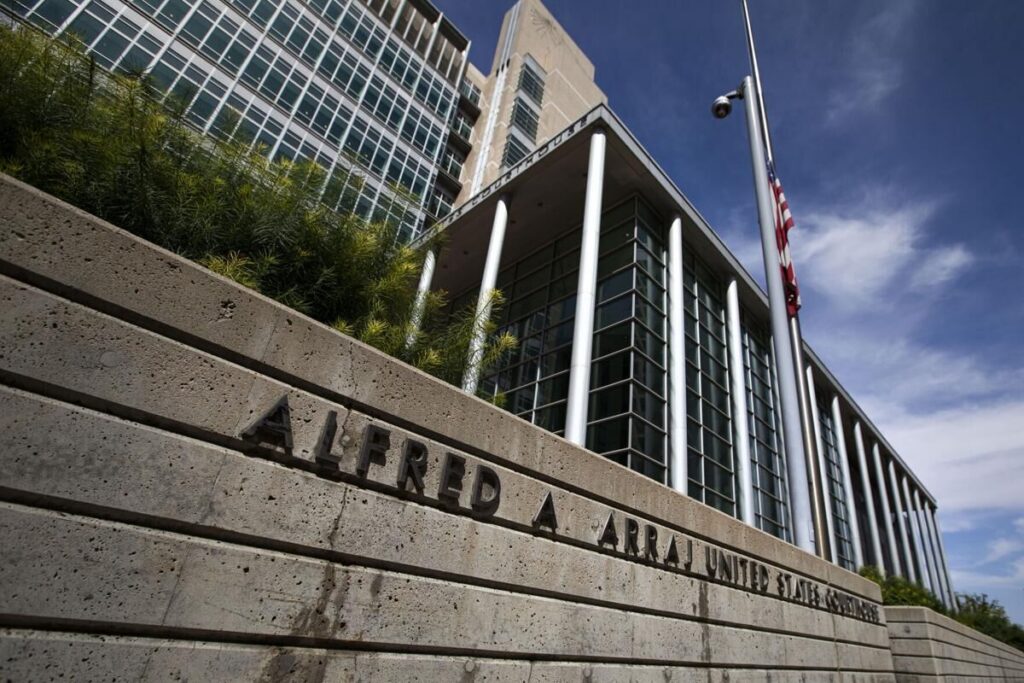
A federal judge ruled on Thursday that Fort Collins’ former “DUI officer” will face a civil trial for allegedly investigating a motorist for impaired driving without any reasonable suspicion to do so. In recent years, several people arrested by Officer...

Denver police reopen 13 sex assault cases after retesting Missy Woods’ CBI work
Jenny Deam
jenny.deam@gazette.com
Updated 1 day ago
Thirteen previously closed Denver sexual assault cases have been reopened after the city’s crime lab retested DNA evidence once analyzed by former Colorado Bureau of Investigation forensic analyst Yvonne Woods. A police spokesperson told The Denver Gazette the once-closed cases...

Ballot measure aims to shift Colorado sporting goods tax revenue to land, water and wildfire projects
Marissa Ventrelli
marissa.ventrelli@coloradopolitics.com
Updated 2 hours ago
Colorado voters this November will decide whether to direct a share of sales tax revenue from sporting goods — including bicycles and skiing equipment — toward land and water conservation, wildfire prevention and expanding outdoor recreation. Supporters say the measure...

Colorado Supreme Court suspends Mesa County judge pending misconduct investigation
Michael Karlik
michael.karlik@coloradopolitics.com
Updated 4 hours ago
The Colorado Supreme Court suspended Mesa County Court Judge Michael J. Grattan on Thursday amid a misconduct investigation. The court’s Sept. 10 order gave Grattan 21 days to explain why his paid suspension should not continue through the end of...

Trump honors the fallen of the 9/11 terrorist attacks during Pentagon speech
Mabinty Quarshie
mabinty-quarshie@coloradopolitics.com
Updated 1 day ago
President Donald Trump and first lady Melania Trump honored the roughly 3,000 Americans killed during the Sept. 11, 2001, terrorist attacks during a ceremony at the Pentagon. The event marking the 25th anniversary of the deadliest attack on American soil...
Colorado Supreme Court changes course, dismisses case about special district bonds
Michael Karlik
michael.karlik@coloradopolitics.com
Updated 4 hours ago
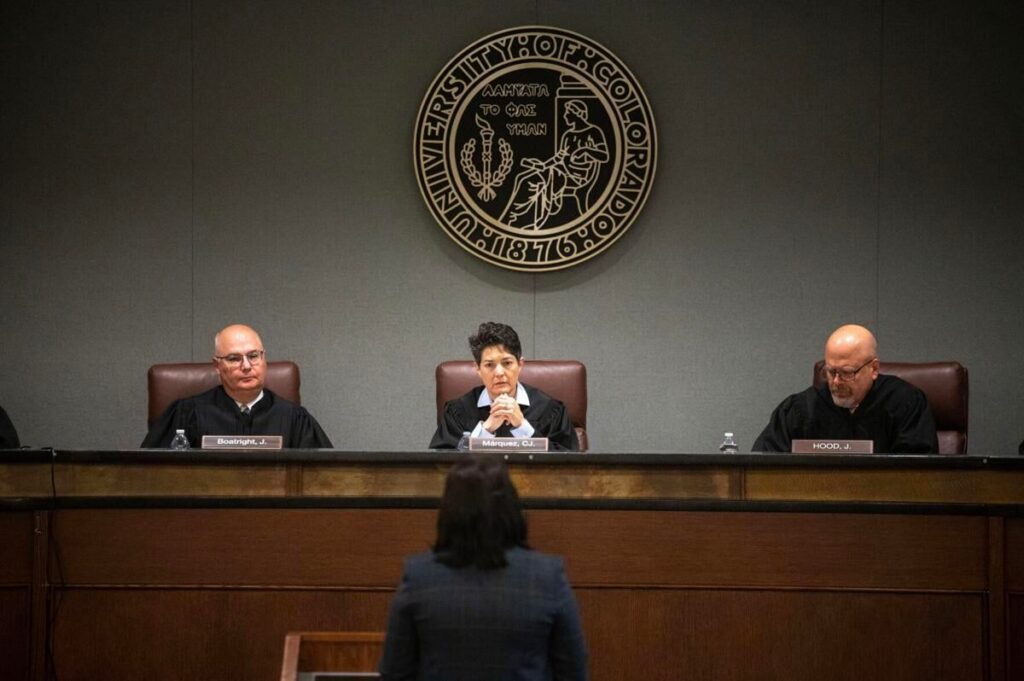
The Colorado Supreme Court declined on Friday to decide a dispute between a large-scale Commerce City development and the various districts financing it, after initially showing interest in the ongoing case. Colorado has roughly 2,800 special districts, which are local...

Colorado leaders express outrage and pain following 9/11 attacks | A LOOK BACK
Rachael Wright, Special to Colorado Politics
rachael.wright@coloradopolitics.com
Updated 1 day ago
Twenty-Five Years Ago This Week: “Responding to the 9/11 terrorist attacks, Colorado Gov. Bill Owens told reporters in a statement, “I join all Coloradans in expressing outrage and horror at the senseless terrorist bombings in New York and Washington D.C....
PREV
PREVIOUS

Denver moves to speed up contract approval process
The city of Denver has trimmed 18 days off the time it takes for major contracts to be approved by city council by shifting to an approval process that involves resolutions rather than ordinances. As of Aug. 15, contracts requiring city council review – those over $500,000 – are being considered as resolutions, not ordinances. […]

Horn: New ozone rules spell devastating impact on Routt County
As the Environmental Protection Agency contemplates a significant reduction to allowable ozone levels, the feds ought to consider the impact on places like Routt County. It may be easy for a bureaucrat sitting in the comfortable confines of a government office building in Washington, D.C., to ink new rules, but it’s up to the people […]