

Officials rip stopgap road bills at launch of U.S. 36 milestone
An Obama transportation department official urged Congress to pass a long-term highway funding bill during a visit to Broomfield this week.
Deputy Transportation Secretary Victor Mendez was in town on Monday to take part in a ceremony marking a milestone in the massive, ongoing U.S. 36 construction project.
Speaking outside Broomfield’s First Bank Center, Mendez said the politics in Washington, D.C., “are very difficult right now” when it comes to funding the country’s roads and bridges.Congress faces a July 31 deadline to pass legislation addressing the country’s transportation needs. But recent history suggests lawmakers will fall short of passing a long-term funding bill, instead opting for yet another stopgap measure.
Over the last six years, Congress has passed short-term transportation funding extensions 33 times.
The temporary funding measures are unsustainable, Mendez said, if Congress intends to repair roads and bridges.
“What concerns us more as we look at the entire nation is, at a time we ought to be building more options for Americans throughout the country, we’re actually building less,” he said.
Mendez reminded the audience that half of Colorado’s $1 billion transportation budget comes from federal aid. But stopgap funding measures that fail to keep up with construction costs and demand will keep having an adverse impact on states such as Colorado, which expects its population to grow by 10 million over the next 30 years, he said.
The deputy secretary called on Congress to take action on the Grow America Act, a six-year, $478 billion highway funding bill supported by President Obama and Mendez’ boss, Transportation Secretary Anthony Foxx.
Mendez said Colorado would receive a 20-percent increase in federal highway funding and a 50-percent increase in transit funding under the administration’s bill.
That’s if the measure advances.
“There’s difficulty getting it through the Republican House right now, which is sort of par for the course,” said Democratic Rep. Ed Perlmutter, who represents the 7th Congressional District.
Perlmutter called the constant cycle of short-term funding mechanisms in Congress “a joke.”
“If you’re a local government or a contractor, you can’t operate on a one-month time frame,” Perlmutter said.
While the Grow America Act faces an uncertain future in the House, the Senate, just one day after Mendez’s trip to Colorado, introduced its own highway funding legislation.
The bipartisan bill would also provide a six-year transportation funding increase, but not as much as the Obama administration-backed bill.
The Senate version, called the Invest in Transportation Act, would increase highway spending by about 13 percent over current levels, an annual increase of about $2 billion. The bill also sets up a program that aims to create jobs by creating incentives for companies to bring $2 trillion in foreign earnings back to the U.S.
Republican Sen. Cory Gardner is a co-sponsor of the legislation.
“It’s critically important that Congress finds a long-term, sustainable solution that maintains our roads and bridges and provides for the infrastructure that keeps our economy moving,” Gardner said in an emailed statement. “I’m a co-sponsor of the Invest in Transportation Act offered by Senators (Rand) Paul and (Barbara) Boxer, which would do just that. I look forward to reviewing the legislation recently passed by the Environment and Public Works Committee.”
Public-private partnership
With uncertainty in Congress over transportation funding – and with no public appetite for raising gas taxes to boost funding – states including Colorado are turning toward public-private partnerships to fund highway projects.
The massive U.S. 36 Express Lanes Project is an example of that kind of funding. In fact, it’s Colorado’s first-ever public-private funding partnership.
The $500 million project will bring express lanes, bus rapid transit and a commuter bikeway that will connect Denver to Boulder.
“If I had to pick one word to describe this project, it’s ‘innovation,'” said Colorado Department of Transportation Executive Director Shailen Bhatt. “It’s a project of firsts.”
A ceremony was held to mark the completion of the project’s first phase, an 11-mile stretch from Federal Boulevard to Louisville’s 88th Street. The project is expected to be completed by early next year.
Gov. John Hickenlooper said the state will look into multimodal projects like this one for future projects in other areas of the state.
“We’re providing choices,” he said. “Look at why metro Denver has been doing so well. It’s all the young millenials moving here, and the top three things they say every time: bike lanes, light rail, bus.”
Tolling will begin on U.S. 36 on July 22. Rates will depend on which lanes drivers choose to travel and the times of the day they are on the highway.
Hickenlooper acknowledged that it might take some time for motorists to accept the reality of having to pay to drive on a metro area highway the frequent.
“People don’t want to pay a toll until they’re stuck two hours in traffic,” he said.
But the governor is confident riders will appreciate the easing of driving on the highway that will occur once the project is completed.
“No one likes to pay a toll,” he said. “Nobody likes it. I can’t stand it. But I also don’t like being stuck in traffic for an hour or two. And right now people don’t want to raise their taxes, so having a tollway is the best way to get this infrastructure built.”
– Twitter: @VicVela1


Colorado Politics Calendar July 27-Aug. 2
Rachael Wright, Special to Colorado Politics
rachael.wright@coloradopolitics.com
Updated 4 days ago
CoPo’s weekly political calendar will help you find political and public-policy events throughout Colorado. It includes candidate and issue campaign events, public policy meetings, court hearings, state and local party conventions, assemblies, debates, rallies, parades, speaking engagements, traveling dignitary appearances,...

The through line from Donald Trump to Victor Marx | SONDERMANN
By Eric Sondermann
by-eric-sondermann@coloradopolitics.com
Updated 4 days ago
Over 10 years ago, before Donald Trump could ever defeat Hillary Rodham Clinton, he had to first engineer a hostile takeover of the Republican Party. Prior to his descent of that golden escalator, the previous seven Republican presidential nominees had...

Colorado districts prepare for school year amid mental health cuts. But will less cellphone distractions help?
Marissa Ventrelli
marissa.ventrelli@coloradopolitics.com
Updated 2 days ago
The signs of a new school year are everywhere — buses in the shop, teachers unpacking boxes, families ticking through supply lists — but behind the familiar rituals, Colorado districts are preparing for a year defined less by routine than...
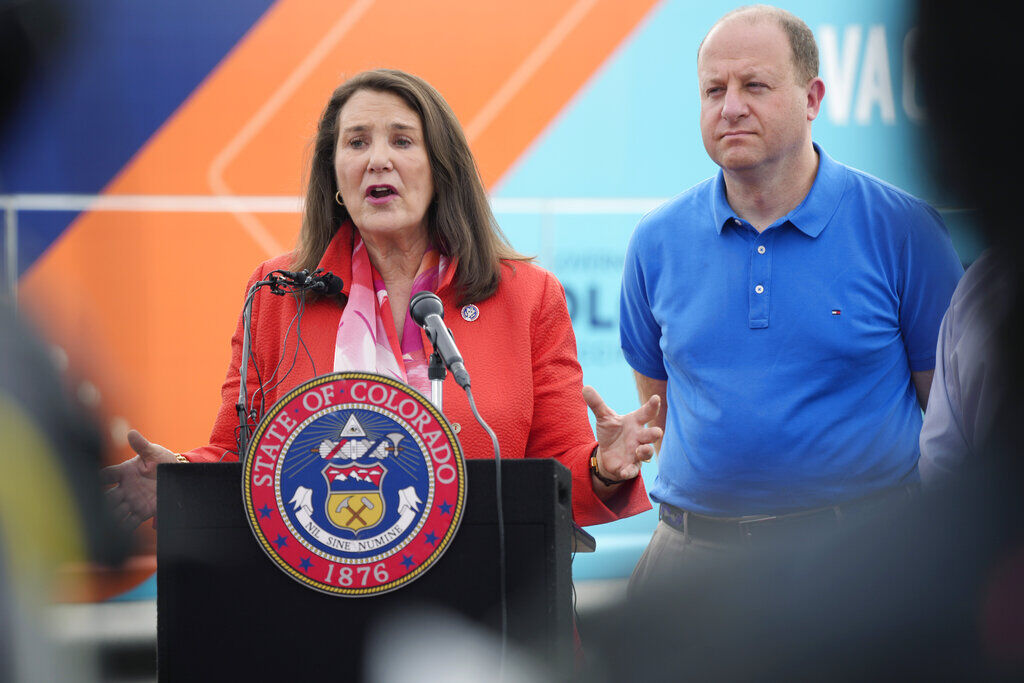
Armstrong staffer considers congressional bid, DeGette angers rural communities with wilderness act | A LOOK BACK
Rachael Wright, Special to Colorado Politics
rachael.wright@coloradopolitics.com
Updated 3 days ago
Forty-five years ago this week: If the lines were drawn just right, Republican Sen. Bill Armstrong stood the chance of losing his office manager, Ruth Fountain. Fountain admitted she was seriously thinking about running for Colorado’s new congressional seat in...

10th Circuit dismisses woman’s lawsuit following 10-year attempt to undo restraining order
Michael Karlik
michael.karlik@coloradopolitics.com
Updated 2 days ago
The Denver-based federal appeals court rejected a woman’s challenge on Friday to a restraining order imposed on her more than a decade ago, finding that she cannot credibly claim she will be prosecuted for violating the restraining order through her...
10th Circuit dismisses woman’s lawsuit following 10-year attempt to undo restraining order
Michael Karlik
michael.karlik@coloradopolitics.com
Updated 2 days ago
The Denver-based federal appeals court rejected a woman’s challenge on Friday to a restraining order imposed on her more than a decade ago, finding that she cannot credibly claim she will be prosecuted for violating the restraining order through her...
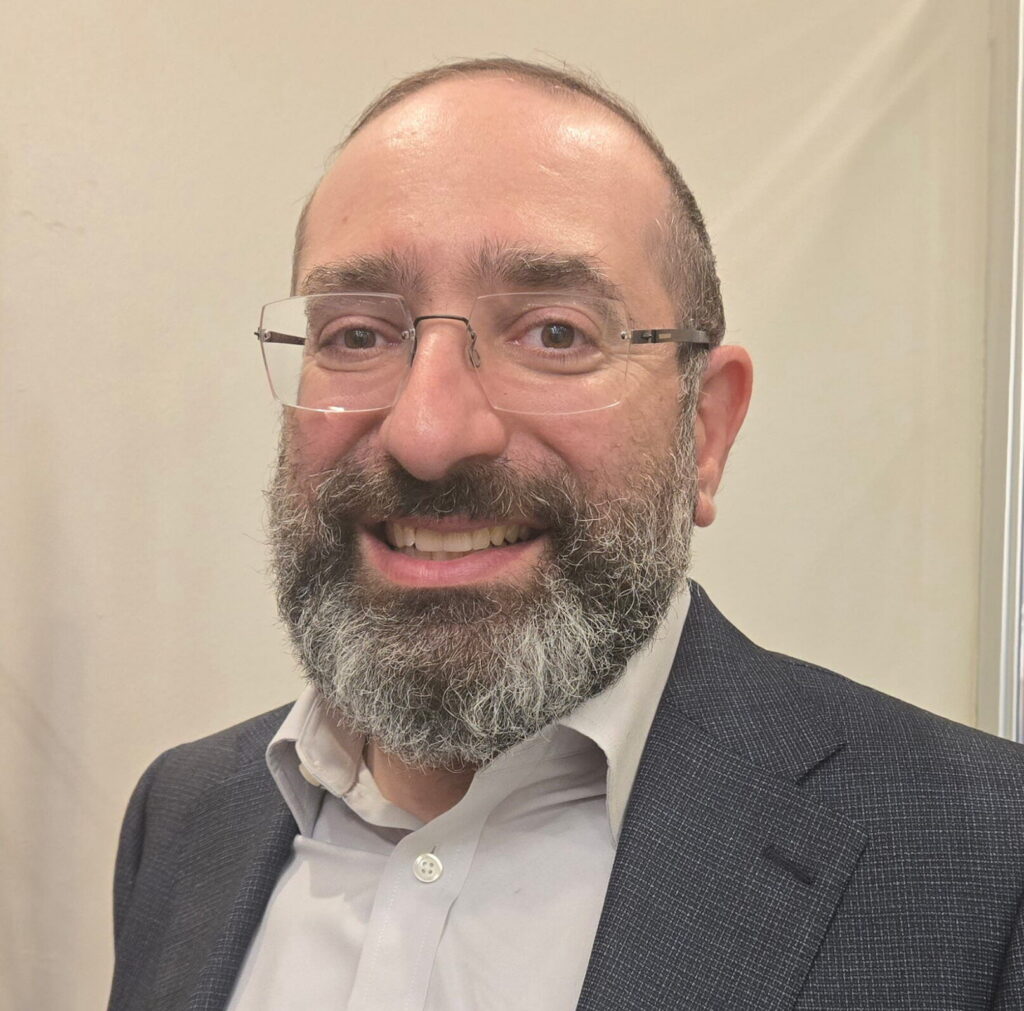
Surprise candidate Shimon Blau cleared to face off against Melat Kiros in November
Ernest Luning
ernest.luning@coloradopolitics.com
Updated 2 days ago
Unaffiliated congressional candidate Shimon Blau, a Denver doctor, has qualified by petition for the general election in Colorado’s 1st District, where Democrat Melat Kiros defeated 15-term U.S. Rep. Diana DeGette in last month’s primary, the Colorado Secretary of State’s Office...

Colorado produce not tied to nationwide cyclospora outbreak, agriculture officials say
Marissa Ventrelli
marissa.ventrelli@coloradopolitics.com
Updated 1 day ago
There is no indication that the recent outbreak of cyclospora, a fecal parasite that has contaminated food and water across nearly every state, can be linked to produce grown in Colorado, according to the state’s Department of Agriculture. “Colorado growers...

UNC opens College of Osteopathic Medicine
Marissa Ventrelli
marissa.ventrelli@coloradopolitics.com
Updated 2 days ago
The University of Northern Colorado held a grand opening for its new College of Osteopathic Medicine on Friday, with Gov. Jared Polis in attendance to celebrate the culmination of a two-year, $127.5 million project. The project was funded through legislation...
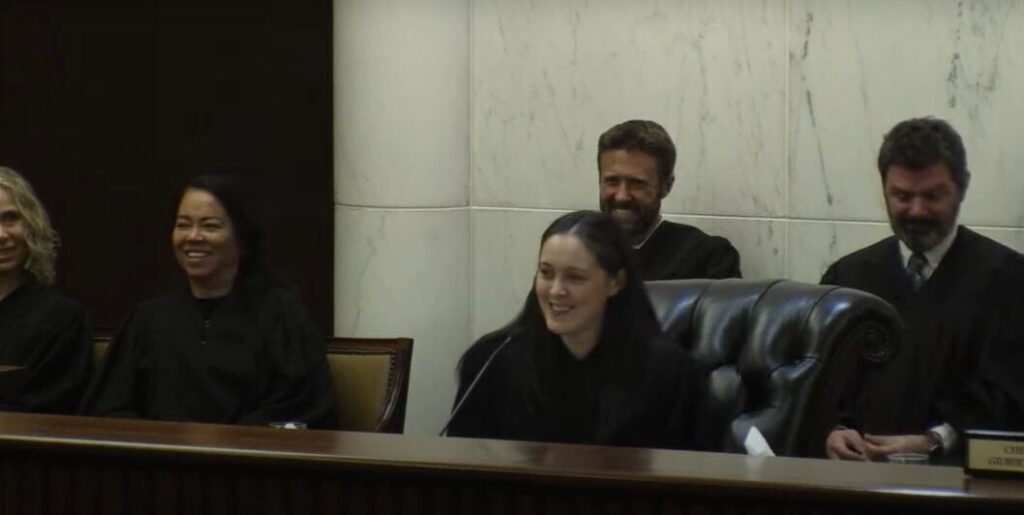
Colorado equal pay law does not require plaintiffs to allege gender-based retaliation, appeals court finds
Michael Karlik
michael.karlik@coloradopolitics.com
Updated 1 day ago
The 2019 Colorado law aimed at rooting out pay discrimination on the basis of sex does not require a plaintiff to allege their employer retaliated against them for sex- or gender-related reasons, the state’s second-highest court decided on Thursday. Lawmakers...
PREV
PREVIOUS

Fields: Déjà vu: a preview of government-run health care
Is Colorado ready for yet another round of government-run health care? I know I’m certainly not. In recent days, a campaign called ColoradoCare launched a ballot initiative for a single-payer health insurance system. It would give the state complete control over our health insurance and health care, basically by eliminating private insurance and making doctors […]

Clinic founder: Lowering barriers to health care
Jim García founded Clinica Tepeyac 23 years ago. A community-based health center, it provides primary and behavioral health care, and health education to Metro Denver’s medically underserved, predominantly Latino population. Many patients are undocumented. The clinic’s capacity has grown to handle 20,000 patient visits annually. In an interview with Catherine Strode, García discussed how he […]