

Coffman: Let them serve
Let me tell you the story of a constituent of mine named Humberto. His parents brought him to the United States at the age of 2, moving to Colorado when Humberto was 6. A few years ago, Humberto graduated from Aurora Central High School, the high school I attended before leaving after my junior year to enlist in the Army.
Like me, Humberto’s dream was to serve his nation in uniform. He wants to be a Marine. Unlike me, due to his parent’s decision to bring him to the United States illegally when he was 2 years old, Humberto can’t go down to the local recruiter’s office and sign up to serve the only country he has ever known.
I believe we should give young people like Humberto the opportunity to serve in this country’s military, to serve the country they call home.
Recently during the debate on the annual defense bill, I supported keeping in language that would have urged the Department of Defense to look into whether enlisting people like Humberto made sense.
The language was ultimately stripped out of the defense bill, but I want to explain why I supported keeping it in and why it is in our military’s best interest.
Those arguing against the amendment reasoned that their opposition, in part, was based on the fact that there are plenty of young people who want to join the military so that broadening the pool of eligible applicants to people brought to this country illegally is not only unnecessary, but it is potentially unfair to U.S. citizens who might be edged out by the increased competition.
The reality is, according to the Department of Defense, only 1 percent of young people today are “eligible and inclined” to sign up to serve. In fact, last year the Pentagon estimated that 71 percent of 17- to 24-year-olds in the U.S. would not be eligible to serve in the military due to educational shortcomings, medical issues, drug and alcohol dependency, or criminal records.
That is because today’s military has incredibly high standards for enlistment. We have the most qualified personnel serving in uniform in the history of our country, thanks to those high standards.
I saw firsthand what low standards can do during my first deployment with the U.S. Army’s 1st Armored Division in Europe, 1972-1974, during the Cold War. The Army had just shifted to an all-volunteer force after Vietnam and was so desperate to fill its ranks that it was all too willing to take those with little formal education, low test scores, and even felons were encouraged to join. Judges were known to tell criminal defendants that they could either join the military or go to jail.
As a result, disciplinary problems were extremely high with one in four soldiers never completing their first enlistment and receiving a less than honorable discharge. Overall readiness suffered as well.
Our military benefits from being able to select from the broadest pool of applicants possible in order to maintain high standards, which translates into a total force ready to meet the national security challenges before us.
In my view, the young people who were brought to the United States illegally as children through no fault of their own, who grew up here, who graduated from high school here, and who often know of no other country, ought to have the opportunity to serve this country if they can meet all of the qualifications.
It is not amnesty. It is an opportunity to serve the greatest nation on earth, an opportunity that only the best and the brightest will be given, and by extending that opportunity to young people like Humberto our military and country will be better off for it.
Editor’s note: A Spanish-language version of this guest commentary appeared online last week on the Univisión and Entravision sites.
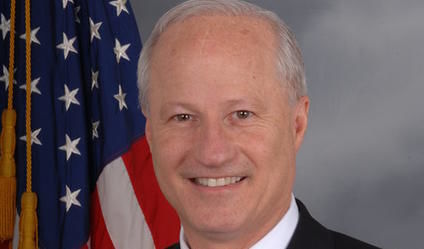
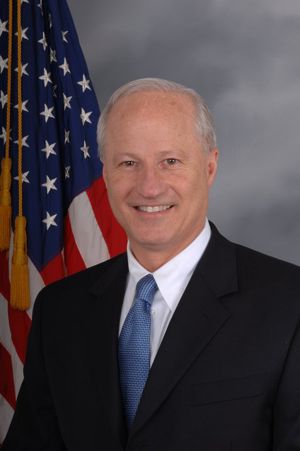
U.S. Rep. Mike Coffman is an Aurora Republican and has a combined 21 years service between the Army, Army Reserve, the Marine Corps and the Marine Corps Reserve. He sits on both the House Armed Services Committee and the House Veterans Affairs Committee.


Colorado Supreme Court signals intervention in dispute over treatment for trans children
Michael Karlik
michael.karlik@coloradopolitics.com
Updated 15 hours ago
The Colorado Supreme Court ordered Children’s Hospital Colorado on Tuesday to explain why it should not direct the organization to resume providing certain types of services to transgender children in compliance with the state’s non-discrimination law. Last month, a Denver...
Trump faces first domestic test on Iran conflict with Senate war powers vote
Ramsey Touchberry, Washington Examiner
ramsey.touchberry.washington.examiner@gazetteedit.wpenginepowered.com
Updated 17 hours ago
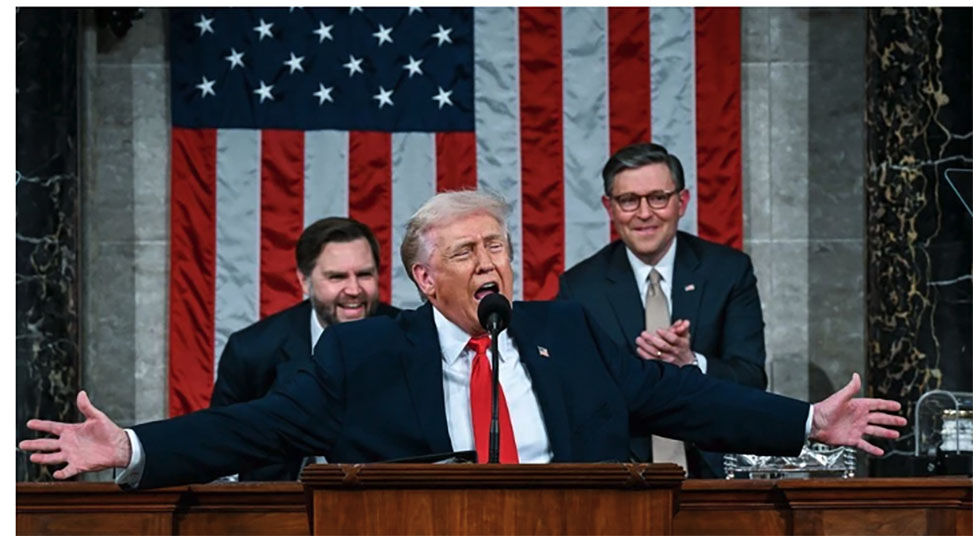
Administration officials are scrambling to sell members of Congress on President Donald Trump’s military operations in Iran ahead of bipartisan attempts to limit his war powers in the Middle East without approval from lawmakers. The Senate and House are set...
Supreme Court hands California parents win over secret gender transition policy
Jack Birle, Washington Examiner
jack.birle.washington.examiner@gazetteedit.wpenginepowered.com
Updated 17 hours ago
The Supreme Court gave California parents a significant victory late Monday when it kept in place a lower court’s block of the Golden State’s public school policy hiding students’ gender identity and preferred pronouns from parents. A 6-3 majority on...

Judge nixes latest policy requiring 7 days’ notice for Congress members to visit ICE facilities
Michael Kunzelman
michael.kunzelman@associatedpress.com
Updated 17 hours ago
WASHINGTON (AP) — A federal judge agreed on Monday to temporarily suspend the latest version of a Trump administration policy that requires members of Congress to provide a week’s notice before they can visit immigration detention facilities. U.S. District Judge...
Judge nixes latest policy requiring 7 days’ notice for Congress members to visit ICE facilities
Michael Kunzelman
michael.kunzelman@associatedpress.com
Updated 15 hours ago
WASHINGTON • A federal judge agreed on Monday to temporarily suspend the latest version of a Trump administration policy that requires members of Congress to provide a week’s notice before they can visit immigration detention facilities. U.S. District Judge Jia...

Gov. Polis, Upper Basin states criticize federal draft plan for managing the Colorado River
Marianne Goodland
marianne.goodland@coloradopolitics.com
Updated 17 hours ago
With no agreement among the seven Colorado River states and federal deadlines now passed, the Upper Colorado River Commission on Monday sharply criticized the U.S. Department of the Interior’s draft plan for managing the river after current guidelines expire this...

Ballot access, dual-office ban bills move swiftly through Colorado legislature
Marianne Goodland
marianne.goodland@coloradopolitics.com
Updated 18 hours ago
With an eye on the 2026 election cycle and mounting tensions with the Trump administration, Colorado lawmakers are fast-tracking a pair of election bills they say will protect the state’s mail ballot system and tighten rules for elected officials. The...

Colorado GOP chair Brita Horn loses ‘no-confidence’ vote, vows to refocus on ‘mending that divide’
Ernest Luning
ernest.luning@coloradopolitics.com
Updated 2 hours ago
The Colorado Republican Party’s state central committee approved a resolution expressing “no confidence” in state chair Brita Horn in a landslide late Monday night near the end of an online meeting marked by rancor and confusion. Almost 80% of the...

Trump to attend White House Correspondents’ Dinner for first time as president
Washington Examiner Staff, Washington Examiner
washington.examiner.staff.washington.examiner@gazetteedit.wpenginepowered.com
Updated 21 hours ago
President Donald Trump announced on Monday that he accepted an invitation to this year’s White House Correspondents’ Dinner. It would mark the first time Trump has attended the dinner, in either term, since he’s been president. Trump announced the decision...

Primary rival sues to prevent Democrat Eileen Laubacher from going through assembly in Colorado’s 4th CD
Ernest Luning
ernest.luning@coloradopolitics.com
Updated 23 hours ago
Democratic congressional candidate Trish Calvarese on Monday asked a judge to prevent one of her primary rivals, Eileen Laubacher, from participating in the caucus and assembly process to seek the nomination to challenge Republican U.S. Rep. Lauren Boebert in Colorado’s...
PREV
PREVIOUS
Prairie dog supporters consider plan to recall Castle Rock council members
Prairie dog supporters outraged over Castle Rock’s decision to proceed with an outdoor mall have solicited a plan to sweep out the town council by recalling three members this year and targeting the other four for defeat in 2016. A five-page document obtained by The Colorado Statesman lays out a detailed campaign strategy, including canvassing, […]

Tancredo: Keep military out of immigration debate
Rep. Mike Coffman advocates opening U.S. military service to young illegal aliens who have qualified for President Obama’s Deferred Action for Childhood Arrivals amnesty (“deferred action” means deferred deportation). Under the Obama DACA program, those young men and women are given a two-year legal status and a work permit, but they do not have permanent […]