

Construction defects heads to Lone Tree
As local governments wait for the General Assembly to begin its work on Senate Bill 15-177, the construction defects bill, others continue to make decisions about their own ordinances, in hopes of attracting more affordable multi-family construction.
Tuesday night, the Lone Tree City Council, located in the south metro area, unanimously passed an ordinance partly based on one passed late last year by the Lakewood City Council. The vote came after about two hours of testimony from representatives of the Community Associations Institute and several Lone Tree realtors.
Lone Tree’s ordinance, according to City Attorney Neil Rutledge, applies only to condos, not other multi-family projects such as townhomes. Like Lakewood’s ordinance, it requires notice and consent from a majority of homeowners in the complex before filing a claim. Unlike Lakewood’s ordinance, builders/developers who own units in the complex, which is a common occurrence when a multi-family complex is being developed, are excluded from voting on whether to file a claim.
Whether the Lone Tree ordinance precludes a homeowners’ association from taking a claim to trial by jury differs depending on who you ask. Jeff Kerrane of Benson, Kerrane, Storz & Nelson, a construction defects attorney who is a member of the CAI, pointed out to Rutledge before the meeting that the ordinance would prevent an HOA from having jury trials. As a result, the city council went into executive session to discuss amendments to the ordinance. They later amended it to add language that they believed would fix that problem. But Kerrane told The Colorado Statesman he believed the ordinance would still prohibit trial by jury. The ordinance as amended also would not allow the HOA to change its bylaws once defects are discovered.
Another major difference with the Lakewood ordinance is that homeowners cannot object to any offers of repairs made by a builder or developer, even if the homeowner believes the repair will not fix the defect. Lone Tree’s ordinance does encourage the homeowner to allow repairs but does not give the builder the right to make repairs against a homeowner’s objections.
Lone Tree City Manager Seth Hoffman told The Statesman that the city, incorporated in 1995, has not had a new condo project built since 2005, although seven apartment complexes were constructed. The city is slated to become part of the expansion of the RTD Light Rail southeast line, with three stations planned. One would be near SkyRidge Medical Center, on the west side of I-25. The other two would be south of that and east of I-25, and that’s where the city anticipates most of its growth will take place in the near future.
But unlike many other communities along the Front Range, Lone Tree has several multi-family projects approved and in progress. Commonwealth Heights is approved for 190 units. Hoffman told the Council that the developer is wavering between building them as condos or apartments. However, the website for the complex markets them as condos.
Two townhomes projects also are approved, for a total of 86 units; and there is a 224-senior complex that would include 124 independent living units.
The new developments mark a change in the market for Lone Tree – one that realtors eagerly await. Realtor Steve Mikolajczak, a member of the Lone Tree Planning Commission, has been selling homes in Lone Tree for 18 years. If he brings a client into the area for condos, he told The Statesman, he has to take them to Highlands Ranch or Parker. There’s nothing available right now in Lone Tree, he said.
Mikolajczak said he favored the construction defects laws as passed in 2001. He noted that in the late 1990s, developers came in from out of state and built poor-quality products. Mikolajczak and another area realtor, Dave Kirchner, both spoke in favor of the Lone Tree ordinance Tuesday night.
The council heard from one former Lone Tree resident, Jack Bergey, via letter. Until recently, Bergey lived in Heritage-Enclave in Lone Tree, a patio-home community “plagued” by construction defects. The community pursued a claim against the builder that allowed them to repair the defects.
“Today, our community is financially sound and a highly desirable place to live,” Bergey wrote.
Dee Wolfe of CAI told the council that passing the ordinance is likely to result in lawsuits against the city. It would allow builders and developers to set the rules for arbitration in a community’s governing documents, with arbitrators chosen by the developer/builder and paid for by the homeowner. It interferes with the right of an HOA to govern itself, instead requiring a majority of all unit owners to vote in favor of legal action, which “would never happen.” It’s “anti-homeowner and anti-consumer. It protects builders, developers and big business at the expense of homeowners,” she said.
Bill Short, an attorney who represents HOAs, said the ordinance makes condo owners into second-class citizens in home ownership because they cannot go to court, although he said builders, developers, and those who own single-family homes have the right to go to court.
Lone Tree Mayor Jim Gunning told The Statesman that the council’s intent with the ordinance is to strike a balance between homeowners and builders/developers. That’s what inspired the modifications the council made to the Lakewood ordinance used as a model for Lone Tree.
“Finding our way back to balance will be difficult. What we did here is a start down that road. I’m not sure it’s the final solution,” Gunning said.
After the meeting Wolfe told The Statesman that at least two or three other local governments, including Englewood, Broomfield and Brighton, have put their own studies of construction defects on hold, waiting to see what will happen at the state Capitol with SB 177.
– Marianne@coloradostatesman.com

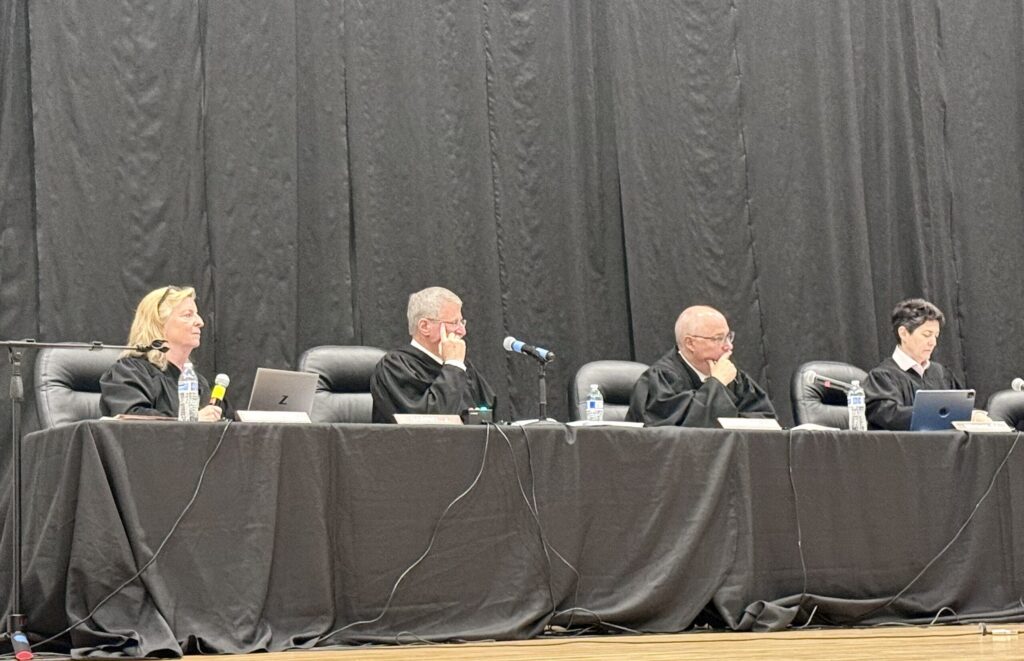
Colorado justices to hear appeal in Kendrick Castillo death lawsuit, ‘fugitive’ rule
Michael Karlik
michael.karlik@coloradopolitics.com
Updated 1 hour ago
The Colorado Supreme Court announced on Tuesday that it will decide whether it was proper to dismiss a lawsuit over the 2019 shooting death of Kendrick Castillo after the defendants paid the maximum amount of damages available to Castillo’s parents,...

Two more wolves killed by Colorado wildlife staff
Marianne Goodland
marianne.goodland@coloradopolitics.com
Updated 2 hours ago
Two yearling wolves from the Copper Creek and Three Creeks packs in Pitkin and Rio Blanco counties, respectively, were killed by Colorado Parks and Wildlife staff on Monday. That brings to 19 the number of wolves that have died under...

U.S. Rep. Lauren Boebert calls Trump’s 90-day wolf-delisting review ‘real progress’
Marianne Goodland
marianne.goodland@coloradopolitics.com
Updated 26 minutes ago
President Donald Trump has directed Interior Secretary Doug Burgum to launch a 90-day review on whether gray wolves and Mexican wolves should be removed from Endangered Species Act protections. The order drew mixed reactions for Colorado’s wolf-reintroduction effort, with ranchers...

Arapahoe County judge’s frustration with defense lawyer not grounds for new trial
Michael Karlik
michael.karlik@coloradopolitics.com
Updated 3 hours ago
Colorado’s second-highest court decided last week that an Arapahoe County judge’s repeated rebukes of a defense attorney and orders to “be quiet” did not rise to the level of bias or a violation of the defendant’s due process rights. A...

Divided appeals court upholds vehicle theft conviction despite unclear origin of car’s value
Michael Karlik
michael.karlik@coloradopolitics.com
Updated 3 hours ago
Colorado’s second-highest court upheld a defendant’s conviction for aggravated motor vehicle theft last week, even though it was unclear how the Thorton Police Department estimated the value of the stolen car. Officer Marc Faivre encountered Ashley Shelee Gibbens-Martinez in a...
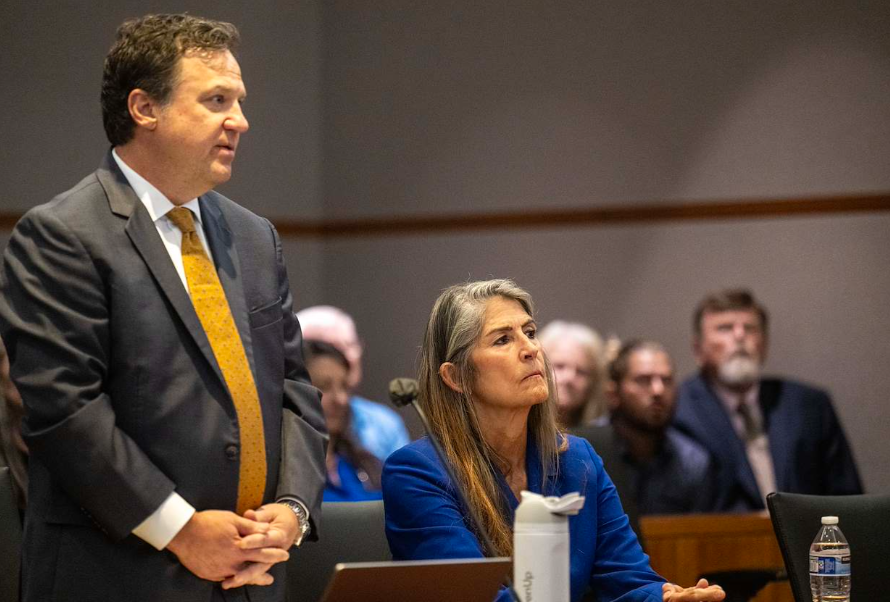
Disgraced ex-CBI analyst Missy Woods sentenced to prison in DNA scandal
Jenny Deam
jenny.deam@gazette.com
Updated 3 hours ago
A Jefferson County district court judge on Tuesday sentenced a disgraced former Colorado Bureau of Investigation DNA analyst to a decade in prison for altering and deleting data in scores of criminal cases over several years. Jefferson County District Judge...
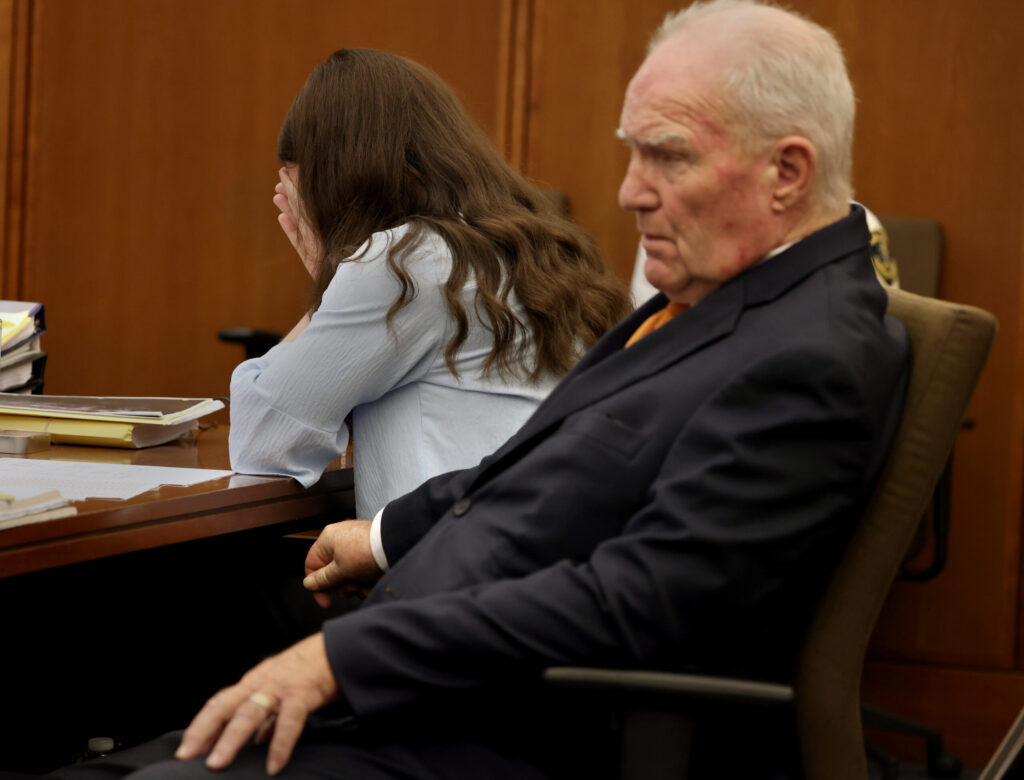
Lindsay Clancy’s attorney makes plea for pardon from Trump
Emily Hallas
emily-hallas@coloradopolitics.com
Updated 9 hours ago
Lindsay Clancy’s attorney urged President Donald Trump on Tuesday to give her a pardon before her murder case could head for another trial. Clancy is a Massachusetts woman who admitted to strangling her three young children in 2023 but argued...

Russia launches massive, deadly, and ‘complex’ attack against Ukraine
Washington Examiner Staff
washington-examiner-staff@coloradopolitics.com
Updated 9 hours ago
Fighting between Ukraine and Russia commenced after a 72-hour pause for diplomatic visits to both countries by U.S. officials. Russia launched a massive attack on Ukraine on Tuesday, firing dozens of cruise missiles and over 140 drones as the war...

Jason Crow endorses Democrats up and down Colorado’s ballot, chips in $100K for campaign efforts
Ernest Luning
ernest.luning@coloradopolitics.com
Updated 2 hours ago
Democratic U.S. Rep. Jason Crow on Tuesday formally endorsed more than 60 Democrats running up and down Colorado’s ballot and said he’s putting $100,000 into statewide and county campaigns and organizing programs to drive turnout in the fall election. Crow,...

FBI sets $25,000 minimum reward for dozens of unsolved Indian Country cases | OUT WEST ROUNDUP
The Associated Press
the-associated-press@coloradopolitics.com
Updated 11 hours ago
SOUTH DAKOTA Indian Country rewards set SIOUX FALLS — The Federal Bureau of Investigation has established a minimum reward of $25,000 in cases where people went missing or were killed in Indian Country, part of a broader effort to address...
PREV
PREVIOUS

Mayor, lawmakers react to immigration injunction
On the morning after a federal judge in Texas stalled President Barack Obama’s executive orders to defer deportation of some undocumented immigrants, Denver Mayor Michael Hancock and representatives of groups that support the policy change gathered in Denver to urge immigrants to stay calm and carry on. “I want to encourage all of the immigrants […]
After midterm autopsy, Colorado and national Democrats scramble to realign message
When Sen. Cory Gardner unseated Democratic incumbent Mark Udall in the 2014 midterm elections, he was the first challenger to boot a sitting Colorado U.S. senator out of office since 1978. The highly competitive race topped priority lists on both sides of the aisle. But on election night, only the Republican camp celebrated. Not only […]