

YIMBY Denver group forms to counter NIMBYs
A small, fledgling, informal group of Denver residents wants to “bring the voice of yes” to the city as it considers how to address growth-related issues like affordable housing, transportation and parking, according to the group’s “unofficial leader.”
Part of a small but growing nationwide movement called Yes In My Backyard, YIMBY Denver formed after a Boulder gathering last summer, said Ian Harwick, a Denver resident since 2000 who has lived in Colorado since he was six months old.
“Some of my cohorts came back all jazzed up and we decided it was the right time to bring the voice of yes to Denver,” he told The Colorado Statesman in an interview. “We felt it was time to move the conversation forward.”
The YIMBY 2016 conference, coordinated by the advocacy group Better Boulder, featured movement supporters from across the lower 48 states, Alaska and Canada. An article on the Next City website described the gathering as “a pep rally, brainstorming session and call to arms, all with the goal of making cities more affordable, equitable and even greener.”
“The YIMBY movement seeks to turn the public outreach process on its head,” the article continued. “Whereas homeowners’ groups and other vested interests often dominate comments at public hearings, YIMBYs seek to testify on behalf of what they consider the silent majority that will benefit from more development and, particularly, more housing in urban areas.”
So far, around 14 people have been involved in regular YIMBY Denver meetings, although the group has not yet decided if or how to formally organize as a nonprofit or political committee, Harwick said. Between 50 to 60 people attended YIMBY Denver’s first formal gathering about a month ago, he added.
The group’s goal is to counter the NIMBY, or Not in My Backyard, attitude seen in parts of the city where housing projects that would affect street parking or locating a shelter for the homeless were met by opposition from nearby residents.
Recently, the group was involved in Denver City Council’s consideration of changes to the city’s small lot parking exemption in the zoning code, Harwick noted.
“We didn’t want to see any changes to the code,” he said. “We want to see more housing, not more parking.”
Not for runaway growth
While the acronym might seem to say the group wants all-out development in Denver, Harwick said they do not favor a “build, build, build” approach.
“People are moving here at an insane rate already, so we need to give them a place to live and be safe and that means including things like mobility and alternative transportation,” he said. “If people are moving here anyway, we need to make sure they can do so affordably.”
The Next City article also noted YIMBYism doesn’t necessarily mean supporters favor indiscriminate building.
“Many sessions in Boulder explored nuances of social justice, environmental responsibility, property rights, coalition building, and the delicate challenge of advocating for development without coming off as shills for for-profit developers,” the article stated.
Since YIMBY Denver is a small group, operating costs are funded out-of-pocket by involved members, Harwick said, and social media is the main communication method to generate support and involvement. Around 100 people have “liked” the group’s Facebook page and an already-established Denver Urbanist Meet Up group has another 350 people YIMBY Denver keeps informed about activities and issues.
Harwick said each YIMBY group operates autonomously. A web site that promotes the movement lists YIMBY groups in 13 other cities across the U.S, Canada and Australia.
“When we were coming up with our motto or mission statement, we looked at what other YIMBY groups were doing, but every city is built differently, they also have different environments, with different mayors and city councils, so we took that into account in defining our approach,” he said.
The YIMBY Denver web site describes some of the group’s stances and goals to try to steer Denver’s growth and services: Residential development of all sizes and character; prioritizing pedestrians, bicyclists, and transit riders over cars to help create safe and functional streets; encourage new homes and businesses to locate in all of Denver’s core neighborhoods; reform land use policies that make it more expensive or burdensome to build new, compact housing in existing neighborhoods.
“Growth within Denver’s established neighborhoods allows our existing infrastructure (e.g. transportation, water and educational and municipal services) to be shared more efficiently,” the site stated. “… Densifying existing Denver neighborhoods is the only way that the city can grow sustainably in the future.”
The group also supports mixed-use development (homes, businesses and community services); mixed-income, diverse neighborhoods; and non-traditional housing arrangements, such as co-ops and community land trusts.
“So when there’s a City Council or neighborhood meeting where these issues are discussed, we want to be there to say we want the best for Denver now, but also for 5, 10, or 15 years down the line,” Harwick said.
In the near future, YIMBY Denver planned to keep an eye on how the city’s next general obligation bond program comes together ahead of this fall’s municipal election. Denver voters are expected to be asked to approve a range of projects in that bond issue that could total more than $500 million.
“The city talks a lot about things like mobility options, but until we see something happen, we’re going to keep pushing,” Harwick added.

Nebraska to be 1st state to implement Trump’s new Medicaid work requirements | OUT WEST ROUNDUP
Ernest Luning
ernest.luning@coloradopolitics.com
Updated 4 days ago
NEBRASKA Medicaid work requirements set Nebraska will become the first state to implement new work requirements for some people with Medicaid health insurance under a law President Donald Trump signed last summer. Gov. Jim Pillen, a Republican, announced on Dec....

Frozen funds, vetoes and lawsuits: Why Colorado says it’s in Trump’s crosshairs
Thelma Grimes
thelma.grimes@coloradopolitics.com
Updated 21 hours ago
Colorado Democrats have accused President Donald Trump of deliberately targeting their state, arguing his administration is using federal powers to punish it for its policies and resistance. But whether Colorado is being singled out — and why — depends largely...

Colorado ‘un santuario’ for drug activity, DEA chief says
The Denver Gazette
the-denver-gazette@coloradopolitics.com
Updated 22 hours ago
Colorado’s “sanctuary” laws, notably its prohibition against cooperating with federal authorities, are having a “chilling effect” on law enforcement’s ability to go after drug cartels operating in the state, an official of the U.S. Drug Enforcement Agency said. That situation...

Vince Bzdek: Coloradans are fed up with the high price of cars
Vince Bzdek
vince.bzdek@gazette.com
Updated 24 hours ago
Car buyers in Colorado – and America – are fed up. Cars are too damn expensive. The average price of a new car broke the $50,000 barrier last fall, according to Kelley Blue Book stats. The Wall Street Journal recently...
Unsolicited advice to both Republicans and Democrats | SONDERMANN
Eric Sondermann
eric-sondermann@coloradopolitics.com
Updated 4 days ago
This even-numbered year will be one of political turnover in Colorado with the governor’s chair opening up, along with the other state executive offices (attorney general, state treasurer, and secretary of state), all due to term limits. A U.S. Senate...

New Jersey signs legislation banning cellphones in schools
Molly Parks, Washington Examiner
molly.parks.washington.examiner@gazetteedit.wpenginepowered.com
Updated 2 days ago
K-12 students in New Jersey will no longer be allowed to use their cellphones in school starting in the fall of 2026. Gov. Phil Murphy (D-NJ) signed a bill into law on Thursday establishing “phone-free” schools in the Garden State....
Gov. Jared Polis ‘frustrated, surprised’ at efforts to revive vetoed union bill
Marissa Ventrelli
marissa.ventrelli@coloradopolitics.com
Updated 2 days ago
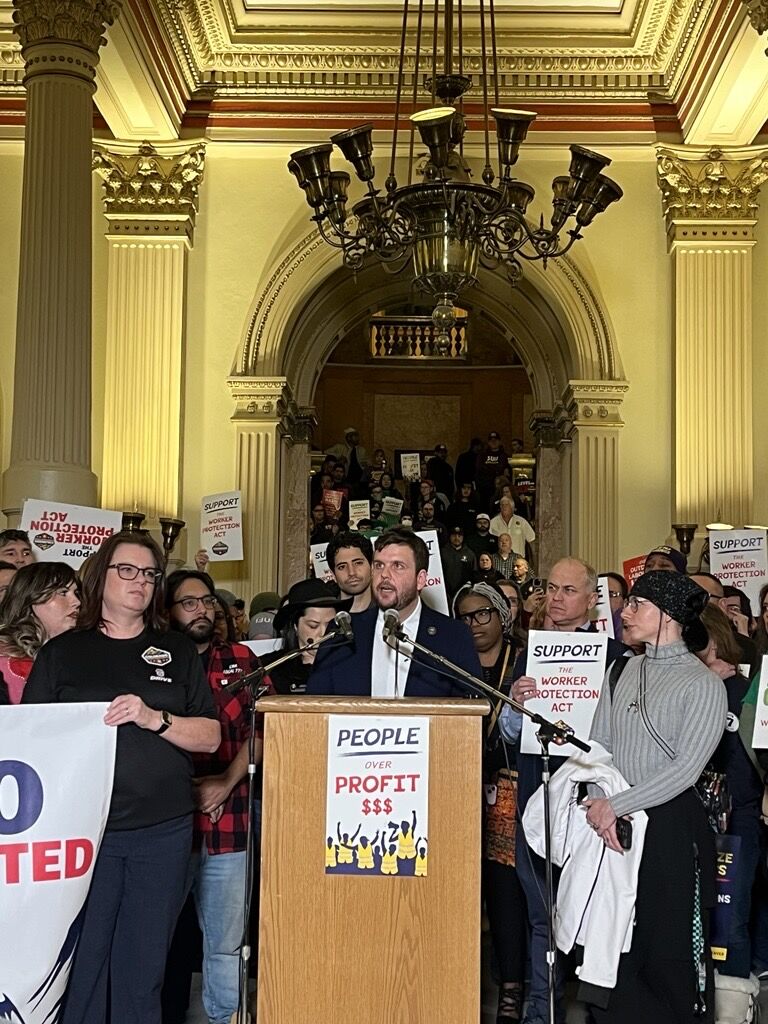
Gov. Jared Polis was surprised that Democratic lawmakers and labor groups are seeking to revive a union-backed legislation less than a year after he vetoed the bill due to concerns about its impact on businesses and mandatory dues. Elected officials...

Red Carpet Reception proves new home’s a winner for Coors Western Art Exhibit & Sale | NONPROFIT REGISTER
Joanne Davidson Special to Colorado Politics
joanne-davidson-special-to-colorado-politics@coloradopolitics.com
Updated 2 days ago
NATIONAL WESTERN STOCK SHOW News: It wasn’t just the art that people were talking about at Thursday night’s Red Carpet Reception for the 34th Coors Western Art Exhibit & Sale. A good number of the 1,000-plus guests were on their first visit to the show’s spacious new location on the...
Colorado candidates switch parties, races as midterm election year looms | TRAIL MIX
Ernest Luning
ernest.luning@coloradopolitics.com
Updated 2 days ago
The final days of 2025 saw an unusually high number of Colorado candidates switch parties and races, reshaping at least a few primaries ahead of this year’s midterm elections. The state has seen its share of switchers over the years,...
Denver Auditor: Office of Social Equity and Innovation risks mismanaging or losing taxpayer money
Deborah Grigsby
deborah.smith@denvergazette.com
Updated 2 days ago
Denver’s Office of Social Equity and Innovation has yet to implement half of the 14 recommendations made by auditors in 2024, leaving the city and the Colorado Youth Detention Continuum Program at risk of misusing small-dollar funds. A follow-up report...