

Trump reduces size of 2 national monuments in Utah amid public lands revamp | OUT WEST ROUNDUP
UTAH
Trump shrinks national monuments
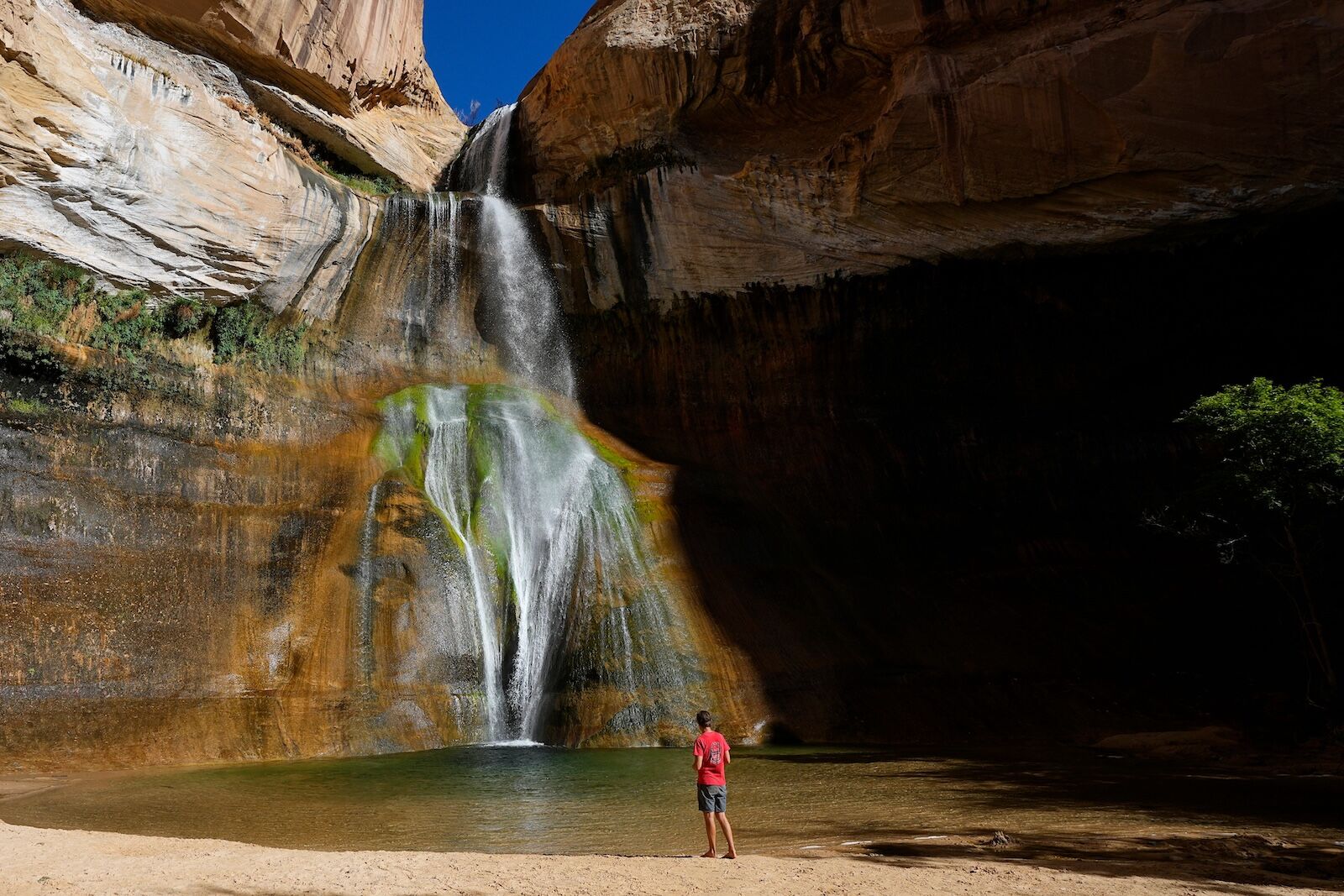
President Donald Trump on July 13 sharply reduced the size of two national monuments in Utah, undoing protections established by his Democratic predecessors on public lands that are sacred among many Native Americans.
Bears Ears and Grand Staircase-Escalante national monuments in southern Utah have ancient cliff dwellings, petroglyphs and scenic canyons, as well as coal and uranium deposits that state officials want made available for development.
Trump, a Republican, issued proclamations under the Antiquities Act to reduce their size by about 90% each. He took similar actions during his first term, but those were reversed by President Joe Biden, a Democrat.
The latest move comes as Trump and other Republicans have drastically reshaped the management of vast taxpayer-owned lands concentrated in Western states. Trump administration officials and congressional Republicans have sought to expand drilling, mining and logging on public lands, while removing protections for imperiled species and rolling back rules for conservation.
Davina Smith-Idjesa, a citizen of the Navajo Nation and co-chair of the Bears Ears Inter-Tribal Coalition, said tribal leaders had braced for a reduction since Trump was elected to a second term. She said it was “heartbreaking” and accused federal officials of sidestepping their legal responsibility to consult with tribal nations that would be impacted.
Utah officials had long fought against the monument designations and argued that the state should be in charge of controlling its own lands. Trump in his first term reduced their size, calling their creation a “massive land grab.” Combined they spanned more than 3.2 million acres, an area nearly the size of Connecticut.
Trump reduced them on July 13 to less than 303,000 acres combined.
“This is a big day for Utah,” Utah Gov. Spencer Cox said as he stood next to Trump at the White House. “These monument designations are supposed to be the smallest area as possible to protect the antiquities.”
ARIZONA
Wildlife protection rolled back
PHOENIX — The Trump administration finalized a rule on July 10 that changes how agencies enforce the Endangered Species Act and eliminates a key protection for imperiled wildlife against logging, oil drilling and other activities.
The administration narrowed the definition of “harm” under the landmark law — a change with broad implications.
For decades, the government defined harm broadly to include encroachments on places with threatened and endangered animals. The change announced July 10 would allow oil and gas drilling, mining, logging and other development on critical wildlife habitats so long as the animals themselves aren’t killed or injured.
Environmentalists warned the move could cause some species to go extinct by opening the door to habitat destruction. Industry representatives and their Republican allies have long argued the landmark 1973 environmental law is wielded too broadly, to the detriment of economic growth.
Administration officials said they were returning the law to its original intent, following a 2024 Supreme Court decision that limited the authority of federal agencies to interpret environmental statutes passed by Congress. They described the government’s prior definition of harm as an intrusion on private property rights.
The Endangered Species Act is credited with bringing back iconic animals — including the bald eagle, American alligator and California condor — from the brink of extinction.
Republicans rolled back several provisions of the law in Trump’s first term, only to have those moves reversed under Democratic President Joe Biden.
KANSAS
Pipeline operator faces hefty fine
TOPEKA — A proposed legal settlement with the U.S. government would require the Keystone Pipeline system’s operator to pay a $26.9 million civil penalty over a major oil spill in Kansas in December 2022 and spend about $40 million more to prevent future accidents.
The agreement would resolve allegations from the U.S. Environmental Protection Agency and Kansas that South Bow, based in Canada, violated U.S. and state clean water laws. The rupture dumped nearly 13,000 barrels of heavy crude oil into a creek running through a rural pasture in Washington County, Kansas, about 150 miles northwest of Kansas City.
The accident was the largest onshore crude pipeline spill in the U.S. in nine years and surpassed all 22 previous ones on the same pipeline system combined, according to a 2021 report from the U.S. Government Accountability Office. The total amount of oil spilled would have nearly filled an Olympic-sized swimming pool.
South Bow also would pay Kansas more than $3 million for environmental restoration projects under a proposed decree filed Friday in U.S. District Court in Kansas.
“The substantial penalty reflects the seriousness of the environmental harm,” Jeffrey Hall, the EPA’s assistant administrator for its enforcement office, said in a statement.
South Bow spokesperson Sara Hunter said in an emailed statement that the company “proactively” launched its response to the spill and has done more than 12,000 miles of pipeline inspections and 400 excavations to examine pipe and make repairs where necessary.
OKLAHOMA
Last iron lung patient dies
Martha Lillard had just turned 5 when she was diagnosed with polio and depended on an iron lung to live. She died June 26 in Oklahoma, the last U.S. polio patient who used the machine, her sister said. She was 78.
Lillard’s younger sister, Cindy McVey, who told The Associated Press doctors hadn’t expected her sister to live past 20, attributes her sister’s death to the effects of long-haul COVID-19. A death certificate lists causes as chronic pulmonary failure and post-polio syndrome, McVey said.
Lillard slept in the iron lung cylinder that encased her body as the air pressure in the chamber forced air in and out of her lungs. As a child, she went to grade school for two hours a day and was tutored the rest of the time. She attended high school by using a phone system that allowed her to interact with her teachers and classmates through an intercom in her classrooms and at one point was even able to drive.
Polio was once one of the nation’s most feared diseases, with annual outbreaks causing thousands of cases of paralysis. The disease primarily affects children.
Vaccines became available starting in 1955. In 1979, polio was declared eliminated in the U.S., meaning it was no longer routinely spread.
During the coronavirus pandemic, Lillard got COVID-19 twice. Before getting COVID-19, she had less than 25% lung capacity. The last five years of her life, she wasn’t able to leave home as it became harder to breathe. For the past two years, she was in the iron lung nearly 24 hours a day, McVey said.

Colorado Politics Calendar Sept. 7-13
Rachael Wright, Special to Colorado Politics
rachael.wright@coloradopolitics.com
Updated 5 days ago
CoPo’s weekly political calendar will help you find political and public-policy events throughout Colorado. It includes candidate and issue campaign events, public policy meetings, court hearings, state and local party conventions, assemblies, debates, rallies, parades, speaking engagements, traveling dignitary appearances,...

Blue-collar support trends highlighted GOP gains among rank‑and‑file workers | A LOOK BACK
Rachael Wright, Special to Colorado Politics
rachael.wright@coloradopolitics.com
Updated 4 days ago
Forty-five years ago this week: Kathy Oatis of the Colorado AFL-CIO’s Committee on Political Education said that organized labor had a negative image with the American voter. “I don’t think the country is against us,” said Oatis. “I think the...

The dissonance of an American Jew thinking about Israel | SONDERMANN
Eric Sondermann
eric-sondermann@coloradopolitics.com
Updated 4 days ago
The Jewish High Holidays will soon be upon us. The third anniversary of Oct. 7 will then quickly follow. Three weeks later, Israeli voters will head to the polls to elect all 120 members of its parliament, the Knesset and...

Parenting from prison: Inmates hope to be present in their children’s lives, while physically absent
Marianne Goodland
marianne.goodland@coloradopolitics.com
Updated 13 hours ago
The room was decorated with balloons, the tables sparking bright with colors as the smell of pizza and cake wafted through the air. As did music. This was, after all, a father-daughter dance. Except this was not a typical father-daughter...

Colorado House ethics committee issues ‘stern letter’ to Democrat over caucus funds mismanagement
Marianne Goodland
marianne.goodland@coloradopolitics.com
Updated 18 hours ago
The Colorado House ethics committee on Friday voted unanimously to issue a “stern letter” to Rep. Mandy Lindsay, D-Aurora, regarding her mismanagement of House Democratic caucus funds. The committee further voted to request that Lindsay resign as Democratic Caucus co-chair...
Appeals court confirms Colorado judges can compel electronic records from out of state
Michael Karlik
michael.karlik@coloradopolitics.com
Updated 17 hours ago
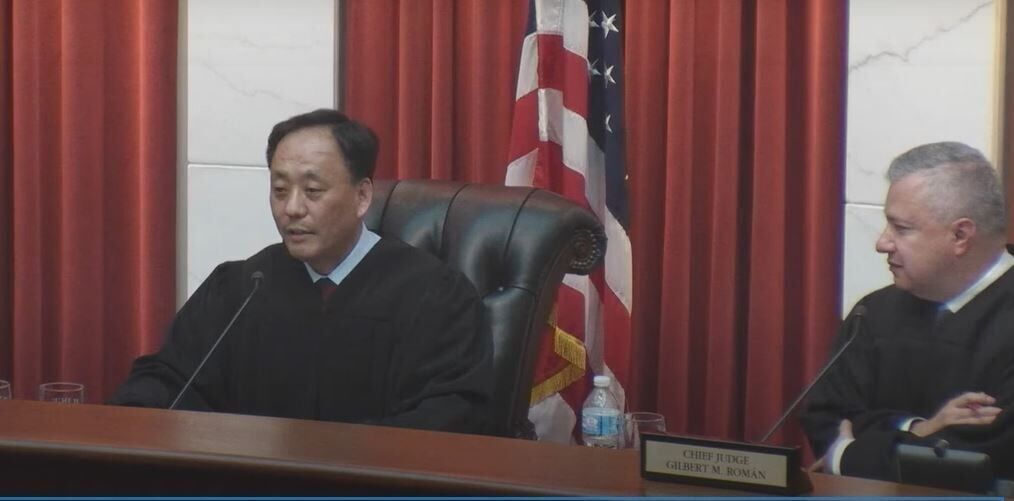
Colorado’s second-highest court clarified on Thursday that judges are empowered to compel out-of-state companies to produce electronic records under state law. El Paso County jurors convicted Mischa Jargowsky on three counts of money laundering and one violation of Colorado’s organized...

Federal judge extends block on Trump executive order seeking to limit mail voting in the midterms
The Associated Press
the-associated-press@coloradopolitics.com
Updated 3 days ago
A federal judge on Friday extended her prohibition against the U.S. Postal Service implementing President Donald Trump’s executive order seeking to limit mail voting during the midterms, putting another major obstacle in the way of the administration as the first...
Mullin asks DOJ to review voter data sharing tied to Zuckerberg-funded nonprofit group
The Washington Examiner
the-washington-examiner@coloradopolitics.com
Updated 16 hours ago
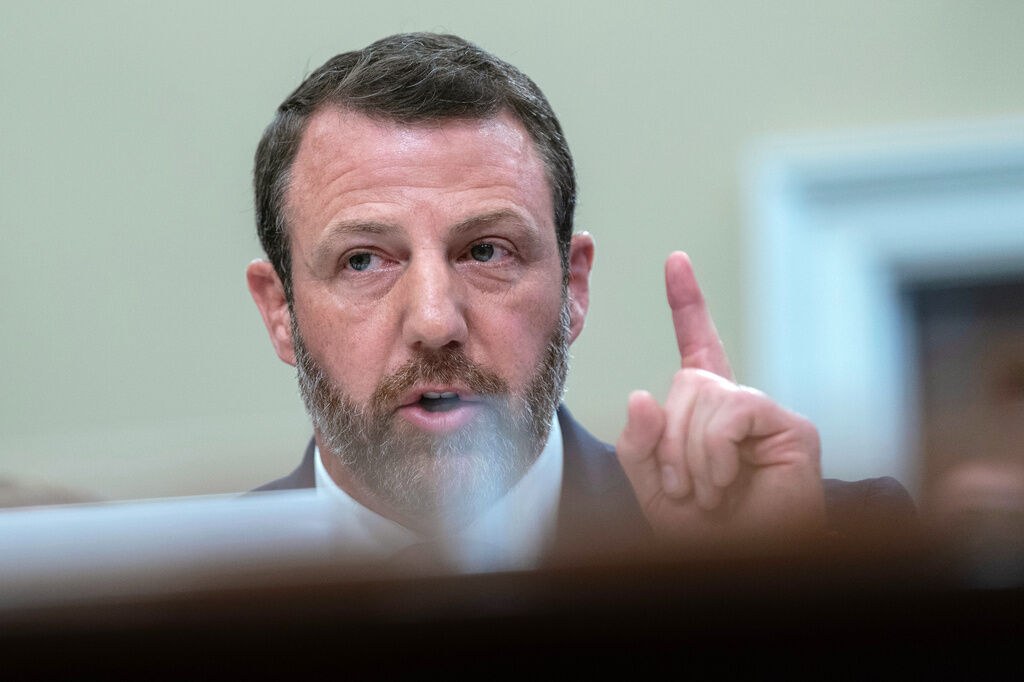
Washington Examiner Homeland Security Secretary Markwayne Mullin asked the Justice Department this week to review whether election-related nonprofit groups, some with multimillion-dollar backing from a Mark Zuckerberg-linked nonprofit, improperly received sensitive state motor vehicle and voter-registration data. In a letter...
Colorado secures FEMA support for wildfire, flooding and mudslide recovery
Marissa Ventrelli
marissa.ventrelli@coloradopolitics.com
Updated 1 day ago
Federal authorities on Friday approved Colorado’s request for federal public assistance to help communities devastated by the Aspen Acres and Gold Mountain Fires. The Federal Emergency Management Agency did not announce how much the state would receive but confirmed that...

State seeks $50K penalty against GOP candidate Victor Marx over alleged campaign finance violations
Deborah Grigsby
deborah.smith@denvergazette.com
Updated 2 days ago
Republican gubernatorial candidate Victor Marx is looking at more than $50,000 in fines in what the Elections Division of the Office of the Secretary of State calls “unprecedented” campaign finance violations. The state has not imposed that fine yet, and...
PREV
PREVIOUS

Big swap at Fort Carson: Abrams tanks and Bradley Fighting Vehicles for Strykers
The armored fleet at Fort Carson will be departing this fall, as the 4th Infantry Division swaps tanks for brand new Strykers. The change will mark a shift in identity for Fort Carson, which will house only Stryker brigades going forward as 3rd Armored Brigade gives up its tanks and Bradley Fighting Vehicles for the […]

What to know before Colorado’s new law on semiautomatic firearms goes into effect
A Colorado law passed in 2025 established new requirements for individuals planning to purchase semiautomatic weapons. Here’s what residents should know before Senate Bill 003 goes into effect on Aug. 1. From a ban to a training course For decades, advocates have been pushing for a ban on semiautomatic weapons with detachable magazines, which they […]