

Q&A: From grassroots underdog to national spotlight — Colorado Democratic socialist Melat Kiros on her path to Congress
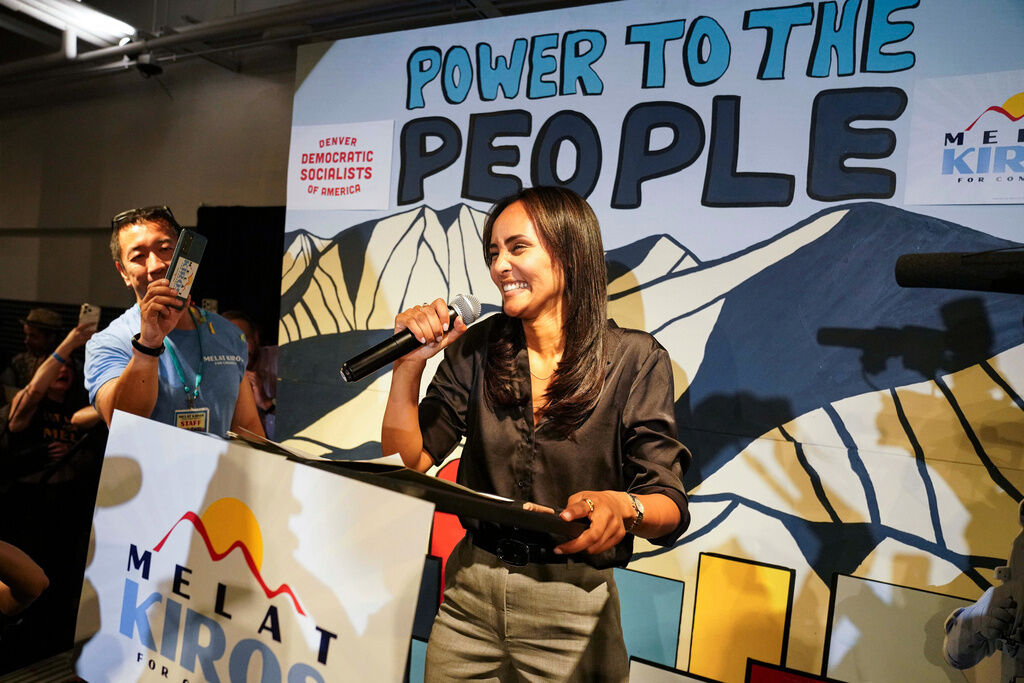
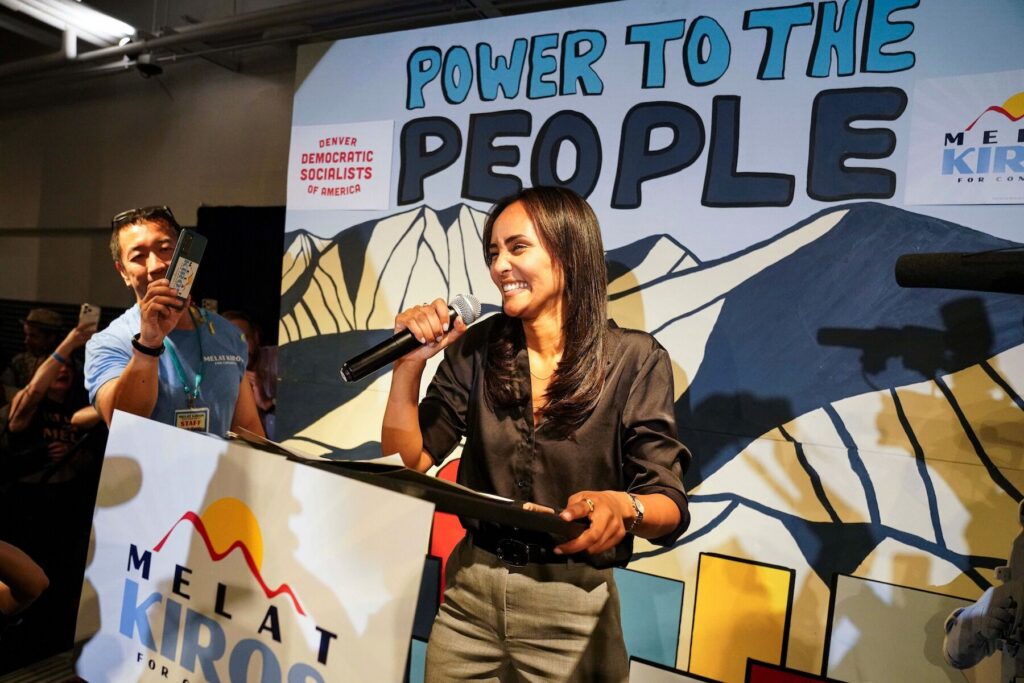





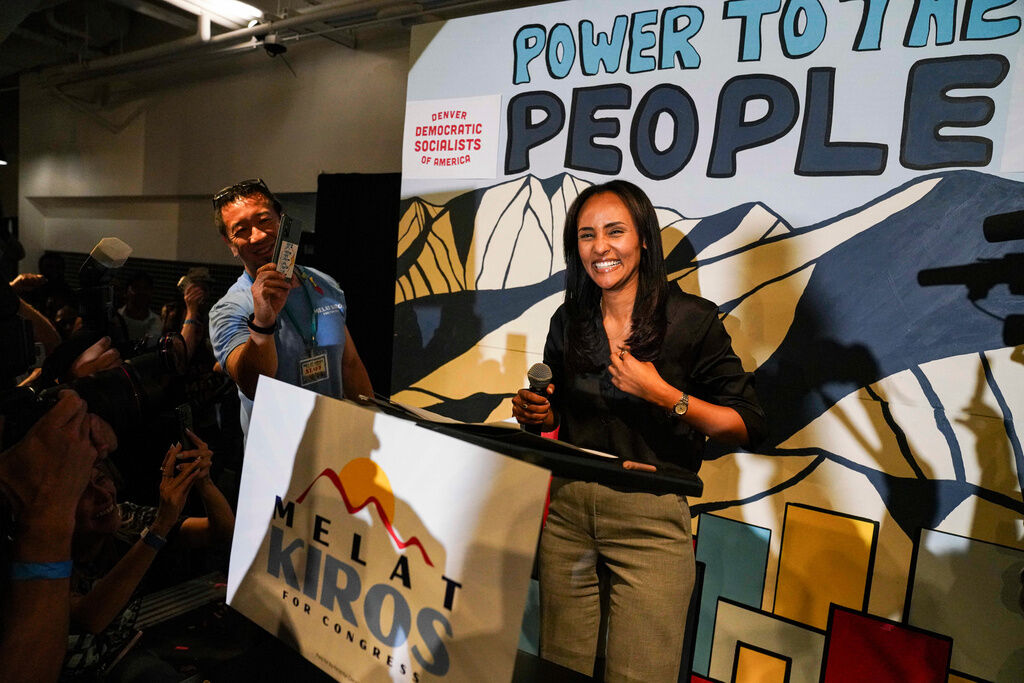


Melat Kiros, the 29-year-old Democratic Socialist who unseated a 15-term incumbent in Colorado’s 1st Congressional District primary on June 30, frames her victory as a mandate for structural political reform rather than a rejection of her predecessor, Diana DeGette. In this extensive Q&A with Colorado Politics, Kiros outlines a campaign rooted in confronting corruption, rejecting corporate PAC money and restoring voter agency in a political system she argues has become unresponsive to working families.
Editor’s Note: Answers were edited only for grammar and clarity.
Colorado Politics: First of all, talk to me about this. You decide to take on a 15-term congresswoman who is progressive and aligns with some of your Democratic beliefs. You’re 29, you take her on and then you win. How has that felt for you as you’re soaking it in over the last week?
Melat Kiros: You know, it has felt incredibly humbling, but also incredibly — what’s the word I’m looking for here? You know, I didn’t run against the congresswoman because I thought she was single-handedly responsible for the failure of us getting this legislation passed. I ran against the corporate finance system that incentivized members like the congresswoman to take money from a lot of these corporations and special interests. The whole point of the campaign was to make the case that our fight has to be with this kind of campaign finance system and with anybody who isn’t willing to do away with those donations and that kind of money — anybody who doesn’t understand the impact and the influence it has on our legislative agenda — in order for us to do the extremely important and urgent work of passing things like Medicare for All and universal child care.
It’s one thing to agree that we need those things; it’s another thing to understand why we don’t have them yet, and what we need to do differently in order to get it done. Being able to make that case over the last year has been a massive project that took thousands of volunteers to carry that message across the city, because we didn’t have the money to carry it over the airwaves. I couldn’t have imagined that we would be here today if you’d asked me a year ago, and a year ago was basically when we launched this campaign — July 9. So it’s been humbling, and it’s also been really validating to know that the people are on the same page and want to see a new strategy for how we can get these things done. We already agree on wanting these policies; it’s just a matter of, “OK, whatever we’ve been doing isn’t working and something has to give.”
CP: Voters across the country are angry, and strategists say that anger is driving support for candidates who promise change. Do you think some of that voter frustration with the status quo played a role in your primary victory?
Kiros: Absolutely, I do and it’s one that I wanted to be really responsible with. I made it abundantly clear that I wasn’t running just for the sake of change. It doesn’t actually matter if we just get a different person in there who has maybe a little bit more drive and urgency if they don’t actually have the strategy that will meaningfully help us get this agenda down the road.
Specifically drawing that line back to corruption in government is one that has been extremely salient for voters for a long time now, and neither party has made any meaningful progress in addressing the corruption. I think we were able to tie that frustration and actually direct it into a meaningful organizing directive around getting rid of the money in our politics. Being able to explain why that stagnation exists because of that corruption was really important to me, because the stakes are incredibly high. We can’t be reckless with change for the sake of it. We have to have a plan, a strategy, a vision — and I think that was something we did really well in this campaign.
CP: Your primary win has drawn national attention and renewed focus on democratic socialism. How do you see your role in this moment, and what drives your support for it?
Kiros: Yeah, I think what we — well, I’ll be honest, I’ve seen my name everywhere last week. It’s definitely been jarring on a personal level, for sure. The ground moved beneath me really quickly. Obviously there are immediate reasons for the attention: a 30-year incumbency, I’m 29 years old, I’m a Democratic socialist — all those things.
But what I really hope we can utilize this attention for is to show that we’ve proven that corporate PAC money is not only one of the greatest obstacles we face in addressing our agenda, it’s also an inhibitor in doing politics the way we envision as a party: grassroots, people-powered, reminding voters of the agency they have. Being outspent somewhere between three-to-one and four-to-one, building one of the biggest field operations the state has ever seen and being able to combat that money so effectively that we won by 13.4 points — I think that has shattered the notion that we just have to deal with the money in our politics because “that’s how things are.”
It shattered the notion that voters don’t have agency over who represents them and what expectations they have. And frankly, it’s probably startling for the establishment, for corporate PACs and special interests who were able to buy an election like they were buying a cup of coffee. Something like 82 or 84% of members of Congress are there because they outspent their opponent. We proved there is a tangible, values-aligned way to win without that money — and win resoundingly. I hope that’s a lesson we can carry to other candidates across the country for the party I love and want to be better.
CP: As much as you had positive publicity, you also had plenty of negative publicity. A Washington Examiner piece described Democratic socialists as supporting universal health care, reduced policing across all areas, abolishing U.S. Immigration and Customs Enforcement and creating major constitutional changes. How do you respond to that characterization, and where do you stand on it?
Kiros: Well, first and foremost, my policies have always been rooted in the fundamental belief that we have to meet people’s basic needs. That is not only the morally correct thing to do; it is also the efficient, effective and economical thing to do. It is more expensive for us to run our health care system the way we do right now. It’s more expensive to run our housing program the way we do right now. When you have a basic need where there will always be demand, the profit motive inevitably ends up exploiting working people.
This comes from my own research and work: The way we’ve organized our economy is not sustainable, and when it comes to basic needs, there has to be reform.
As for constitutional amendments, I find it interesting that they’re categorized as extreme when that was always envisioned for our country. Our Constitution was supposed to evolve with the times. What we’ve found is that corporate and billionaire interests have managed to run our elections in a way that gives them a very aligned minority that prevents constitutional amendments from ever happening, despite overwhelming popular support. Reversing Citizens United has enjoyed 90% approval for years, yet there is no path to amend it.
There are a lot of interests making a lot of money off the status quo, but it’s not sustainable and it’s not what the people want. Folks engaging in extremist rhetoric — especially in races where people are winning by margins like ours — are really only condemning the voters. And voters see clearly who is fighting for them and who isn’t.
CP: The president has labeled candidates like you as communists and says you’re dividing not only the Democratic Party but the nation. Are you?
Kiros: No, not at all. These are policies that are popular with the people. These are policies that would deliver meaningful relief to working families. I reject any characterization suggesting that what we’re fighting for is anything less than common sense.
Ultimately, the way we talk about these policies is part of the democratic process. At the end of the day, I think we all want health care to be more affordable — Republicans included. We all want housing to be affordable. We all want wages that reflect what we’ve earned. How we do that — the mechanics — that’s what the democratic process is for.
We have a big party and a representative democracy for a reason. This is where debates, negotiations and compromises happen. But voters are tired of hearing from commentators, consultants and frankly the president about why they’re wrong for voting for people who talk about the things they care about.
This movement is by and for working people. Trump ought to be more careful about how he talks about it, because the same people frustrated with our party are frustrated with him and his administration. I think we’re going to see a lot of unity along working-class lines when we start fighting for these policies.
CP: Critics paint you as extreme and far-left at a time when Americans say they want moderate, middle-ground leadership. They argue your ideology contributes to polarization and won’t lead to progress. What do you say?
Kiros: I think the polarization is a result of the lack of progress. Democrats have to recognize that we haven’t delivered for working families since Obamacare. And Obamacare was a monumental achievement — millions gained health insurance — but it was also a Band-Aid.
It was a Band-Aid when we failed to meaningfully address the 2008 economic crisis and hold people accountable. It was a Band-Aid when we barely gave people what they needed to survive during COVID and still lost millions of Americans. All of these things have compounded to show that our government has become ineffectual in protecting working families.
There’s a vacuum for someone to come along and say they have answers. Trump filled that vacuum in the Republican Party — to the detriment of everyone. There’s a vacuum now in the Democratic Party. We have a choice: reckon with the fact that what we’ve been doing isn’t working, and deliver for working families again. That’s how we reduce polarization.
Corruption and money in politics are the greatest explainers for why things feel broken and rigged. This issue already enjoys overwhelming support. Democrats would be wise to lead on it. That’s the case I’m making — to my party, to voters and not just Democrats. Corruption is most felt in the Republican Party; it’s obscene. Whoever’s asking for your vote, make sure they’re fighting for you. This is a new standard we have to set.
CP: Many middle-class families are struggling with housing, childcare, jobs, rising costs. How do your own experiences prepare you to address those challenges through policy?
Kiros: There’s always been an interesting question posed to folks who’ve been in office for decades: how in touch are you with the urgency of the affordability crisis if you’re not experiencing it yourself? There are exceptions — (Democratic U.S. Sen.) Bernie (Sanders) has been beating this drum for decades — but there is truth to the idea that the further away you are from the struggle, the harder it is to conceptualize how dire it is.
I’m 29. I’m a renter. I have student loan debt. Ironically, the personal financial disclosure forms are bracketed, so everyone uses the top number of that bracket — $250,000 — which is not how much I have in student loan debt. But that’s a very real reality for a lot of people.
The closeness to the struggle delivers a certain urgency. At the end of the day, we have to govern, legislate and be effective. If government isn’t doing that, voters have an obligation to vote people out and send others in. That’s the whole basis of this project we embarked on 250 years ago. Reminding voters of that agency and responsibility is part of the work.
CP: Serving in Congress means shaping policy for all constituents, including those who strongly disagree with you. How will you represent the full spectrum of voters, including those who identify with movements opposed to your own?
Kiros: I think the way to drive it home is that no one believes they are the villain. Everyone believes their ideology or policy platform is the best route to delivering the kind of society they want. I choose to believe most people want better for everybody — to live with dignity, peacefully, with freedom.
There will be wide gaps between what I think will deliver that world and what someone like (Republican U.S. Rep.) Lauren Boebert thinks will deliver that world. But we won’t find bridges unless we sit down and have the conversation. The solutions exist. The research exists. What’s been missing is imagination — and frankly, sitting down and thinking of new ideas.
I don’t think any of this is impossible. There’s too much evidence to the contrary — and too much money spent trying to make us believe it’s impossible. That’s evidence enough that solutions exist; they just don’t want us to find them or agree to them.
I intend to work with anybody who shares the goal of delivering prosperity for everyone and has the good faith to negotiate. I have no delusions that everyone will greet me with open arms. But the first step is cultivating relationships and building a multiparty coalition. We’re not going to drag half the country kicking and screaming toward Medicare for All. We have to build real coalitions, and I look forward to that work.
CP: Your campaign often referenced Donald Trump. With the majority of citizens electing him, he will be president for two years if you’re elected. Are there any areas in his positions or policies where you’re willing to compromise or work with the president and the Republican Congress?
Kiros: Yeah, actually, there are a couple of things. We’re not all the way there yet, but I think the President is in a starting position where we might be able to get the stock trading ban through. There will need to be more negotiations to make sure it includes him and his entire family, but I think there’s room there.
A place where we’re already in agreement is that the President has expressed interest in capping credit-card interest rates at 10%, which would make a monumental difference for working families. So there are absolutely places of compromise that seem insignificant but would make a meaningful difference. We should be pushing harder to make those things happen.
CP: I couldn’t talk to you without bringing up foreign policy. How do you explain your support for Palestinian rights in a way that shows why global solidarity and U.S. foreign policy choices matter to working people here at home?”
Kiros: First and foremost, we have to provide for the basic needs of folks here at home. It is beyond me how we can spend billions of dollars a day on wars when hundreds of thousands of Americans sleep on the streets, tens of thousands die every year because they don’t have health insurance and one in six kids are literally hungry.
Making sure our tax dollars are prioritized with the moral clarity of providing basic needs for Americans is my first priority. Then, on the global stage, we must ensure our taxpayer dollars align with our democratic values — holding allies accountable when they engage in war crimes and genocide, as the state of Israel is engaging in Palestine right now. We must be honest about the conditions that lead to violence and the role our military-industrial complex plays. They have failed every single audit since audits began.
Specifically regarding Israel and Palestine, I sincerely believe there is a path for people to deliver a government that protects basic rights and equality regardless of race, religion, ethnicity or nationality. If we’re going to have an allyship with Israel that calls itself a democracy, they have to act like it. It is not a democracy to engage in apartheid or occupation. These are researched and documented enough to be considered facts now.
And this aligns with the overwhelming opinion of voters in our party and increasingly the electorate at large. Remembering and protecting our values — and holding our friends accountable to them — is essential.
CP: I watched you on election night. You were fired up, energetic and then you slowed down and got emotional when you thanked your parents and sister. Talk about your family’s influence on what you’re doing right now.
Kiros: My parents — like so many parents, especially immigrant parents who leave everything they know behind in pursuit of a better life — carry a lot of responsibility for their kids. There’s a responsibility for immigrant kids to live up to that sacrifice. But my parents always made it clear that the fact I didn’t feel the pressure they did, and that I had the opportunity to build something dignified, was luck. That’s exactly what it is — luck.
There’s no other explanation for how my family was selected in the diversity-visa lottery. That’s all that separates me from a young woman in the northern region of Ethiopia, where I was born. They always made it clear that my only responsibility is to do exactly what I believe in — which is what my dad told me when I called him and said I was going to write a letter that would probably get me in trouble, but I thought it was the right thing to do. He said, ‘That’s all I came here for you to be able to do the right thing and do it unencumbered.’
They are who I look up to more than anyone. They are who I do this for.


Cherry Creek School District paid law firm $114K, including $40K for political consultant, over superintendent allegations
Nico Brambila
nico.brambila@denvergazette.com
Updated 20 hours ago
The Cherry Creek School District paid $114,000 to hire outside counsel to provide the Board of Education with legal advice as it navigated the allegations that were swirling around the former superintendent. Fisher Phillips invoices obtained through a Colorado Open...
DPS Superintendent Alex Marrero misses cut for Miami-Dade job
Nico Brambila
nico.brambila@denvergazette.com
Updated 21 hours ago
Denver Public Schools (DPS) Superintendent Alex Marrero did not make the short list of candidates vying for the top job with the Miami-Dade County Public School District. The Miami-Dade school board narrowed the field from 21 applicants to six semifinalists....

Aspen Acres fire damage footage released, residents seek reentry
Savannah Eller
savannah-eller@coloradopolitics.com
Updated 21 hours ago
First looks at the damage path are emerging in the Aspen Acres fire, as more than 11,000 people wait for news on when they can return. Tuesday afternoon, the Pueblo County Sheriff’s Office released a nine-minute video showing fire damage...
Independent candidate launches late campaign against Melat Kiros for CD1
Mark Samuelson Special to The Denver Gazette
mark.samuelson@denvergazette.com
Updated 20 hours ago
Democratic Socialist Melat Kiros’ surprising defeat of 15-term Congresswoman Diana DeGette may be creating a void within Denver’s voter base — and at least one latecomer is jumping into that gap, petitioning to get himself on the November ballot as...

Douglas County seeks cost estimates for nuclear feasibility study
Nicholas Fogleman
nicholas.fogleman@denvergazette.com
Updated 21 hours ago
Douglas County commissioners on Tuesday directed staff to obtain cost estimates for a feasibility study examining whether small modular nuclear reactors or microreactors could be developed in the county. The discussion came during a work session in which county staff...

‘Explosive’ diarrhea among symptoms as parasitic illness hits Colorado
Nico Brambila
nico.brambila@denvergazette.com
Updated 21 hours ago
A fecal parasite that can contaminate food and water is causing “explosive” diarrhea across more than a dozen states, including Colorado, health officials said Tuesday. Preliminary data show Colorado has recorded 90 cases of cyclosporiasis since January, Hope Shuler, a...
Gun groups sue Denver, Polis, Weiser and others over ‘assault’ weapons ban
Deborah Grigsby
deborah.smith@denvergazette.com
Updated 21 hours ago
A lawsuit filed in federal court by three Denver residents and two gun rights groups aims to strike down the city’s “assault weapon” restrictions, along with bans on ammunition magazines holding 15 rounds or more. The complaint, filed on June...

Colorado Attorney General sues HUD over changes to homeless funding
Matt Kyle
matt.kyle@denvergazette.com
Updated 2 days ago
Colorado Attorney General Phil Weiser on Tuesday joined the attorneys general of several other states to sue the federal government over an attempt to cap funding for permanent housing projects. The change would result in tens of thousands of people...

How close is Aspen Acres fire to ADX Florence Supermax prison?
Grace Brajkovich
grace.brajkovich@gazette.com
Updated 16 hours ago
As the Aspen Acres fire blazes in Pueblo and Custer counties, burning through over 90,000 acres of land, evacuation orders border the “Alcatraz of the Rockies.” The ADX Florence Supermax prison in Fremont County is considered the most secure prison...
Republican Victor Marx maintains slim lead over Barb Kirkmeyer in Colorado gubernatorial primary
Ernest Luning
ernest.luning@coloradopolitics.com
Updated 3 days ago
Republican Victor Marx held on to a narrow lead Monday over state Sen. Barb Kirkmeyer as county clerks continued to count ballots in Colorado’s gubernatorial primary. Following an update posted at 3:30 p.m. by the Colorado Secretary of State’s Office,...
PREV
PREVIOUS

Victor Marx widens lead over Barb Kirkmeyer as Colorado’s GOP gubernatorial primary nears finish line
Republican Victor Marx inched further ahead of his chief rival in the Colorado gubernatorial primary, state Sen. Barb Kirkmeyer, as county clerks reported final, unofficial vote totals Thursday morning. The winner of the June 30 primary — which has been too close to call since counting started nine days earlier — will face Democratic nominee […]
Appeals court clarifies meaning of 'at-risk' victim based on breathing disability
Colorado’s second-highest court clarified last month that victims qualify as “at-risk” under state law if they required mechanical assistance to breathe on the date of the offense against them. El Paso County prosecutors charged Jon Claude Crow with third-degree assault, which is ordinarily a misdemeanor. It becomes a felony if the assault is on an […]