

Tapped: As snowpack levels shrink, Jefferson County cities take divergent paths on water
Editor’s note: The Denver metro region sits at the center of one of the American West’s most complex and consequential water challenges. This series examines the interconnected systems that determine how the region secures, stores, and conserves its water while navigating the competing demands of fast‑growing urban communities and the increasingly unpredictable mountain snowpack that underpins the entire system.

Jefferson County’s water picture is anything but uniform.
Cities tied to Denver Water are adopting its Stage 1 drought rules, while communities with their own supplies — such as Arvada, Golden and Westminster — are turning to new treatment plants, long‑term planning and conservation programs to weather a year of low snowpack and uncertain runoff.
Below outlines the strategies adopted by several communities in the county.
Lakewood
Lakewood gets most of its water from Denver Water and therefore follows those drought restrictions. That supply is then distributed through 20 independent special districts across the city, with Consolidated Mutual Water and the Green Mountain Water and Sanitation District serving the largest number of customers.
Because Lakewood’s water ultimately comes from Denver Water, local water providers typically mirror Denver Water’s pricing structure, city spokesperson Stacie Oulton said.
The city itself does not manage the water infrastructure — those responsibilities remain with the independent districts. Oulton said that the structure dates back to before Lakewood incorporated in 1969, when roughly 90,000 residents relied on self‑formed special districts for water service.
When the city was established, it did not take over those systems.
Lakewood has assumed control of only one water and sewer district, which serves about 7,000 people.
Oulton said the drought is not expected to significantly affect rates for the small number of residents served directly by the city, though the full impact remains uncertain.
Lakewood declared a Stage 1 drought on March 27, adopting the same restrictions implemented by Denver Water.
Arvada
Arvada occupies a unique position in Jefferson County, relying on a blended water supply that makes its system more diversified than most communities.
Under a long‑standing contract, 75% of the city’s water comes from Denver Water’s North System, while the remaining 25% comes from Arvada’s own water rights in the Clear Creek and Ralston Creek basins, which feed the Ralston and Arvada reservoirs.
In February, the Arvada Reservoir held about 5,000 acre‑feet of water, slightly below the typical 5,500 acre‑feet for that time of year. The lowest February level since 2006 was just under 4,500 acre‑feet in 2013.
Denver Water provides only the raw water, while Arvada handles treatment and sends used water to Metro Water Recovery for recycling, according to Katie Patterson, the city’s infrastructure communications manager.
Although Arvada is following Denver Water’s Stage 1 drought restrictions, Patterson said the city remains in a “really good position.”
She added that Arvada conducts ongoing water‑supply modeling to determine when conservation measures are needed, under the guidance of a dedicated water‑supply administrator.
Patterson noted that conservation still requires a community‑wide effort. To support residents, the city offers outdoor‑water programs such as low‑water garden boxes and lawn‑replacement incentives through its partnership with Resource Central.
Infrastructure planning is also a major focus. Much of Arvada’s system was built between the 1960s and 1980s, and the city is preparing for significant upgrades. In 2025, Arvada purchased land for a new $315 million water treatment plant to replace the aging Ralston Water Treatment Plant. The new facility is expected to be completed in 2030.
Wheat Ridge
Wheat Ridge receives most of its drinking water from Denver Water, which completed the Ashland Reservoir renovation project in 2018 at a cost of $34 million. The project added two 10‑million‑gallon treated‑water storage tanks supplied by the Moffat Treatment Plant in Lakewood.
The Wheat Ridge Water District serves areas east of Independence Court, as well as Mountain View, Lakeside, and neighborhoods south of I‑70 between Carr and Garrison. This district also relies on Denver Water for its supply.
To support long‑term system upgrades, the district implemented a $5.51 service‑charge increase on Feb. 1. The additional revenue will help replace aging cast‑iron water mains with modern ductile‑iron and PVC lines — an effort expected to cover about 20 miles of pipe over the next 30 to 40 years.
Because Wheat Ridge depends on Denver Water, the city is also under a Stage 1 drought declaration.
Sage Kelley wrote this article while he was on staff of The Denver Gazette
Read more from the Tapped series here:
Tapped: As fire risk climbs, Colorado faces threat to drinking water
Tapped: Denver residents face hotter, costlier summer under new drought rules
Tapped: Is water a problem for data centers in Colorado?
Tapped: Aurora cracks down on water use as reservoirs fall, runoff shrinks
Tapped: Douglas County looks to diversify water supply as population grows
Tapped: Colorado River overallocation collides with record drought conditions
Tapped: Golden tightens water rules as Clear Creek snowpack falters
Tapped: As snowpack levels shrink, Jefferson County cities take divergent paths on water
Tapped: Colorado River overallocation collides with record drought conditions
Tapped: Parker makes strides toward renewable supply


Counties warn CPW that new comment limits sideline local governments
Marianne Goodland
marianne.goodland@coloradopolitics.com
Updated 26 minutes ago
The September meeting of the Colorado Parks and Wildlife Commission will feature newly revised public‑comment rules — changes introduced by chair Jay Tutchton of Bent County, who announced them without first discussing the revisions publicly with the rest of the...

Controversial two-bag furbearer limit heads to CPW meeting under legal threat
Marianne Goodland
marianne.goodland@coloradopolitics.com
Updated 5 minutes ago
Next week’s Colorado Parks and Wildlife Commission meeting in La Junta is likely to open under the cloud of threatened legal action. Safari Club International and the Sportsmen’s Alliance Foundation warned the commission this month that its July vote imposing...

Golden to pay $155,000 to fired city manager
Matt Kyle
matt.kyle@denvergazette.com
Updated 1 hour ago
The Golden City Council on Tuesday approved a roughly $155,000 severance payout to former city manager Scott Vargo, who was fired earlier this month following a “racist incident” at a city fire station. The payout is part of a separation...

USPS ballot rule faces lawsuit from Colorado, other states
Thelma Grimes
thelma.grimes@coloradopolitics.com
Updated 3 hours ago
Colorado, along with 25 other states, filed a lawsuit against the U.S. Postal Service to challenge a new rule that seeks to restrict the mailing of ballots to American citizens in an eligible voters list. Colorado relies heavily on the...

This is how much Colorado will receive from massive Meta child safety settlement
Thelma Grimes
thelma.grimes@coloradopolitics.com
Updated 7 minutes ago
As part of a sweeping multistate agreement, Meta Platforms, Inc. — the parent company of Facebook and Instagram — has agreed to pay more than $17 billion and adopt extensive child-safety changes to its operations. Colorado Attorney General Phil Weiser...

Douglas County Schools puts $54M mill levy override on November ballot
Nicholas Fogleman
nicholas.fogleman@denvergazette.com
Updated 8 minutes ago
The Douglas County School District board unanimously approved a resolution Tuesday to place a $54 million mill levy override on the November ballot, sending the funding request to voters after months of discussion about the district’s financial challenges. The proposed...
Drones rejoin Aspen Acres fire response amid stable containment entering 9th week
Cleo Westin
cleo-westin@coloradopolitics.com
Updated 1 hour ago
Unmanned aircraft systems have begun roaming areas of rough terrain where the 77% contained Aspen Acres fire continues to burn to aid firefighters, incident command announced on Monday and Tuesday. Wyoming Type 3 Incident Management Team 7 requested their help...
Buc-ee’s and El Paso County: What to know ahead of the public hearing
Savannah Eller
savannah-eller@coloradopolitics.com
Updated 1 hour ago
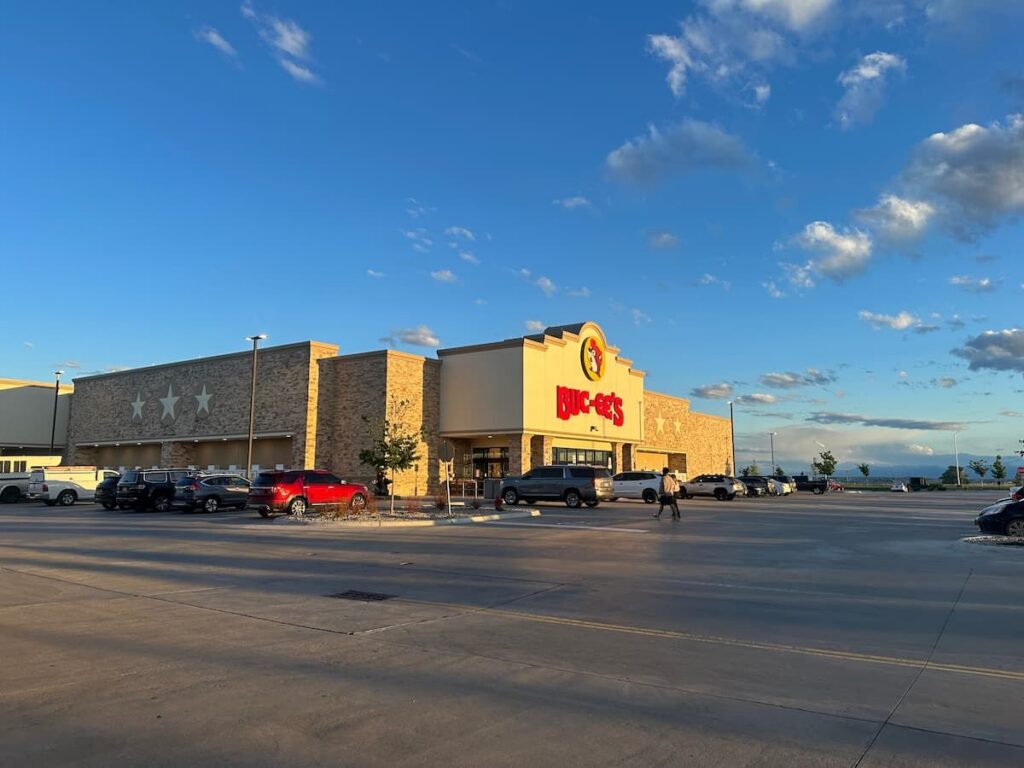
Controversial plans for the second Colorado location of the Texas travel chain Buc-ee’s are making their debut in El Paso County’s public hearing process. Interest in the project has been high from the start, defining over a year of local...

Aurora councilmembers apologize after passing police, firefighter raises on anniversary of McClain killing
Kyla Pearce
kyla.pearce@gazette.com
Updated 1 hour ago
Several Aurora City Councilmembers apologized to the public at the end of Monday night’s meeting after approving pay raises for police and firefighters on the anniversary of Elijah McClain’s death. McClain, 23, was killed in 2019 while walking home from...

Clear Creek, Jefferson County officials give inside look on wildfire preparations
Matt Kyle
matt.kyle@denvergazette.com
Updated 1 hour ago
When it comes to fighting wildfires, the best methods are proactive, not reactive. For officials in Clear Creek and Jefferson counties, it’s not a matter of if a wildfire happens, but when. With a large number of wildfires devastating parts...
PREV
PREVIOUS

Tapped: Golden tightens water rules as Clear Creek snowpack falters
Editor’s note: The Denver metro region sits at the center of one of the American West’s most complex and consequential water challenges. This series examines the interconnected systems that determine how the region secures, stores, and conserves its water while navigating the competing demands of fast‑growing urban communities and the increasingly unpredictable mountain snowpack that […]

Tapped: Parker makes strides toward renewable water supply
Editor’s Note: The Denver metro region sits at the center of one of the American West’s most complex and consequential water challenges. This series examines the interconnected systems that determine how the region secures, stores, and conserves its water while navigating the competing demands of fast‑growing urban communities and the increasingly unpredictable mountain snowpack that […]