

Yet again, when rights are in conflict | Hal Bidlack
I admit, it is going to take quite a bit of self-control to not have this entire column end up being yet another screed about a certain president who continues to shock the world in his race to the bottom of intellectual discourse. Like many, I suspect, when I first read the social media post President Donald Trump made over the weekend, I assumed it was a fake post by some “influencer” attempting to shock his or her audience by including a F-bomb and making a clearly disrespectful reference to Islam. But at 8:03 a.m. Easter morning, Trump let the pettiness fly.
Surely, it seemed to most folks the leader of the free world would not he himself devolve into such aberrant and low-brow insults, especially as U.S. service members are actively fighting the war he started all by himself, right?
Well, as we now know, that social media post was, in fact, our commander-in-chief. And that post threatened to commit what is internationally recognized as a war crime, the bombing of civilian power plants.
I take this stuff seriously, having spent more than 25 years in the armed forces. And having started my career as an ICBM launch officer, I’ve oft thought about the implications of nuclear weapons and morality. Though I cannot, of course, even now talk about what we targeted back in the early 1980s, when I was sitting nuclear alerts, I can say I was comfortable with the overall command view on the use of nuclear weapons and other such weapons of mass destruction. I believed then that the real power of the weapons systems I commanded was in their deterrent force, in that no sane enemy would ever risk inducing a nuclear strike by the U.S.
Today, with a foolish and childish man who doesn’t strike me as any kind of deep thinker in command of the greatest military the world has ever known, and his obvious ability to be distracted by shiny objects, I do worry about a war in the mid-east escalating in ways that are deeply troubling to ponder.
And on Easter Sunday, was this self-described “non-denominational Christian” (he used to claim to be a Presbyterian) in deep spiritual contemplation about the meaning of the holiday and the troops he has placed in danger? No, he was in a motorcade, on his way to a round of golf, but only after touring the area in D.C. wherein Trump proposes to construct the largest “victory arch” in the world, no doubt with his name in gold prominently displayed.
I could go on and on…
But, in an effort to keep my kindly editor at least somewhat content, I want to turn to a Colorado Politics article that yet again illustrates one of the challenges we have when seeking justice in our world, the inevitable challenges when personal rights conflict with other personal rights.
Out in Mesa County (gorgeous country) a federal judge has sided with the local school district in a case about a school’s right to have a calm atmosphere in which to teach, versus a student’s right to free speech.
It seems a young man, quite properly not identified by name but simply referred to as “John Doe,” was creating some disruptions in class. A special-needs student, Doe had a history of confronting his teachers. There was, as was stated in the case, “ample evidence” Doe created disruptions in class, making education difficult for the teachers and other students involved. One example noted in the story was Doe wore a hat to school with a Confederate battle flag on it, and when the teacher asked him to remove it, disruption happened.
Meeting with his parents was apparently also confrontational, with threats of lawsuits against the school district for alleged First Amendment violations by school personnel. On one occasion, Doe’s father ended up “toe to toe” with the principal, who called law enforcement, and was later claimed to have emailed a threat of violence to the principal.
I must say, my first thought is one of sympathy to the parents and to the young man involved. It sounds like he walks a difficult path through life, and that creates challenges for parents trying to raise the young man. I’m sorry for his struggles.
But here we again see an issue of rights in conflict. A student in a class would certainly seem to have the right to be educated in a reasonable environment. Yet Doe also has rights, and courts have ruled students are allowed to have and to express opinions, even when those differ with the “traditional” view of things.
The court did have precedent to follow, however. Back in 1968, in the case of Tinker v. Des Moines Independent Community School District, the U.S. Supreme Court ruled, quite reasonably I think, that yes, students retain their free speech rights unless their behavior and conduct “substantially interferes with school operations.” Thus, students are a special class under the law, with free speech rights but not inalienable free speech rights, such as adults have.
Thus, once more, the rights-in-conflict issue creates challenges, but ultimately (barring appeals I suspect will go nowhere) young Mr. Doe will need to modify his behavior if he wants to stay in the public school.
One hopes there are special education professionals working in Mesa who can help him. As the son, brother, father and uncle of teachers, I appreciate how difficult that profession can be, and I am sure the teachers and administrators involved took no joy in going to court.
But, at least for the moment, this particular case of rights in conflict is settled.
Hal Bidlack is a retired professor of political science and a retired Air Force lieutenant colonel who taught more than 17 years at the U.S. Air Force Academy in Colorado Springs.


Note to Colorado lawmakers — parents protecting kids isn’t abuse, it’s their job | OPINION
Colorado Politics
colorado-politics@coloradopolitics.com
Updated 11 hours ago
By Matt Sharp and Sharon Supp During the last few years, the U.S. Supreme Court has made at least one thing clear: Colorado is consistently overreaching to apply its laws in unconstitutional ways. Colorado treated a cake artist with hostility...

H.R. 1 underscores unfairness in Colorado tax code | OPINION
Colorado Politics
colorado-politics@coloradopolitics.com
Updated 11 hours ago
By Caroline Nutter On July 4, 2025, Colorado’s budget was overturned with the stroke of a pen. When President Donald Trump signed into law H.R. 1, or the One Big Beautiful Bill Act, he didn’t only cut federal funding by...
Colorado lawmakers grapple with spending cuts amid $1 billion-plus deficit
Marianne Goodland
marianne.goodland@coloradopolitics.com
Updated 13 hours ago
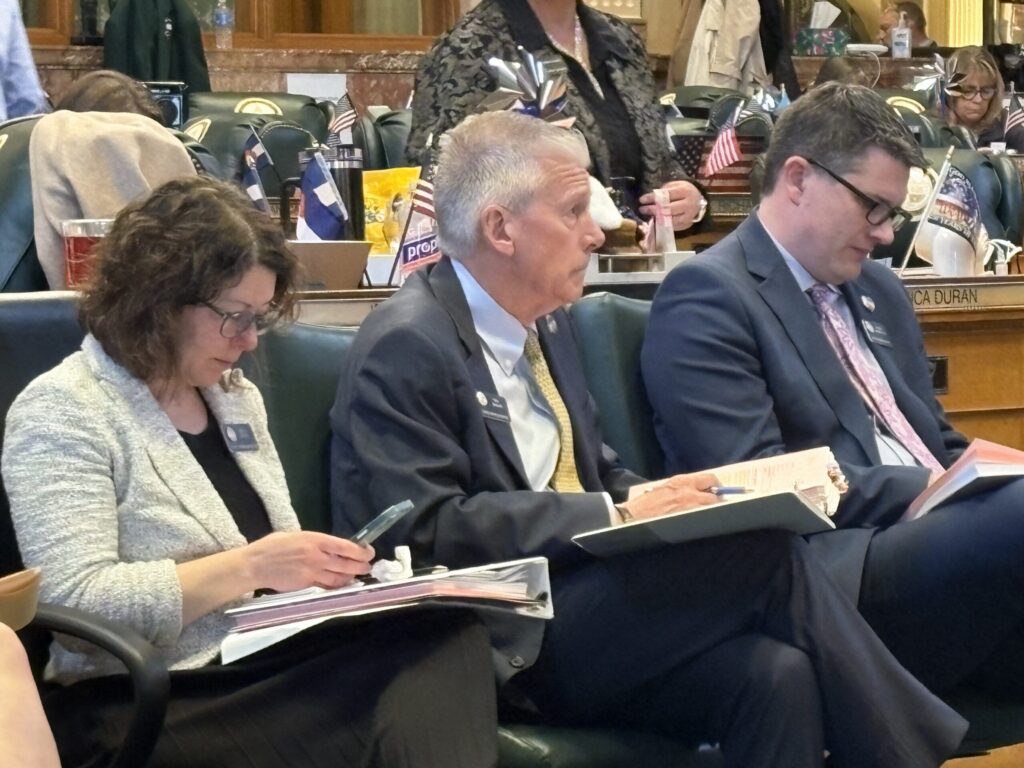
The battle over Colorado’s budget for next year — which stalled in the House over a procedural maneuver — entered a more difficult phase on Thursday, when legislators grappled with hundreds of millions of dollars in proposed reductions to balance...

Colorado bill reshaping RTD board advances
Marissa Ventrelli
marissa.ventrelli@coloradopolitics.com
Updated 16 hours ago
A proposal to reshape the Regional Transportation District’s leadership easily cleared a committee vote Wednesday, advancing the bill sponsors say is needed to revive a transit system still struggling to regain riders and public trust. Critics have countered that, while...

Colorado Democrat John Hickenlooper pulls in nearly $1.4M in 1st quarter, heads into primary with $4M
Ernest Luning
ernest.luning@coloradopolitics.com
Updated 13 hours ago
U.S. Sen. John Hickenlooper’s campaign raised nearly $1.4 million in the first quarter of 2026 and plans to report more than $4 million on hand heading into Colorado’s June primary, the first-term Democrat’s campaign said Thursday. That brings Hickenlooper’s total...
Republican Ron Hanks plans ‘grassroots’ primary challenge to US Rep. Jeff Hurd in Colorado’s 3rd CD
Ernest Luning
ernest.luning@coloradopolitics.com
Updated 16 hours ago
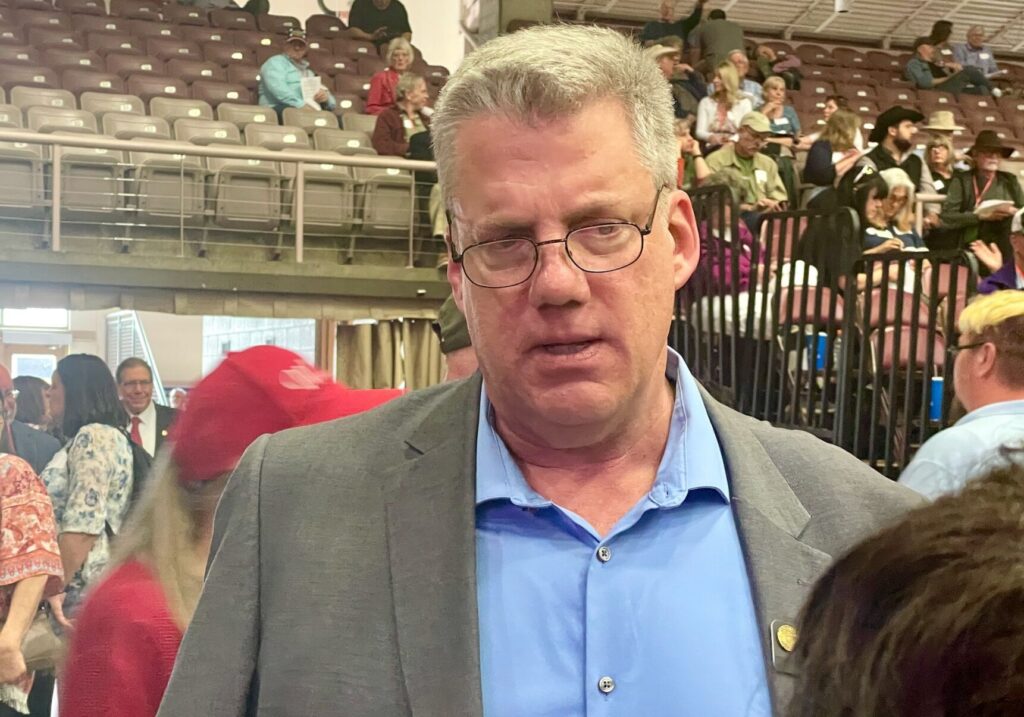
Colorado Republican Ron Hanks, a former state lawmaker, plans to challenge first-term U.S. Rep. Jeff Hurd in the 3rd Congressional District primary by seeking a spot on the June ballot at the GOP’s district assembly in Pueblo on Friday, Colorado...
House GOP stalls Colorado budget debate by forcing full reading of 661-page bill
Marianne Goodland
marianne.goodland@coloradopolitics.com
Updated 16 hours ago
A procedural battle at the Colorado Capitol boiled over on Wednesday night, when a House Republican demanded the 661‑page state budget be read aloud in full — a move that delayed the advance of the proposed $46.8 billion spending plan....

Colorado lawmakers propose changes to family court procedures | Bills in Brief
Marissa Ventrelli
marissa.ventrelli@coloradopolitics.com
Updated 2 days ago
Colorado lawmakers introduce hundreds of bills each year. Bills in brief cuts through the noise by explaining which proposals matter, what’s at stake, and how decisions at the Capitol could affect everyday life across the state. Colorado lawmakers from both parties are...
The danger of when government goes rogue | Paula Noonan
Paula Noonan
paula-noonan@coloradopolitics.com
Updated 22 hours ago
It’s dangerous, even fatal, when government goes rogue whether in a democracy or autocracy. Government officials who ignore or taunt laws that constrain bad acts should be given the heave ho. We’re witnessing these egregious scenarios now at the federal...

Colorado Medicaid director’s resignation long-overdue inflection point for our families, kids | OPINION
Colorado Politics
colorado-politics@coloradopolitics.com
Updated 11 hours ago
By Heidi Baskfield For years, the consequences of a strained and fragmented Medicaid system have fallen on those least able to navigate it — the children with complex needs and the families fighting to care for them. Though policy debates...
PREV
PREVIOUS

Turn blueprint into action with the Outdoors Opportunities Act | OPINION
Nearly a year has passed since Gov. Jared Polis, Colorado Parks and Wildlife, the Colorado Department of Natural Resources, Colorado’s Outdoor Recreation Industry Office and other key partners finalized the visionary Colorado Outdoor Strategy, establishing the framework to ensure Colorado’s outdoor recreation and conservation legacy for generations to come. Now it’s time for action. Action […]

Public comment period opens as federal review targets Colorado's wolf reintroduction program
Federal wildlife officials have opened a formal review of Colorado’s wolf reintroduction program, launching a public comment period to assess how the state has handled rising conflicts between wolves and livestock. A notice from the U.S. Fish and Wildlife Service was published in the Federal Register on Monday, setting a June 5 deadline for the comments. The […]