

Public comment period opens as federal review targets Colorado’s wolf reintroduction program
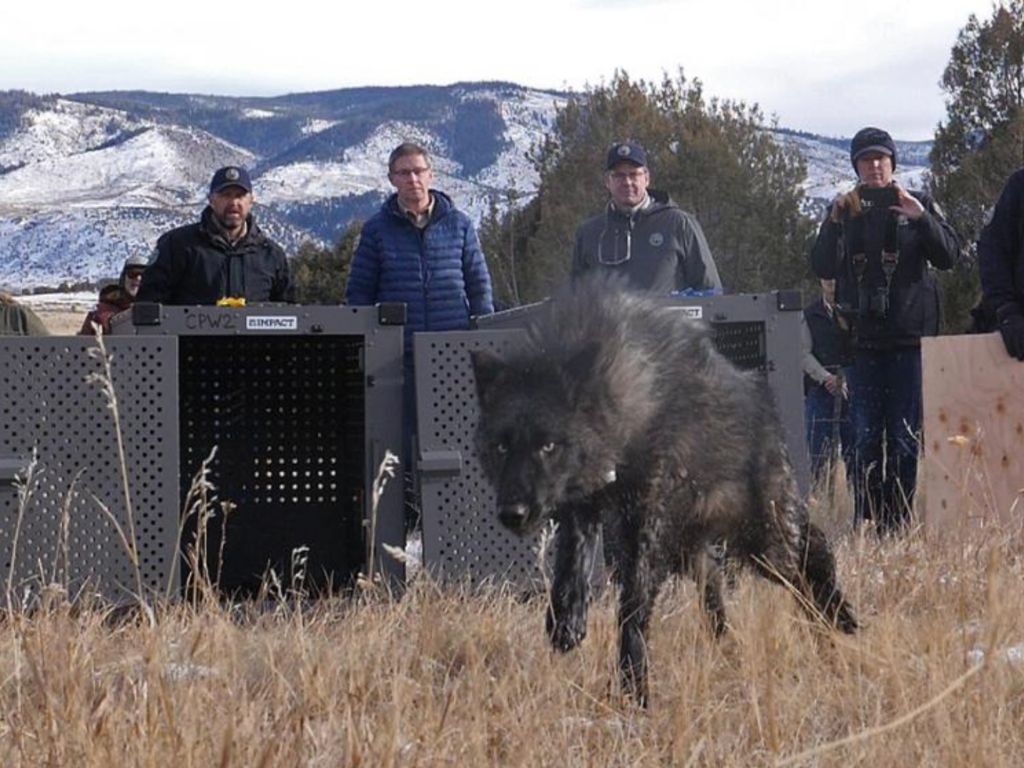
Federal wildlife officials have opened a formal review of Colorado’s wolf reintroduction program, launching a public comment period to assess how the state has handled rising conflicts between wolves and livestock.
A notice from the U.S. Fish and Wildlife Service was published in the Federal Register on Monday, setting a June 5 deadline for the comments.
The notice says the U.S. Fish and Wildlife Service is seeking information on how Colorado has implemented the federal 10(j) rule issued in 2023. It also explains that the agency signed a memorandum of understanding with Colorado Parks and Wildlife outlining goals, such as providing timely public updates on the restoration program, conducting outreach, and carrying out proactive measures — including both nonlethal and lethal control — to reduce or resolve conflicts between wolves and livestock.
The federal wildlife agency is seeking comments on how the agreement has been implemented, including conflict‑prevention efforts and suggestions for improving the program. The agency is also requesting information on the impact of wolves on wild ungulate herds, such as elk and moose, on tribal lands, as well as on how Colorado has carried out procedures for nonlethal and lethal management of wolves causing unacceptable impacts.
The Endangered Species Coalition called the request for public comment a “politically motivated effort to undermine” Colorado’s vote to allow the reintroduction program.
Ryan Sedgeley, Southern Rockies representative for the Endangered Species Coalition, added that when special interests “fail in state processes, they run to Washington looking for political intervention.”
“That is not science-based wildlife management. It is a set-up for misinformation, fear, and another attack on wolf recovery,” he said.
Meanwhile, John Swartout, who represents the United Wolf Coalition, said the federal request — which includes detailed questions about depredation — gives landowners an important chance to share their experiences, especially regarding how state officials have conducted depredation investigations.
He said state parks and wildlife staff sometimes don’t reach a depredation site until two or three days after the incident, when other animal tracks may be present, making it difficult to confirm whether a wolf was responsible. He also noted that the federal wildlife agency receives only confirmed depredation reports from Colorado Parks and Wildlife — not the inconclusive ones.
Swartout said he expects some commenters to say the state has not made a concerted effort to keep wolves away from cattle and that wolves are too close to livestock.
U.S. Fish and Wildlife is “trying to get the whole picture,” Swartout said.
The federal wildlife agency is also seeking feedback on how Colorado has assessed the risk of wolf-livestock conflicts, what steps the state has taken to reduce that risk, and how it has applied the “allowable forms of take” under the 10(j) rule, including taking wolves caught attacking livestock and the state’s removal of animals that kill livestock.
Finally, the federal agency wants to hear about the state’s wolf compensation program as a “means of achieving minimization of conflict.”
In 2020, Colorado voters, mostly along the Front Range, narrowly approved the wolf reintroduction program. The measure required wolves to be relocated west of the Continental Divide — into counties that largely opposed the plan and have since seen the loss of dozens of livestock and more than a million dollars in compensation in 2025 and 2026, far exceeding the program’s budget.
The wolf relocation program has also spent considerably more than the $800,000 projected for annual costs. The total funding, excluding compensation, is now $2.1 million per year.
To address rising costs, CPW asked the Joint Budget Committee for an additional $450,000 in the 2026–27 budget for wolf‑relocation expenses, saying it would cost nearly twice as much as the previous year to bring in wolves from British Columbia. The budget committee did not act on the request.
In late 2025, the state wildlife agency signed a $400,000 contract with British Columbia for another batch of wolves.
However, last year the federal government restricted Colorado to sourcing wolves only from eastern Washington, eastern Oregon, eastern Utah and from Idaho, Montana, and Wyoming. All of those states have since refused to provide additional wolves.
Colorado obtained 10 wolves from Oregon in December 2023, some of which came from packs with a history of livestock depredation. Those wolves started killing livestock in Grand County less than four months after their arrival and during spring calving season.
Fifteen came from British Columbia in January 2025, and those wolves also started killing livestock, despite no history of doing so, by March 2025, in Eagle and Pitkin counties.
State wildlife officials relocated the Copper Creek pack — a mother and four yearlings — to Pitkin County at the same time, resulting in additional livestock losses. Over a weekend last May, a yearling was believed to have killed four animals over three days. That wolf was later killed by state officials.
That caught the attention of Brian Nesvik, head of the U.S. Fish & Wildlife Service, who included it in a request for information he sent to the state in December. The federal agency has not said whether CPW’s response satisfied its concerns, though it did not move to suspend the program — a step Nesvik had warned would occur if the state failed to reply.
The impact on the wolves has also fallen short of expectations outlined in the state’s wolf plan: 13 of the 25 relocated wolves have died from various causes, a mortality rate of 48%. Under the plan, the program is supposed to be reviewed if mortality drops below 70%.


Pastors Scott Bottoms, Victor Marx win spots in Colorado GOP’s gubernatorial primary at party assembly
Ernest Luning
ernest.luning@coloradopolitics.com
Updated 16 hours ago
Two pastors from Colorado Springs qualified Saturday for the Republican gubernatorial primary ballot at the Colorado GOP’s state assembly in Pueblo in a party meeting that dragged late into the night. State Rep. Scott Bottoms, who is known as one...

Colorado House finishes work on 2026-27 state budget, finally
Marianne Goodland
marianne.goodland@coloradopolitics.com
Updated 2 days ago
The House on Saturday, after four days of work – it usually takes two – finished up their work and voted on the $46.8 billion 2026-27 state budget, as contained in House Bill 1410 and 64 accompanying measures designed to...

Home rule has protected Colorado cities for over 125 years | Cronin and Loevy
Tom Cronin Bob Loevy
tom-cronin-bob-loevy@coloradopolitics.com
Updated 2 days ago
Colorado is currently gripped by a political struggle between the governor plus the legislature in Denver and populous home-rule city governments, mainly on the Front Range, such as Colorado Springs. In the past few years, the legislature has been passing bills that applied to city government policies, which...
Minority Leader Peña argues against oil and gas bill | A LOOK BACK
Rachael Wright, Special to Colorado Politics
rachael.wright@coloradopolitics.com
Updated 5 days ago
Forty-Five Years Ago This Week: “The Colorado House of Representatives had just given its final approval to House Bill 81-1152, which created $9 million in tax relief to oil and gas companies. But this came “at the expense of local...
An “-“ends tribute in a week full of “odds” | Capitol M | Week of April 11, 2026
Marianne Goodland
marianne.goodland@coloradopolitics.com
Updated 4 days ago
The lighter side of the Capitol, usually… The decision to read the budget bill — the long bill, which spans 661 pages this year — put a damper on the House’s already less‑than‑festive mood. So Capitol M decided to catch...
What you need to know about the Colorado legislature reading a 661-page bill aloud
Marianne Goodland
marianne.goodland@coloradopolitics.com
Updated 2 days ago
A rarely used procedural move by a Republican legislator threw the Colorado House into an extended slowdown, after she invoked her right to have a nearly 700-page state budget bill read aloud in full. Once Rep. Brandi Bradley, R‑Roxborough Park,...
Literal reading of budget bill complicates Colorado legislators’ plans for GOP assembly
Marianne Goodland
marianne.goodland@coloradopolitics.com
Updated 2 days ago
Republican Rep. Brandi Bradley’s decision to force the full reading of the state budget — called the “long bill” for its obvious length — has not only slowed House business to a crawl but also disrupted her colleagues’ plans for...
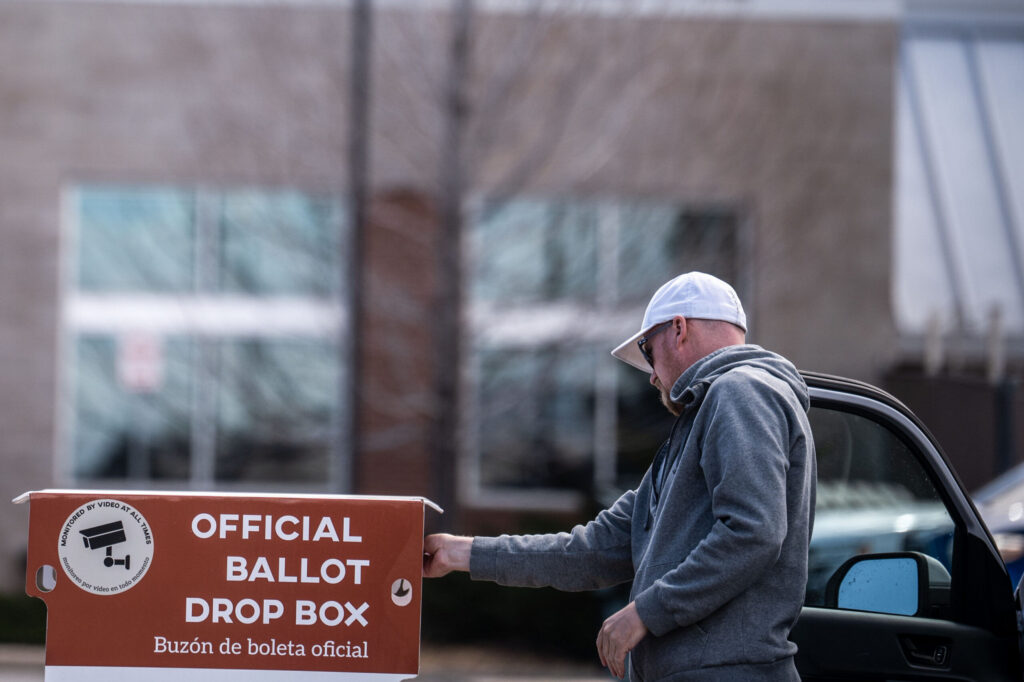
Colorado GOP votes down bid to ask court to prevent unaffiliated voters from voting in June primary
Ernest Luning
ernest.luning@coloradopolitics.com
Updated 3 days ago
Members of the Colorado Republican Party’s executive committee rejected a proposal Thursday night to seek an emergency injunction in federal court to prevent unaffiliated voters from participating in the state’s upcoming June primary election. The proposed motion, backed by Colorado...
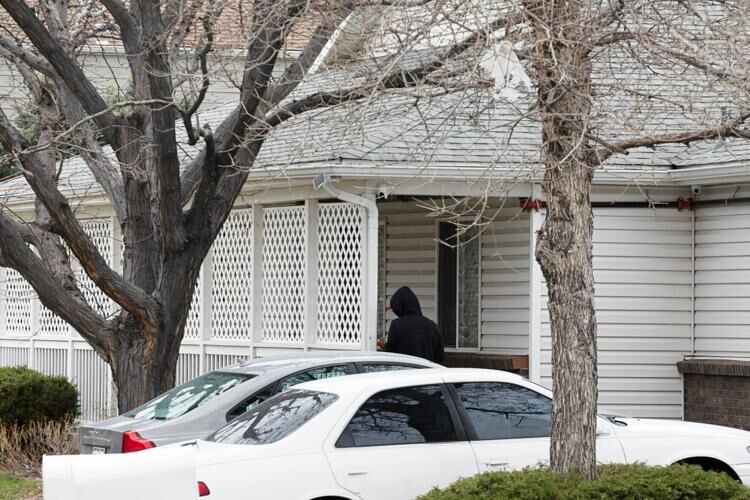
City of Northglenn, state fail to reach agreement on mental health facility amid safety concerns
Marissa Ventrelli
marissa.ventrelli@coloradopolitics.com
Updated 3 days ago
The City of Northglenn said it was unable to reach an agreement with the state on a pair of transitional living facilities for individuals with mental health conditions run by the Colorado Department of Human Services. The facilities, located across...
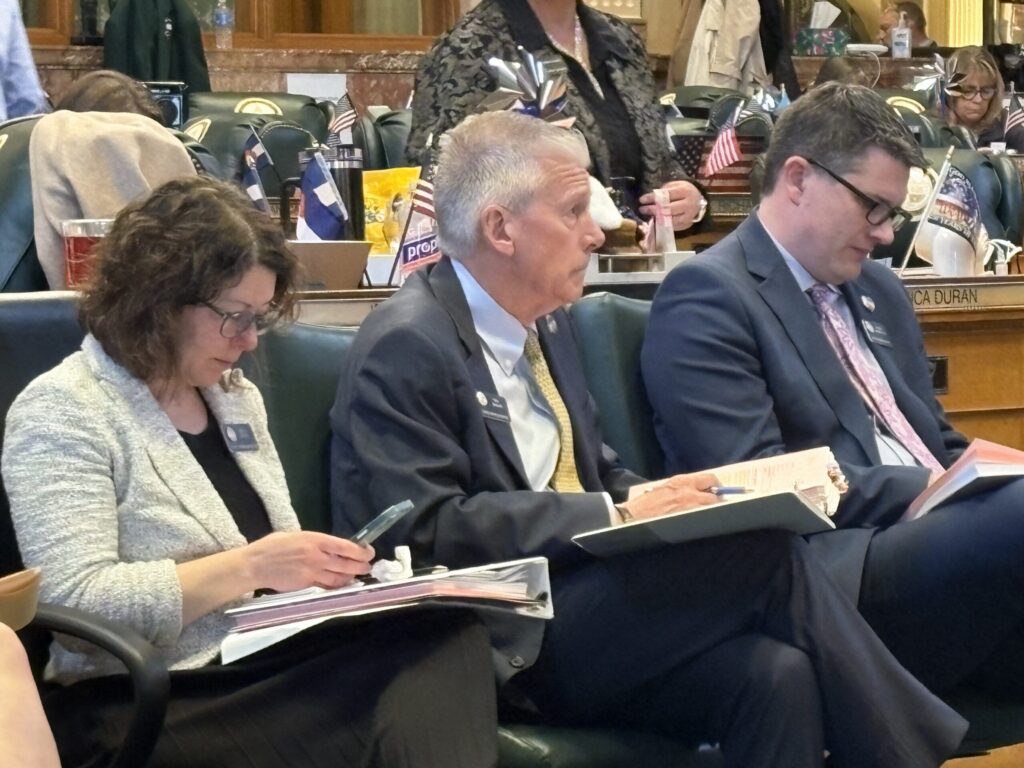
Colorado lawmakers grapple with spending cuts amid $1 billion-plus deficit
Marianne Goodland
marianne.goodland@coloradopolitics.com
Updated 3 days ago
The battle over Colorado’s budget for next year — which stalled in the House over a procedural maneuver — entered a more difficult phase on Thursday, when legislators grappled with hundreds of millions of dollars in proposed reductions to balance...
PREV
PREVIOUS

Denver to mull $6.9M East Colfax BRT extension, police union deal
Denver’s councilmembers will consider several items during Monday’s regular meeting, but the most notable is a resolution to overhaul contract review rules, requiring draft agreements to be shared with the Council before being heard at committee meetings. Council Resolution 26-0329 aims to give council members early access to draft and final agreements and more time […]
Federal judge blocks evidence from Aurora police's unconstitutional search
A federal judge ruled last month that prosecutors cannot use firearm evidence against a defendant because Aurora police searched him without having any reasonable basis to believe he was armed and dangerous. In evaluating the constitutionality of the search, U.S. District Court Senior Judge William J. Martínez noted that police officers were called to a […]